


Fine Wire Mesh Filter: An Engineering Guide to Industrial Precision and Selection
In industrial process engineering, the requirement for high-precision separation often leads to the selection of a fine wire mesh filter. These components are critical in environments where particulate contamination can compromise product purity, damage downstream equipment, or invalidate chemical compositions. Unlike disposable polymer-based filters, stainless steel wire mesh provides a reusable, thermally stable, and chemically resistant solution for demanding B2B applications.
Selecting the appropriate filtration media requires a deep understanding of fluid dynamics, material science, and mechanical design. This guide examines the technical specifications, structural configurations, and operational considerations essential for engineers and procurement professionals when integrating Wire Mesh Filter Cylinders & Tubes into industrial systems.
Mechanisms of Fine Wire Mesh Filtration
A fine wire mesh filter operates primarily through surface filtration. Unlike depth filters, which trap particles within a thick matrix of fibers, wire mesh captures contaminants on its surface. This mechanism allows for precise control over the "absolute" filtration rating, as the pore size is geometrically defined by the weave of the wires.
Weave Patterns and Their Impact
The performance of a fine wire mesh filter is largely determined by its weave pattern. For industrial applications, three primary types are common:
1. Plain Weave: The simplest configuration where each warp wire crosses over and under each shute wire. This provides a high open-area ratio, making it ideal for high-flow, low-pressure-drop applications, though it is limited in how fine the micron rating can go while maintaining structural stability.
2. Twill Weave: Each shute wire passes over and under two warp wires. This allows for a heavier wire diameter to be used for a given mesh count, increasing the mechanical strength of the fine mesh.
3. Dutch Weave (Plain and Twill): These weaves use different wire diameters for the warp and shute directions. The result is a dense, strong mesh with very small triangular openings. Dutch weaves are the standard for "fine" filtration requirements, offering superior pressure resistance and the ability to achieve micron ratings as low as 5 to 10 microns.
Material Selection and Chemical Compatibility
Industrial filtration often occurs in aggressive environments involving high temperatures, corrosive chemicals, or high-pressure steam. Kaifil specializes in stainless steel constructions because of their predictable performance under stress.
Stainless Steel 304 vs. 316L
* Grade 304: The standard industrial grade. It offers excellent mechanical properties and resistance to many atmospheric corrosives. It is suitable for food and beverage applications and general water treatment.
* Grade 316L: The "L" denotes low carbon, which improves weldability and prevents sensitization to intergranular corrosion. 316L contains molybdenum, significantly increasing resistance to chlorides and pitting. This is the preferred choice for pharmaceutical, marine, and chemical processing industries where the fine wire mesh filter will be exposed to acids or saline solutions.
For specialized applications, exotic alloys like Hastelloy or Monel may be used, though 316L remains the industry benchmark for the majority of precision filtration tasks due to its balance of cost and performance.
Structural Design: Wire Mesh Filter Cylinders & Tubes
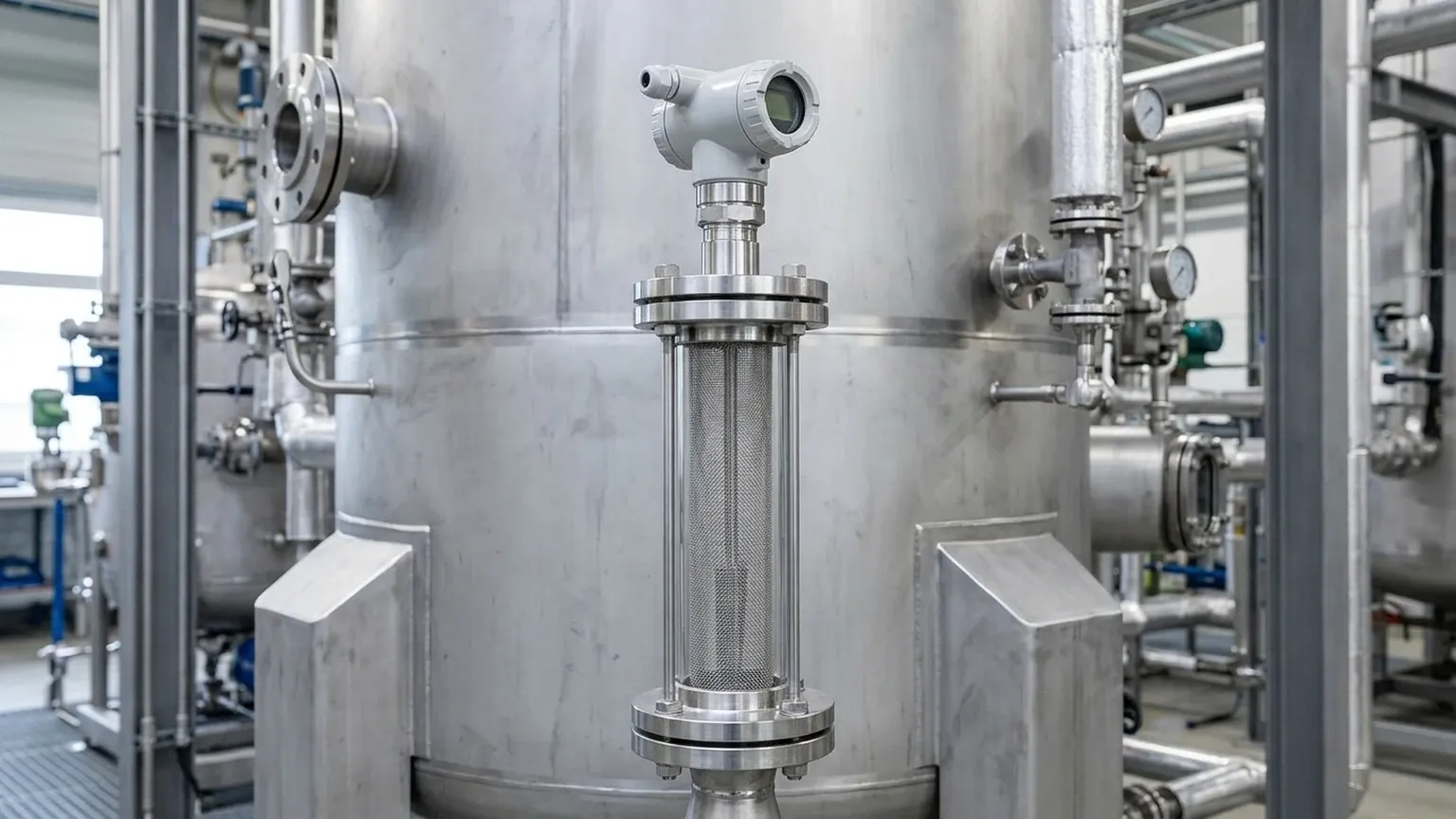
The geometry of the filter element is as vital as the mesh itself. In most industrial housings, the mesh is formed into Wire Mesh Filter Cylinders & Tubes to maximize the filtration surface area relative to the footprint of the equipment.
Support Cores and Reinforcement
A fine mesh, by its nature, lacks the rigidity to withstand high differential pressures (ΔP) on its own. When fluid flows through the mesh, the pressure drop exerts a mechanical force that can cause the mesh to collapse or deform. To prevent this, fine wire mesh filters are typically constructed with:
* Internal Support Cores: Perforated metal tubes or expanded metal cylinders that provide the primary structural skeleton.
* Outer Protection Sleeves: Used in backwashing applications to protect the fine mesh from external impact or to help distribute flow evenly.
* Sintered Layers: In high-pressure environments, multiple layers of mesh are sintered together. This process uses heat and pressure to fuse the wires at their contact points without melting them, creating a single, rigid plate that retains the filtration accuracy of the fine mesh while gaining the strength of a heavy-duty plate.
Pleated vs. Cylindrical Designs
While simple cylindrical tubes are common, engineers may opt for pleated designs. Pleating increases the effective filtration area (EFA) within the same envelope. A higher EFA reduces the flux (flow per unit area), which in turn lowers the initial pressure drop and extends the service life of the filter before cleaning is required.
Engineering Selection Criteria for Fine Wire Mesh
When specifying a fine wire mesh filter, several technical parameters must be defined to ensure the component meets the application's requirements.
Micron Rating: Absolute vs. Nominal
It is critical to distinguish between these two terms. A "nominal" rating refers to the ability of the filter to retain a certain percentage (usually 60% to 90%) of particles of a specific size. An "absolute" rating, which is more common for high-quality wire mesh, refers to the diameter of the largest hard spherical particle that will pass through the filter under specific test conditions. For critical pharmaceutical or hydraulic applications, an absolute rating is usually mandatory.
Pressure Drop (ΔP) Considerations
The initial pressure drop is the resistance to flow caused by the clean filter media. As the filter captures contaminants, the ΔP increases. Engineers must calculate the maximum allowable pressure drop before the filter requires cleaning or replacement. Factors influencing this include:
* Fluid viscosity (higher viscosity increases ΔP).
* Flow velocity.
* Mesh open area percentage.
* Contaminant loading characteristics.
Sealing and End Cap Configurations
A fine wire mesh filter is only as effective as its seal. Any bypass—where fluid flows around the filter rather than through it—will compromise the entire system. Common end cap designs include:
* Double Open End (DOE): Requires gaskets at both ends to seal against the housing.
* Single Open End (SOE): Often features an O-ring (e.g., 222 or 226 style) at one end and a closed cap or fin at the other, ensuring a high-integrity seal common in sanitary applications.
* Threaded Connections: NPT or BSP threads provide a secure, leak-proof mechanical connection for high-pressure hydraulic lines.
Application Risks and Operational Constraints
While stainless steel filters are robust, they are not immune to failure if misapplied. Understanding the risks is essential for maintaining system uptime.
Blinding and Clogging
"Blinding" occurs when particles that are exactly the size of the mesh openings become wedged in the pores. Unlike a cake of dust that sits on top of the mesh, blinded particles are difficult to remove via standard backwashing. In applications with a high concentration of near-size particles, a different weave pattern or a multi-stage filtration approach may be necessary.
Fatigue and Mechanical Stress
In systems with pulsating flows (such as those downstream of a reciprocating pump), the wire mesh can experience fatigue. Over time, constant vibration can lead to wire breakage. Specifying a filter with a robust internal support core and ensuring the mesh is properly tensioned and welded during manufacturing can mitigate this risk.
Chemical Attack
Even stainless steel can fail if exposed to incompatible chemicals. For example, high concentrations of chlorides at elevated temperatures can cause stress corrosion cracking. Engineers should always cross-reference the fluid chemistry with a chemical resistance chart for the specific grade of stainless steel selected.
Procurement Guide: What International Buyers Should Confirm
When sourcing Wire Mesh Filter Cylinders & Tubes from a manufacturer like Kaifil, providing detailed specifications reduces the risk of receiving an incompatible component. Buyers should confirm the following:
1. Dimensional Tolerances: Ensure the outer diameter (OD), inner diameter (ID), and overall length (OAL) are within the tolerances required by the filter housing.
2. Material Certification: Request Mill Test Reports (MTRs) to verify the grade of stainless steel (e.g., 316L) and ensure it meets ASTM or ISO standards.
3. Filtration Efficiency: Define the micron rating and specify whether it must be absolute or nominal.
4. Operating Environment: Provide the maximum operating temperature and pressure, as well as the expected differential pressure across the element.
5. Cleaning Compatibility: If the filter is intended to be cleaned via ultrasonic bath or chemical CIP (Clean-in-Place), ensure the construction (including gaskets and adhesives, if any) can withstand these processes.
Maintenance, Cleaning, and Total Cost of Ownership
One of the primary advantages of a fine wire mesh filter is its longevity. While the initial purchase price is higher than that of a disposable cartridge, the total cost of ownership (TCO) is often significantly lower due to the ability to clean and reuse the element.
Cleaning Methods
* Backwashing: Reversing the flow of fluid to dislodge surface contaminants. This is effective for larger particles but may not remove fine silt trapped in Dutch weaves.
* Ultrasonic Cleaning: Using high-frequency sound waves in a cleaning solution to create cavitation bubbles. These bubbles reach deep into the mesh pores to dislodge stubborn particles. This is the most effective method for restoring a fine wire mesh filter to near-original ΔP.
* Chemical Cleaning: Using acids or alkalis to dissolve organic or mineral deposits. This requires careful selection of chemicals to ensure they do not attack the stainless steel or the welds.
When to Replace
Despite being cleanable, wire mesh filters eventually reach the end of their service life. Signs that replacement is necessary include:
* Permanent Pressure Drop: When the "clean" ΔP remains significantly higher than the original specification after multiple cleaning cycles.
* Media Migration: Evidence of broken wires or thinning mesh, which could allow contaminants to pass through.
* Structural Deformation: Any bowing or crushing of the support core or mesh layers.
Conclusion
The integration of a fine wire mesh filter into an industrial process is a decision that impacts both product quality and operational efficiency. By focusing on the technical nuances of weave patterns, material grades, and structural support, engineers can ensure that their Wire Mesh Filter Cylinders & Tubes provide reliable service in even the most demanding environments.
As a professional manufacturer, Kaifil provides the engineering expertise necessary to customize these filtration solutions to specific application needs, ensuring that every component meets the rigorous standards required by modern B2B industrial sectors. Whether for hydraulic systems, chemical processing, or food production, the correct selection of a fine wire mesh filter remains a cornerstone of precision engineering.
