


Wire Mesh Filter Screen: An Engineering Guide to Selection and Application
In industrial filtration, the wire mesh filter screen serves as the fundamental component for mechanical separation. Whether integrated into complex housing systems or used as standalone strainers, these components are critical for protecting downstream equipment, ensuring product purity, and maintaining process efficiency. For engineers and procurement specialists, selecting the correct filtration media involves a deep understanding of material properties, weave patterns, and structural configurations.
This guide examines the technical specifications of the wire mesh filter screen, the design of Wire Mesh Filter Cylinders & Tubes, and the engineering considerations necessary to optimize filtration performance in demanding B2B environments.
Technical Fundamentals of Wire Mesh Filter Screens
A wire mesh filter screen is a precision-engineered fabric made from metallic wires. Unlike non-woven or depth media, wire mesh provides surface filtration where particles larger than the pore size are captured on the upstream side of the screen. This characteristic allows for easier cleaning and consistent performance over long operational cycles.
Weave Types and Their Impact on Performance
The method by which wires are interlaced determines the screen’s filtration accuracy, strength, and flow characteristics:
1. Plain Weave: The most common and straightforward weave where each warp wire crosses over and under each shute wire. It offers a high open area and low pressure drop, making it ideal for coarse filtration and high-flow applications.
2. Twill Weave: Each shute wire passes over and under two warp wires. This allows for the use of heavier wires for a given mesh count, increasing the mechanical strength and durability of the screen.
3. Dutch Weave (Plain and Twill): These weaves use different diameters for warp and shute wires. The result is a dense, compact mesh with small, triangular openings. Dutch weaves are preferred for fine filtration (down to 5-10 microns) and applications requiring high pressure resistance.
4. Reverse Dutch Weave: In this configuration, a higher number of warp wires and a lower number of shute wires are used. This creates a screen with high mechanical strength in the warp direction, often used in continuous filter belt applications.
Material Selection: Stainless Steel and Beyond
Material compatibility is the primary factor in determining the service life of a filter. Kaifil specializes in stainless steel due to its inherent resistance to corrosion and temperature extremes.
* AISI 304: The standard grade for general industrial use, providing good corrosion resistance in water treatment and food processing applications.
* AISI 316L: Contains molybdenum, which significantly improves resistance to chlorides and pitting. This is the preferred material for chemical processing, marine environments, and pharmaceutical manufacturing.
* High-Nickel Alloys: For extreme environments involving high temperatures or highly aggressive chemicals, materials like Hastelloy or Monel may be utilized to prevent premature failure of the wire mesh filter screen.
Engineering Wire Mesh Filter Cylinders & Tubes
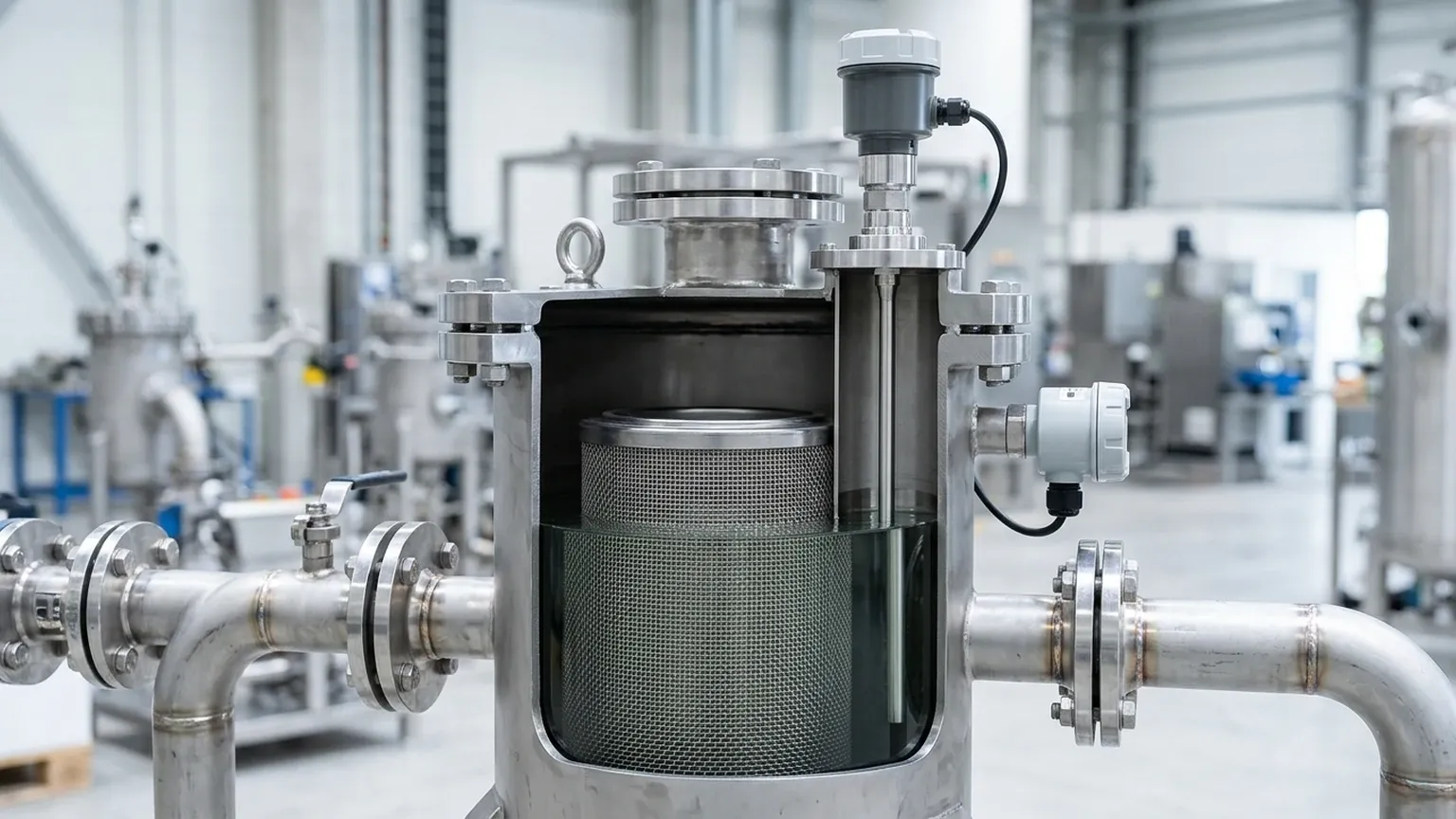
While the mesh provides the filtration media, the structural form is what allows it to function within an industrial system. Wire Mesh Filter Cylinders & Tubes are the most common configurations for liquid and gas filtration.
Structural Integrity and Reinforcement
Single-layer mesh cylinders often lack the rigidity required to withstand high differential pressures. To address this, engineers utilize several reinforcement techniques:
* Support Cores: Perforated metal tubes or expanded metal liners are placed inside or outside the mesh to prevent collapsing or bursting under pressure.
* Multi-Layer Sintering: By bonding multiple layers of wire mesh together through a heat-and-pressure process (sintering), manufacturers create a composite material that combines fine filtration with high mechanical strength. Sintered mesh cylinders do not require additional support structures in many applications.
* Pleating: To increase the Effective Filtration Area (EFA) within a fixed footprint, the wire mesh is pleated. This reduces the flux (flow per unit area), which lowers the pressure drop and extends the time between cleaning cycles.
Welding and Fabrication Standards
The integrity of a filter cylinder depends heavily on the quality of its longitudinal and end-cap welds. Plasma welding and TIG (Tungsten Inert Gas) welding are standard in high-quality fabrication to ensure clean, burr-free joints that do not introduce contaminants or create weak points in the structure. For pharmaceutical and food-grade applications, welds must be ground smooth and passivated to prevent bacterial growth.
Performance Metrics: Micron Rating and Flow Dynamics
Selecting a wire mesh filter screen requires balancing filtration efficiency with the system's hydraulic requirements.
Absolute vs. Nominal Micron Ratings
* Nominal Rating: Refers to an approximate pore size where a percentage of particles (e.g., 90%) are retained. It is a general guide but does not guarantee the capture of all particles at that size.
* Absolute Rating: Determined by the largest spherical glass bead that can pass through the mesh. In critical applications, such as hydraulic systems or pharmaceutical sterile filtration, an absolute rating is necessary to ensure process safety.
Pressure Drop (ΔP) Considerations
The pressure drop across a clean filter is influenced by the mesh's open area, the fluid's viscosity, and the flow velocity. A common engineering mistake is undersizing the filter, leading to high initial ΔP and frequent clogging. Engineers should aim for a design where the initial pressure drop does not exceed 2-3 PSI (0.14-0.21 bar) to provide sufficient headroom for contaminant loading.
Application Analysis: Where Wire Mesh Excels
Wire mesh filters are versatile components used across diverse industrial sectors. Their ability to be customized makes them suitable for specific process challenges.
Chemical and Petrochemical Processing
In these environments, filters must withstand aggressive solvents and high temperatures. Sintered wire mesh cylinders are often used as catalyst recovery filters or as polymer melt filters, where they must maintain structural integrity at temperatures exceeding 300°C.
Food and Beverage Production
Hygiene is the priority here. Stainless steel wire mesh filter screens are non-leaching and can be easily sterilized using SIP (Steam-In-Place) or CIP (Clean-In-Place) protocols. They are commonly used for straining pulp from juices, filtering frying oils, or removing particulates from dairy products.
Hydraulic and Lubrication Systems
Protecting sensitive valves and pumps from wear-inducing particles is essential. Wire mesh tubes are used as suction strainers or high-pressure inline filters. Their metallic construction prevents media migration, a common failure mode in paper or fiberglass filters where fibers can break off and enter the downstream flow.
Installation, Maintenance, and Total Cost of Ownership
To maximize the ROI of filtration equipment, engineers must consider the full lifecycle of the component.
Proper Installation Practices
When installing Wire Mesh Filter Cylinders & Tubes, ensuring a proper seal is paramount. Common sealing methods include:
* O-Rings and Gaskets: Made from Viton, EPDM, or PTFE, these provide a leak-proof interface between the filter and the housing.
* Threaded Connections: NPT or BSP threads allow for direct integration into piping systems.
* Flange Mounts: Used for larger industrial housings where high flow rates and mechanical stability are required.
Cleaning and Regeneration
One of the greatest advantages of a wire mesh filter screen is its cleanability. Depending on the contaminant, several methods can be used:
* Backwashing: Reversing the flow of fluid to dislodge particles from the screen surface.
* Ultrasonic Cleaning: Using high-frequency sound waves in a cleaning solvent to remove fine particulates trapped within the mesh pores.
* Chemical Cleaning: Using acids or alkalis to dissolve organic or inorganic scaling, provided the mesh material is compatible with the cleaning agent.
Evaluating Total Cost of Ownership (TCO)
While stainless steel wire mesh filters have a higher initial acquisition cost compared to disposable polymer filters, their TCO is often significantly lower. By eliminating the need for frequent replacements and reducing waste disposal costs, metal filters provide a sustainable and cost-effective solution for long-term industrial operations.
Procurement Guide: Information for International Buyers
When sourcing custom filtration solutions from a manufacturer like Kaifil, providing precise technical data is essential for an accurate quote and a functional product. Buyers should be prepared to confirm the following:
1. Fluid Characteristics: Viscosity, density, and chemical composition.
2. Operating Conditions: Minimum/maximum temperature and operating pressure.
3. Filtration Target: Desired micron rating (absolute or nominal) and the nature of the contaminants (hard, soft, fibrous).
4. Flow Rate: Normal and maximum flow requirements.
5. Dimensional Constraints: Overall length, outer diameter, inner diameter, and connection type.
6. Compliance Requirements: Need for FDA, 3A, or specific ISO certifications.
Conclusion
The selection of a wire mesh filter screen is a technical decision that impacts the reliability and efficiency of an entire industrial process. By understanding the nuances of weave patterns, material grades, and structural reinforcements, engineers can specify Wire Mesh Filter Cylinders & Tubes that deliver precise filtration under the most demanding conditions. As a specialist manufacturer, Kaifil provides the engineering expertise and custom fabrication capabilities necessary to turn these technical requirements into high-performance filtration components.
