


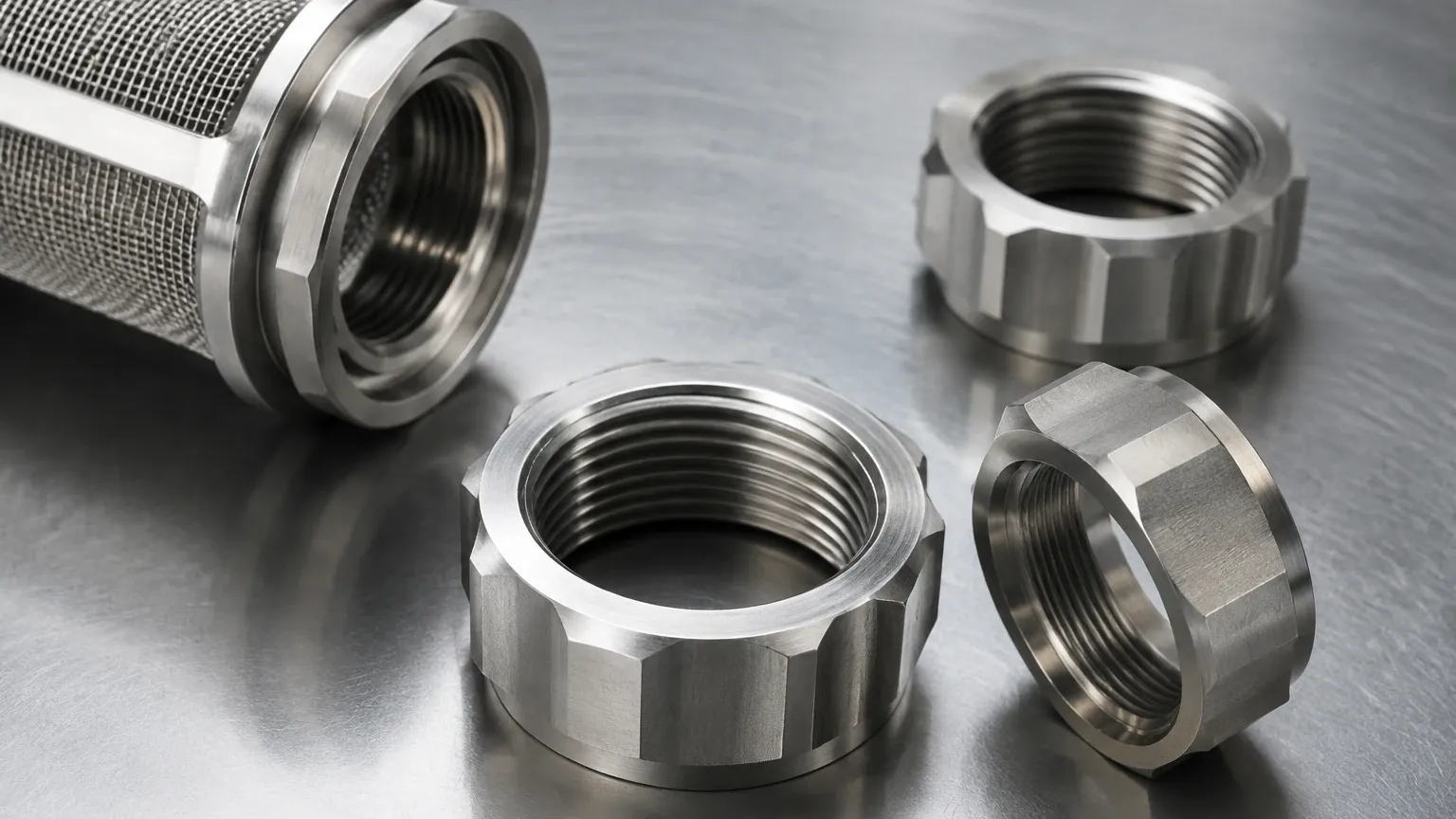
Strainer Joint Nut
In industrial filtration systems, the integrity of a connection is as critical as the filtration media itself. While the focus of engineering often remains on the micron rating or the flow capacity of the filter element, the mechanical components that secure these systems—such as the strainer joint nut—play a pivotal role in operational safety and efficiency. A strainer joint nut is a specialized fastening component used to secure the connection points of industrial strainers, particularly in union-style assemblies or where a removable basket housing requires a high-pressure seal.
For engineers and procurement teams, understanding the technical specifications, material properties, and maintenance requirements of the strainer joint nut is essential for preventing leaks, avoiding downtime, and ensuring the longevity of the entire filtration assembly. This guide examines the engineering considerations behind these components within the context of high-performance industrial filtration.
The Role of the Strainer Joint Nut in Industrial Filtration Systems
The primary function of a strainer joint nut is to provide the necessary clamping force to create a liquid-tight or gas-tight seal between two mating surfaces. In many industrial applications, strainers are designed for easy access to allow for frequent cleaning of the internal mesh or basket. The joint nut facilitates this by allowing the operator to decouple the housing or the piping connection without specialized heavy machinery.
In a typical union-type strainer, the nut draws the tailpiece and the head together, compressing a gasket or an O-ring located in the interface. This mechanical compression must be uniform to prevent bypass or external leakage. Because industrial systems often operate under fluctuating pressures and temperatures, the strainer joint nut must maintain its preload despite thermal expansion and vibration. Failure of this component can lead to catastrophic system depressurization or the contamination of the downstream process.
Material Engineering and Corrosion Resistance
Material selection is perhaps the most critical factor when specifying a strainer joint nut. Since these components are frequently exposed to the same process fluids as the filter itself, they must exhibit compatible chemical resistance.
Stainless Steel Alloys
As a manufacturer specializing in stainless steel filtration solutions, Kaifil emphasizes the use of 304 and 316L stainless steel for joint nuts.
- SS304: Suitable for general industrial use, providing excellent strength and basic corrosion resistance in non-corrosive environments.
- SS316L: Preferred for chemical processing, pharmaceutical, and marine applications. The addition of molybdenum provides superior resistance to chloride-induced pitting and crevice corrosion.
Specialized Coatings and Platings
In certain environments, even high-grade stainless steel may require additional protection or functional enhancements. For instance, electroless nickel plating can be applied to improve surface hardness and wear resistance, while PTFE coatings may be used to reduce friction during assembly and disassembly, effectively mitigating the risk of thread galling.
Understanding Thread Specifications and Sealing Integrity
The mechanical performance of a strainer joint nut is dictated by its thread profile and manufacturing precision. Industrial strainers typically utilize one of several standard thread types, each with specific advantages:
1. NPT (National Pipe Tapered): Common in North American systems, these threads create a seal by the interference between the male and female threads. However, in joint nut applications, NPT is less common than straight threads because the nut is usually part of a union assembly.
2. BSPP (British Standard Parallel Pipe): Often used in global applications, these parallel threads rely on a bonded seal or an O-ring rather than the threads themselves to achieve a seal. The strainer joint nut in this configuration serves purely as a mechanical fastener to hold the sealing surfaces together.
3. Metric Fine Threads: Used in high-precision or compact filtration units where a higher thread density allows for finer torque adjustments and better resistance to loosening under vibration.
Precision machining is vital. If the threads of the strainer joint nut are not concentric or if the pitch is slightly off, the clamping force will be unevenly distributed. This leads to "cocking" of the seal, where one side of the gasket is over-compressed while the other side remains loose, inevitably resulting in a leak.
Common Challenges: Galling, Overtightening, and Fatigue
Engineers must be aware of the specific mechanical risks associated with stainless steel fasteners in filtration systems.
Thread Galling
Stainless steel is notorious for galling, a form of cold welding that occurs during the assembly of threaded parts. When a strainer joint nut is tightened too quickly or without proper lubrication, the oxide layer on the surface of the metal can be stripped away, causing the high points of the threads to fuse together. Once galling occurs, the nut often cannot be removed without destroying the threads. To prevent this, Kaifil recommends the use of anti-seize compounds and controlled, low-speed tightening.
Overtightening
A common mistake in the field is the belief that a tighter nut always results in a better seal. Overtightening a strainer joint nut can deform the gasket, crush the O-ring, or even stretch the threads beyond their elastic limit. Once the nut enters the plastic deformation stage, it loses its ability to maintain a constant preload, which can lead to leaks when the system undergoes thermal cycling.
Fatigue and Stress Corrosion Cracking
In systems with high-frequency pressure pulsations (such as those found near reciprocating pumps), the joint nut is subject to cyclic loading. Over time, this can lead to fatigue failure. Additionally, if the nut is under high tensile stress in a corrosive environment, it may be susceptible to Stress Corrosion Cracking (SCC), which can cause the component to fail suddenly without prior visible signs of wear.
Maintenance Protocols and Component Replacement
To ensure the reliability of industrial filtration systems, the strainer joint nut should be included in regular maintenance inspections. A standard protocol should include:
* Visual Inspection: Checking for signs of pitting, rust, or physical deformation of the nut's hex flats (which indicates the use of improper tools).
* Thread Cleaning: Removing debris or old anti-seize compound before reassembly to ensure accurate torque readings.
* Lubrication: Applying a compatible lubricant to the threads and the bearing surface of the nut to ensure smooth operation and prevent galling.
* Torque Verification: Using calibrated torque wrenches to meet the manufacturer’s specified clamping force.
Replacement cycles for these nuts depend heavily on the frequency of basket cleaning. In applications where the strainer is opened daily, the threads will wear faster than in systems that are only serviced annually. It is often more cost-effective to replace a worn strainer joint nut during scheduled maintenance than to risk an unplanned shutdown due to a failed connection.
Selection Criteria for Custom Strainers & Baskets
When specifying Strainers & Baskets for a new project, the joint nut and the overall connection method must be matched to the application’s pressure rating and the technician's ease of use. For instance, in high-viscosity food processing applications, a heavy-duty ACME thread joint nut might be preferred for its robustness and ease of cleaning, whereas a fine-threaded nut might be better suited for high-pressure hydraulic oil filtration.
Customization options provided by manufacturers like Kaifil allow engineers to select the exact alloy, thread type, and nut geometry (such as wing nuts for tool-free operation or heavy hex nuts for high-torque requirements) that best fits their operational constraints. Confirming the compatibility of the strainer joint nut with existing piping standards is a critical step before finalizing a purchase order.
Conclusion
The strainer joint nut is a fundamental component that ensures the mechanical stability and leak-proof performance of industrial filtration systems. By focusing on material integrity, precision threading, and proper maintenance techniques, engineers can significantly reduce the risk of system failure. Whether you are dealing with chemical processing, water treatment, or pharmaceutical manufacturing, the details of the fastening system are just as important as the filtration efficiency of the mesh. Selecting high-quality components and following rigorous engineering standards will ensure that your filtration system remains a reliable part of your industrial infrastructure.
