


Wire Mesh Ac Filter
In industrial environments, air filtration and conditioning systems are subjected to conditions far more rigorous than standard commercial HVAC applications. Whether managing intake air for heavy machinery, filtering process air in chemical plants, or maintaining air quality in pharmaceutical cleanrooms, the choice of filter media is critical. A wire mesh ac filter constructed from stainless steel offers a durable, cleanable, and high-performance alternative to synthetic or fiberglass media.
This guide examines the engineering principles, material specifications, and selection criteria for industrial wire mesh filters, focusing on how Wire Mesh Filter Cylinders & Tubes provide the structural foundation for effective air and gas filtration.
The Role of Wire Mesh in Industrial AC and Air Systems
Industrial air conditioning and cooling systems often operate in environments characterized by high humidity, chemical vapors, or extreme temperatures. Standard disposable filters often fail under these conditions due to moisture absorption, structural collapse, or chemical degradation. A wire mesh ac filter utilizes a woven or knitted metallic structure to capture airborne particulates through impingement and interception.
Unlike depth filters that trap particles within a thick bed of fibers, wire mesh filters primarily perform surface filtration. This allows for more predictable pressure drops and simplifies the cleaning process. In industrial AC units, these filters serve as pre-filters to protect sensitive downstream components or as primary filters in heavy-duty air handling units (AHUs) where high airflow and durability are paramount.
Engineering Specifications for Wire Mesh Filter Cylinders & Tubes
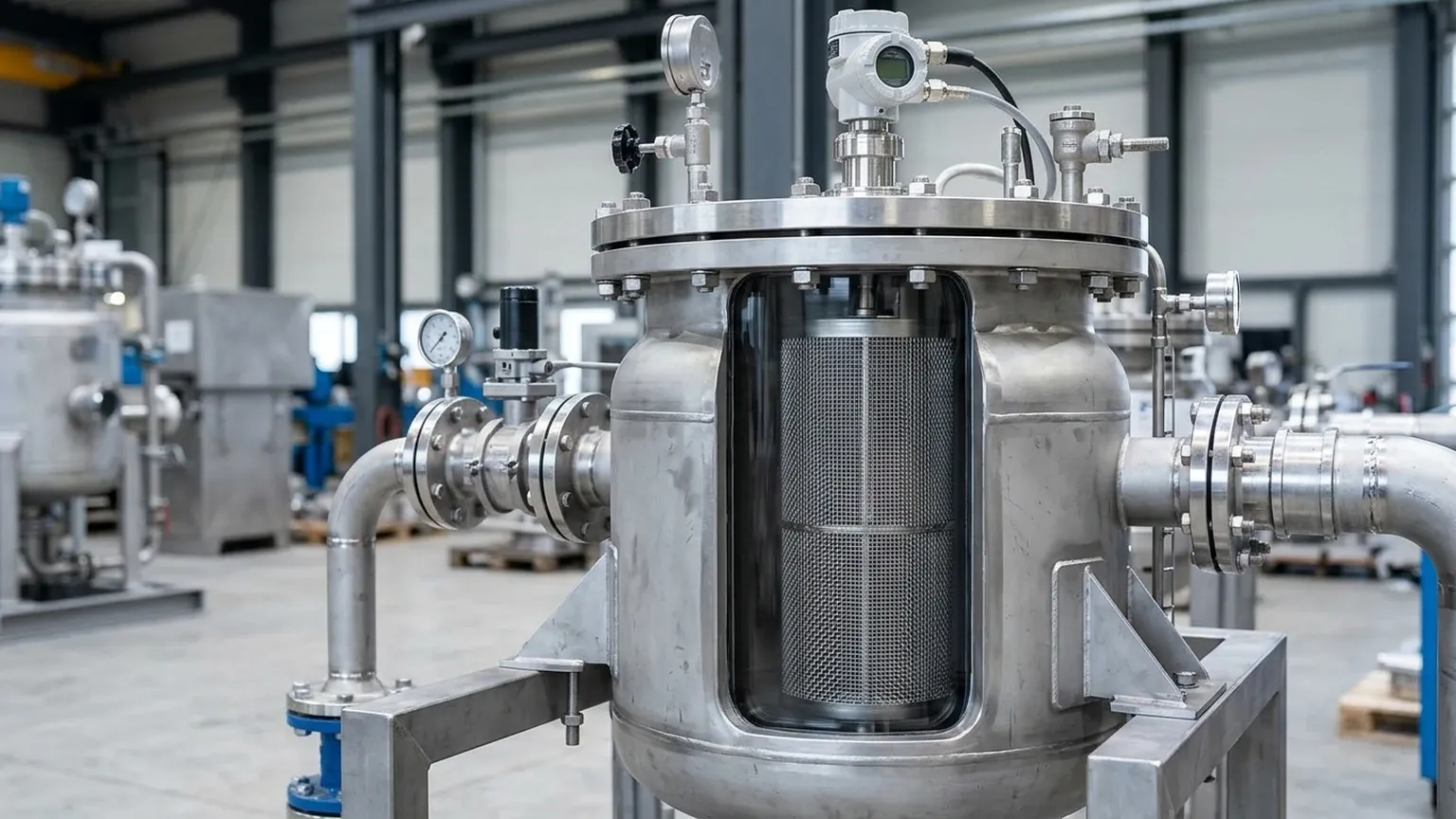
When designing or procuring a wire mesh ac filter, the geometry of the filter element is as important as the mesh itself. Most industrial applications utilize Wire Mesh Filter Cylinders & Tubes because of their inherent mechanical strength and high surface area-to-volume ratio.
1. Mesh Count and Micron Rating
The mesh count (the number of openings per linear inch) determines the filtration fineness. For air conditioning applications, the goal is often to balance particle capture with airflow resistance. Fine meshes provide higher filtration accuracy but may lead to a faster increase in differential pressure (ΔP) if the dust loading is high.
2. Weave Types
* Plain Weave: The most common type, offering a straightforward aperture size and high flow rates.
* Twilled Weave: Allows for thicker wires and is used when the filter requires higher mechanical strength.
* Dutch Weave: Provides a denser structure, often used for fine filtration where high pressure is present.
3. Structural Reinforcement
For large-scale AC systems, a single layer of wire mesh may lack the rigidity to withstand high-velocity airflow. Engineers often specify multi-layer constructions where a fine filtration mesh is supported by a coarser, heavier-gauge mesh or a perforated metal core. This ensures the filter maintains its shape under vacuum or pressure loads.
Material Selection: 304 vs. 316 Stainless Steel
Material compatibility is a primary concern in industrial filtration. The environment in which the wire mesh ac filter operates dictates the grade of stainless steel required.
* Grade 304 Stainless Steel: This is the standard choice for most industrial AC applications. It offers excellent strength and good corrosion resistance against water and common atmospheric pollutants. It is cost-effective and suitable for general industrial air handling.
* Grade 316 Stainless Steel: In environments involving salt air (coastal regions), high humidity, or exposure to corrosive chemicals (such as in chemical processing or marine applications), Grade 316 is preferred. The addition of molybdenum enhances its resistance to pitting and crevice corrosion.
* High-Temperature Alloys: For specialized process air applications where temperatures exceed 300°C, specialized alloys may be required to prevent oxidation and maintain structural integrity.
Performance Metrics: Pressure Drop and Flow Rate
In any AC or ventilation system, the energy efficiency of the blower or fan is directly tied to the pressure drop across the filter. A wire mesh ac filter must be engineered to provide the required filtration efficiency without creating excessive resistance.
Understanding Differential Pressure (ΔP)
As particles accumulate on the surface of the wire mesh, the open area decreases, and the differential pressure increases. Because stainless steel wire mesh is rigid, it does not compress or "unload" particles when the pressure increases, which is a common failure mode in synthetic filters. Engineers must calculate the "clean pressure drop" based on the air velocity and the percentage of open area in the mesh to ensure the HVAC system remains within its operating curve.
Flow Velocity Considerations
High-velocity air can cause vibration in poorly supported mesh. When selecting Wire Mesh Filter Cylinders & Tubes, the length and diameter must be optimized to keep the face velocity within acceptable limits, typically preventing turbulent noise and premature wear of the mesh wires.
Installation and Maintenance of Industrial Wire Mesh Filters
One of the greatest advantages of a stainless steel wire mesh ac filter is its reusability. In a B2B industrial context, this significantly reduces the total cost of ownership (TCO) compared to frequent replacements of disposable units.
Cleaning Protocols
Unlike disposable media, stainless steel filters can be cleaned and returned to service. Common methods include:
* Backwashing/Back-pulsing: Using compressed air or water to dislodge particles from the mesh surface.
* Ultrasonic Cleaning: For fine meshes where particles may be lodged in the weave, ultrasonic baths provide deep cleaning without damaging the wire structure.
* Chemical Cleaning: In food processing or pharmaceutical applications, filters can be sanitized using caustic or acidic solutions, provided the material grade (316L) is compatible.
Installation Constraints
Industrial AC filters must be installed with secure seals to prevent air bypass. Engineers should specify the end-cap configuration—whether threaded, flanged, or fitted with O-rings—to ensure a leak-proof fit within the AHU or ductwork. The use of precision-manufactured cylinders ensures that the filter fits perfectly into existing housings, reducing installation time and labor costs.
Application Risks and Mitigation
While wire mesh filters are exceptionally durable, certain application risks must be managed:
1. Clogging (Blinding): In environments with oily or sticky particulates, wire mesh can become "blinded" more quickly than depth media. Selecting a mesh with a larger open area or implementing a regular cleaning schedule can mitigate this.
2. Mechanical Fatigue: In systems with high-frequency pressure pulsations, the wire mesh may experience fatigue. This is addressed by using pleated designs or reinforced Wire Mesh Filter Cylinders & Tubes that distribute mechanical stress more evenly.
3. Galvanic Corrosion: If a stainless steel filter is housed in a dissimilar metal (like aluminum) in a moist environment, galvanic corrosion can occur. Using non-conductive gaskets or ensuring material compatibility in the housing design is essential.
Buyer’s Checklist: Confirming Specifications with Manufacturers
For procurement teams and engineers, providing accurate data to the manufacturer is the only way to ensure the final product meets the application requirements. Before ordering a wire mesh ac filter, confirm the following details:
* Dimensional Accuracy: Exact Outer Diameter (OD), Inner Diameter (ID), and overall length.
* Micron Rating: The specific particle size that must be captured.
* Operating Environment: Temperature range, presence of corrosive chemicals, and moisture levels.
* Flow Requirements: Maximum and minimum airflow rates (CFM or m³/h).
* Connection Type: Specify end-cap styles (e.g., DOE – Double Open End, or SOE – Single Open End with a specific fitting).
* Compliance Standards: Does the filter need to meet FDA, 3A, or specific ISO standards for filtration efficiency?
Conclusion
The transition to stainless steel filtration in industrial AC and air handling systems offers long-term reliability and cost savings. By utilizing Wire Mesh Filter Cylinders & Tubes, facilities can achieve precise filtration performance even in the most demanding environments. Whether the priority is chemical resistance, high-temperature stability, or the ability to clean and reuse the media, a properly engineered wire mesh ac filter is a superior technical solution for modern industrial infrastructure.
Investing in high-quality, custom-manufactured filtration components ensures that air handling systems operate at peak efficiency, protecting both equipment and personnel while minimizing the environmental impact of disposable waste.
