


Engineering Guide to Steel Mesh Air Filters and Industrial Wire Mesh Components
In industrial engineering, air filtration is a critical process required to protect sensitive machinery, ensure product purity, and maintain environmental safety. While synthetic and paper-based media are common in commercial HVAC, heavy-duty industrial applications often demand the durability and thermal resistance of a steel mesh air filter. Unlike disposable alternatives, metal mesh filters provide a reusable, high-strength solution capable of operating in extreme temperatures, corrosive atmospheres, and high-pressure environments.
Selecting the appropriate filtration component requires a deep understanding of mechanical properties, airflow dynamics, and material science. This guide explores the technical considerations of Wire Mesh Filter Cylinders & Tubes, providing engineers and purchasing teams with the factual data needed to optimize their filtration systems.
Understanding the Role of Steel Mesh Air Filters in Industrial Environments
A steel mesh air filter is primarily utilized where standard media would fail due to mechanical stress or environmental conditions. In industrial settings, these filters serve several functions, ranging from coarse pre-filtration to high-precision particulate removal.
The primary advantage of using stainless steel mesh is its structural rigidity. In high-velocity air streams, flexible media can deform, leading to "media migration" or bypass, where unfiltered air escapes through gaps. A rigid metal filter maintains its geometry, ensuring consistent filtration performance. Furthermore, in applications involving oil mist, high humidity, or chemical vapors, synthetic fibers may degrade or clog prematurely. Stainless steel remains inert and can be cleaned and returned to service, significantly lowering the total cost of ownership over the equipment's lifecycle.
Technical Specifications of Wire Mesh Filter Cylinders & Tubes
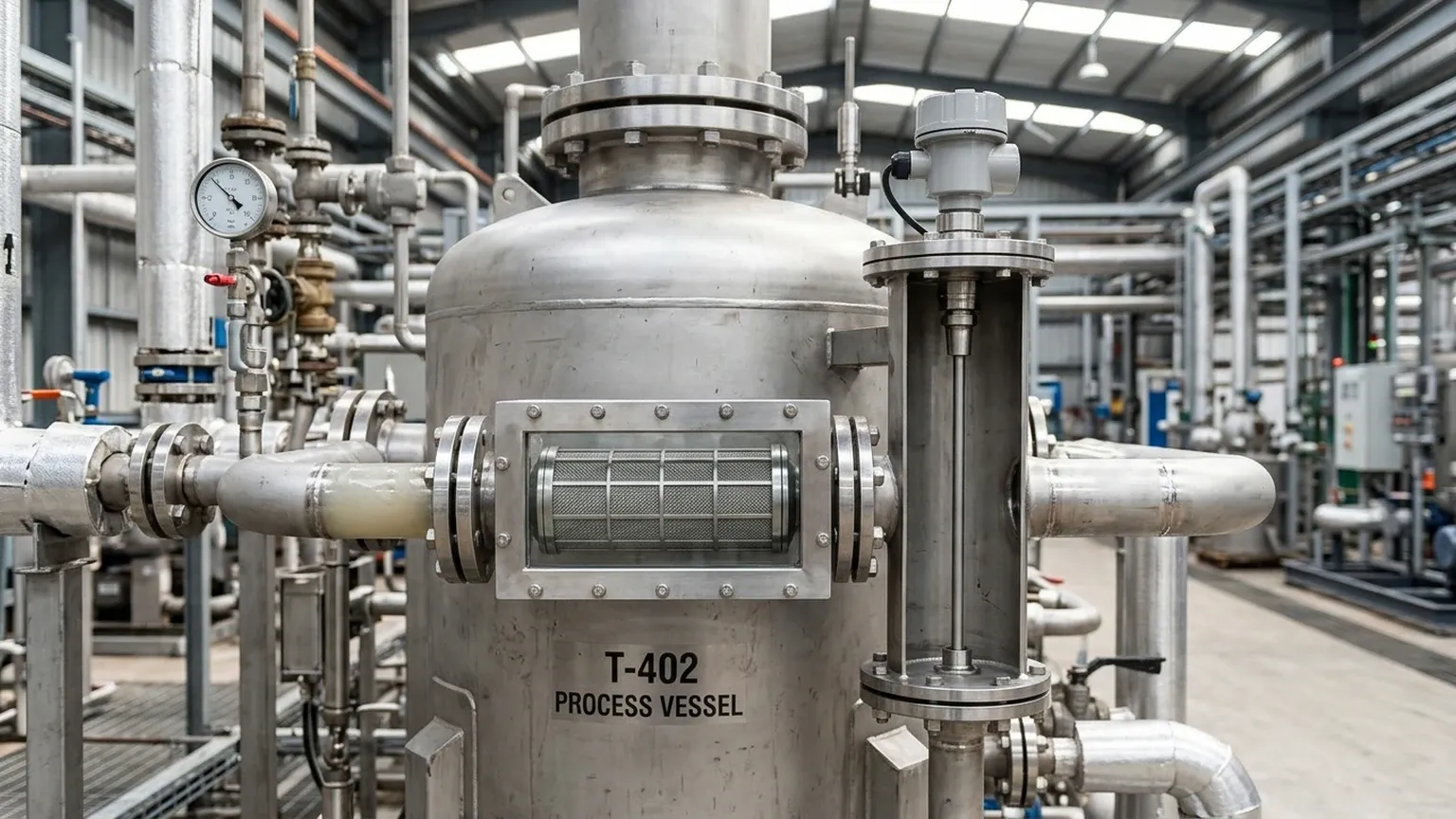
The most common configuration for industrial air and gas filtration is the cylindrical form. Wire Mesh Filter Cylinders & Tubes are engineered to provide a high surface-to-volume ratio, which is essential for managing pressure drop and extending the time between cleaning cycles.
Weave Types and Pore Geometry
Industrial wire mesh is not a monolithic category; the weave pattern dictates the filter’s performance characteristics:
- Plain Weave: The simplest pattern where wires cross over and under each other. It offers high flow rates and is ideal for coarse air intake filtration.
- Dutch Weave: This pattern uses heavier warp wires and finer shute wires, creating a "tortuous path" for particles. It provides much finer filtration ratings and higher mechanical strength.
- Twill Weave: Allows for thicker wires in a given mesh count, increasing the durability of the filter tube for high-pressure pneumatic applications.
Micron Ratings and Filtration Efficiency
Filtration accuracy is measured in microns (μm). For a steel mesh air filter, the nominal rating refers to the ability of the mesh to retain a percentage of particles of a specific size, while the absolute rating refers to the diameter of the largest spherical particle that can pass through the mesh. In industrial air systems, mesh tubes can be manufactured to provide filtration from 1 micron up to 500 microns, depending on whether the goal is fine dust collection or large debris exclusion.
Material Engineering: Selecting the Right Stainless Steel Grade
Material selection is the most significant factor in determining the longevity of a filter in a B2B industrial context. Kaifil utilizes various grades of stainless steel to meet specific environmental challenges.
1. AISI 304 Stainless Steel: The standard choice for general industrial air filtration. It offers excellent strength and basic corrosion resistance, suitable for most indoor and dry outdoor environments.
2. AISI 316/316L Stainless Steel: Contains molybdenum, which provides superior resistance to chlorides and acids. This is the preferred material for offshore applications, chemical processing plants, and pharmaceutical cleanrooms where the filter may be exposed to aggressive cleaning agents.
3. High-Temperature Alloys: For exhaust gas filtration or high-heat pneumatic systems, specialized alloys can be used to maintain structural integrity at temperatures exceeding 500°C (932°F).
Performance Factors: Pressure Drop and Filtration Efficiency
For an engineer, the most critical metric after filtration accuracy is the "clean pressure drop" (ΔP). This is the resistance the filter media offers to the airflow. A high pressure drop forces fans and compressors to work harder, increasing energy consumption and potentially leading to system failure.
Face Velocity and Airflow Resistance
The velocity of the air as it approaches the filter face (face velocity) must be balanced against the open area of the mesh. Wire mesh tubes are often designed with a specific "open area percentage." If the open area is too low, the velocity through the individual apertures increases, which can pull particles through the mesh (breakthrough) or cause rapid impingement of dust, leading to a fast rise in differential pressure.
Pleating for Increased Surface Area
To combat high pressure drop in compact spaces, Wire Mesh Filter Cylinders & Tubes can be pleated. Pleating increases the effective filtration area by 3 to 10 times compared to a smooth cylindrical surface. This design modification allows for lower face velocity, higher dirt-holding capacity, and longer service intervals without increasing the outer dimensions of the filter housing.
Design Considerations for Custom Industrial Air Filtration
When specifying a steel mesh air filter for a custom project, several mechanical design elements must be addressed to ensure compatibility with existing hardware.
Support Structures and Reinforcement
In high-pressure applications, such as the intake of a large industrial compressor, the wire mesh itself may not have the burst strength required to withstand the differential pressure. In these cases, the filter is constructed with an inner or outer perforated metal core. This core provides the necessary mechanical support, while the wire mesh performs the actual filtration. The bond between the mesh and the core is typically achieved through precision longitudinal welding or specialized adhesive bonding for lower-temperature applications.
End Fittings and Sealing
Leakage around the filter element (bypass) renders the filtration system ineffective. Custom filter tubes are available with various end configurations, including:
- Double Open End (DOE): Requires gaskets on both ends to seal against the housing.
- Single Open End (SOE): Often features a threaded fitting, a bayonet mount, or an O-ring seal (such as 222 or 226 configurations) to ensure a leak-proof connection.
- Flanged Ends: Used in large-scale ducting or heavy industrial piping where the filter is bolted directly into the flow path.
Maintenance and Cleaning Cycles for Reusable Metal Filters
One of the primary B2B value propositions for stainless steel filtration is reusability. Unlike fiberglass or polyester filters, a steel mesh air filter can be cleaned multiple times, reducing waste and long-term procurement costs.
Cleaning Methodologies
- Ultrasonic Cleaning: The most effective method for fine mesh. High-frequency sound waves create cavitation bubbles that dislodge deeply embedded particulates from the wire intersections.
- Backwashing/Back-pulsing: In automated systems, a reverse flow of air or liquid can be used to blow accumulated dust off the surface of the filter tube while it is still in the housing.
- Chemical Cleaning: For filters used in chemical or food processing, caustic or acidic washes can remove organic buildup or scale without damaging the 316L stainless steel substrate.
Determining Replacement Cycles
While metal filters are durable, they are not infinite. Engineers should monitor the "terminal pressure drop"—the point at which the filter is so loaded with contaminants that cleaning no longer restores the pressure drop to an acceptable baseline. Additionally, frequent cleaning or high-pressure pulses can eventually lead to work-hardening of the wires and fatigue cracking. Regular inspection for mesh integrity and seam separation is essential for maintaining system safety.
Procurement Checklist for Engineers and Purchasing Teams
Before finalizing an order for Wire Mesh Filter Cylinders & Tubes, technical buyers should confirm the following parameters with the manufacturer:
1. Operating Environment: What is the maximum temperature and what chemicals will the filter encounter?
2. Flow Rate Requirements: What is the standard and maximum cubic feet per minute (CFM) the filter must handle?
3. Target Particle Size: What is the specific micron rating required (nominal vs. absolute)?
4. Mechanical Constraints: What are the exact outer diameter (OD), inner diameter (ID), and overall length (OAL) tolerances?
5. Pressure Limits: What is the maximum operating differential pressure (ΔP) before the element risks collapse or bypass?
6. Certification Needs: Does the application require compliance with FDA standards (for food/pharma) or specific ISO filtration standards?
By addressing these technical variables, industrial facilities can implement a steel mesh air filter solution that balances high-performance filtration with mechanical durability, ensuring the long-term reliability of their critical processes.
