


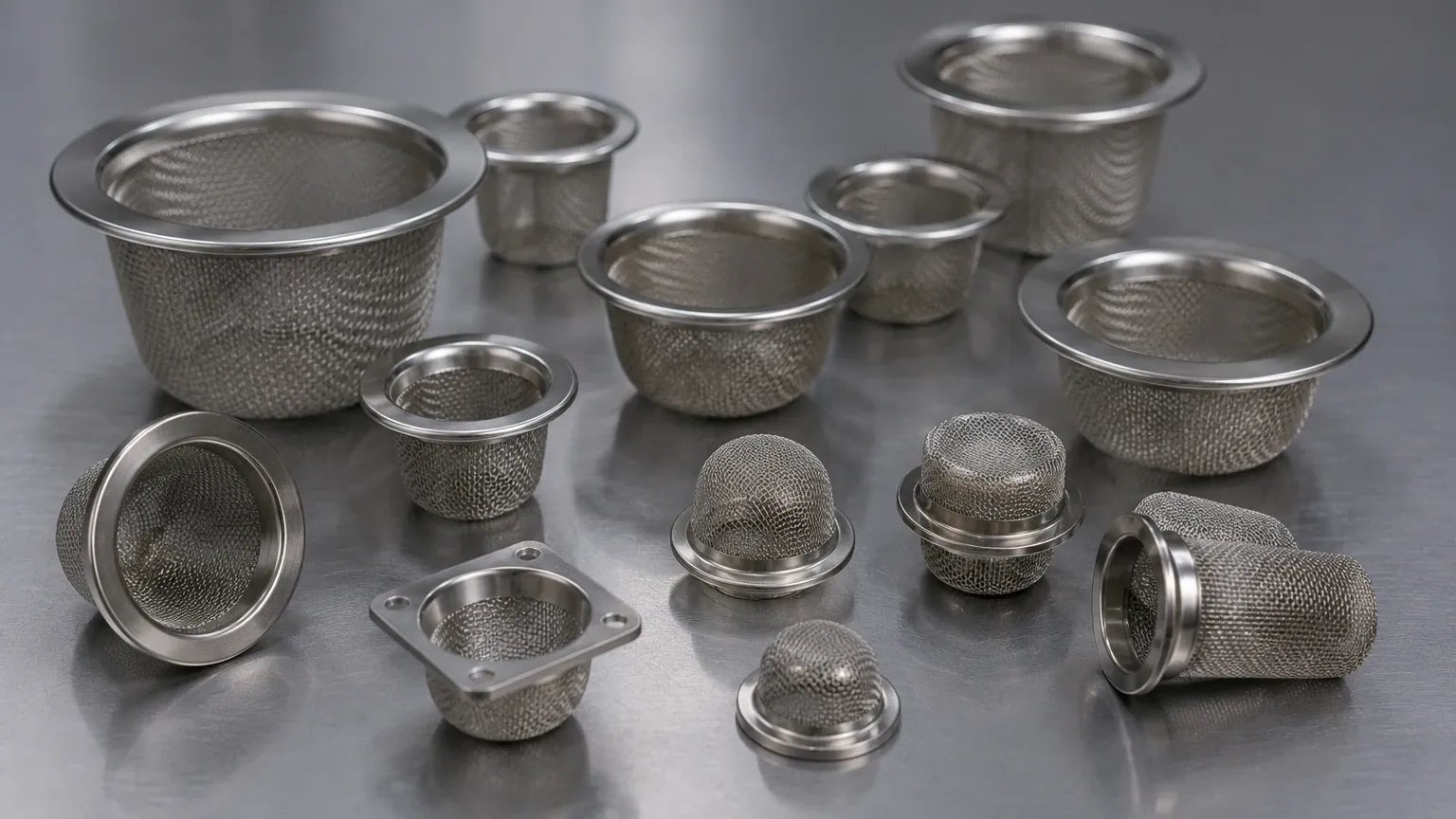
Mini Strainers
In industrial fluid handling, the protection of sensitive downstream components is a critical engineering priority. While large-scale filtration systems handle bulk contaminant removal, mini strainers serve as the essential "last line of defense" for precision equipment. These compact filtration components are designed to capture particulate matter that could otherwise damage valves, clog spray nozzles, or interfere with the accuracy of analytical sensors.
For engineers and procurement professionals, selecting the right mini strainer involves more than just matching a pipe size. It requires a deep understanding of material compatibility, pressure dynamics, and the specific filtration requirements of the application. As a specialized manufacturer, Kaifil provides a range of Strainers & Baskets designed to meet these rigorous industrial standards, ensuring operational continuity in demanding environments.
Understanding the Role of Mini Strainers in Industrial Systems
Mini strainers are characterized by their small footprint and their ability to be integrated directly into localized piping systems or OEM equipment. Unlike high-volume housing filters, these components are typically installed immediately upstream of the device they are intended to protect.
Their primary function is the removal of coarse solids, scale, and debris from liquid or gas streams. In hydraulic systems, for instance, a mini strainer might protect a pilot valve from metal shavings or seal fragments. In chemical processing, they prevent undissolved solids from entering dosing pumps. Because they are often located in hard-to-reach areas within a machine's architecture, their design must prioritize durability and ease of access for maintenance.
Engineering and Material Specifications for Precision Filtration
The performance of mini strainers is fundamentally tied to the materials used in their construction. In most industrial B2B applications, stainless steel is the gold standard due to its mechanical strength and resistance to corrosion.
Stainless Steel 304 vs. 316
* Stainless Steel 304: This is the most common material for general industrial use. It offers excellent strength and good corrosion resistance for water-based applications and mild chemicals.
* Stainless Steel 316/316L: For environments involving chlorides, high temperatures, or aggressive chemicals (such as in the pharmaceutical or marine industries), SS316 is preferred. The addition of molybdenum enhances its resistance to pitting and crevice corrosion.
Mesh and Perforation Options
The internal element of a mini strainer—the basket or screen—must be engineered to balance filtration efficiency with flow capacity. Engineers must specify the mesh count (the number of openings per linear inch) or the micron rating (the size of the smallest particle the screen will reliably trap). For mini strainers, mesh sizes typically range from coarse 20 mesh (approx. 840 microns) to fine 400 mesh (approx. 37 microns). In cases where high mechanical strength is required, a perforated metal support may be used in conjunction with a fine wire mesh overlay.
Key Performance Metrics: Pressure Drop and Filtration Accuracy
One of the most frequent challenges in implementing mini strainers is managing the pressure drop ($ΔP$). Every filtration component introduces a degree of resistance to the flow. If the strainer is too small or the mesh is too fine for the fluid's viscosity, the resulting pressure drop can starve downstream equipment or cause the strainer element to collapse.
Calculating the Clean Pressure Drop
Engineers must calculate the initial pressure drop based on the fluid's flow rate, density, and viscosity. A well-designed mini strainer should ideally operate with a clean pressure drop of less than 2 PSI. As the strainer collects debris, this pressure drop will increase.
Open Area Ratio
The efficiency of Strainers & Baskets is often measured by the "Open Area Ratio" (OAR). This is the ratio between the total area of the holes in the mesh and the internal cross-sectional area of the inlet pipe. A higher OAR (typically 4:1 or higher) ensures that the strainer can accumulate a significant amount of debris before the pressure drop becomes critical, thereby extending the service interval.
Critical Applications for Compact Filtration Components
Mini strainers are utilized across a diverse spectrum of industries where space is at a premium and precision is mandatory.
1. Analytical Instrumentation: Protection of chromatography columns, mass spectrometers, and automated sampling systems where even microscopic particles can cause system failure or data inaccuracies.
2. Pneumatic and Hydraulic Pilots: Ensuring that the small orifices in pilot-operated valves remain clear of contaminants, which is vital for the safety and reliability of heavy machinery.
3. Spray Nozzle Protection: In food processing or coating applications, mini strainers prevent the clogging of fine spray tips, ensuring a consistent application pattern and reducing downtime for cleaning.
4. Dosing and Metering Pumps: Protecting the internal check valves of high-precision pumps from abrasive solids that could cause leakage or loss of prime.
5. Cooling Loops: In laser equipment or high-frequency induction furnaces, small-scale strainers prevent scale buildup in narrow cooling channels.
Selection Criteria for Engineers and Purchasing Teams
When sourcing mini strainers for industrial projects, several technical factors must be confirmed to ensure the component is fit for purpose.
Connection Types
Mini strainers are available with various port configurations to match existing piping. Common options include:
* NPT/BSPT Threaded: The most common for small-bore industrial piping.
* Compression Fittings: Ideal for instrumentation tubing where a leak-proof, high-pressure seal is required.
* Flanged: Used in applications where the strainer must be easily removed from the line without disturbing the piping.
Temperature and Pressure Ratings
It is vital to verify that the strainer housing and the internal seals (O-rings or gaskets) can withstand the operating environment. While the stainless steel body may handle high temperatures, an EPDM or Viton seal might have a lower threshold. Engineers should always specify the maximum operating pressure (MAWP) to prevent catastrophic housing failure.
Ease of Maintenance
Since mini strainers are designed to capture debris, they will eventually require cleaning. Design features such as "top-entry" access allow maintenance teams to remove the basket or screen without disconnecting the entire strainer from the line. This significantly reduces labor costs and system downtime.
Maintenance and Operational Efficiency
The total cost of ownership (TCO) for filtration components is heavily influenced by maintenance requirements. For mini strainers, a proactive maintenance schedule is essential.
* Differential Pressure Monitoring: In critical systems, installing pressure gauges upstream and downstream of the strainer allows operators to monitor the "loading" of the filter element. A sudden spike in differential pressure indicates that the strainer is full and requires immediate cleaning.
* Cleaning Protocols: Stainless steel mesh elements are generally cleanable using ultrasonic baths, back-flushing, or chemical cleaning, depending on the nature of the contaminant. This makes them a more sustainable and cost-effective choice compared to disposable plastic filters.
* Spare Parts Management: For OEM applications, maintaining a stock of replacement baskets and seals is recommended to ensure that a cleaning cycle does not turn into an extended period of downtime.
Customization and OEM Integration
Many industrial applications require a non-standard approach to filtration. Standard off-the-shelf mini strainers may not fit within the tight spatial constraints of a custom-built machine or may not offer the specific micron rating required for a unique chemical process.
Kaifil specializes in the custom manufacture of Strainers & Baskets, providing OEM partners with tailored solutions. Customization options include:
* Bespoke Dimensions: Modifying the length, diameter, or port orientation to fit specific equipment layouts.
* Specialized Mesh Weaves: Utilizing twilled, plain, or dutch weave wire mesh to achieve specific flow and retention characteristics.
* Reinforced Elements: Adding internal supports or outer cages to the filter basket to withstand high-pressure surges or high-viscosity fluids.
By collaborating closely with manufacturers during the design phase, engineers can ensure that the mini strainers integrated into their systems provide optimal protection without compromising flow efficiency.
Conclusion
Mini strainers may be small in size, but their impact on the reliability of industrial systems is substantial. By preventing particulate contamination from reaching sensitive components, they safeguard expensive machinery and ensure the quality of the final product. Whether you are designing a new analytical instrument or retrofitting a chemical processing line, understanding the technical nuances of material selection, pressure drop, and OAR is essential for successful implementation. For high-quality, precision-engineered filtration components, exploring professional Strainers & Baskets is the first step toward achieving a robust and efficient industrial operation.
