


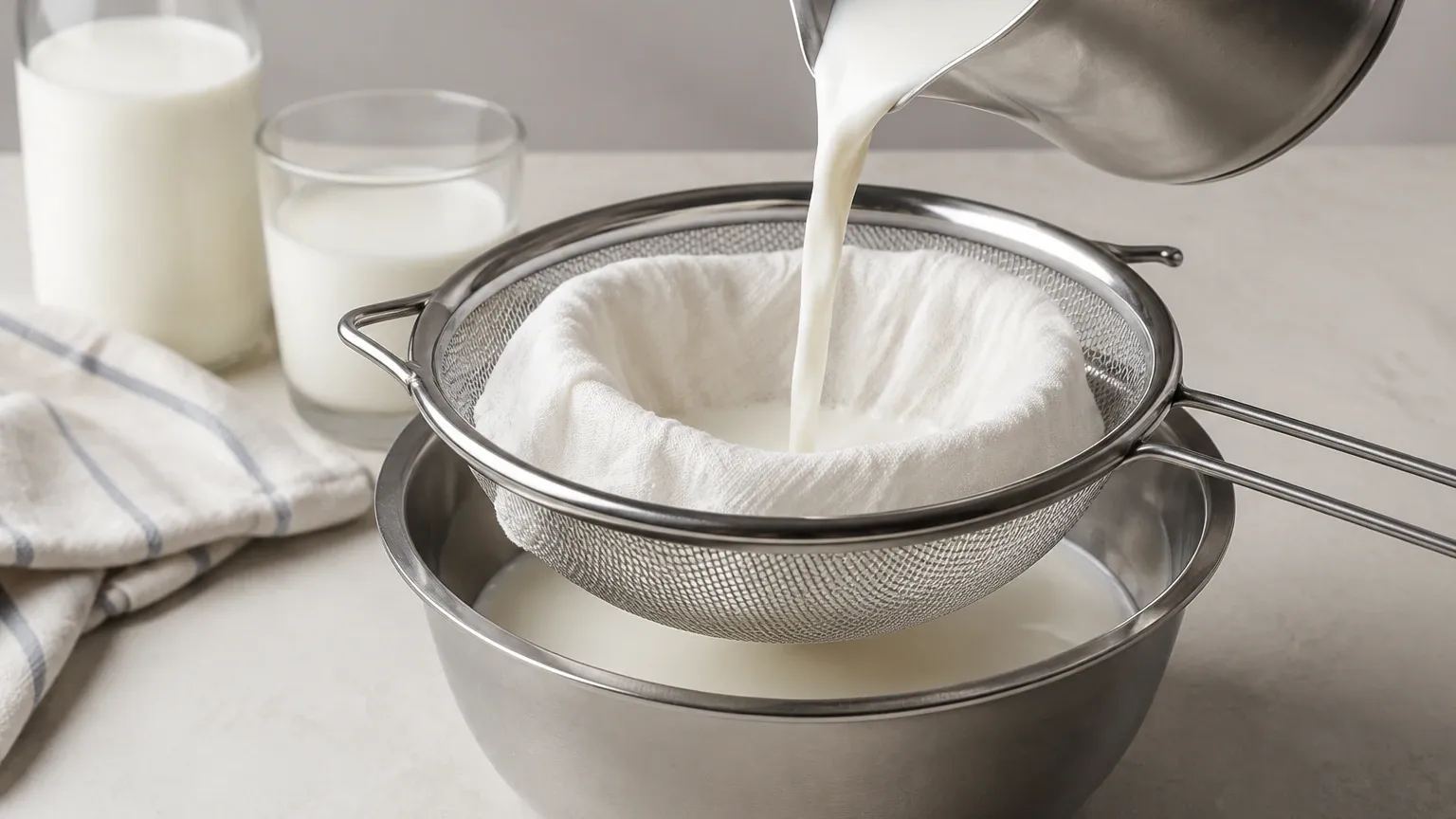
Milk Strainer
In the dairy processing industry, the integrity of the final product depends heavily on the efficiency of primary filtration stages. A milk strainer serves as a critical mechanical barrier, designed to remove suspended solids, particulates, and organic debris from raw or processed milk. For engineers and plant managers, selecting the appropriate filtration component is not merely a matter of size; it involves a complex evaluation of material science, fluid dynamics, and stringent sanitary standards.
Industrial dairy operations require filtration solutions that can withstand high-flow velocities, aggressive cleaning cycles, and the corrosive nature of lactic acid. Whether integrated into a receiving station or positioned before a plate heat exchanger, the performance of Strainers & Baskets directly impacts equipment longevity and product safety.
The Role of Precision Filtration in Dairy Processing
The primary function of a milk strainer in an industrial context is the protection of downstream equipment. Raw milk often contains various macro-impurities such as hair, straw, or sediment that can damage centrifugal pumps, clog homogenizer valves, or foul the narrow channels of heat exchangers.
By implementing a robust straining system, facilities can prevent unplanned downtime and reduce maintenance costs. Beyond equipment protection, these components play a vital role in quality control. Even microscopic particulates can affect the texture and shelf-life of dairy products. Therefore, the filtration media—whether it be a perforated metal plate or a fine stainless steel wire mesh—must be engineered to precise micron ratings to ensure consistent results across batch processing.
Material Selection and Sanitary Standards
When specifying a milk strainer for B2B applications, material composition is the first technical hurdle. The dairy environment is notoriously demanding due to the combination of organic acids and the high temperatures used during sterilization.
Stainless Steel 304 vs. 316L
While Stainless Steel 304 is suitable for some general-purpose industrial applications, the dairy industry predominantly utilizes Stainless Steel 316L. The "L" denotes low carbon content, which improves weldability and resistance to intergranular corrosion. The addition of molybdenum in 316L provides superior resistance to chlorides and the acidic profile of milk, ensuring that the strainer does not leach metallic ions into the product or suffer from pitting over time.
Surface Finish and Ra Values
Sanitary design dictates that all product-contact surfaces must be smooth and non-porous. For a milk strainer, this typically means a surface roughness (Ra) of 0.8 μm or better. Electropolishing is often employed to achieve a mirror-like finish, which minimizes the ability of bacteria to adhere to the surface and facilitates more effective cleaning. Inadequate surface finishing can lead to biofilm buildup, compromising the entire production line's hygiene.
Engineering Configurations: In-Line vs. Basket Designs
Choosing the right physical configuration for a milk strainer depends on the flow rate, the expected solids loading, and the available footprint within the facility.
In-Line Strainers
In-line strainers are compact and designed for direct installation into a pipeline. They are ideal for applications where space is limited and the solids load is relatively low. These units often feature a cylindrical filter element that can be easily removed for manual cleaning. In-line designs are frequently used in the final stages of processing where only incidental particulates are expected.
Basket Strainers
For high-capacity operations, such as raw milk receiving bays, basket-style Strainers & Baskets are the industry standard. The basket design offers a significantly larger surface area compared to in-line filters, allowing for higher flow rates with lower pressure drops. The basket acts as a reservoir for captured debris, meaning the system can run for longer periods between cleaning cycles.
Duplex Systems
In continuous processing environments where downtime is not an option, a duplex strainer system is utilized. This configuration consists of two parallel strainers connected by a diverter valve. When one basket becomes full, the flow is switched to the second unit, allowing the operator to clean the first basket without interrupting the production flow.
Technical Performance Metrics: Flow Rate and Pressure Drop
From an engineering perspective, the performance of a milk strainer is measured by its ability to maintain a high flow rate while minimizing pressure drop (ΔP). A high pressure drop across a filter indicates that the mesh is either too fine for the application or that the filter is becoming clogged.
Open Area Ratio
One of the most important metrics is the "Open Area Ratio." This is the ratio of the total area of the holes in the mesh or perforated plate to the area of the inlet pipe. A well-designed milk strainer should have an open area ratio of at least 4:1 or 6:1. This ensures that even as the strainer begins to collect debris, there is still enough clear passage for the milk to flow without causing significant backpressure on the pumps.
Viscosity Considerations
The viscosity of the fluid also dictates the strainer design. While whole milk has a relatively low viscosity, cream or condensed dairy products require larger mesh openings or reinforced support structures to handle the increased mechanical stress on the filter element. Engineers must account for these rheological properties when selecting the micron rating for the wire mesh.
Maintenance, Cleaning, and CIP Integration
In modern dairy plants, manual cleaning is increasingly replaced by Clean-In-Place (CIP) systems. A milk strainer must be designed to be "CIP-able," meaning the internal geometry must be free of dead legs, sharp corners, or crevices where milk solids could accumulate and sour.
Gasket and Seal Compatibility
The seals used in the strainer housing must be FDA-compliant and resistant to the caustic and acidic chemicals used in CIP cycles. Common materials include EPDM, Silicone, and Viton. During the selection process, it is essential to confirm that the seal material can withstand the maximum operating temperature of the sterilization cycle, which often exceeds 90°C (194°F).
Durability of the Filter Element
Because the filter element is subject to frequent handling and high-pressure cleaning, its structural integrity is paramount. High-quality milk strainers utilize reinforced mesh or perforated baskets with heavy-duty handles and support cages. This prevents the mesh from deforming or tearing under the weight of captured solids or the force of a backwash cycle.
Selecting the Right Filtration Solution for Industrial Dairy Lines
When purchasing a milk strainer, procurement teams should look beyond the initial purchase price and consider the total cost of ownership. A cheaper, poorly manufactured strainer may suffer from frequent seal failures, mesh bypass (where particulates leak around the edges), or rapid corrosion.
Key questions for engineers to ask include:
1. What is the required micron rating? (Typically ranging from 50 to 500 microns for primary dairy straining).
2. What is the maximum allowable pressure drop?
3. Does the design meet 3-A or EHEDG sanitary standards?
4. Are custom flange connections available? (e.g., Tri-clamp, DIN, or SMS connections to match existing piping).
Customization is often necessary to integrate a new strainer into an existing line. Professional manufacturers like Kaifil provide OEM services that allow for tailored dimensions, specific mesh counts, and specialized housing designs to meet unique process requirements. By choosing high-performance Strainers & Baskets, dairy processors can ensure a more reliable, hygienic, and efficient production environment.
Conclusion
The milk strainer is a deceptively simple component that carries immense responsibility in the dairy supply chain. From protecting expensive machinery to ensuring the purity of the final product, its role cannot be overstated. By focusing on high-grade stainless steel construction, optimized flow dynamics, and sanitary design principles, industrial facilities can achieve a balance between high throughput and rigorous hygiene. Investing in precision-engineered filtration components is a fundamental step in optimizing dairy processing efficiency and maintaining the highest standards of food safety.
