


Strainer Name
In industrial fluid handling and process engineering, the term "strainer name" often refers to the specific classification and nomenclature used to identify mechanical filtration devices. Selecting the correct strainer based on its designated name is a critical step for engineers and procurement teams, as the name typically dictates the unit’s geometry, flow characteristics, and suitability for specific pressure or temperature environments.
Industrial strainers are essential components designed to protect downstream equipment—such as pumps, valves, meters, and heat exchangers—from damage caused by debris, scale, and other particulate matter. Because different applications require different levels of filtration and maintenance accessibility, understanding the engineering principles behind each strainer name is vital for optimizing system performance and longevity.
The Engineering Logic Behind Strainer Classification
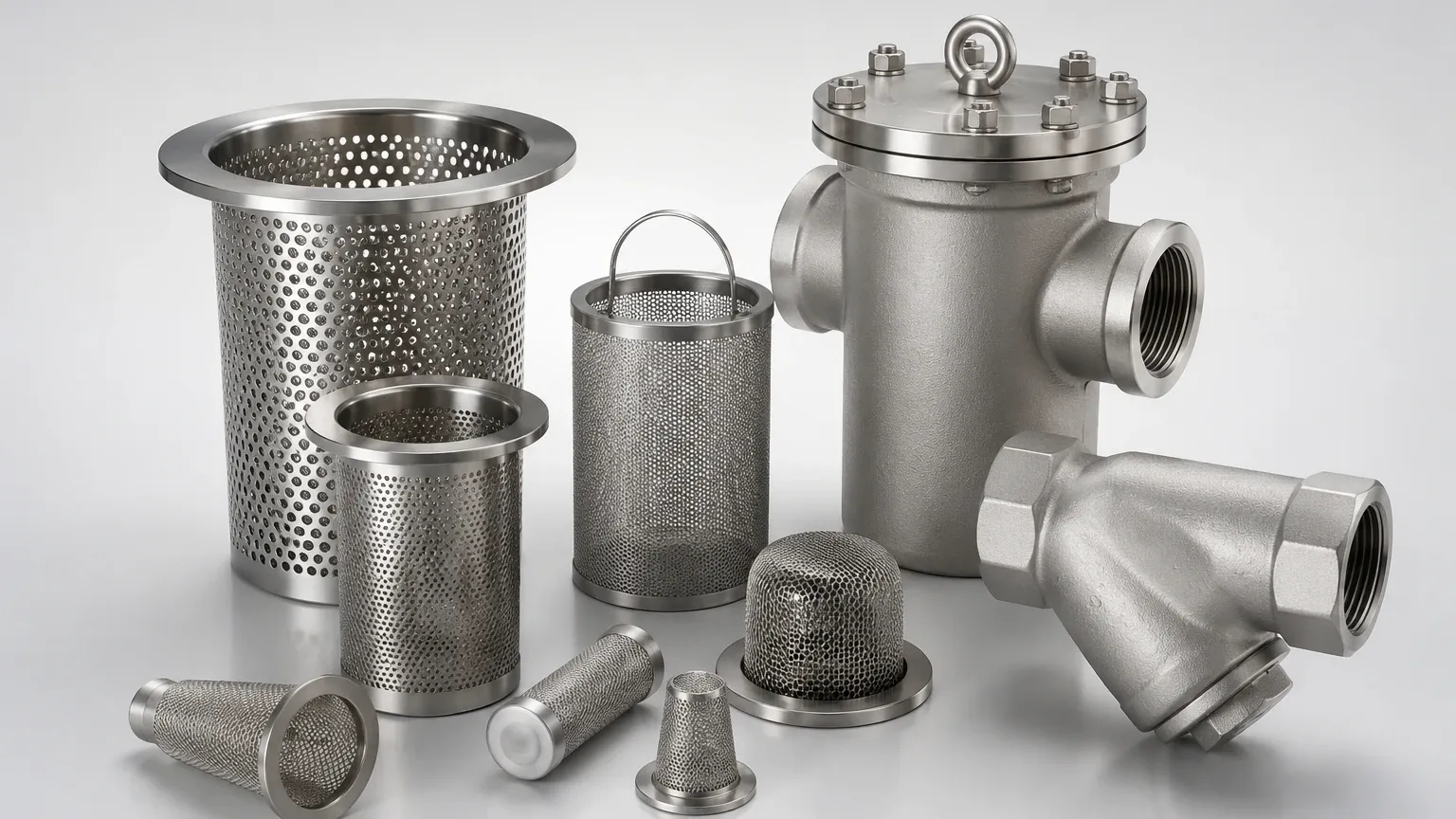
When an engineer specifies a strainer name in a technical data sheet, they are defining more than just a part number. The nomenclature usually reflects the physical shape of the housing, which in turn determines the flow path of the fluid. The internal configuration, specifically the orientation of the Strainers & Baskets, dictates how much pressure drop the system will experience and how frequently the unit must be serviced.
Most industrial strainers fall into several primary categories: Y-type, T-type, Simplex Basket, and Duplex Basket. Each strainer name carries specific implications for installation space, flow capacity, and the ability to handle solids loading. For instance, a name like "Y-Strainer" immediately informs the installer that the unit can be placed in either horizontal or vertical piping, provided the "leg" of the Y points downward to collect debris.
Y-Strainers: High-Pressure Versatility
The Y-strainer is perhaps the most common strainer name encountered in industrial piping. Its name is derived from its shape, where the filtering element is housed in a diagonal cylinder extending from the main flow line.
Technical Characteristics
From an engineering perspective, Y-strainers are typically utilized in applications with low concentrations of solids. They are favored in steam, gas, and liquid lines where high pressure is a factor. Because the body of a Y-strainer is compact, it can be manufactured to withstand higher pressures than larger basket-style units.
Maintenance Considerations
One of the defining features of this strainer name is the ability to include a "blow-down" valve on the strainer cap. This allows the operator to flush out accumulated debris without stopping the process flow or opening the unit. However, if the screen requires manual cleaning, the process must be halted, making Y-strainers less ideal for systems with high dirt loading.
Basket Strainers: High Capacity and Ease of Access
When a process requires a larger dirt-holding capacity, the preferred strainer name is the Basket Strainer (or Simplex Strainer). These units feature a vertical cylinder that houses a removable basket-shaped element.
Flow Dynamics
Basket strainers are designed for horizontal piping installations. The fluid enters the basket from the top or side and exits through the mesh walls, leaving the debris trapped inside the basket. This design offers a lower pressure drop compared to Y-strainers because the total surface area of the internal basket is significantly larger.
Application Suitability
In industries such as food and beverage or chemical processing, where batch purity is paramount, the basket strainer name is synonymous with high-volume filtration. The "top-entry" design allows for easy removal of the basket for cleaning or replacement. This is particularly useful when handling viscous fluids or liquids with high particulate counts, as the larger volume of the basket extends the time between maintenance cycles.
Duplex Strainers: Continuous Operation Requirements
In critical systems where the flow cannot be interrupted for maintenance, the specified strainer name will be a Duplex Strainer. A duplex unit consists of two separate strainer chambers—usually basket types—connected by a diversion valve (such as a ball or plug valve).
Operational Engineering
When one chamber becomes clogged, the operator can switch the flow to the second chamber without shutting down the system. This makes the duplex strainer name essential for lubrication systems, cooling water lines, and continuous chemical processes. The selection of a duplex unit involves evaluating the valve mechanism to ensure a "zero-leak" transition between chambers, preventing air entrainment or pressure spikes during the switchover.
T-Strainers: Compact and Specialized
The T-strainer name refers to a unit where the filtering element is perpendicular to the flow path, creating a "T" shape. These are often used as "startup strainers" or in applications where space is extremely limited.
Performance Trade-offs
While T-strainers offer a very low pressure drop and are easy to maintain in large-diameter piping, they often have a smaller dirt-holding capacity than basket strainers. Engineers often specify this strainer name for suction-side pump protection where the primary goal is to catch large objects rather than fine silt or scale.
Material Selection and Customization in Strainer Design
Beyond the basic strainer name, the materials used in construction are paramount to the unit's success in a given environment. Stainless steel (SS304 and SS316) is the industry standard for most chemical, pharmaceutical, and food-grade applications due to its corrosion resistance and durability.
Wire Mesh and Perforation
At the heart of every strainer is the filtration media. Kaifil specializes in custom stainless steel wire mesh and perforated metal components that fit within these various strainer bodies. When selecting a strainer name, engineers must also specify:
* Mesh Size: The number of openings per linear inch.
* Micron Rating: The smallest particle size the strainer will capture.
* Open Area Ratio (OAR): The ratio of the total open area of the mesh to the cross-sectional area of the inlet pipe. A higher OAR (typically 4:1 or 6:1) ensures a lower initial pressure drop and longer service life.
Customization allows for the reinforcement of baskets to withstand high differential pressures, ensuring that the mesh does not collapse under heavy solids loading.
Key Evaluation Criteria for Procurement
When purchasing industrial filtration components, simply providing a strainer name is often insufficient. Purchasing teams and engineers should confirm several technical parameters with the manufacturer to ensure the product meets the application's demands:
1. Pressure and Temperature Ratings: Ensure the housing material and seals (O-rings or gaskets) are compatible with the operating temperature and maximum system pressure.
2. Flow Rate and Viscosity: High-viscosity fluids require larger mesh openings or larger strainer bodies to maintain acceptable flow rates.
3. Chemical Compatibility: Verify that the stainless steel grade (e.g., 316L for high-acid environments) is appropriate for the fluid being processed.
4. Connection Type: Specify whether the unit requires flanged, threaded, or socket-weld connections to match existing piping standards (ANSI, DIN, or JIS).
Total Cost of Ownership and Maintenance
While the initial purchase price of a strainer is a factor, the total cost of ownership (TCO) is heavily influenced by maintenance requirements and pressure drop. A strainer name that implies a smaller unit (like a Y-strainer) might be cheaper upfront but could lead to higher energy costs due to frequent cleaning and higher resistance to flow.
Conversely, investing in a high-capacity basket strainer or a duplex system can significantly reduce labor costs and downtime. Durable stainless steel components from a specialized manufacturer like Kaifil ensure that the internal elements do not need frequent replacement, even in demanding industrial environments.
Conclusion
Understanding the technical implications behind each strainer name allows engineers to design more efficient and reliable fluid systems. Whether the application calls for the high-pressure resilience of a Y-strainer, the high-capacity of a basket strainer, or the continuous operation of a duplex unit, the choice must be guided by flow dynamics, solids loading, and maintenance accessibility. By focusing on precision-engineered Strainers & Baskets and high-quality materials, industrial facilities can protect their critical equipment and maintain optimal process performance.
