


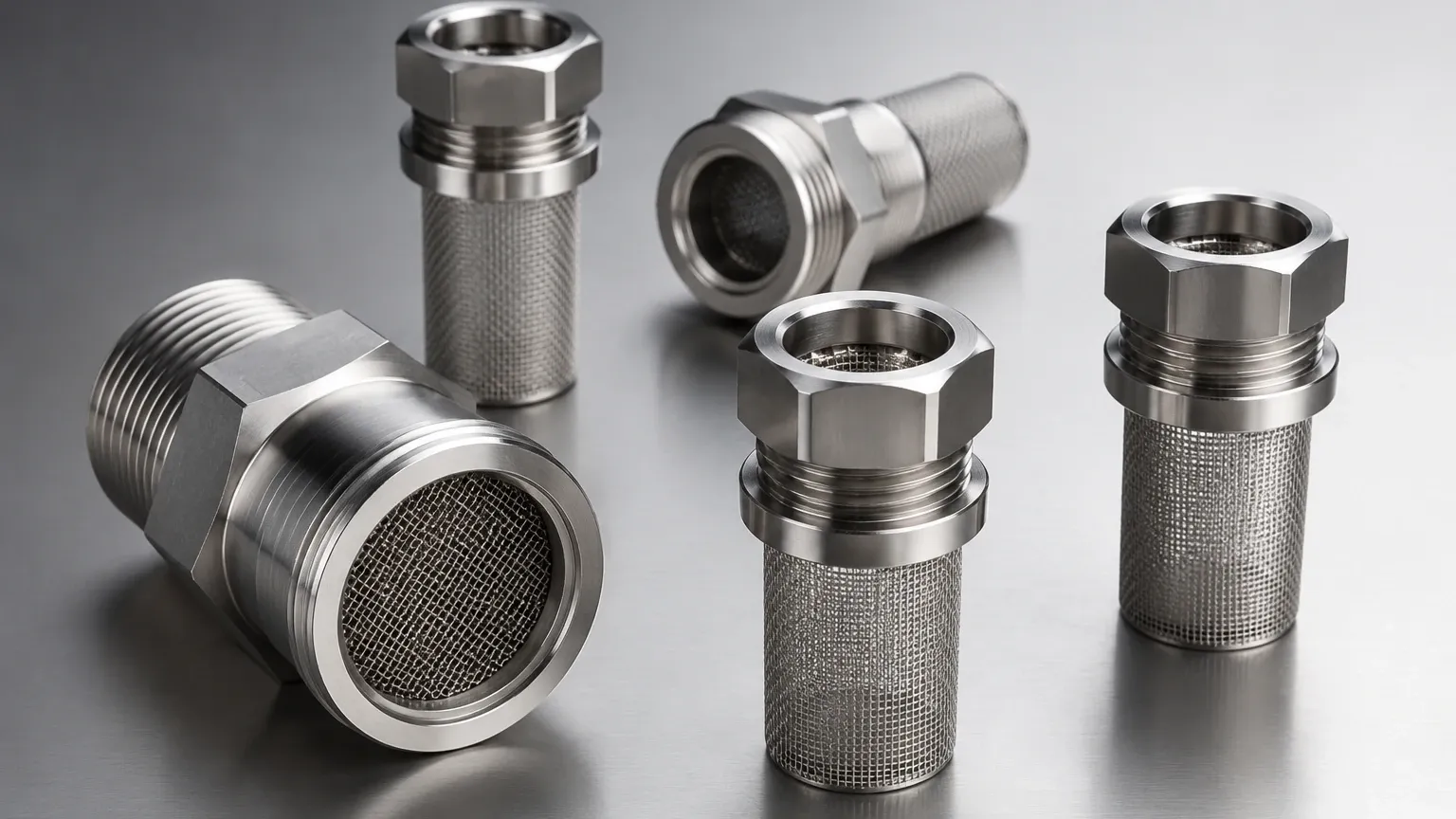
Strainer Nozzle
In the landscape of industrial fluid management, the strainer nozzle serves as a critical interface between fluid flow and media retention. While often small in physical scale compared to the massive pressure vessels they inhabit, these components are foundational to the efficiency of ion exchange, water softening, and various chemical filtration processes. For engineers and procurement professionals, understanding the technical nuances of a strainer nozzle is essential for ensuring system longevity and preventing costly media migration or pressure imbalances.
As a specialized component within the broader category of Strainers & Baskets, the strainer nozzle is designed to allow the passage of liquids or gases while retaining granular treatment media such as ion exchange resins, activated carbon, sand, or catalysts. This guide examines the engineering principles, material requirements, and selection criteria necessary for optimizing filtration performance in demanding industrial environments.
The Role of the Strainer Nozzle in Industrial Filtration
The primary function of a strainer nozzle is two-fold: flow distribution and media retention. In a typical downward-flow treatment vessel, the nozzles are installed on a lateral piping system or a false bottom plate (nozzle plate). Their job is to ensure that the influent is distributed evenly across the entire surface of the media bed, preventing "channeling"—a phenomenon where fluid takes the path of least resistance, leaving large portions of the treatment media underutilized.
Conversely, during the backwash cycle, the strainer nozzle must facilitate a uniform upward flow to expand the media bed and remove accumulated particulates without allowing the media itself to escape into the effluent stream. This requires precise control over the slot width and the total flow area (TFA) provided by the nozzle array.
Technical Design: Wedge Wire vs. Mesh and Perforations
When selecting a strainer nozzle, the design of the filtration surface is the most significant factor affecting performance. Most high-performance industrial nozzles utilize wedge wire technology, though perforated and mesh-lined options exist for specific low-pressure applications.
Wedge Wire Construction
Continuous-slot wedge wire is the industry standard for high-reliability applications. This design features V-shaped profiles welded onto support rods. The narrowest part of the V-face is positioned toward the fluid flow, creating a slot that widens inwardly. This geometry is inherently non-clogging; any particle small enough to pass through the initial slot width will easily clear the rest of the nozzle without becoming wedged. This is a critical advantage over standard mesh, which can trap particles within its weave, leading to permanent blinding and increased pressure drop.
Flow Dynamics and Slot Width
Slot width is typically measured in microns or millimeters. For ion exchange resins, which often have a particle size ranging from 0.3mm to 1.2mm, a strainer nozzle with a slot width of 0.2mm is common. Engineering teams must confirm the minimum particle size of their media, including the potential for bead breakage over time, to select a slot width that provides a sufficient safety margin without unnecessarily restricting flow.
Material Selection and Chemical Compatibility
Industrial filtration environments are often chemically aggressive or subject to high temperatures. Selecting the correct alloy for a strainer nozzle is vital to prevent stress corrosion cracking (SCC), pitting, and mechanical failure.
1. 304 Stainless Steel: Suitable for general water treatment and mildly corrosive environments where cost-effectiveness is a priority.
2. 316L Stainless Steel: The preferred choice for pharmaceutical, food and beverage, and chemical processing. The addition of molybdenum provides superior resistance to chlorides and organic acids.
3. Super Duplex and Exotic Alloys: In desalination or high-salinity brine applications, materials like Duplex 2205 or Monel may be required to withstand extreme oxidative stress.
Beyond the metal itself, the seals and gaskets used to install the nozzle must be compatible with the process fluid. EPDM, Viton, and PTFE are common choices, each offering different levels of resistance to temperature and chemical degradation.
Integration with Strainers & Baskets Systems
A strainer nozzle rarely operates in isolation. It is typically a modular component of a larger assembly, such as a header-lateral system or a hub-and-radial distributor. These assemblies are categorized under Strainers & Baskets because they function as the primary screening mechanism for the vessel.
In large-scale water treatment plants, hundreds of nozzles are threaded into a collector plate. The spacing and density of these nozzles determine the Total Flow Area (TFA). If the TFA is too low, the system will experience a high pressure drop ($\\Delta P$), increasing energy costs for pumps. If the TFA is too high, flow distribution may become uneven, leading to localized exhaustion of the treatment media.
Critical Evaluation Criteria for Engineers
Before finalizing a specification for strainer nozzles, engineering teams should evaluate the following technical parameters:
Mechanical Strength and Collapse Pressure
During normal operation, the pressure differential across a nozzle is usually low. However, during system upsets, such as a sudden valve closure or a pump surge, the nozzle may be subjected to significant mechanical stress. It is essential to confirm the collapse pressure rating of the nozzle to ensure it can withstand the maximum possible head pressure of the system without deforming.
Threading and Installation Standards
Nozzles are available with various mounting options, including NPT (National Pipe Thread), BSP (British Standard Pipe), or metric threads. Some designs utilize a "quick-fit" or expanding plug mechanism for installation on plates where threading is not feasible. Ensuring compatibility between the nozzle shank and the vessel's internal piping is a common point of failure in procurement that can lead to significant project delays.
Temperature Limits
While stainless steel handles high temperatures well, the mechanical properties of the nozzle can change at extremes. Furthermore, if the nozzle utilizes any plastic components or specialized coatings, these will often be the limiting factor in the system's operating temperature.
Common Risks and Mitigation Strategies
Failure to properly specify a strainer nozzle can lead to several industrial risks:
* Media Migration: If a nozzle fails or if the slot width is incorrectly specified, treatment media (such as expensive resins) can enter the downstream process. This can contaminate the final product and damage downstream equipment like pumps and valves.
* Flow Maldistribution: Poorly designed nozzles or inconsistent slot widths across an array can cause "hot spots" in the media bed. This leads to premature breakthrough of contaminants and necessitates more frequent regeneration cycles, increasing chemical consumption.
* Corrosion-Induced Failure: In chemical processing, even minor alloying differences can lead to rapid failure. Engineers should request material mill certificates to verify that the nozzles meet the required metallurgical standards.
Customization and OEM Requirements
Many industrial applications require bespoke nozzle designs. Standard off-the-shelf components may not meet the specific flow requirements or spatial constraints of a custom-built pressure vessel. Customization options often include:
* Adjustable Shank Lengths: To accommodate different plate thicknesses.
* Dual-Head Designs: For applications requiring high flow rates in a compact footprint.
* Variable Slot Orientations: To optimize flow for horizontal vs. vertical vessels.
Working with a manufacturer capable of providing OEM solutions ensures that the filtration components are precisely matched to the system's hydraulic profile.
Conclusion: Selecting the Right Filtration Partner
The strainer nozzle is a small but pivotal component in the efficiency of industrial fluid systems. By focusing on wedge wire precision, material integrity, and correct hydraulic calculations, engineers can significantly reduce the total cost of ownership for their filtration systems. Whether you are designing a new ion exchange plant or retrofitting an existing water treatment facility, the selection of high-quality Strainers & Baskets components is the first step toward reliable, long-term performance.
When evaluating suppliers, prioritize those who offer technical transparency, including detailed flow rate charts, pressure drop data, and material certifications. Ensuring these details are confirmed before purchase prevents the operational headaches of media loss and system inefficiency, allowing for a more stable and predictable industrial process.
