


Strainer Oil
In industrial fluid management, the term "strainer oil" refers to the critical process of removing coarse particulates from oil-based media to protect downstream equipment, such as pumps, nozzles, and heat exchangers. Unlike fine filtration, which targets microscopic contaminants, straining is the first line of defense in a hydraulic, lubrication, or processing system. For engineers and procurement specialists, selecting the correct Strainers & Baskets is essential to maintaining system integrity, reducing downtime, and ensuring the longevity of expensive mechanical components.
Industrial oils—ranging from thin hydraulic fluids to heavy crude or viscous food-grade oils—present unique challenges compared to water-based systems. The viscosity of the medium, the nature of the contaminants, and the operating pressure all dictate the design and material requirements of the strainer. This guide explores the technical parameters of oil straining, material science considerations, and the engineering logic behind selecting high-performance metal filtration components.
Understanding the Role of Strainers in Oil Filtration Systems
The primary function of an oil strainer is to capture large debris—such as metal chips, scale, or gasket fragments—that could cause catastrophic failure in high-speed machinery. While filters are often measured in single-digit microns and are designed to be replaced frequently, strainers usually utilize a permanent or cleanable wire mesh or perforated metal element.
In a typical industrial circuit, the strainer is placed on the suction side of the pump. This positioning is strategic; it prevents large solids from entering the pump housing where they could cause cavitation or mechanical wear. However, because oil is significantly more viscous than water, the design of the strainer must account for the resistance to flow. A poorly specified strainer oil setup can lead to a high pressure drop, potentially starving the pump of fluid and leading to system failure.
Engineering Considerations for Oil Strainer Selection
When specifying a strainer for oil-based applications, engineers must look beyond simple pipe size. Several variables influence the efficiency and safety of the installation:
Viscosity and Flow Rate
Viscosity is perhaps the most critical factor in strainer oil applications. As the viscosity of the oil increases (measured in Centistokes or Saybolt Universal Seconds), the pressure drop across the strainer element also increases. For heavy gear oils or crude oils, a larger surface area is required to maintain the desired flow rate without exceeding the allowable pressure drop. Engineers often use a "viscosity correction factor" when sizing strainers to ensure the basket has sufficient open area.
Mesh Count and Micron Rating
Selecting the right mesh size involves a balance between protection and performance. A mesh that is too fine will clog rapidly, requiring constant maintenance. A mesh that is too coarse will allow harmful particles to pass through. In oil systems, typical straining ranges from 40 mesh (approx. 400 microns) down to 200 mesh (approx. 74 microns). For specialized applications, multi-layered sintered wire mesh can provide even finer precision while maintaining the structural integrity required for high-pressure oil lines.
Temperature Stability
Industrial oils often operate at elevated temperatures, especially in lubrication and heat transfer systems. The strainer components must be capable of withstanding thermal expansion without losing their sealing integrity or structural shape. This is where the choice of materials becomes paramount.
Material Selection: Why Stainless Steel is Standard for Strainer Oil Applications
While some low-pressure applications might use plastic or cast iron, stainless steel remains the gold standard for industrial oil strainers. Kaifil specializes in the manufacture of stainless steel filtration solutions because of the material's inherent advantages in demanding environments.
1. Chemical Compatibility: Industrial oils often contain additives, detergents, or acidic byproducts of oxidation. Stainless steel (typically Grade 304 or 316L) offers superior resistance to corrosion compared to carbon steel, ensuring that the strainer itself does not become a source of contamination.
2. Mechanical Strength: Oil systems, particularly hydraulic circuits, can experience significant pressure spikes. Stainless steel wire mesh and perforated baskets provide the high collapse strength necessary to withstand these fluctuations without deforming.
3. Cleanability: Unlike disposable synthetic filters, stainless steel baskets are designed for reuse. In many oil applications, the contaminants are non-adhesive (like metal shavings), allowing the basket to be cleaned via ultrasonic baths or high-pressure washing, which reduces the total cost of ownership.
4. Durability in High Viscosity: Heavy oils exert significant force on the strainer element. The rigid structure of a stainless steel basket ensures that the mesh remains uniform, preventing "media migration" or the bypassing of contaminants.
Common Configurations of Strainers & Baskets for Industrial Oil
The physical housing of the strainer is as important as the internal element. Depending on the operational requirements, different configurations are utilized:
Simplex Basket Strainers
Simplex strainers are used in systems where the flow can be intermittently shut down for cleaning. They consist of a single basket chamber. These are common in batch processing or in systems with redundant pump lines.
Duplex (Twin) Strainers
For continuous operations where downtime is not an option—such as power plant lubrication or refinery lines—duplex strainers are used. These feature two separate chambers with a diverter valve. When one basket becomes clogged, the flow is switched to the clean chamber, allowing the operator to service the first basket without stopping the process.
Y-Strainers
Y-strainers are typically used for smaller pipe diameters and lower contaminant loads. They are compact and can be installed in either horizontal or vertical orientations. In oil systems, they are frequently used as "police filters" just before sensitive instruments or nozzles.
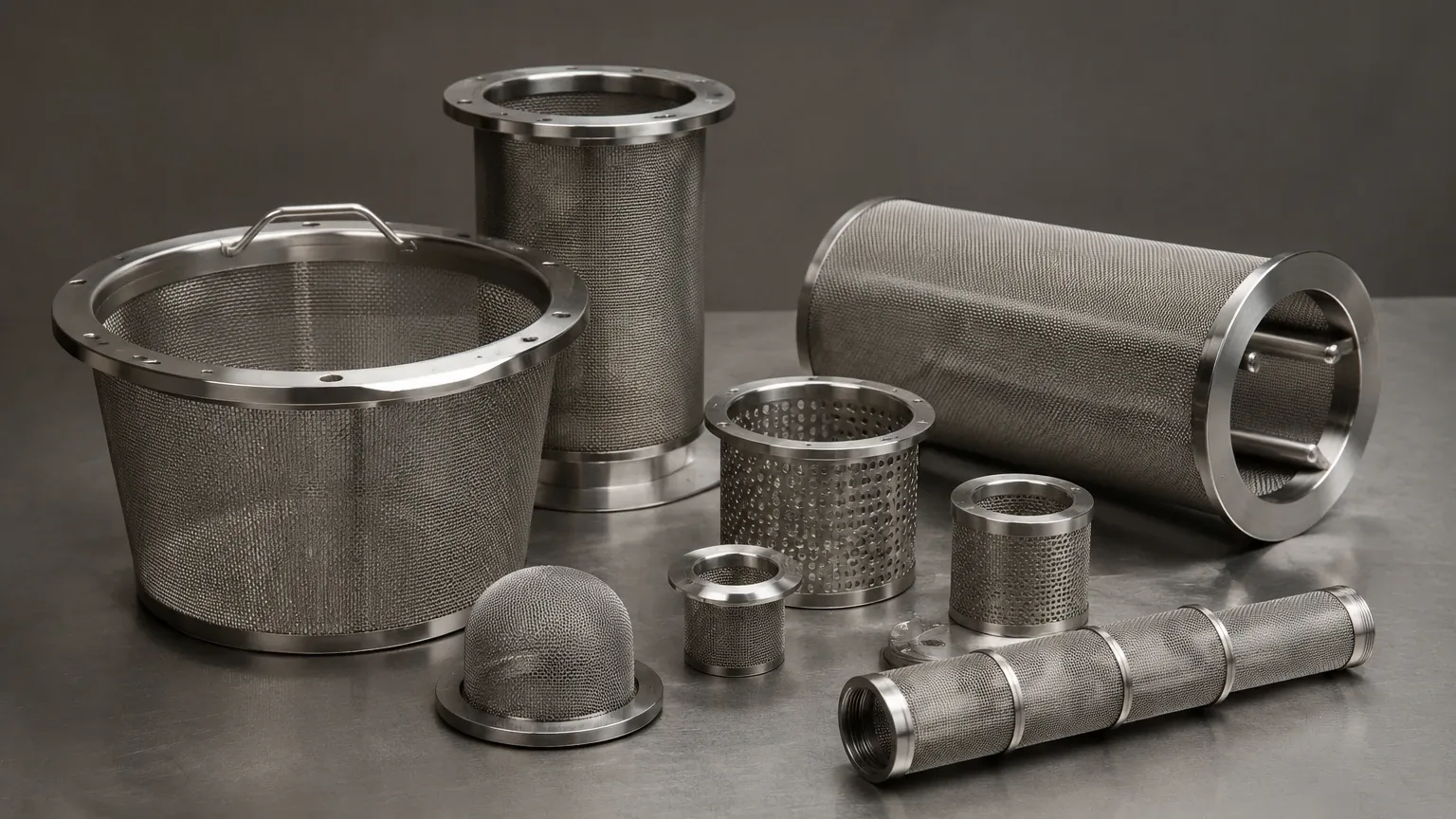
Custom Fabricated Baskets
In many OEM applications, standard off-the-shelf strainers do not fit the spatial or performance constraints. Custom-designed baskets can be engineered with specific flange types, handle configurations for easy removal, or reinforced structures for high-differential pressure scenarios.
Performance Metrics: Pressure Drop and Filtration Efficiency
For a B2B purchaser, understanding the performance data provided by the manufacturer is key to a successful installation. Two primary metrics define the success of a strainer oil application:
Clean Pressure Drop (Delta P)
This is the pressure loss across the strainer when the basket is clean. For oil systems, a clean pressure drop of 2 psi or less is generally targeted. If the initial pressure drop is too high, it leaves very little room for contaminant loading before the system reaches its maximum allowable pressure differential.
Dirt Holding Capacity
The volume of the basket determines how much debris it can hold before the pressure drop becomes critical. A larger basket volume means longer intervals between cleaning cycles. In heavy-duty industrial environments, choosing a "high-capacity" basket design can significantly reduce labor costs associated with maintenance.
Maintenance and Operational Longevity of Oil Strainers
To ensure the long-term efficiency of a strainer oil system, a proactive maintenance schedule is required. Engineers should confirm the following before finalizing a purchase:
* Differential Pressure Monitoring: The most effective way to manage an oil strainer is by installing differential pressure gauges. These provide a real-time indication of how full the basket is, allowing maintenance to be scheduled based on actual need rather than arbitrary time intervals.
* Replacement Cycles: While stainless steel baskets are cleanable, they are not infinite. Over years of service, the wire mesh may suffer from fatigue or abrasion. Having a set of spare baskets on hand is critical to prevent extended downtime during cleaning or in the event of a mesh failure.
* Seal Integrity: The O-rings or gaskets used in the strainer housing must be compatible with the specific type of oil being processed. For example, Viton (FKM) is often preferred for high-temperature oils and chemical resistance, whereas Buna-N might be sufficient for standard hydraulic fluids.
Customization and OEM Solutions in Oil Filtration
Every industrial environment has unique variables. A chemical processing plant handling hot thermal oil has different needs than a food manufacturer straining vegetable oil for frying. This is where the expertise of a manufacturer like Kaifil becomes invaluable.
Customization options often include:
* Variable Micron Ratings: Tailoring the mesh to the specific particle size distribution of the process.
* Reinforced Liners: Adding a perforated metal backup to a fine wire mesh to prevent bursting under high pressure.
* Magnetic Inserts: In systems where ferrous metal wear is a concern (such as gearboxes), magnetic rods can be added to the basket to capture fine iron particles that might otherwise pass through the mesh.
By focusing on the technical nuances of fluid dynamics and material science, engineers can ensure that their choice of Strainers & Baskets provides the necessary protection for their oil-based systems. Whether it is a standard Y-strainer for a small hydraulic line or a massive custom duplex system for a refinery, the goal remains the same: efficient, durable, and reliable removal of contaminants to keep industrial processes running smoothly.
