


Strainer or Sieve
In industrial fluid handling and material processing, the terms used to describe separation equipment are often used interchangeably. However, for an engineer or a procurement specialist, choosing between a strainer or sieve involves understanding distinct functional roles, mechanical designs, and performance expectations. While both components serve the primary purpose of removing unwanted solids from a process stream, their application environments and the physics of their operation differ significantly.
Selecting the correct hardware is not merely a matter of terminology; it is a critical engineering decision that affects the longevity of downstream equipment, the purity of the final product, and the overall efficiency of the production line. This guide explores the technical nuances of these components, focusing on the selection criteria for heavy-duty Strainers & Baskets and how to determine the most effective solution for specific industrial challenges.
Technical Definitions and Core Differences
To make an informed decision, one must first define the operational boundaries of a strainer or sieve. In a professional B2B context, these distinctions are usually based on the state of the media (liquid vs. solid) and the intent of the separation.
Industrial Strainers
An industrial strainer is typically integrated into a closed piping system. Its primary function is to protect downstream components—such as pumps, valves, and flow meters—from damage caused by debris. Strainers are designed to handle liquid streams and are built to withstand the internal pressures of a hydraulic or process line. Because they are often "permanent" fixtures in a pipeline, they are engineered for durability and ease of cleaning without necessitating the complete disassembly of the piping network.
Industrial Sieves
A sieve is generally associated with the grading, sizing, or scalping of dry bulk solids or the separation of solids from liquids in a non-pressurized, often gravity-fed environment. While a strainer is a protective device, a sieve is frequently a production device used to ensure particle size consistency. In laboratory or batch processing environments, a sieve might be used to analyze the particle size distribution of a sample.
When evaluating a strainer or sieve for a high-volume industrial application, the focus shifts toward the structural integrity of the media. For most chemical, pharmaceutical, and food processing applications, stainless steel is the standard material due to its resistance to corrosion and mechanical wear.
Engineering Considerations for Strainers & Baskets
When the application involves high-flow liquid systems, the design of the filtration element—often a basket or a cylindrical insert—is paramount. Engineers must look beyond simple hole size and consider the fluid dynamics at play.
Open Area Ratio
One of the most critical metrics in strainer design is the Open Area Ratio (OAR). This is the ratio between the total area of the holes in the filter media and the cross-sectional area of the inlet pipe. A high OAR (typically 4:1 or higher) ensures that the strainer does not cause a significant pressure drop across the system. If the OAR is too low, the pump must work harder to maintain flow, leading to increased energy costs and potential cavitation.
Mechanical Strength and Support
Unlike a laboratory sieve, an industrial basket strainer must withstand the force of the fluid flow. In many designs, a fine wire mesh is supported by a heavier perforated metal backup tube. This "layered" approach allows for high filtration precision (down to several microns) while maintaining the structural rigidity required to prevent the media from collapsing under pressure surges or heavy cake loading.
Flow Path and Velocity
The geometry of the strainer housing and the basket determines the internal flow velocity. High velocity can lead to erosion of the mesh or the bypass of particles if the seals are not properly engineered. For viscous fluids, such as those found in food processing or heavy chemical industries, the basket design must account for the increased resistance to flow.
Selection Criteria: Mesh, Micron, and Perforation
Choosing the right separation level for a strainer or sieve requires a balance between protection and maintenance frequency. If the mesh is too coarse, harmful particles pass through. If it is too fine, the unit will clog rapidly, leading to excessive downtime for cleaning.
Understanding Mesh vs. Micron
- Mesh Count: Refers to the number of openings per linear inch. A higher mesh count indicates smaller openings. For example, a 100-mesh screen has 100 openings per inch.
- Micron Rating: Refers to the actual size of the opening (1 micron = 1/1000th of a millimeter). This is a more precise measurement for fine filtration.
In industrial Strainers & Baskets, engineers often specify a "nominal" or "absolute" micron rating. A nominal rating indicates the ability to retain the majority of particles of a certain size, while an absolute rating guarantees the retention of all particles above that size. For critical applications like pharmaceutical manufacturing, absolute ratings are often required.
Material Selection
The choice of material is dictated by the chemical compatibility of the fluid and the operating temperature.
- Type 304 Stainless Steel: The standard for general-purpose applications, offering good corrosion resistance and strength.
- Type 316 Stainless Steel: Contains molybdenum, providing superior resistance to chlorides and acids, making it essential for marine environments and aggressive chemical processing.
- Specialty Alloys: For extreme temperatures or highly corrosive environments, alloys like Monel or Hastelloy may be used in custom-fabricated baskets.
Common Risks and Performance Pitfalls
Implementing a strainer or sieve without proper engineering oversight can lead to several operational risks. Identifying these early in the procurement process can prevent costly system failures.
Pressure Drop ($ΔP$)
Every filter element introduces some resistance. As the basket collects debris, the pressure drop increases. If the system is not equipped with differential pressure gauges, the operator may not realize the strainer is clogged until the flow stops or the basket ruptures. High-quality industrial strainers are designed to handle a specific maximum $ΔP$ before cleaning is mandatory.
Particle Bypass
Bypass occurs when fluid leaks around the edges of the filter element rather than passing through the media. This is often caused by poor sealing surfaces or the use of improper gaskets. In precision applications, the basket must have a machined flange or a high-quality O-ring seal to ensure that 100% of the fluid is processed.
Media Blinding
Blinding happens when particles that are roughly the same size as the openings become wedged in the mesh, effectively sealing it off. This is a common issue when choosing a strainer or sieve for materials with irregular shapes (like fibers or crystals). Selecting a different weave pattern, such as a Dutch weave or using a perforated plate with staggered holes, can mitigate this risk.
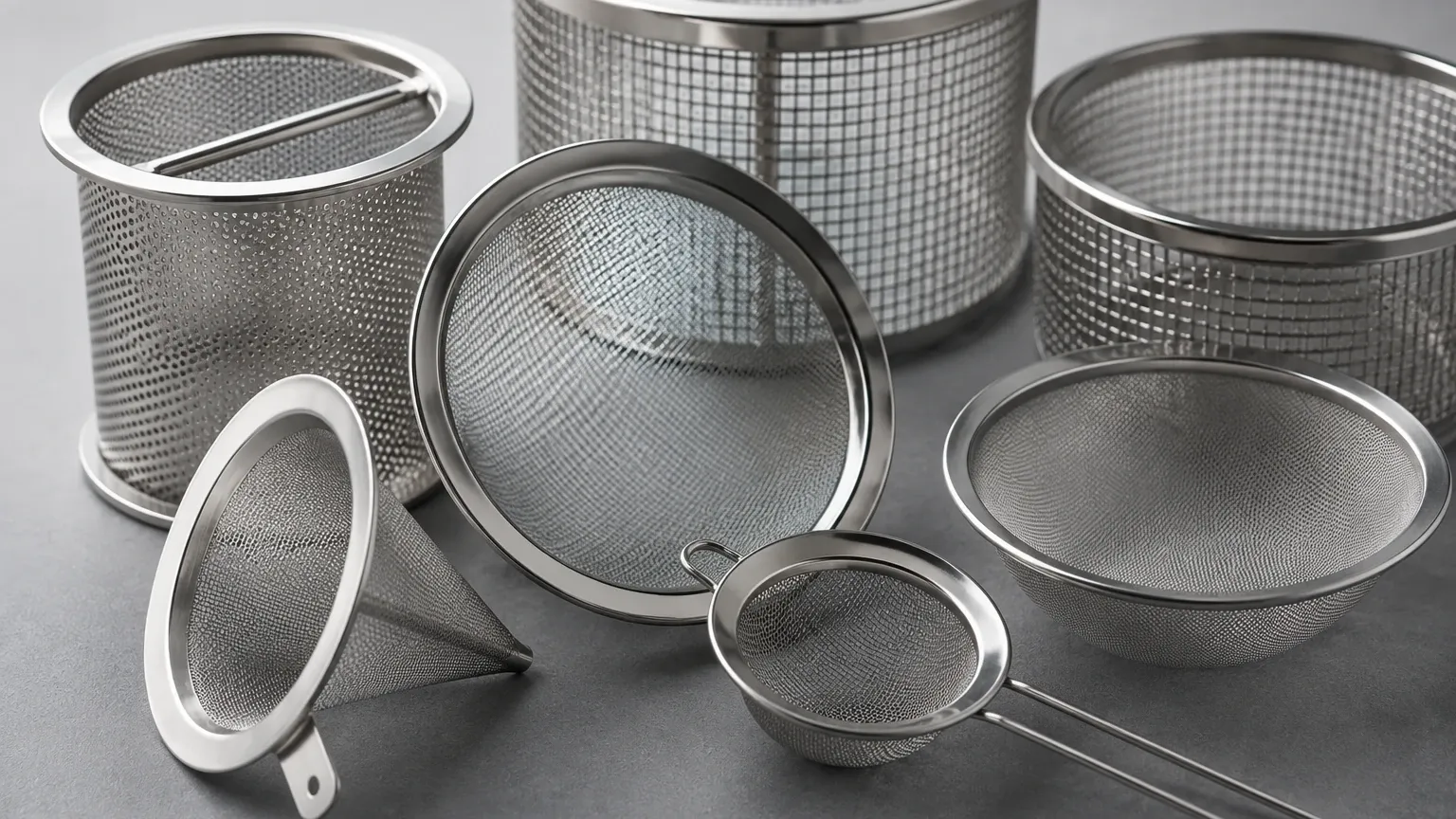
Customization and OEM Solutions
Standard off-the-shelf strainers often fail to meet the specific needs of complex industrial processes. This is where custom manufacturing becomes essential. When working with a specialized manufacturer like Kaifil, engineers can specify exact dimensions, mounting configurations, and filtration levels to suit unique equipment.
Tailored Basket Designs
Customization allows for the optimization of the basket's volume. A larger basket can hold more debris, extending the time between cleaning cycles. Furthermore, specialized handles or lifting lugs can be added to heavy baskets to comply with workplace safety regulations regarding manual handling.
Integration with Existing Systems
For retrofit projects, the ability to manufacture a strainer or sieve that fits into an existing housing without piping modifications is a significant cost saver. Custom flanges (ANSI, DIN, or JIS) and specialized surface finishes (such as electropolishing for sanitary applications) ensure that the new component integrates seamlessly into the production line.
Maintenance and Operational Efficiency
The total cost of ownership for a strainer or sieve is largely determined by its maintenance requirements. A well-designed system minimizes labor costs and maximizes uptime.
Cleaning Protocols
Stainless steel filters are preferred because they are cleanable and reusable. Depending on the application, cleaning can be performed via backwashing, ultrasonic baths, or manual pressure washing. The durability of the wire mesh is a key factor here; low-quality mesh may fray or break during repeated cleaning cycles, leading to contamination of the process stream.
Replacement Indicators
Engineers should establish clear replacement cycles based on the wear of the mesh and the integrity of the support structure. Even the most robust stainless steel basket will eventually succumb to fatigue if subjected to constant pressure fluctuations. Regular inspection for signs of "wire pull" or corrosion at the weld points is essential for maintaining system safety.
Conclusion: Confirming Requirements Before Purchase
Before finalizing the specification for a strainer or sieve, technical professionals should confirm the following data points to ensure the selected hardware will perform as expected:
1. Fluid Characteristics: Confirm the viscosity, temperature, and chemical composition (including pH levels and chloride content).
2. Flow Rate: Determine the maximum and minimum flow rates to calculate the expected pressure drop.
3. Contaminant Profile: Understand the type of solids being removed (hard vs. soft, spherical vs. fibrous) and the expected loading rate.
4. Downstream Requirements: Identify the sensitivity of the equipment being protected. What is the maximum particle size that the pump or valve can tolerate?
5. Housing Constraints: Verify the internal dimensions of the strainer housing, including the seat depth and sealing mechanism.
By focusing on these factual engineering boundaries, purchasing teams can avoid the pitfalls of generic equipment selection. Whether the goal is to protect a high-pressure hydraulic system or to ensure the purity of a food-grade liquid, the right Strainers & Baskets serve as the first line of defense in maintaining industrial process integrity.
