


Strainers Pool
In large-scale commercial aquatic facilities, industrial water treatment plants, and municipal water management systems, the primary stage of filtration is critical for the longevity of the entire infrastructure. The term "strainers pool" refers to the heavy-duty filtration components designed to capture large debris—such as hair, lint, leaves, and plastic fragments—before they reach the circulating pumps or secondary fine-filtration media. For engineers and facility managers, selecting the right strainer is not merely a matter of sizing a basket; it is a technical decision that impacts hydraulic efficiency, pump protection, and long-term operational costs.
Industrial-grade strainers must withstand constant flow, chemical exposure, and varying pressure differentials. Unlike residential components, these systems require robust materials and precision engineering to ensure that the filtration process remains uninterrupted and that the downstream equipment is shielded from mechanical damage.
The Engineering Role of Strainers in Large-Scale Water Systems
The primary function of a strainer in a high-volume water system is the protection of the pump impeller. In commercial pool and industrial water applications, pumps operate at high RPMs and move thousands of gallons per minute. Even small solids can cause cavitation, imbalance, or catastrophic failure of the pump seals and impellers.
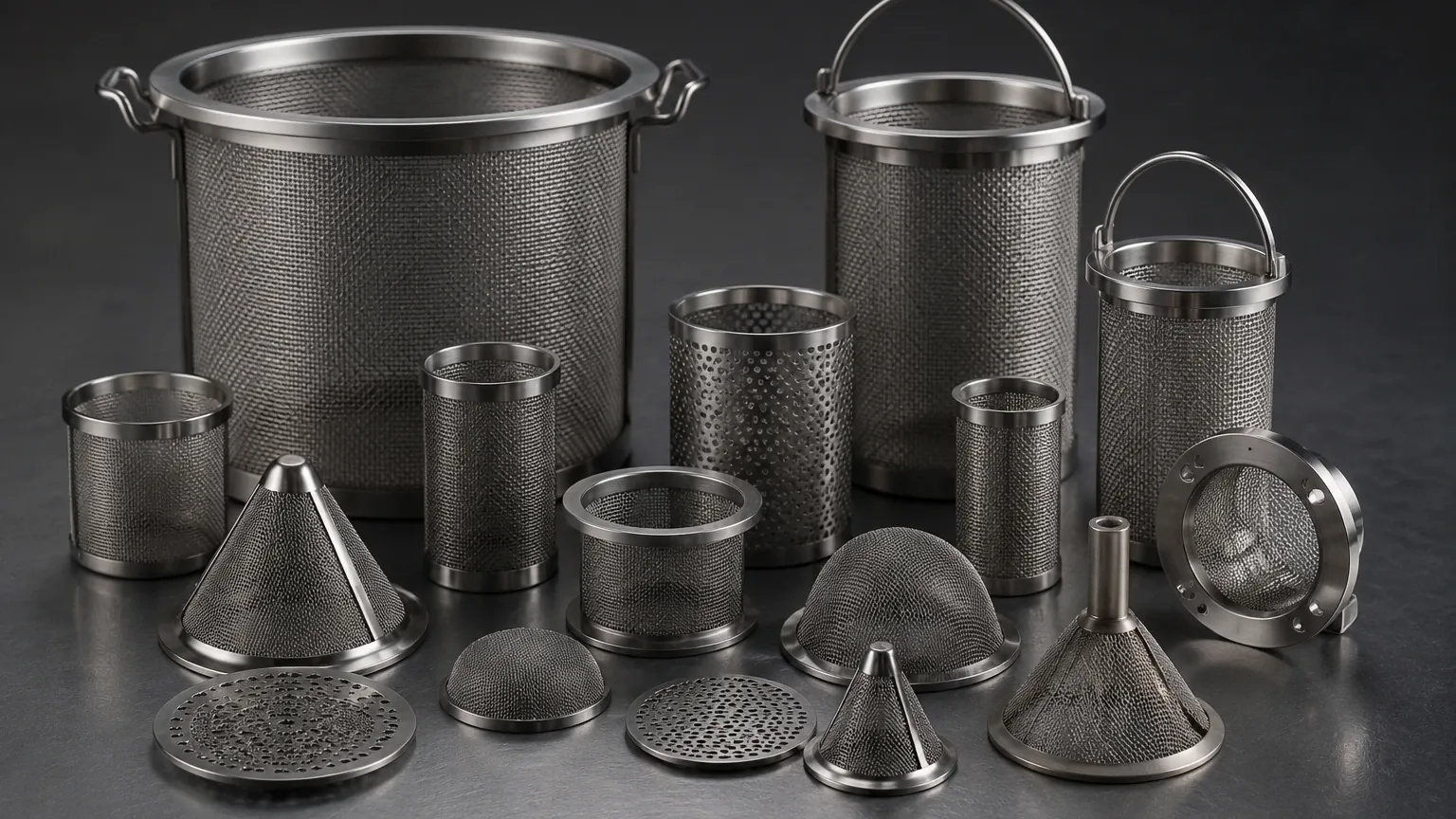
Effective Strainers & Baskets act as the first line of defense. By positioning a strainer on the suction side of the pump, engineers ensure that the water entering the pump volute is free of macro-contaminants. This is particularly vital in "strainers pool" applications where the debris load can fluctuate significantly based on bather load, environmental factors, or seasonal changes.
Beyond pump protection, these strainers also reduce the organic and inorganic load on secondary filters, such as sand filters or high-efficiency cartridges. By removing larger particles early, the backwash frequency of secondary systems is reduced, leading to significant savings in water and chemical usage.
Material Selection: Stainless Steel vs. Synthetic Alternatives
When specifying components for industrial water environments, material compatibility is a primary concern. While plastic or composite strainers are common in low-pressure residential settings, industrial applications demand the structural integrity of metal.
Corrosion Resistance and Chemical Compatibility
Pool water and industrial process water often contain high concentrations of chlorine, bromine, or other corrosive agents. Stainless steel, specifically Grade 304 or Grade 316L, is the industry standard for these environments.
* SS 304: Suitable for standard fresh water and moderately treated pool environments. It provides excellent structural strength and basic corrosion resistance.
* SS 316L: Recommended for high-salinity environments, saltwater pools, or industrial processes involving aggressive chemicals. The addition of molybdenum enhances resistance to pitting and crevice corrosion in chloride-rich environments.
Pressure and Thermal Stability
Industrial systems often experience pressure surges (water hammer) and temperature fluctuations that can cause synthetic materials to crack or deform. Stainless steel strainers maintain their geometric tolerances under high pressure, ensuring that the seal between the basket and the housing remains tight, preventing debris bypass.
Technical Specifications of Strainer Baskets
The heart of any strainer system is the basket. The design of the basket determines the filtration efficiency and the pressure drop across the unit. Engineers must evaluate several technical parameters when selecting a basket for a pool or water treatment application.
Perforation and Mesh Sizes
Strainer baskets are typically constructed from perforated metal sheets, which may be lined with a finer wire mesh depending on the application requirements. For a standard "strainers pool" setup, perforations usually range from 1/8 inch to 1/4 inch. If finer filtration is required to protect sensitive sensors or heat exchangers downstream, a stainless steel wire mesh lining can be integrated into the basket design.
Open Area Ratio (OAR)
One of the most critical engineering metrics is the Open Area Ratio. This is the ratio of the total area of the holes in the basket to the cross-sectional area of the inlet pipe. A high OAR (typically 6:1 or higher) is desirable because it allows for a lower initial pressure drop and provides more space for debris accumulation before the flow is significantly restricted. A well-engineered basket ensures that the system can operate for longer durations between maintenance cycles.
Structural Reinforcement
In high-flow industrial applications, the force of the water can cause a standard basket to collapse if it becomes heavily loaded with debris. Custom-manufactured baskets often feature reinforced bottoms and heavy-duty handles to withstand the mechanical stresses of both operation and manual cleaning.
Hydraulic Efficiency and Pressure Drop Considerations
Every component added to a fluid system introduces a certain amount of resistance, measured as a pressure drop (Delta P). In a "strainers pool" configuration, maintaining a low pressure drop is essential for energy efficiency. If a strainer is poorly designed or improperly sized, the pump must work harder to overcome the resistance, leading to increased electricity consumption and premature wear on the motor.
Engineers use flow coefficient (Cv) values to predict the pressure drop across a strainer at a given flow rate. When selecting Strainers & Baskets, it is important to choose a configuration that aligns with the system's design flow rate. Oversizing a strainer is often a better strategy than undersizing, as it provides a larger debris-holding capacity and lower velocity through the mesh, which reduces the likelihood of debris being forced through the openings.
Maintenance and Lifecycle Management
The reliability of a filtration system is heavily dependent on the maintenance protocol. In industrial environments, the "strainers pool" components must be easily accessible for inspection and cleaning.
Monitoring Performance
Differential pressure gauges should be installed on the inlet and outlet sides of the strainer housing. A significant increase in the pressure differential indicates that the basket is reaching its holding capacity and requires cleaning. Modern industrial systems may use electronic pressure transducers to trigger an alarm when the basket needs attention.
Cleaning Cycles
Unlike self-cleaning automatic filters, most basket strainers require manual intervention. The design of the strainer housing—specifically the lid mechanism—impacts the downtime required for cleaning. Quick-release swing bolts or T-bolt closures are preferred in industrial settings to minimize the time the system is offline.
Replacement Indicators
While stainless steel components are highly durable, they are not indestructible. During routine cleaning, technical teams should inspect the basket for:
1. Wire Mesh Integrity: Any tears or breaks in the mesh that could allow debris bypass.
2. Gasket Wear: The seal between the basket and the housing must be intact to prevent unfiltered water from bypassing the basket.
3. Structural Deformation: Signs of bowing or crushing, which indicate that the strainer is being subjected to pressures beyond its design limit.
Customization for Specialized Industrial Applications
Standard off-the-shelf strainers often fail to meet the specific spatial or performance requirements of complex industrial water systems. Custom manufacturing allows for the optimization of the strainer to the specific environment.
For instance, in facilities with limited floor space, a custom-designed offset strainer may be necessary to fit existing piping. In applications where the water contains unique contaminants—such as fibrous materials in textile processing or specific organic matter in aquaculture—the mesh type and basket geometry can be tailored to prevent blinding (clogging of the mesh surface).
OEM capabilities allow for the integration of specific flange types (ANSI, DIN, or JIS), specialized coating for added chemical resistance, and the inclusion of magnetic inserts to capture fine metallic particles that might otherwise pass through a standard mesh.
Total Cost of Ownership in Filtration Selection
When evaluating "strainers pool" options, purchasing teams must look beyond the initial acquisition cost. The Total Cost of Ownership (TCO) includes the purchase price, installation costs, energy consumption (related to pressure drop), maintenance labor, and the cost of replacement parts.
A low-cost plastic strainer may have a lower upfront price but can lead to higher TCO due to frequent failures, shorter lifespan, and higher risk of downstream damage to expensive pumps. Conversely, a precision-engineered stainless steel strainer provides a longer service life, often exceeding 10 to 15 years in well-maintained systems, and ensures the highest level of protection for the entire water treatment circuit.
Conclusion
Selecting the appropriate components for a "strainers pool" application is a fundamental engineering task that ensures the efficiency and safety of large-scale water systems. By focusing on material quality, hydraulic performance, and ease of maintenance, facility managers can significantly reduce operational risks and extend the life of their equipment. Stainless steel Strainers & Baskets remain the gold standard for industrial and commercial applications, providing the durability and precision required to handle the most demanding filtration challenges.
