


Plastic Strainers
In industrial fluid handling systems, the primary function of a strainer is to remove unwanted solids from a liquid or gas stream to protect downstream equipment such as pumps, valves, and flow meters. While stainless steel is often the standard for high-pressure and high-temperature applications, plastic strainers serve a critical role in environments where chemical corrosion or cost-efficiency are the driving factors. Understanding the technical specifications, material limitations, and performance characteristics of plastic strainers is essential for engineers and procurement teams tasked with maintaining system integrity.
Selecting the correct component within the broader category of Strainers & Baskets requires a deep dive into the chemical compatibility of polymers and the mechanical stresses of the specific application. This guide examines the engineering considerations of plastic strainers and how they compare to precision metal filtration solutions.
Understanding Plastic Strainers in Industrial Filtration
Plastic strainers are typically used in low-to-medium pressure applications where the fluid being processed is highly corrosive to metals. Unlike stainless steel, which relies on a chromium oxide layer for corrosion resistance, polymers are inherently inert to many acids, bases, and salts. This makes them a staple in water treatment, chemical processing, and aquatic life support systems.
Industrial plastic strainers generally fall into two structural categories: Y-strainers and basket strainers. Y-strainers are compact and often used in pressurized lines where the amount of debris is minimal. Basket strainers, conversely, feature a larger holding capacity and a lower pressure drop, making them suitable for high-flow systems where frequent cleaning might otherwise disrupt operations.
Material Science: Selecting the Right Polymer
The performance of a plastic strainer is almost entirely dependent on the base resin used in its construction. Engineers must match the polymer to the chemical composition and temperature of the process fluid.
Polyvinyl Chloride (PVC)
Among the most common materials for plastic strainers, PVC is valued for its cost-effectiveness and broad chemical resistance to many acids and alkalis. However, its temperature range is limited, typically capped at 140°F (60°C). It is widely used in irrigation, swimming pools, and general water distribution.
Chlorinated Polyvinyl Chloride (CPVC)
CPVC offers similar chemical resistance to PVC but with an extended temperature range, often up to 200°F (93°C). This makes it suitable for hot corrosive liquids and industrial processes that exceed the thermal limits of standard PVC.
Polypropylene (PP)
Polypropylene is a lightweight thermoplastic known for its excellent resistance to organic solvents and degreasing agents. It is often used in the food and beverage industry and in laboratories. While it handles higher temperatures than PVC, it is more susceptible to oxidative degradation if exposed to certain concentrated acids.
Polyvinylidene Fluoride (PVDF)
For the most demanding chemical environments, PVDF (often known by the brand name Kynar) is the material of choice. It provides exceptional resistance to strong acids, halogens, and high-purity chemicals. It also maintains mechanical strength at temperatures up to 300°F (149°C), though at a significantly higher cost than PVC or PP.
Plastic vs. Metal: Engineering Trade-offs in Strainers & Baskets
When evaluating Strainers & Baskets, engineers must decide between plastic and metal. This decision is rarely about cost alone; it is about the physical and chemical boundaries of the application.
Corrosion Resistance
Stainless steel, particularly 316L, is highly resistant to many chemicals, but it can succumb to pitting or stress corrosion cracking in the presence of high chloride concentrations (such as seawater) or specific aggressive acids. In these cases, plastic strainers are technically superior because they do not corrode in the electrochemical sense.
Pressure and Temperature Ratings
This is where metal strainers hold a significant advantage. Plastic strainers are subject to "creep" and loss of structural integrity as temperatures rise. A plastic strainer rated for 150 PSI at room temperature may only be safe for 50 PSI at its maximum operating temperature. Stainless steel components maintain their pressure ratings across a much wider thermal envelope and are impervious to the brittle failure that can occur in plastics at sub-zero temperatures.
Mechanical Durability
Plastic components are more susceptible to damage from water hammer (pressure surges) and mechanical impact. In industrial environments where heavy equipment is operated, the external housing of a plastic strainer is a potential point of failure. Stainless steel housings provide a level of physical protection and longevity that polymers cannot match.
Design and Structural Considerations for Polymer Strainers
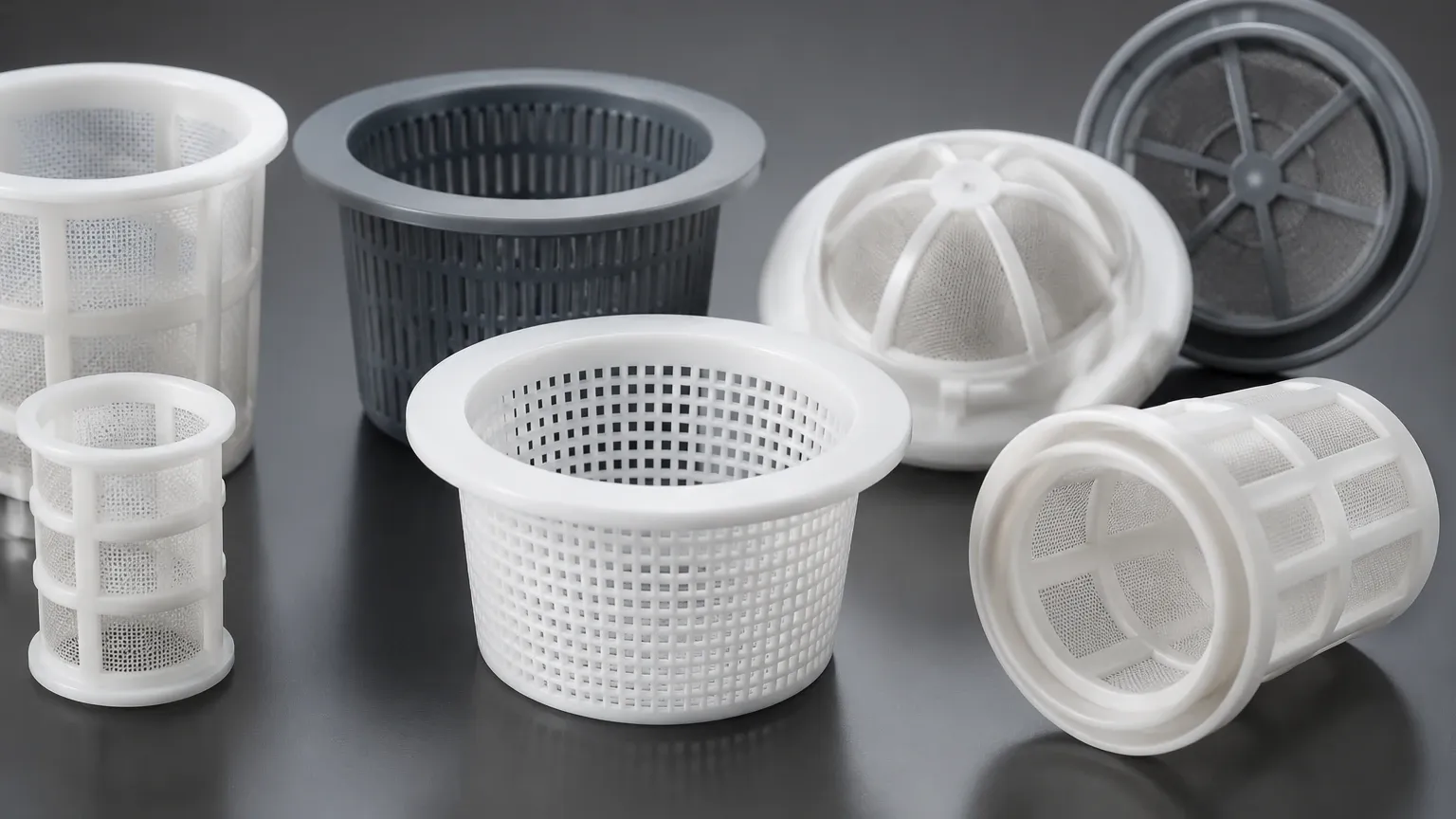
The internal basket or screen is the heart of the strainer. In plastic strainers, these baskets are often made of the same polymer as the housing or, in some hybrid designs, a stainless steel mesh basket is inserted into a plastic body to combine chemical resistance with fine filtration accuracy.
Mesh vs. Perforation
Plastic baskets are often injection-molded with circular perforations. While durable, these molded baskets are limited in how fine they can filter. For applications requiring filtration below 200 microns, a mesh liner is usually required. If the process requires ultra-fine filtration in a corrosive environment, a custom-engineered stainless steel or specialty alloy mesh basket from a manufacturer like Kaifil is often the most reliable solution.
Seal and O-Ring Compatibility
The housing of a plastic strainer must be sealed to prevent leaks. The choice of O-ring material—usually EPDM or FPM (Viton)—is just as critical as the housing material. A failure in the seal is often the first sign of chemical incompatibility, even if the plastic body remains intact.
Performance Limitations: Pressure, Temperature, and Longevity
Engineers must be aware of several specific risks when integrating plastic strainers into industrial systems:
1. Thermal Expansion: Plastics have a much higher coefficient of thermal expansion than metals. In systems with fluctuating temperatures, this can lead to stress at connection points (flanges or threads), potentially causing leaks.
2. UV Degradation: Many plastics become brittle when exposed to direct sunlight over long periods. If a plastic strainer is installed outdoors, it must be shielded or manufactured with UV-stabilized resins.
3. Chemical Leaching: In pharmaceutical or high-purity water applications, the potential for the plastic material to leach trace chemicals (extractables and leachables) into the fluid stream must be evaluated. In these high-purity scenarios, electropolished stainless steel is often preferred over plastic.
Selection Guide for Procurement and Engineering Teams
Before purchasing a plastic strainer, the following technical data points should be confirmed with the manufacturer:
* Fluid Chemistry: Provide the full chemical profile, including concentration levels. A plastic that is resistant to 10% sulfuric acid may fail at 50% concentration.
* Maximum Operating Pressure: Ensure the pressure rating is calculated at the *maximum* operating temperature, not just at ambient temperature.
* Flow Rate and Pressure Drop (ΔP): Calculate the allowable pressure drop across the strainer. Plastic baskets often have thicker walls than wire mesh, which can reduce the total open area and increase resistance to flow.
* Connection Type: Determine if the system requires socket-weld, threaded, or flanged connections. For plastic systems, flanged connections are generally preferred for larger diameters to avoid the stress concentrations inherent in threaded joints.
* Cleaning Frequency: If the solids loading is high, a basket strainer with a quick-release cover is essential to minimize downtime. Consider whether the plastic threads on the cover will hold up to frequent opening and closing, or if a metal-reinforced closure is necessary.
Conclusion
Plastic strainers are indispensable tools for handling corrosive fluids in low-pressure environments. However, they are not a universal solution. As system requirements move toward higher temperatures, higher pressures, or more stringent filtration accuracies, the limitations of polymers become apparent.
For industrial applications that demand the ultimate in durability and precision, stainless steel Strainers & Baskets remain the engineering benchmark. By understanding the specific strengths and weaknesses of plastic strainers, technical professionals can make informed decisions that balance cost, safety, and long-term system reliability. Whether selecting a simple PVC Y-strainer for a water line or a custom-fabricated stainless steel basket for a chemical reactor, the goal remains the same: ensuring the purity of the process fluid and the protection of the infrastructure.
