


Small Strainers
In industrial fluid handling, the efficiency of a system is often determined by the reliability of its smallest components. Small strainers, though compact in design, serve as critical safeguards for high-value downstream equipment such as precision nozzles, flow meters, pumps, and control valves. These components are engineered to remove coarse particles from liquid or gas streams, preventing mechanical wear, clogging, and process downtime. For engineers and procurement professionals, selecting the correct small strainer requires a deep understanding of metallurgy, fluid dynamics, and the specific environmental rigors of the application.
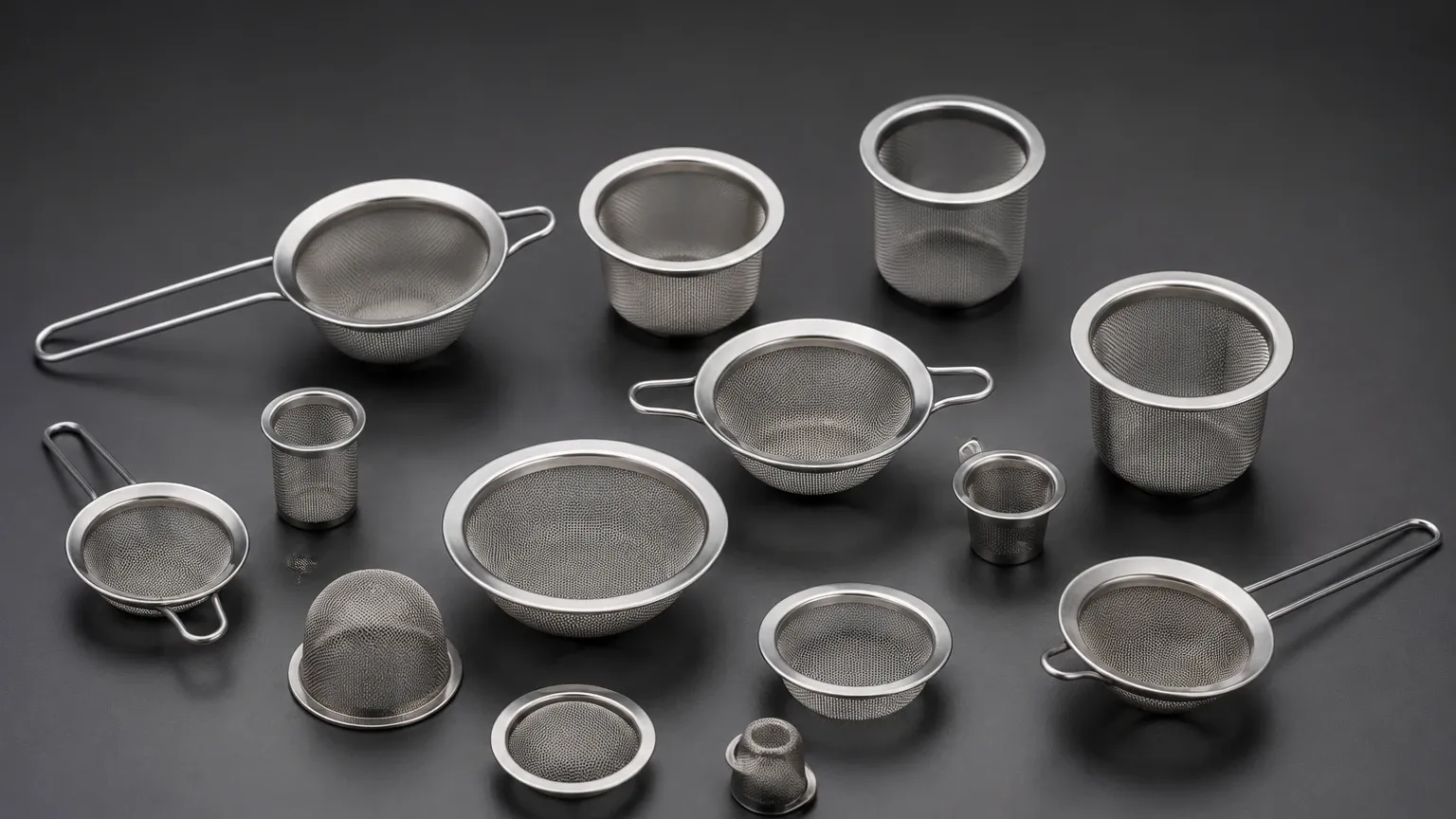
As a specialized manufacturer, Kaifil provides high-performance Strainers & Baskets designed to meet the exacting standards of the chemical, pharmaceutical, and food processing industries. This guide explores the technical considerations essential for integrating small strainers into industrial systems, focusing on material integrity, flow characteristics, and customization.
The Role of Small Strainers in Protecting Precision Equipment
Small strainers are typically defined by their compact footprint and their role in point-of-use protection. While large-scale filtration systems manage the bulk removal of contaminants at the primary intake, small strainers are installed closer to sensitive components. This localized protection is vital because contaminants can be introduced into a system through pipe scale, gasket degradation, or maintenance activities downstream of the primary filters.
In hydraulic systems, for instance, even microscopic debris can cause catastrophic failure in high-pressure valves. Similarly, in the food and beverage industry, small strainers are used to ensure that final product lines remain free of any particulates that might have bypassed earlier stages. The primary function of these strainers is not necessarily to "purify" the fluid to a sub-micron level, but to "strain" out solids that exceed a specific size threshold, thereby maintaining the mechanical integrity of the system.
Engineering Specifications: Material Selection and Durability
The performance of small strainers is heavily dependent on the materials used in their construction. Because these components often operate in corrosive or high-temperature environments, stainless steel is the industry standard.
Stainless Steel Grades: 304 vs. 316L
* Grade 304 Stainless Steel: This is the most common choice for general industrial applications. It offers excellent strength and basic corrosion resistance, making it suitable for water treatment and standard hydraulic fluids.
* Grade 316L Stainless Steel: For applications involving chemicals, brine, or pharmaceutical processing, 316L is preferred. The addition of molybdenum enhances resistance to pitting and crevice corrosion, particularly in chloride-rich environments. The "L" denotes low carbon content, which is essential for components that require welding, as it prevents carbide precipitation and maintains the integrity of the mesh-to-frame bond.
Beyond the housing, the internal mesh or perforated metal must be selected based on the chemical compatibility of the fluid. In highly aggressive environments, exotic alloys may be required, though precision-manufactured 316L meets the vast majority of B2B industrial requirements for durability and hygiene.
Technical Design: Comparing Strainer Configurations
When specifying small strainers, engineers must choose between several structural configurations. Each design impacts the ease of maintenance, the available filtration surface area, and the pressure profile of the system.
Y-Strainers vs. Basket Strainers
In small-bore piping, the Y-strainer is a frequent choice due to its compact, slanted design. It is ideal for high-pressure applications where the amount of debris is relatively low. However, for applications requiring higher dirt-holding capacity, small basket strainers are superior.
Basket strainers feature a vertical cylinder that houses a removable basket. This design allows for a larger surface area compared to the screen of a Y-strainer. For engineers, the choice often comes down to the "open area ratio." A well-designed basket strainer typically offers an open area at least four to six times the cross-sectional area of the inlet pipe, which minimizes initial pressure drop and extends the time between cleaning cycles.
Perforated Metal vs. Wire Mesh
Small strainers can be constructed using perforated metal sheets or woven wire mesh. Perforated metal is generally used for coarser straining (removing particles larger than 1mm), providing high structural rigidity. For finer applications, a stainless steel wire mesh is layered over a perforated metal backup tube. This "composite" construction allows the strainer to achieve high filtration accuracy without sacrificing the strength needed to withstand high differential pressures.
Evaluating Pressure Drop and Flow Dynamics
One of the most critical engineering considerations for small strainers is the pressure drop (Delta P). Every component placed in a fluid path introduces resistance. If a strainer is too small or the mesh is too fine for the flow rate, the resulting pressure drop can starve downstream pumps or cause cavitation.
Calculating the Clean Pressure Drop
The clean pressure drop is the resistance measured when the strainer is first installed and the fluid is free of debris. This value is influenced by:
1. Fluid Viscosity: Thicker fluids (like heavy oils) result in higher pressure drops.
2. Velocity: As flow velocity increases, pressure drop increases exponentially.
3. Mesh Density: Finer meshes offer more resistance to flow.
Engineers should aim for a design where the clean pressure drop does not exceed 2 PSI (0.14 bar) at the maximum intended flow rate. If the calculated drop is higher, it may be necessary to move to a larger strainer body or a more efficient basket design. Utilizing high-quality Strainers & Baskets ensures that the internal geometry is optimized to reduce turbulence and maintain laminar flow as much as possible.
Customization and OEM Integration
In many modern industrial designs, standard off-the-shelf strainers do not fit the spatial constraints of the equipment. This is particularly true in skid-mounted systems or laboratory-scale processing units. Customization becomes a necessity rather than a luxury.
Dimensional Constraints and Connection Types
Custom small strainers can be manufactured to specific lengths and diameters to fit into existing manifolds. Furthermore, the connection types—whether NPT threads, BSP, socket weld, or sanitary tri-clamp flanges—must be precise to ensure a leak-proof seal. In pharmaceutical and food applications, the internal surfaces must be polished to a specific Ra (Roughness Average) to prevent bacterial growth and ensure effective Clean-in-Place (CIP) cycles.
Tailored Filtration Ratings
OEMs often require specific micron ratings that do not fall into standard mesh categories. By working with a manufacturer like Kaifil, engineers can specify exact wire diameters and weave patterns to achieve a precise balance between particle retention and dirt-holding capacity. This level of customization ensures that the strainer performs exactly as required by the system's technical specifications.
Maintenance, Cleaning, and Total Cost of Ownership
While the initial purchase price of a small strainer is an important factor, the Total Cost of Ownership (TCO) is driven by maintenance requirements and the longevity of the component. A poorly designed strainer that clogs frequently or is difficult to clean will quickly become a bottleneck for production.
Cleaning Protocols
Stainless steel strainers are valued for their reusability. Unlike disposable plastic filters, metal baskets can be cleaned and returned to service. Common cleaning methods include:
* Manual Rinsing: Suitable for coarse debris.
* Ultrasonic Cleaning: Essential for removing fine particles trapped within the weave of a high-mesh-count strainer.
* Chemical Soaking: Used when the contaminant is an organic or chemical buildup that cannot be removed mechanically.
Identifying Replacement Needs
Even the most durable stainless steel strainers eventually require replacement. Signs of wear include "blinding" (permanent clogging of the mesh), mechanical deformation of the basket frame due to high differential pressure, or localized corrosion (pitting). Regular inspection protocols should be established to ensure that the strainer is not bypassed or operating in a damaged state, which would leave downstream equipment vulnerable.
Key Confirmation Points Before Purchasing
Before finalizing a purchase or specifying a small strainer for a new project, technical teams should confirm the following data points with their supplier:
1. Operating Pressure and Temperature: Ensure the housing and the mesh can withstand the maximum possible surges in the system.
2. Chemical Compatibility: Verify that the grade of stainless steel (304, 316, or 316L) is appropriate for the fluid being processed.
3. Filtration Goal: Define exactly what size of particle needs to be removed. Over-specifying (choosing a mesh that is too fine) will lead to unnecessary maintenance and pressure loss.
4. Seal Requirements: Determine if O-rings or gaskets are needed and ensure they are made of compatible materials like Viton, EPDM, or PTFE.
5. Regulatory Compliance: For food or pharmaceutical use, confirm that the materials and manufacturing processes meet FDA or equivalent standards.
By focusing on these technical parameters, engineering teams can ensure that their choice of small strainers contributes to the overall stability and efficiency of their industrial processes. High-quality manufacturing and precise engineering are the foundations of reliable filtration, and selecting a partner with the expertise to deliver customized solutions is essential for long-term operational success.
