


Strainers Tea
In the industrial beverage and botanical extraction sectors, the process of separating solid particulates from liquid extracts is a critical phase that dictates the final product's clarity, flavor profile, and shelf stability. When discussing strainers tea processing facilities utilize, the conversation shifts from simple consumer-grade infusers to high-capacity, precision-engineered industrial filtration components. These systems must handle significant volumes of liquid while maintaining strict hygiene standards and ensuring consistent filtration accuracy.
For engineers and production managers, selecting the appropriate Strainers & Baskets is not merely about size; it involves a deep understanding of fluid dynamics, material compatibility, and the physical characteristics of the tea leaves or botanical solids being processed. This article explores the technical requirements, engineering considerations, and selection criteria for industrial-grade tea filtration solutions.
The Role of Industrial Strainers in Tea Processing
Tea production on an industrial scale involves several stages where filtration is paramount. From the initial extraction in large brewing vessels to the final polishing before packaging, strainers serve as the primary defense against unwanted solids. In large-scale brewing, the term "strainers tea" refers to the heavy-duty basket strainers and inline filters designed to capture spent leaves, stems, and fine dust.
Industrial strainers are typically integrated into the piping system or the discharge ports of extraction tanks. Their primary function is to protect downstream equipment—such as pumps, heat exchangers, and fine membrane filters—from clogging or mechanical damage. Because tea extracts can contain a wide range of particle sizes, from large whole leaves to microscopic "fines," a multi-stage filtration approach is often required. The first stage usually involves coarse baskets to remove the bulk of the solids, followed by finer mesh strainers to achieve the desired clarity.
Engineering Considerations for Tea Filtration Systems
When designing or specifying filtration components for tea processing, several engineering factors must be evaluated to ensure operational efficiency and product quality.
Micron Rating and Mesh Selection
The choice of mesh size is determined by the specific variety of tea and the desired end-product. For example, black tea processing may require different micron ratings compared to fine matcha or herbal infusions. Industrial strainers for tea often utilize stainless steel wire mesh with openings ranging from 50 microns to several millimeters. Selecting a mesh that is too fine can lead to rapid blinding (clogging) and excessive pressure drops, while a mesh that is too coarse will allow sediment to pass through, compromising the clarity of the tea liquor.
Flow Rate and Pressure Drop
In B2B environments, production throughput is a key performance indicator. Filtration systems must be sized to accommodate the maximum flow rate of the production line without creating a significant pressure drop (ΔP). A high pressure drop indicates that the strainer is either undersized for the flow or is becoming clogged. Engineers must calculate the open area ratio of the basket or mesh to ensure that the effective filtration area is sufficient to maintain laminar flow and minimize turbulence, which can sometimes force small particles through the mesh.
Solids Loading Capacity
Tea leaves expand significantly when hydrated. This increase in volume must be accounted for when selecting the dirt-holding capacity of the strainer baskets. If the basket is too small, it will require frequent cleaning, leading to increased downtime. Industrial-grade baskets are often designed with a high surface-area-to-volume ratio to maximize the time between maintenance cycles.
Material Selection: Why Stainless Steel is Essential
The chemical composition of tea makes material selection a critical factor in the longevity of filtration equipment. Tea contains tannins and organic acids that can be mildly corrosive to certain metals over time. Furthermore, because tea is a food and beverage product, all contact surfaces must meet stringent regulatory standards for food safety.
Stainless Steel 304 vs. 316L
Most industrial strainers tea applications utilize Stainless Steel 304 or 316L. SS304 is often sufficient for standard water-based extractions. However, SS316L is preferred for its superior corrosion resistance, especially in applications involving high temperatures, acidic herbal blends, or aggressive cleaning chemicals used in Clean-in-Place (CIP) cycles. The "L" in 316L stands for low carbon, which helps prevent sensitization during welding, ensuring that the structural integrity of the filter basket remains intact even in demanding environments.
Surface Finish and Cleanability
To prevent bacterial growth and cross-contamination between batches, the surface finish of the filtration components must be smooth and free of crevices. Electropolishing is a common treatment for stainless steel strainers in the beverage industry. It removes surface imperfections and creates a passive layer that enhances corrosion resistance and makes the equipment easier to clean. For engineers, confirming the Ra (Roughness Average) value of the internal surfaces is a standard part of the procurement process.
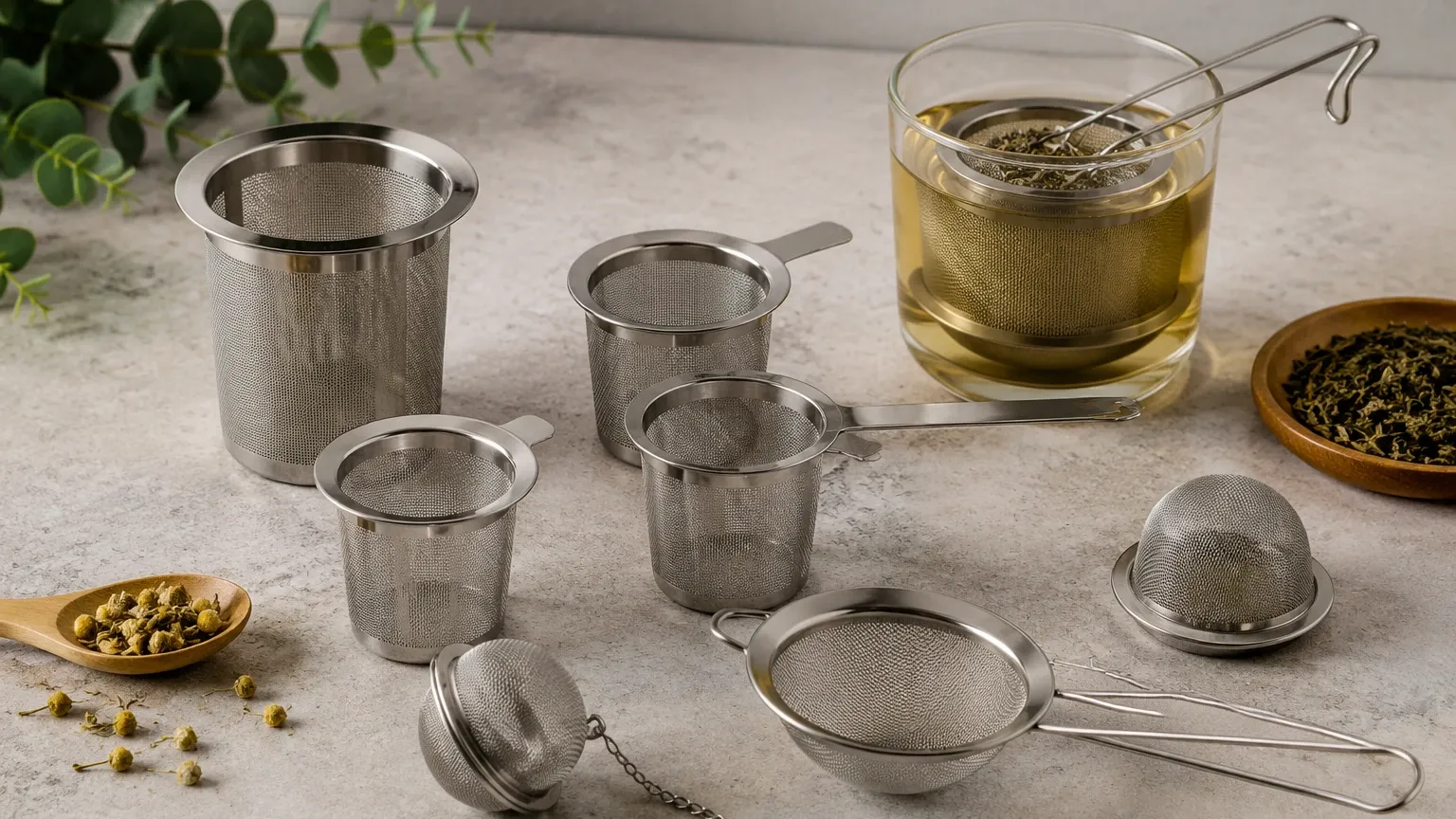
Customizing Strainers & Baskets for Botanical Extraction
Standard off-the-shelf filtration products rarely meet the specific needs of a complex industrial tea extraction line. Customization is often necessary to integrate the filtration component into existing infrastructure or to address unique processing challenges.
Basket Designs and Reinforcements
In high-pressure systems, the wire mesh of a strainer basket can collapse under the force of the fluid flow if not properly supported. Custom baskets often feature a perforated metal backup tube or a heavy-duty frame to provide structural rigidity. The design of the handle and the sealing mechanism (such as O-rings or gaskets made of EPDM or Viton) must also be customized to ensure a leak-proof fit and ease of removal during maintenance.
Multi-Layer Sintered Mesh
For applications requiring extreme precision and durability, multi-layer sintered wire mesh is an excellent choice. This material consists of several layers of stainless steel mesh that are bonded together through a heat-treatment process. The result is a robust, porous material that offers the filtration accuracy of fine mesh with the mechanical strength of a solid plate. Sintered mesh is particularly useful in strainers tea manufacturers use for high-pressure extraction or when backwashing is required to clear the filter media.
Maintenance and Operational Efficiency in Beverage Filtration
The total cost of ownership for a filtration system is heavily influenced by its maintenance requirements. In a B2B context, reducing downtime is just as important as the initial purchase price.
Cleaning Cycles and CIP Integration
Modern tea processing lines often utilize automated CIP systems to sanitize equipment without disassembly. Strainers and baskets must be designed to withstand the thermal and chemical stresses of these cycles. If a strainer is not CIP-compatible, it must be designed for quick removal. Features such as swing-bolt closures or quick-release clamps allow operators to swap out baskets in minutes, minimizing the impact on production schedules.
Monitoring Performance
Installing differential pressure gauges across the filtration unit is a best practice for monitoring the state of the strainer. By tracking the pressure drop, maintenance teams can predict when a basket needs cleaning or replacement, moving from reactive to proactive maintenance. This data is also valuable for engineers looking to optimize the flow characteristics of the entire system.
Selecting the Right Filtration Partner for Large-Scale Production
When sourcing industrial filtration solutions, purchasing teams and engineers should look beyond the product specifications and evaluate the manufacturer's technical expertise and quality control processes. A reliable partner should be able to provide detailed documentation, including material certifications (MTRs), pressure test reports, and compliance certificates for food-grade standards.
Before finalizing a purchase, technical teams should confirm the following:
1. Compatibility: Does the strainer housing and basket material align with the chemical profile of the tea and the cleaning agents used?
2. Scalability: Can the manufacturer provide custom designs if production capacity increases?
3. Lead Times: For critical components like replacement baskets, what are the standard lead times to ensure continuous operation?
4. Technical Support: Does the manufacturer offer engineering support to help calculate flow rates and pressure drops for specific applications?
By focusing on these technical and operational details, beverage manufacturers can ensure that their filtration systems provide reliable, long-term performance, protecting both their equipment and the quality of the final product. Whether it is a standard basket or a highly customized sintered mesh component, the right industrial strainer is a fundamental piece of the tea production puzzle.
