


Strainer Meaning in Tamil
In the landscape of global industrial procurement and technical engineering, language serves as both a bridge and a barrier. For professionals operating within the manufacturing hubs of South India, particularly in Tamil Nadu, understanding the specific terminology used in fluid handling is essential. The phrase strainer meaning in tamil is most directly translated as "வடிகட்டி" (Vadikatti). However, in a professional B2B and engineering context, this simple translation encompasses a wide range of sophisticated Strainers & Baskets designed for rigorous industrial applications.
While a layperson might associate a "Vadikatti" with a simple household sieve, an engineer views it as a critical mechanical component designed to protect downstream equipment from damage. In industries ranging from chemical processing in Thoothukudi to automotive manufacturing in Chennai, the industrial strainer is the first line of defense against particulate contamination. This article explores the technical depth behind the term, the engineering principles of strainer selection, and the operational advantages of choosing high-quality stainless steel filtration components.
Defining "Strainer Meaning in Tamil" within Industrial Engineering
To accurately grasp the strainer meaning in tamil in a commercial setting, one must look beyond the literal dictionary definition. In technical Tamil, an industrial strainer is often referred to as "தொழில்துறை வடிகட்டி" (Tholilthurai Vadikatti). This distinction is vital because industrial strainers are pressure-rated vessels designed to handle high flow rates and aggressive chemical media, unlike their domestic counterparts.
In an engineering context, the "meaning" of a strainer is defined by its function: mechanical separation. It is a device used to remove solid particles from a liquid or gas stream through a perforated or wire mesh straining element. This process is essential for protecting expensive machinery such as pumps, control valves, and meters. If these solids are not removed, they can cause abrasive wear, clogging, or catastrophic mechanical failure. Therefore, when a procurement team in a Tamil-speaking region requests a "Vadikatti," they are looking for a solution that ensures system longevity and process purity.
Categorizing Strainers & Baskets: Technical Configurations
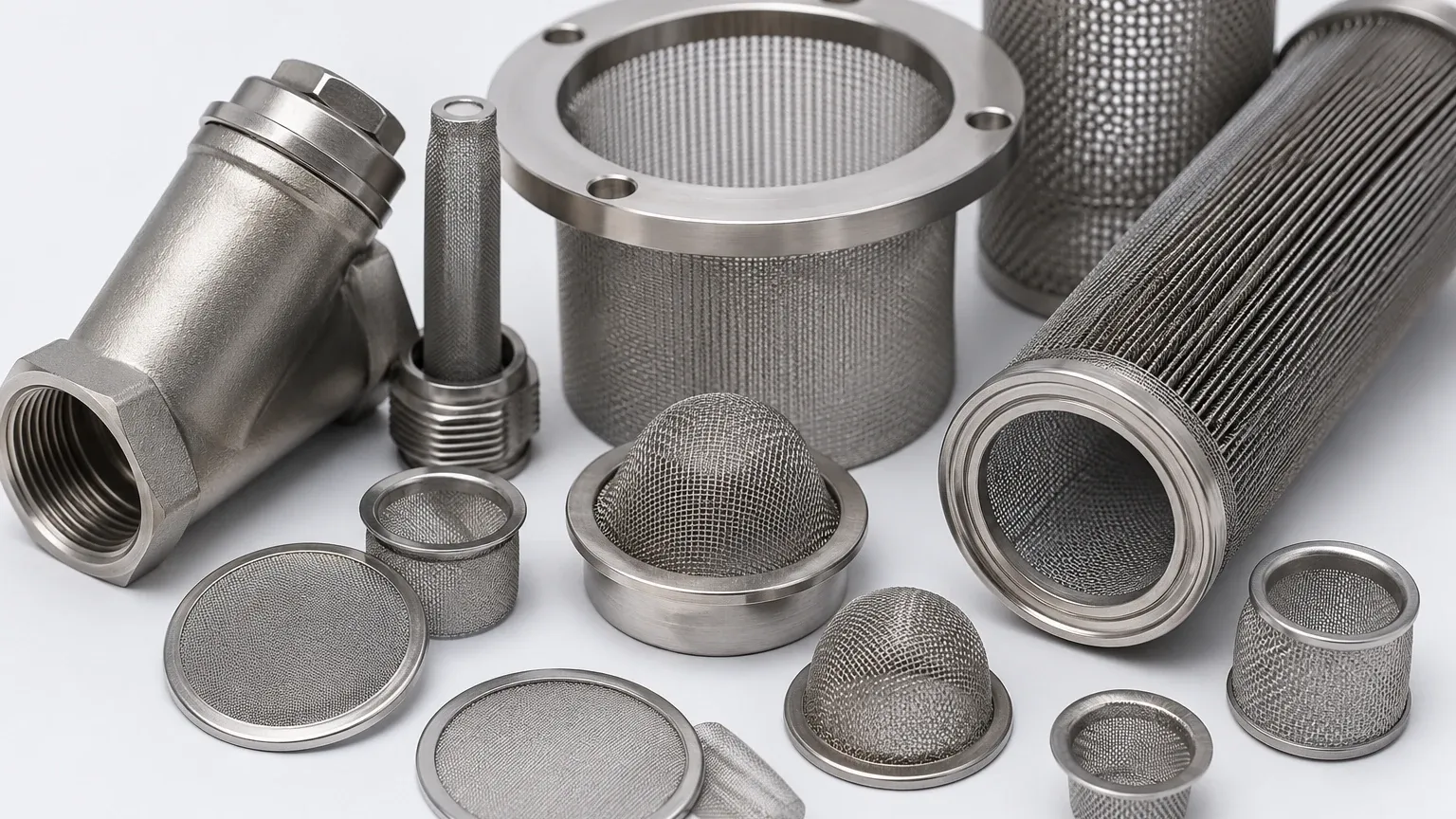
Choosing the right strainer requires an understanding of different mechanical configurations. Each design serves a specific purpose based on the piping layout and the operational requirements of the facility. As a specialized manufacturer, Kaifil provides several core types of Strainers & Baskets to meet these needs:
Simplex Basket Strainers
A simplex strainer is a single-chamber unit used in systems where the flow can be safely interrupted for cleaning. In Tamil industrial settings, these are often employed in batch processing. The basket design offers a significantly larger surface area than a standard Y-strainer, allowing for a higher dirt-holding capacity and longer intervals between cleaning cycles.
Duplex (Twin) Basket Strainers
For continuous flow operations where downtime is not an option, duplex strainers are the standard. These units consist of two separate strainer chambers connected by a diversion valve. When one basket becomes full, the operator can switch the flow to the clean chamber without stopping the process. This is critical in power plants, oil refineries, and large-scale water treatment facilities where a shutdown could result in massive financial losses.
Y-Strainers
Y-strainers are typically used in pressurized lines for both liquid and gas. Their compact shape makes them ideal for installations where space is limited. While they have a smaller debris collection area than basket strainers, they are highly effective for protecting steam traps and sensitive instrumentation in high-pressure environments.
Material Integrity and Corrosion Resistance in Filtration
In the context of the strainer meaning in tamil and its industrial application, material selection is perhaps the most critical engineering decision. The environment in which the strainer operates dictates the type of metal required. In many coastal industrial zones in South India, atmospheric corrosion and the salinity of process water make material durability a top priority.
1. Stainless Steel 304: This is the most common material for general industrial use. It offers excellent strength and good corrosion resistance for water and mild chemical applications.
2. Stainless Steel 316 and 316L: For more demanding environments, such as pharmaceutical manufacturing or chemical processing, SS316 is the preferred choice. The addition of molybdenum enhances its resistance to pitting and crevice corrosion, especially in chloride-rich environments. The "L" variant (Low Carbon) is used to prevent sensitization during welding, ensuring the structural integrity of the strainer housing.
3. Exotic Alloys: In extreme cases involving highly acidic or alkaline fluids, materials like Monel, Hastelloy, or Duplex Stainless Steel may be utilized to ensure the strainer does not degrade over time.
Engineers must also consider the compatibility of the gaskets and seals within the strainer assembly. Whether using EPDM, Viton, or PTFE, the sealing material must be able to withstand the temperature and chemical composition of the fluid to prevent leaks and bypass.
Engineering Metrics: Flow Rate, Pressure Drop, and Micron Ratings
When evaluating the strainer meaning in tamil from a technical perspective, engineers focus on three primary metrics: flow rate, pressure drop, and the required level of filtration (micron rating). These factors determine whether a strainer is fit for its intended purpose.
The Open Area Ratio (OAR)
The Open Area Ratio is a mathematical calculation that compares the total area of the holes in the strainer basket to the internal cross-sectional area of the inlet pipe. A high-quality industrial strainer should have an OAR of at least 4:1. This ensures that even as the basket begins to collect debris, there is still enough open space for the fluid to pass through without causing a significant increase in backpressure.
Understanding Pressure Drop (Delta P)
Pressure drop is the loss of fluid pressure as it moves through the strainer. If the pressure drop is too high, it can lead to cavitation in pumps and reduced system efficiency. Engineers use flow coefficient (Cv) values to calculate the expected pressure drop at various flow rates. A well-designed basket from Kaifil is engineered to minimize this resistance, ensuring that the system operates at peak efficiency.
Micron and Mesh Ratings
The level of filtration is defined by the size of the openings in the mesh.
* Mesh: Refers to the number of openings per linear inch.
* Micron: Refers to the actual size of the particle that will be trapped (1 micron = 1/1000th of a millimeter).
For example, a 100-mesh strainer has openings of approximately 149 microns. Selecting the correct mesh size is a balancing act; a mesh that is too coarse will allow harmful particles to pass through, while a mesh that is too fine will clog rapidly, leading to frequent maintenance.
Operational Maintenance and Industrial Best Practices
In the busy industrial sectors of Tamil Nadu, operational efficiency is closely tied to maintenance protocols. The "meaning" of a strainer in a practical sense often comes down to how easily it can be serviced. A strainer that is difficult to clean will inevitably lead to neglected maintenance and eventual system failure.
Cleaning Procedures
Most industrial basket strainers feature a cover that can be removed to access the basket. Best practices involve installing pressure gauges both upstream and downstream of the strainer. When the pressure differential reaches a predetermined limit (usually 5-10 psi), it indicates that the basket is full and requires cleaning. The basket is then removed, washed, and inspected for any signs of damage or wear before being reinstalled.
Preventing Bypass
One of the most common risks in industrial straining is "bypass," where fluid leaks around the edges of the basket instead of passing through the mesh. This is often caused by poor manufacturing tolerances or damaged seals. High-quality Strainers & Baskets are engineered with precision-machined seats to ensure a tight seal, guaranteeing that 100% of the fluid is strained.
Custom OEM Solutions for Global Filtration Challenges
Standard off-the-shelf strainers do not always meet the unique demands of specialized industrial processes. This is where Kaifil’s expertise in custom manufacturing becomes invaluable. For engineers and purchasing teams, the ability to customize a strainer means they can solve specific problems related to space constraints, unusual flow conditions, or highly specific filtration requirements.
Customization options include:
* Specialized End Connections: Whether the system requires ANSI flanges, DIN standards, or NPT threads, strainers can be manufactured to match existing piping.
* Reinforced Baskets: For high-pressure applications, the wire mesh can be reinforced with a perforated metal backup to prevent the basket from collapsing under the weight of the debris.
* Magnetic Inserts: In automotive or metalworking applications, magnetic rods can be added to the basket to capture fine ferrous particles that might otherwise pass through the mesh.
* Unique Geometries: In cases where standard housings won't fit, custom-engineered vessels can be designed to fit into tight footprints while maintaining the required flow characteristics.
By working closely with an OEM manufacturer, companies can ensure that their filtration equipment is perfectly aligned with their technical specifications, reducing the risk of operational errors and increasing the overall reliability of the plant.
Conclusion: The Strategic Value of Quality Filtration
Understanding the strainer meaning in tamil requires a transition from a linguistic definition to a technical appreciation of fluid dynamics and mechanical protection. In the competitive B2B landscape, a strainer is not just a "Vadikatti"; it is a strategic asset that ensures the continuous operation of critical infrastructure.
Whether you are designing a new hydraulic system, upgrading a chemical processing line, or maintaining a municipal water treatment plant, the quality of your Strainers & Baskets will directly impact your bottom line. By prioritizing material integrity, precise engineering, and ease of maintenance, Kaifil provides the industrial solutions necessary for global manufacturing excellence. In the end, a well-chosen strainer pays for itself many times over by preventing downtime and extending the lifespan of the entire fluid handling system.
