


Wire Mesh Filter Basket: An Engineering Guide to Selection and Application
In industrial fluid processing, the integrity of downstream equipment often depends on the efficiency of primary filtration components. The wire mesh filter basket serves as a critical barrier, designed to remove suspended solids from liquids and gases across a wide range of flow rates and pressures. Unlike disposable filter media, these stainless steel components offer a reusable, high-strength solution for demanding B2B environments, including chemical processing, water treatment, and food production.
Selecting the correct filtration component requires an understanding of fluid dynamics, material science, and mechanical design. This guide explores the engineering principles behind the wire mesh filter basket, providing technical professionals with the data necessary to optimize filtration performance and ensure system longevity.
Engineering Principles of Wire Mesh Filter Baskets
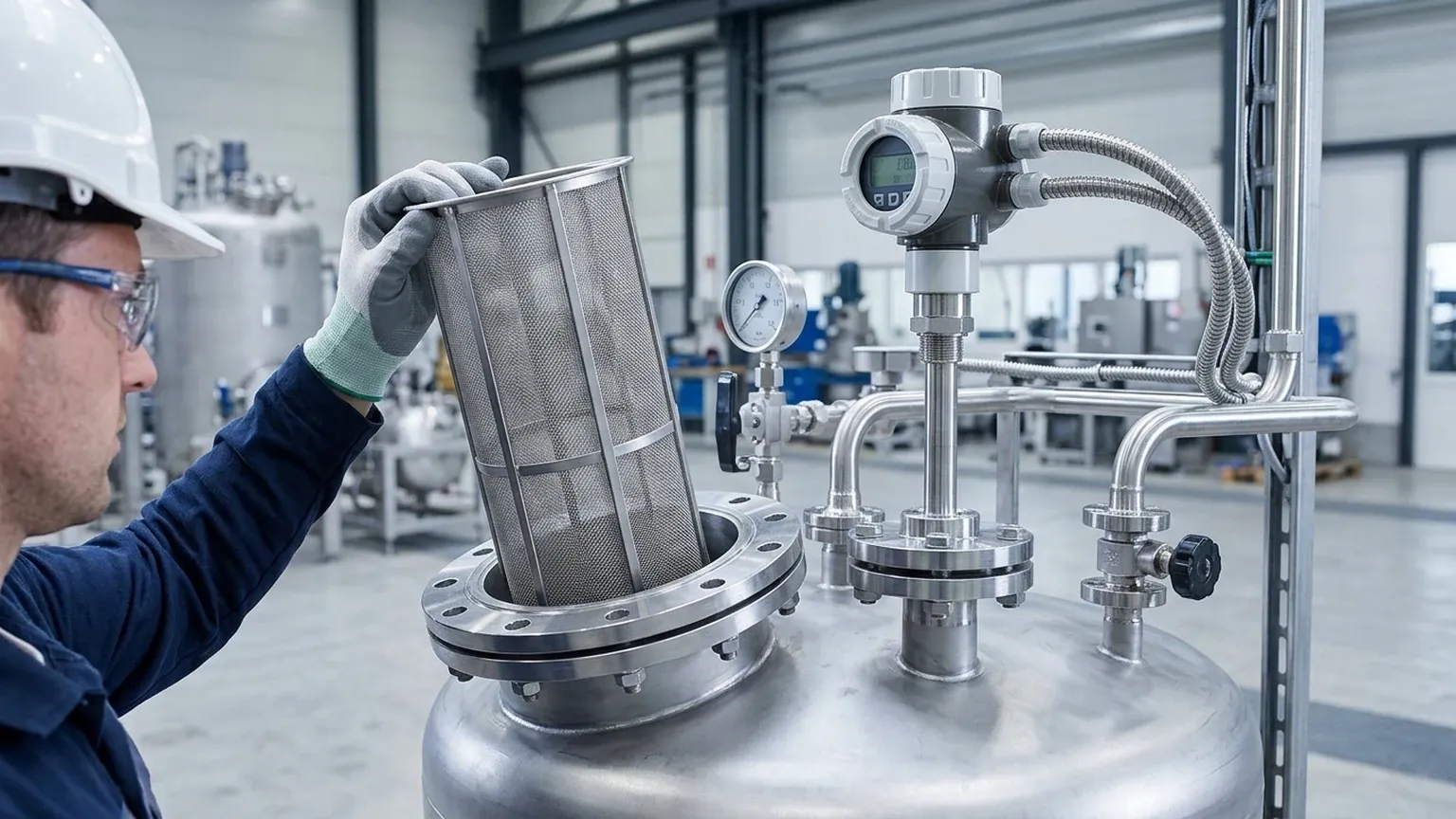
The primary function of a wire mesh filter basket is to provide surface filtration. As fluid passes through the mesh, particles larger than the pore size are trapped on the upstream side. Because these baskets are typically installed within a strainer housing, they are designed to handle high-volume flow with minimal resistance.
Flow Dynamics and Effective Filtration Area (EFA)
One of the most critical factors in basket design is the Effective Filtration Area (EFA). A larger EFA reduces the velocity of the fluid as it passes through the mesh, which in turn minimizes the pressure drop (ΔP) across the filter. Engineers must balance the mesh density with the structural requirements of the basket. If the mesh is too fine without sufficient support, the fluid velocity may cause mechanical deformation or "blinding," where particles become permanently lodged in the mesh openings.
Surface vs. Depth Filtration
While wire mesh is primarily a surface filtration medium, multi-layered sintered mesh configurations can provide a degree of depth filtration. In a standard wire mesh filter basket, the focus is on ease of cleaning and consistent pore size. For applications requiring the capture of deformable particles or high dirt-holding capacity, engineers may specify pleated mesh designs to increase the surface area within the same footprint.
Material Selection and Structural Integrity
Industrial filtration environments are often characterized by corrosive fluids, extreme temperatures, and high mechanical stress. The choice of material is the first line of defense against premature failure.
Stainless Steel Grades
* SS304: The standard choice for general industrial applications, providing good corrosion resistance and mechanical strength at a cost-effective price point.
* SS316L: Preferred for pharmaceutical, food and beverage, and marine applications. The addition of molybdenum enhances resistance to pitting and crevice corrosion, particularly in chloride-rich environments.
* Specialty Alloys: For highly aggressive chemical processing, alloys such as Hastelloy, Monel, or Inconel may be utilized to withstand extreme pH levels or high-temperature oxidation.
Structural Reinforcement
A wire mesh filter basket is rarely composed of mesh alone. To withstand the differential pressure exerted by the flow, the mesh is typically supported by a perforated metal cylinder or a heavy-duty wire frame. This internal or external skeleton prevents the mesh from collapsing or bursting. In high-pressure hydraulic or steam applications, the integration of Wire Mesh Filter Cylinders & Tubes as a core component ensures that the basket maintains its geometric integrity even as the filter cake builds up.
Critical Selection Criteria for Industrial Applications
When specifying a wire mesh filter basket, engineers must look beyond simple dimensions. The following parameters define the performance envelope of the component:
Micron Rating and Mesh Count
The micron rating defines the smallest particle size the mesh is intended to retain. However, it is essential to distinguish between "nominal" and "absolute" ratings. A nominal rating indicates the ability to retain a percentage of particles, while an absolute rating refers to the diameter of the largest hard spherical particle that can pass through the mesh. The mesh count (the number of wires per linear inch) determines the open area percentage, which directly impacts flow capacity.
Weave Types
* Plain Weave: The simplest and most common weave, offering high open area and straightforward cleaning.
* Dutch Weave: Utilizes heavier warp wires and finer shute wires, resulting in a dense, high-strength mesh with very fine filtration capabilities.
* Twill Weave: Allows for thicker wires in a given mesh count, increasing the mechanical durability of the basket.
Effective Sealing Mechanisms
Filtration efficiency is compromised if fluid can bypass the basket. Engineers must specify the sealing interface, whether it be a machined flange, an O-ring groove, or a spring-loaded top. A precision-engineered flange ensures a metal-to-metal or gasketed seal within the strainer housing, preventing bypass even under fluctuating pressure conditions.
Installation Constraints and Design Configurations
The physical configuration of the wire mesh filter basket must align with the existing housing and the operational workflow of the facility.
Basket Geometry
While cylindrical baskets are standard, tapered designs are often used to facilitate easier removal when the basket is full of heavy debris. The bottom of the basket can be flat, rounded, or fitted with a drain plug to assist in the recovery of filtered solids.
Handle and Lifting Options
For large-scale industrial strainers, the weight of a loaded filter basket can be significant. Design considerations include:
* Bail Handles: Standard for manual removal.
* Heavy-Duty Lifting Eyes: Required for baskets handled by overhead cranes.
* Slotted Handles: Designed to lock the basket into position, preventing rotation or lifting caused by turbulent flow.
Performance Management and Operational Risks
Failure to monitor the condition of a wire mesh filter basket can lead to catastrophic system failure. Engineers should implement a rigorous maintenance and monitoring protocol.
Pressure Drop (ΔP) Monitoring
The most reliable indicator of filter performance is the differential pressure. As the mesh becomes loaded with contaminants, the ΔP increases. If the pressure exceeds the design limit of the basket, the mesh may rupture, or the bypass valve (if present) may open, allowing unfiltered fluid downstream. Automated systems often include ΔP sensors that trigger a cleaning cycle or an alarm when the basket reaches 75% of its maximum allowable pressure drop.
Cleaning and Regeneration
One of the primary advantages of a stainless steel wire mesh filter basket is its cleanability. Depending on the contaminant, baskets can be cleaned via:
* Backwashing: Reversing the flow to dislodge particles.
* Ultrasonic Cleaning: Using high-frequency sound waves to remove fine particles from deep within the weave.
* Chemical Cleaning: Using solvents or acids to dissolve organic or mineral scaling, provided the material is compatible.
Fatigue and Mechanical Wear
In systems with pulsating flow or frequent pressure surges, the mesh can experience metal fatigue. Over time, this leads to micro-cracks near the weld points or where the mesh meets the support structure. Regular visual inspections and integrity testing are necessary to identify these issues before they result in a breach.
Procurement Checklist for International Buyers
To ensure that a custom-manufactured wire mesh filter basket meets the technical requirements of a project, procurement teams should confirm the following details with the manufacturer:
1. Fluid Characteristics: Specify the viscosity, temperature, and chemical composition of the fluid to ensure material compatibility.
2. Contaminant Profile: Identify the type of solids (hard, soft, fibrous) and the expected particle size distribution.
3. Flow Rate Requirements: Provide the minimum, normal, and maximum flow rates to calculate the required EFA.
4. Maximum Allowable ΔP: Define the threshold at which the basket must be cleaned or replaced.
5. Connection Standards: Ensure the flange dimensions and bolt patterns match the housing (e.g., ANSI, DIN, or JIS standards).
6. Certification Needs: For specific industries, documentation such as Material Test Reports (MTRs), FDA compliance for food contact, or pressure vessel certifications may be required.
Conclusion
The wire mesh filter basket is a fundamental component in industrial fluid management, offering a balance of durability, precision, and cost-effectiveness. By understanding the technical nuances of mesh selection, structural support, and flow dynamics, engineers can specify filtration solutions that protect sensitive downstream equipment and maintain process efficiency. Whether for a standard water treatment plant or a complex chemical refinery, the correct application of these metal filtration components is essential for operational reliability.
For those seeking specialized configurations, such as high-pressure inserts or precision-welded assemblies, exploring advanced Wire Mesh Filter Cylinders & Tubes can provide the necessary structural foundation for a high-performance basket design. Through careful engineering and informed procurement, industrial facilities can achieve a filtration system that minimizes downtime and maximizes product quality.
