


Universal Urinal Strainers
In the management of commercial and industrial facilities, the reliability of plumbing infrastructure is often determined by the smallest components. Among these, universal urinal strainers play a critical role in maintaining hygiene, preventing costly pipe blockages, and ensuring the efficient operation of wastewater systems. For engineers and facility managers, selecting the right filtration component is not merely a matter of fitment but a strategic decision involving material science, hydraulic performance, and long-term maintenance costs.
As a specialized manufacturer of industrial filtration solutions, Kaifil provides a range of Strainers & Baskets designed to meet the rigorous demands of high-traffic environments. Understanding the technical nuances of these components is essential for optimizing facility uptime and reducing the total cost of ownership.
The Role of Strainers & Baskets in Plumbing Infrastructure
Industrial and commercial plumbing systems are susceptible to debris that can lead to significant downstream issues. Universal urinal strainers serve as the primary mechanical barrier in the drainage system. Their primary function is to capture solid waste—ranging from paper debris and cigarette butts to mineral scale—before it enters the narrow P-traps and lateral lines of a building's plumbing.
From an engineering perspective, these strainers are a subset of the broader category of industrial strainers. While their application is specific to sanitation, the principles of fluid dynamics and particle retention remain the same. A well-designed strainer must balance two competing requirements: maximum debris retention and minimum flow restriction. If the filtration media is too fine, the strainer will clog rapidly, leading to standing water and hygiene issues. If it is too coarse, it fails to protect the plumbing infrastructure from blockages.
Material Selection: The Case for Stainless Steel
One of the most critical decisions in specifying universal urinal strainers is the material of construction. While plastic and silicone alternatives are common in low-traffic retail environments, industrial and high-use commercial facilities require the durability and chemical resistance offered by metal alloys.
Corrosion Resistance
Urinals present a uniquely harsh environment for metals. The combination of uric acid, urea, and various cleaning chemicals can quickly degrade inferior materials. Kaifil specializes in the use of high-grade stainless steel, typically Type 304 or Type 316, for filtration components. Stainless steel forms a passive chromium oxide layer that protects the base metal from oxidation and chemical attack, ensuring that the strainer maintains its structural integrity over years of service.
Hygiene and Sanitation
Stainless steel is non-porous, making it inherently resistant to the growth of bacteria and biofilms. In public and industrial restrooms, where sanitation is a primary concern, the ability to thoroughly clean and disinfect filtration components is vital. Unlike plastic, which can develop micro-fissures that harbor pathogens, stainless steel can withstand aggressive steam cleaning and concentrated chemical disinfectants without degrading.
Structural Integrity
Universal urinal strainers in commercial settings are often subjected to physical stress, whether from high-pressure cleaning or accidental impact. Stainless steel strainers offer superior tensile strength compared to synthetics, preventing warping or cracking that could allow debris to bypass the filter and enter the drain line.
Engineering the "Universal" Fit
The term "universal" in the context of urinal strainers refers to the component's ability to interface with a wide variety of drain diameters and configurations. Achieving a universal fit requires careful consideration of geometry and tolerances.
Dimensional Standardization
Most commercial urinals utilize standard drain sizes, but variations in manufacturing can lead to slight differences in the internal diameter of the drain throat. A universal design often incorporates a tapered profile or a flexible perimeter to accommodate these variances. Engineers must ensure that the strainer sits flush with the drain surface to prevent debris from slipping underneath the edges.
Flow Rate Considerations
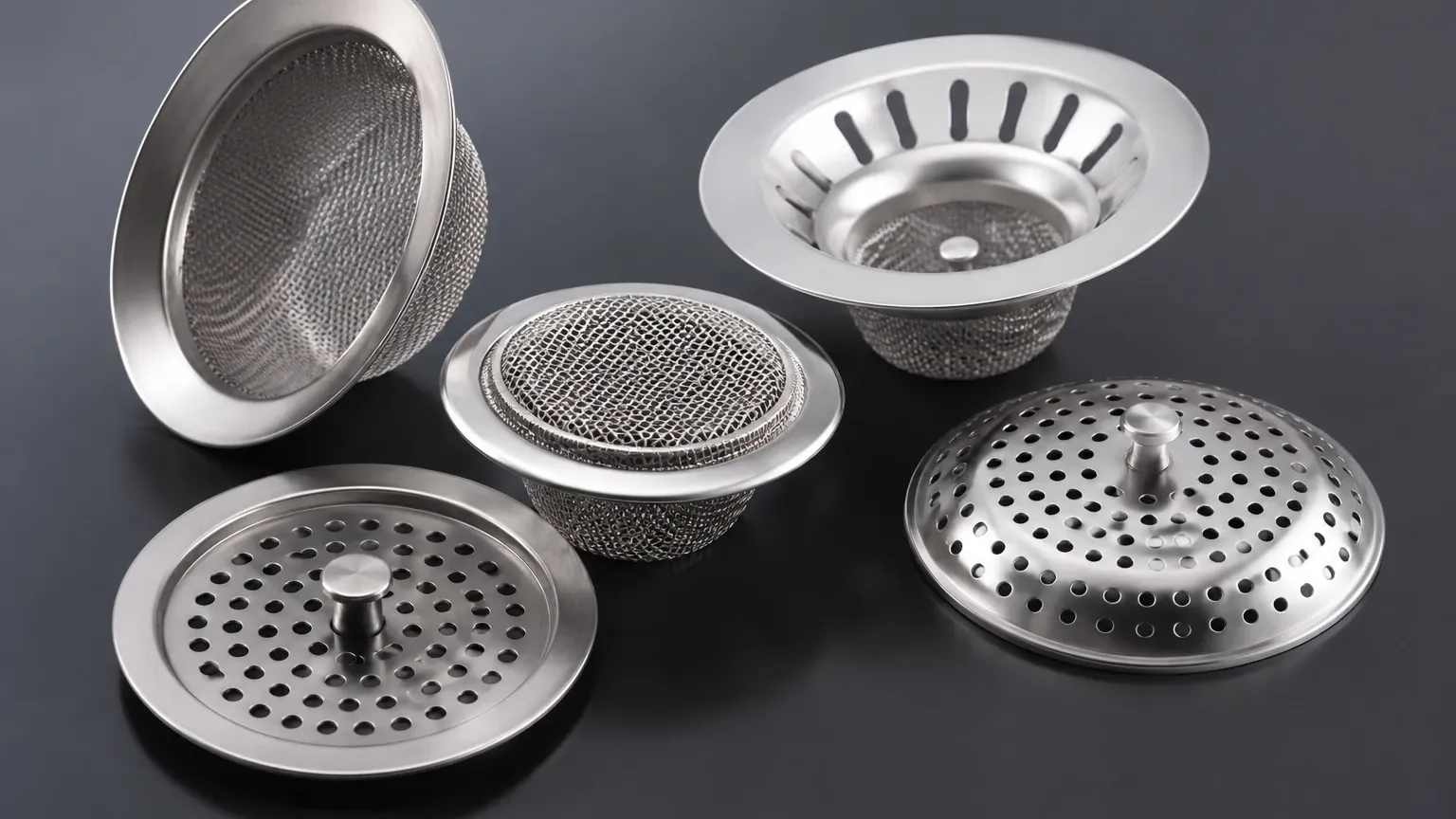
When designing universal urinal strainers, the open area ratio (OAR) is a key metric. The OAR is the ratio of the total area of the holes to the total area of the strainer face. For a strainer to be effective in a high-flow environment, such as those found in stadiums or large office complexes, the OAR must be high enough to handle the peak discharge of the flush valve without causing backup. Precision-punched or etched stainless steel allows for a higher hole density than molded plastic, providing superior flow characteristics in a compact footprint.
Filtration Performance and Clog Prevention
The primary technical objective of a strainer is the retention of solids. In industrial filtration, this is often measured by the "micron rating" or "mesh size." For universal urinal strainers, the goal is to capture macroscopic solids that are likely to cause mechanical blockages.
Particle Retention Strategy
Debris in commercial restrooms is unpredictable. A robust strainer design utilizes a pattern of apertures that can trap elongated objects (like straws or stirrers) as well as spherical or irregular particles. By utilizing advanced manufacturing techniques, such as CNC punching or laser cutting, manufacturers can create complex hole patterns that optimize retention while maintaining structural rigidity.
Preventing Scale Buildup
In many regions, hard water leads to the accumulation of calcium and magnesium scale within the drain lines. While a strainer cannot filter out dissolved minerals, it can prevent the entry of scale flakes that have broken off from the urinal porcelain or the flush pipe. By capturing these solids at the source, universal urinal strainers prevent them from settling in the P-trap, where they can act as a substrate for further mineral accumulation and eventual blockage.
Maintenance, Longevity, and Total Cost of Ownership
For B2B buyers and procurement teams, the initial purchase price of a component is only one part of the financial equation. The total cost of ownership (TCO) includes installation, cleaning labor, replacement frequency, and the cost of emergency plumbing repairs avoided by the component's performance.
Replacement Cycles
Plastic strainers are often treated as consumables, replaced every few months due to discoloration, odor absorption, or physical failure. In contrast, a high-quality stainless steel universal urinal strainer is a semi-permanent fixture. With regular cleaning, a metal strainer can last the lifetime of the urinal fixture itself, significantly reducing the waste stream and the administrative burden of frequent reordering.
Ease of Maintenance
Maintenance personnel value components that are easy to service. Stainless steel strainers can be quickly removed, rinsed, and reinstalled. Because they do not absorb odors, they contribute to a better environment for both the maintenance staff and the end-users. Furthermore, the rigid nature of metal strainers ensures they do not become "stuck" or brittle over time, a common issue with aged plastic components.
Custom OEM Solutions for Commercial Applications
While universal designs meet the needs of the majority of applications, certain specialized environments require custom filtration solutions. This is where the expertise of a professional manufacturer like Kaifil becomes invaluable.
Specialized Geometries
In some high-security environments, such as correctional facilities, or in high-end architectural projects, standard universal urinal strainers may not suffice. Custom-engineered strainers can be designed with specific locking mechanisms to prevent unauthorized removal or with unique aesthetic finishes (such as PVD coating) to match the interior design of luxury facilities.
Integrated Filtration Systems
For large-scale industrial sites, the urinal strainer may be the first stage in a multi-stage wastewater treatment process. In these cases, the strainer's mesh size must be precisely coordinated with the downstream filtration equipment to ensure system-wide efficiency. Kaifil works closely with engineering teams to develop customized Strainers & Baskets that meet these specific technical requirements.
Conclusion: Selecting the Right Filtration Partner
The selection of universal urinal strainers is a detail that impacts the operational efficiency of an entire facility. By moving away from disposable plastic options and toward precision-engineered stainless steel components, facility managers can achieve better hygiene, lower maintenance costs, and greater environmental sustainability.
When evaluating suppliers, it is essential to consider their manufacturing capabilities and their understanding of industrial filtration principles. A partner like Kaifil brings technical expertise in material selection, precision manufacturing, and customized design to the table, ensuring that every filtration component—no matter how small—performs to the highest standard.
For engineers and purchasing professionals looking to optimize their facility's plumbing performance, focusing on the quality of the primary filtration stage is a proven strategy for long-term success. Investing in durable, high-performance strainers is not just a maintenance choice; it is an engineering decision that protects the building's most vital infrastructure.
