


Veebee Strainers
In the landscape of industrial fluid handling, the protection of sensitive downstream equipment—such as pumps, valves, meters, and heat exchangers—is a primary engineering concern. Among the most recognized names in pipeline protection are Veebee strainers, a range of filtration components designed to remove unwanted solids from liquid, gas, or steam lines. For engineers and procurement specialists, understanding the technical nuances of these strainers is essential for maintaining system integrity and optimizing the total cost of ownership.
Industrial filtration is not a one-size-fits-all discipline. The selection of a strainer involves a complex calculation of flow rates, pressure differentials, and material compatibility. Whether a facility utilizes standardized cast units or requires custom-engineered Strainers & Baskets, the fundamental goal remains the same: ensuring that the internal filtration element can withstand the mechanical stresses of the application while providing the necessary micron rating.
Understanding the Design Principles of Veebee Strainers
Veebee strainers are categorized primarily by their body configuration and the flow path they facilitate. The most common designs include Y-type strainers, T-type strainers, and various basket (simplex or duplex) configurations. Each serves a specific role based on the installation environment and the expected debris load.
Y-Type Strainers
The Y-type design is perhaps the most versatile for high-pressure applications. Its compact shape allows for installation in both horizontal and vertical pipelines, provided the "leg" of the Y points downward to collect debris. In steam applications, Y-strainers are often preferred due to their ability to handle high pressures without the bulk of a basket-style unit. However, they typically have a smaller dirt-holding capacity compared to baskets, making them more suitable for systems with lower concentrations of suspended solids.
Basket and Mono-in-Line Strainers
Basket strainers, often referred to as mono-in-line or simplex strainers, feature a larger internal volume. This design allows for a higher "Open Area Ratio" (OAR), which refers to the ratio between the total open area of the filter medium and the cross-sectional area of the inlet pipe. A higher OAR results in a lower initial pressure drop and longer intervals between cleaning cycles. These are typically used in horizontal pipelines where the flow can be momentarily shut down for basket removal.
Duplex Strainers
For critical processes that cannot be interrupted, duplex strainers utilize a twin-chamber design with a changeover valve. This allows one side to be cleaned while the other remains in operation, ensuring continuous filtration in 24/7 industrial environments such as chemical refineries or power generation plants.
Material Selection and Engineering Specifications
The longevity of a strainer is largely determined by the materials used in its construction. While cast iron and carbon steel are common for non-corrosive applications, stainless steel is the industry standard for demanding environments. Manufacturers like Kaifil specialize in high-grade stainless steel components that provide superior resistance to oxidation and chemical erosion.
1. Stainless Steel (304/316): These materials are essential for food and beverage, pharmaceutical, and chemical processing. 316 stainless steel, in particular, offers enhanced resistance to chlorides, making it ideal for marine or brine-heavy applications.
2. Specialty Alloys: For extreme temperatures or highly aggressive media, alloys such as Monel, Hastelloy, or Duplex Stainless Steel may be specified. These materials prevent premature failure due to stress corrosion cracking or pitting.
3. Sealing Materials: The choice of gaskets and O-rings (e.g., EPDM, Viton, PTFE) must align with the chemical profile of the fluid and the operating temperature. A failure in the seal can lead to bypass, where unfiltered fluid escapes around the basket, defeating the purpose of the strainer.
Technical Evaluation Criteria for Strainers & Baskets
When evaluating Veebee strainers or custom alternatives, engineers must look beyond the external dimensions. The internal filtration element—the basket or screen—is the most critical component. Several factors dictate its performance:
Micron Rating vs. Perforation
Industrial screens are typically constructed from perforated plate or wire mesh. Perforated plates provide structural strength and are used for coarse filtration (removing large stones or welding slag). Wire mesh is layered over a perforated backup to achieve finer filtration, often down to 20 microns or less. It is a common mistake to specify a mesh that is too fine, which leads to rapid clogging and excessive pressure drop.
Pressure Drop (Delta P)
Every strainer introduces a restriction in the flow. The clean pressure drop should be calculated to ensure it does not exceed the system's allowable limits. As debris accumulates, the pressure drop increases. If the differential pressure becomes too high, the internal basket can collapse, sending both the debris and the damaged filter media downstream into expensive equipment.
Flow Velocity
High flow velocities can cause erosion of the strainer body and the internal mesh. Most industrial guidelines suggest keeping liquid velocities below 3 meters per second (10 feet per second) to minimize turbulence and mechanical wear. In gas or steam applications, these velocities can be significantly higher, requiring reinforced basket designs.
Installation and Maintenance Best Practices
Proper installation is as important as the selection of the strainer itself. A incorrectly installed Veebee strainer can lead to air pockets, inefficient debris collection, and maintenance difficulties.
* Orientation: Y-strainers in steam lines should be installed horizontally with the screen in the horizontal plane. This prevents water from collecting in the pocket, which could otherwise lead to water hammer and erosion. In liquid lines, the leg should point downward.
* Clearance for Removal: Engineers must ensure there is sufficient physical space to remove the basket or screen. In tight piping layouts, this often necessitates the use of "short-pattern" strainers or T-type designs where the element is removed vertically.
* Blow-off Valves: Many Y-strainers and basket strainers feature a threaded plug in the cover. Replacing this with a blow-off ball valve allows for the removal of loose debris without opening the strainer, extending the time between manual cleanings.
Maintenance cycles should be determined by differential pressure monitoring rather than a fixed calendar schedule. Installing DP (Differential Pressure) gauges across the strainer provides a real-time indication of when the internal element requires cleaning. This proactive approach prevents system downtime and protects the structural integrity of the filter basket.
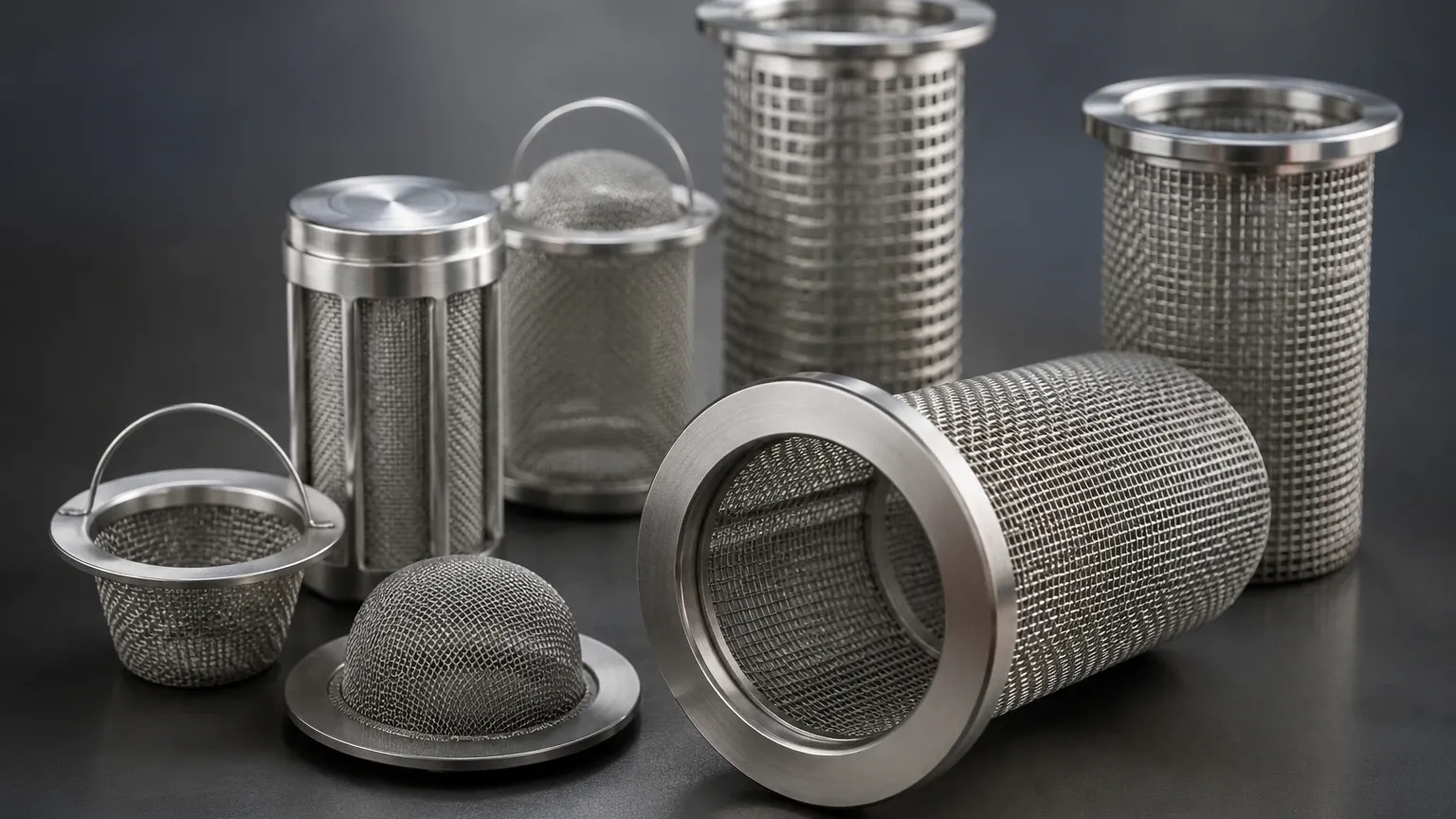
Customization and OEM Solutions in Industrial Filtration
While standard Veebee strainers meet many general-purpose needs, specialized industrial processes often require customized solutions. This is where manufacturers like Kaifil provide significant value. Standard cast strainers may have limitations in terms of specific flange ratings, non-standard dimensions, or unique filtration requirements.
Customization options often include:
* Reinforced Baskets: For high-viscosity fluids or high-pressure differentials, standard baskets may fail. Custom-engineered baskets with internal or external support cages ensure durability.
* Magnetic Inserts: In systems where fine iron or steel particles (black powder) are a concern, magnetic rods can be integrated into the strainer basket to capture sub-micron metallic contaminants that would otherwise pass through the mesh.
* Specialty Coatings: For highly abrasive slurries, internal surfaces can be coated with materials like Tungsten Carbide or specialized polymers to extend the life of the strainer body.
For facilities already using Veebee strainers, sourcing high-quality replacement Strainers & Baskets that meet or exceed original OEM specifications is a cost-effective way to maintain system performance. Custom manufacturers can replicate the dimensions of existing elements while upgrading the mesh material or the structural design to solve recurring failure issues.
Common Risks and Performance Limitations
Failure to properly specify or maintain a strainer can lead to several operational risks:
1. Bypass: If the strainer basket does not seat correctly against the machined surface of the housing, fluid will take the path of least resistance. This allows contaminants to bypass the filter media entirely.
2. Cavitation: If the pressure drop across the strainer is too high, it can cause the fluid pressure to drop below its vapor pressure, leading to cavitation in downstream pumps. This results in rapid mechanical damage and loss of efficiency.
3. Corrosion Fatigue: In systems with fluctuating temperatures or pressures, the constant stress on the filter mesh can lead to fatigue cracks. Regular inspection is necessary to identify these micro-fractures before a total failure occurs.
Conclusion: Selecting the Right Filtration Partner
Veebee strainers represent a standard of reliability in the industry, but their effectiveness is entirely dependent on correct application engineering. Whether you are designing a new pipeline or looking to optimize an existing process, the focus must remain on the technical specifications of the filtration media and the structural integrity of the housing.
By partnering with a specialist manufacturer like Kaifil, engineers gain access to technical expertise in stainless steel filtration and the ability to customize components for specific industrial challenges. From material selection to precision manufacturing, ensuring that your strainers and baskets are fit for purpose is the most effective way to protect your infrastructure and ensure long-term operational success.
