


Wire Strainers Nz
In the industrial landscape of New Zealand, where sectors such as dairy processing, viticulture, water treatment, and chemical manufacturing drive the economy, the reliability of fluid handling systems is paramount. At the heart of these systems lies a critical component often overlooked until a failure occurs: the wire strainer. For engineers and procurement specialists sourcing wire strainers nz, understanding the technical nuances of these components is essential for maintaining operational uptime and protecting expensive downstream equipment like pumps, heat exchangers, and flow meters.
Industrial filtration is not a one-size-fits-all solution. The selection of Strainers & Baskets requires a deep dive into fluid dynamics, material science, and mechanical engineering. This guide examines the critical factors involved in selecting, specifying, and maintaining wire strainers within demanding industrial environments.
The Role of Wire Strainers in Industrial Processes
A wire strainer is a closed vessel with a cleanable screen element designed to remove foreign particles from a flowing liquid or gas. Unlike filters, which typically remove particles down to the sub-micron level and are often disposable, strainers are generally used for coarser filtration (20 mesh and larger) and are designed for repeated cleaning and reuse.
In the context of New Zealand’s primary industries, wire strainers serve as the first line of defense. In dairy processing, they remove coagulated solids or incidental debris before the milk reaches pasteurization units. In municipal water treatment, they protect sensitive membranes from larger sediment. The primary objective is to prevent mechanical damage and clogging, which can lead to costly unscheduled downtime and repairs.
Engineering Considerations: Material Selection and Durability
When evaluating wire strainers nz, the choice of material is the most significant factor affecting longevity and performance. Given New Zealand’s coastal geography and the prevalence of corrosive cleaning agents in food-grade environments, stainless steel is the industry standard.
SS304 vs. SS316L
* Stainless Steel 304: Suitable for general-purpose applications where corrosion risk is moderate. It offers excellent strength and cost-effectiveness for water-based systems and standard industrial fluids.
* Stainless Steel 316L: The "L" denotes low carbon, which improves weldability and resistance to intergranular corrosion. SS316L contains molybdenum, making it significantly more resistant to chlorides and pitting. This is the preferred choice for marine environments, chemical processing, and any application involving high-salinity fluids or aggressive CIP (Clean-in-Place) chemicals.
Beyond the alloy, the structural integrity of the mesh itself matters. High-pressure systems require reinforced wire mesh or perforated plate backing to prevent the strainer element from collapsing under differential pressure. At Kaifil, we emphasize the importance of precision welding and mesh tensioning to ensure that the strainer maintains its geometric stability throughout its service life.
Technical Specifications: Mesh, Micron, and Open Area
Selecting the correct filtration grade is a balancing act between particle retention and pressure drop. Engineers must define the "allowable particle size" for the downstream equipment.
Understanding Mesh and Micron
* Mesh Count: Refers to the number of openings per linear inch. A higher mesh count indicates a finer screen.
* Micron Rating: Refers to the actual size of the opening (1 micron = 0.001 mm).
It is vital to distinguish between nominal and absolute ratings. A nominal rating indicates the strainer will trap a percentage of particles of a certain size, while an absolute rating (common in high-precision wire mesh) ensures that no particle larger than the rating can pass through.
The Importance of the Open Area Ratio
One of the most critical engineering metrics for Strainers & Baskets is the ratio of the net open area of the screen to the cross-sectional area of the inlet pipe. A common industry standard is a 4:1 ratio. A higher ratio allows for a lower initial pressure drop and longer intervals between cleanings. If the open area is too low, fluid velocity through the screen increases, which can lead to particle "breakthrough" or accelerated erosion of the wire mesh.
Types of Strainer Configurations
The physical configuration of the strainer must align with the piping layout and the required maintenance frequency.
1. Simplex Basket Strainers
These are used in systems where the flow can be intermittently stopped for cleaning. They feature a top-loading basket that is easy to remove. For NZ operations that run in batches, simplex strainers offer a cost-effective and robust solution.
2. Duplex (Twin) Strainers
In continuous process industries—such as power generation or large-scale chemical plants—stopping the flow is not an option. Duplex strainers consist of two separate strainer chambers connected by a diversion valve. When one side becomes clogged, the flow is switched to the clean chamber, allowing the dirty basket to be serviced without interrupting the process.
3. Y-Strainers
Named for their shape, Y-strainers are typically used for steam, gas, or liquid applications where the amount of material to be removed is small. They are compact and can be installed in either horizontal or vertical pipelines. However, they generally have a smaller dirt-holding capacity compared to basket-style strainers.
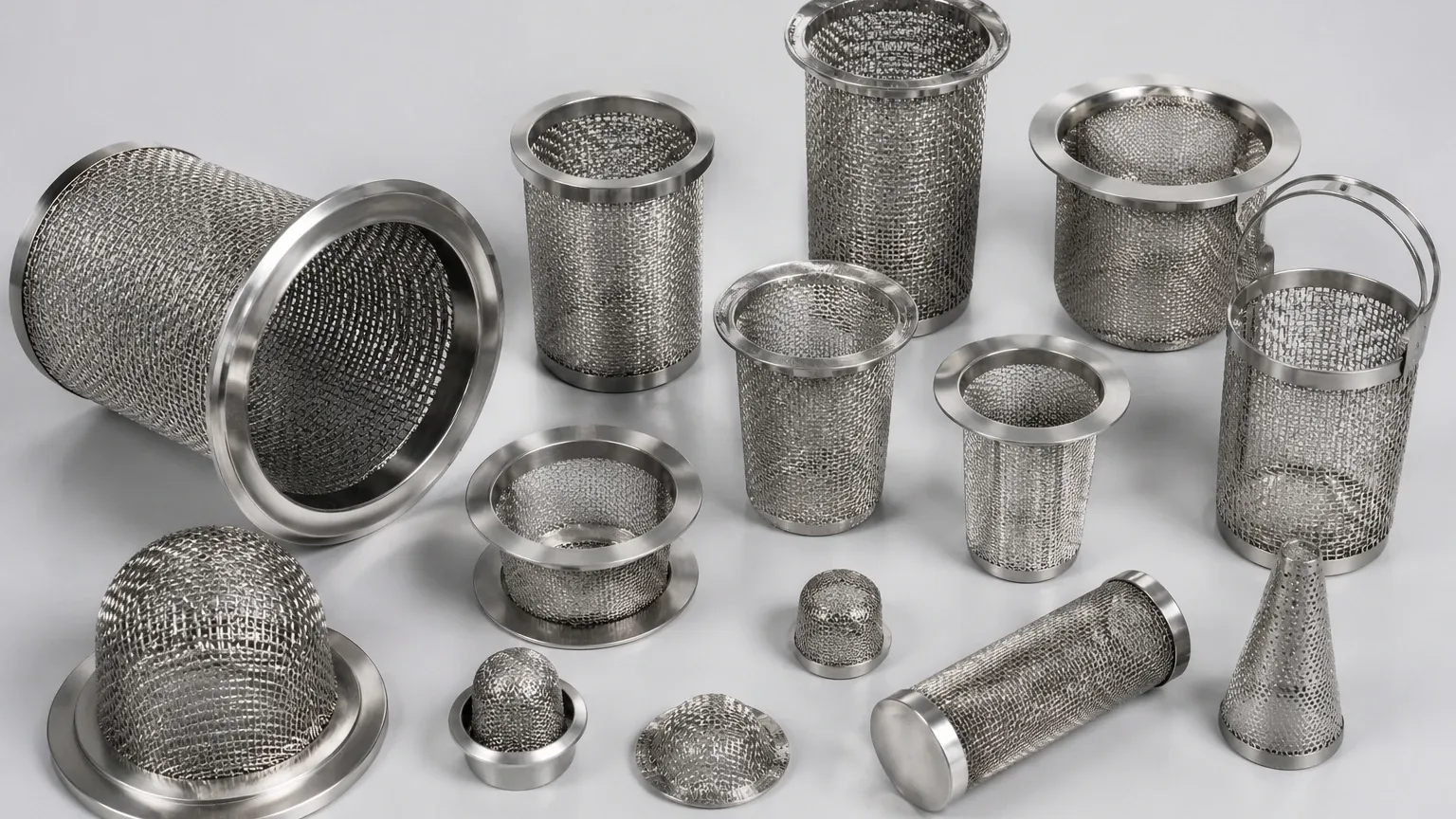
Customization and OEM Solutions for the NZ Market
Off-the-shelf solutions often fail to meet the specific spatial or performance constraints of modern industrial plants. Customization is a core strength of Kaifil’s manufacturing process. When sourcing wire strainers nz, engineers should look for manufacturers capable of providing:
* Custom Flange Connections: Matching existing piping standards (ANSI, DIN, or JIS) without the need for adapters.
* Specialty Linings: For highly abrasive slurries, adding protective coatings or using heavy-duty wedge wire can extend the life of the component.
* Magnetic Inserts: In metalworking or hydraulic applications, adding magnetic rods to the basket can capture fine ferrous particles that might otherwise pass through the mesh.
* Sanitary Finishes: For the food and beverage sector, ensuring internal surfaces are polished to a specific Ra (Roughness Average) to prevent bacterial growth and ensure compliance with hygiene standards.
Evaluating Total Cost of Ownership (TCO)
When purchasing industrial filtration components, the initial purchase price is only a fraction of the total cost. Procurement teams must consider the following:
* Pressure Drop Costs: A poorly designed strainer with a high pressure drop forces pumps to work harder, significantly increasing energy consumption over time.
* Maintenance Labor: How long does it take to open the vessel and clean the basket? Quick-opening covers and ergonomic basket handles can reduce labor costs.
* Durability: A cheap, low-quality wire strainer may suffer from mesh fatigue or bypass leaks, leading to the failure of expensive downstream components. Investing in high-quality stainless steel construction from a reputable manufacturer like Kaifil ensures a longer service life and better protection.
* Replacement Cycles: High-quality wire mesh can be cleaned and reused hundreds of times. Inferior mesh may fray or tear after only a few cleaning cycles, necessitating frequent replacements.
Maintenance and Performance Monitoring
To ensure the continued efficiency of wire strainers, a proactive maintenance schedule is required. The most effective way to monitor strainer performance is through differential pressure (DP) measurement. By installing pressure gauges upstream and downstream of the strainer, operators can see exactly when the basket is becoming loaded with debris.
Cleaning should be performed once the DP reaches a predetermined limit (often 5-10 psi over the clean pressure drop). Waiting too long can cause the mesh to deform or even rupture under the increased pressure. When cleaning, it is important to use soft brushes or ultrasonic baths for fine mesh to avoid damaging the wire structure. For heavy-duty baskets, high-pressure water jets are effective, provided they are used at the correct angle to flush particles out of the mesh rather than wedging them deeper.
Why Technical Expertise Matters in Selection
Choosing the right wire strainer is an engineering decision that impacts the safety and efficiency of an entire production line. Whether you are dealing with the high-viscosity fluids of a processing plant or the high-volume flow of a water treatment facility, the technical specifications of your Strainers & Baskets will dictate your system's reliability.
At Kaifil, we combine advanced manufacturing capabilities with deep engineering knowledge to provide filtration solutions that go beyond the standard. We understand the specific challenges faced by the New Zealand industrial sector, from strict sanitary requirements to the need for components that can withstand harsh environmental conditions. Our focus on quality material selection, precise filtration accuracy, and customized design ensures that every strainer we produce delivers dependable performance in the most demanding environments.
For engineers and purchasing teams looking to optimize their filtration processes, the path forward involves a clear understanding of application requirements and a partnership with a manufacturer that prioritizes technical excellence. By focusing on the details—mesh geometry, material grade, and flow dynamics—you can ensure that your wire strainers provide the protection your equipment deserves, maintaining the productivity and integrity of your operations for years to come.
