


Wire Strainers Bunnings
In the realm of fluid management and debris control, wire strainers are essential components that protect downstream equipment from damage and ensure the purity of the medium being transported. For many small-scale projects, domestic maintenance, or light agricultural tasks, searching for wire strainers at retail hardware outlets like Bunnings is a common starting point. Retail options provide immediate availability for standard tasks such as gutter protection, basic irrigation filtering, or simple plumbing repairs.
However, for industrial engineers, procurement managers, and technical professionals operating in sectors like chemical processing, food and beverage, or hydraulic systems, the requirements for Strainers & Baskets often exceed the specifications found in general consumer-grade hardware. While wire strainers from retail stores serve a vital role in the DIY and residential markets, industrial applications demand a higher level of material integrity, filtration precision, and structural durability. Understanding the distinction between retail-grade components and engineered industrial solutions is critical for maintaining system efficiency and preventing costly downtime.
Understanding the Application Scope for Wire Strainers
When evaluating wire strainers, the first step is to define the application's specific environment. Retail-grade wire strainers, such as those found in the plumbing or gardening aisles of hardware stores, are typically designed for low-pressure environments where the primary goal is to catch large debris like leaves, twigs, or coarse sediment. These products are often mass-produced using standard dimensions that fit common residential piping or fencing systems.
In contrast, industrial wire strainers must withstand significant mechanical stress. In a B2B context, a strainer is not just a barrier; it is a precision-engineered component of a larger process. Industrial systems often involve high flow velocities, fluctuating pressures, and chemically aggressive fluids. For these environments, the "off-the-shelf" approach of retail wire strainers may lead to premature failure. Engineers must consider the mechanical properties of the wire mesh, the method of reinforcement, and the compatibility of the alloys used in construction.
Material Selection: Stainless Steel vs. Standard Alloys
One of the most significant differences between consumer-grade wire strainers and industrial filtration components is the quality and grade of the material. At retail outlets, wire strainers may be made of galvanized steel or standard 304-grade stainless steel. While these are suitable for many outdoor or water-based applications, they may not provide sufficient corrosion resistance for industrial use.
The Importance of Stainless Steel Grades
In industrial filtration, the choice between Stainless Steel 304 and 316 is pivotal.
* SS 304: Offers good corrosion resistance and is suitable for most water-based and food-grade applications. It is the standard for many high-quality retail products.
* SS 316/316L: Contains molybdenum, which significantly increases resistance to chlorides and acidic environments. This is often the requirement for chemical processing and marine applications where a retail-grade strainer would succumb to pitting or stress corrosion cracking.
Industrial manufacturers like Kaifil specialize in these high-performance alloys, ensuring that the Strainers & Baskets provided can endure the specific chemical profile of the process fluid. For an engineer, selecting the right material is a balance between initial cost and the total cost of ownership, as a more expensive 316L strainer will often outlast multiple 304-grade replacements in harsh conditions.
Engineering Considerations for Industrial Strainers & Baskets
When moving beyond the scope of wire strainers found at retail stores, several engineering parameters must be rigorously evaluated to ensure system performance.
Micron Rating and Filtration Efficiency
Retail wire strainers are usually categorized by mesh count or general descriptions (e.g., "fine" or "coarse"). In industrial procurement, precision is paramount. Filtration requirements are defined by micron ratings, which specify the exact size of particles the strainer is designed to intercept. Achieving a specific micron rating requires high-quality wire cloth with consistent aperture sizes. If the mesh is inconsistent—a common issue in low-cost, mass-produced items—larger particles may bypass the filter, leading to the failure of sensitive downstream components like pumps or spray nozzles.
Pressure Drop and Flow Rate
Every strainer introduces a degree of resistance into a fluid system, known as pressure drop (ΔP). An incorrectly sized strainer can cause a significant drop in pressure, forcing pumps to work harder and increasing energy consumption. Industrial-grade Strainers & Baskets are designed with specific open area ratios to maximize flow while maintaining filtration integrity. Engineers must calculate the clean pressure drop and the terminal pressure drop (the point at which the strainer must be cleaned) to ensure the system remains within its operational envelope.
Structural Integrity and Reinforcement
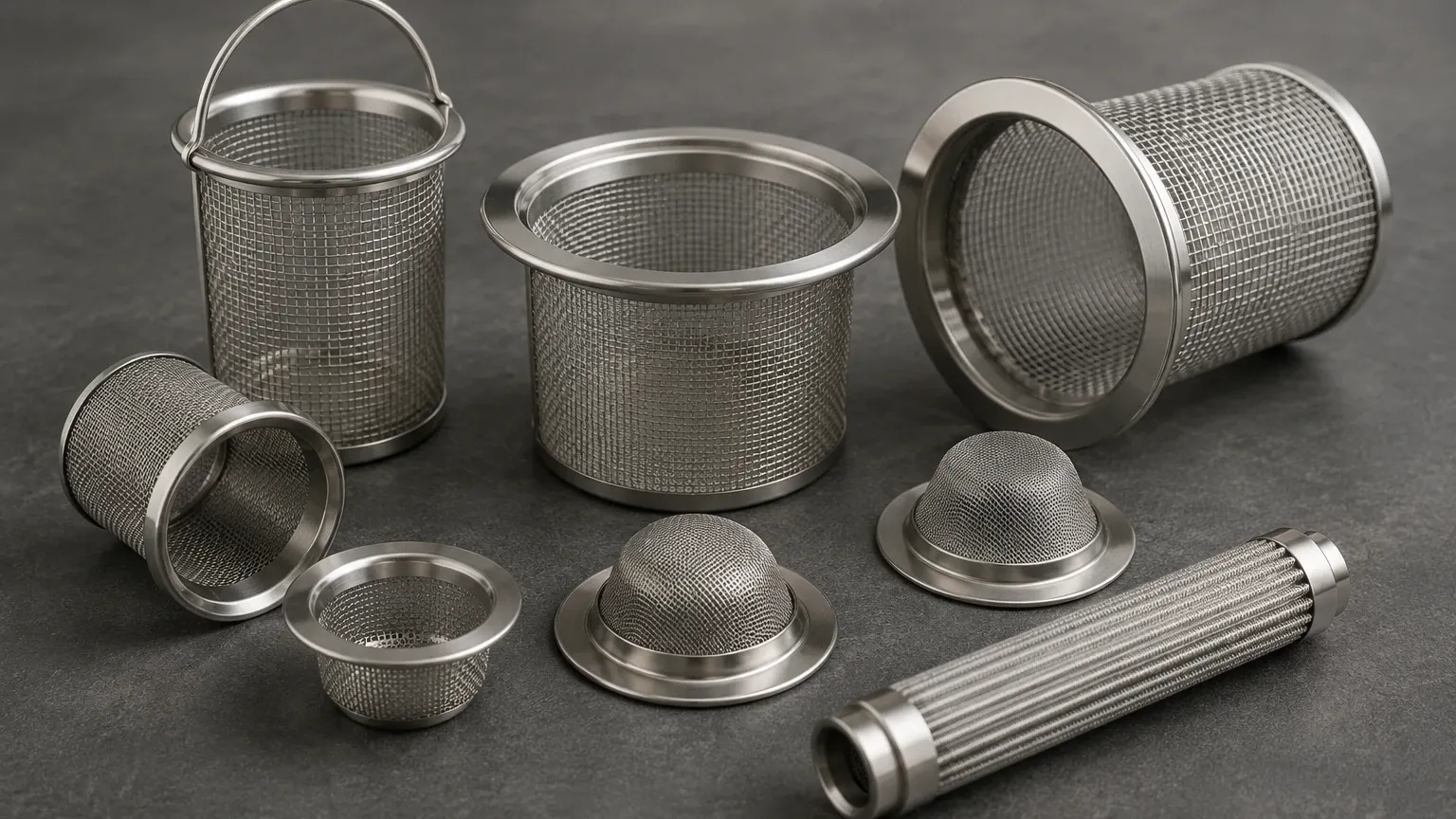
In high-pressure applications, the force of the fluid can cause a thin wire mesh to collapse or burst. Industrial strainers often feature a multi-layer construction where the fine filtration mesh is supported by a coarser, heavier-duty mesh or a perforated metal basket. This reinforcement allows the strainer to handle high differential pressures that would destroy a standard retail wire strainer.
Comparing Retail Availability and Custom OEM Solutions
For a maintenance team needing a quick fix for a non-critical water line, the convenience of retail wire strainers is undeniable. However, for original equipment manufacturers (OEMs) and large-scale industrial plants, custom solutions offer long-term advantages.
Customization vs. Standardization
Retail products are built to standard sizes. Industrial processes, however, often involve unique pipe diameters, non-standard flange connections, or specific space constraints. Custom-manufactured Strainers & Baskets can be designed to fit perfectly into existing infrastructure, eliminating the need for awkward adapters or system modifications. Customization also extends to the shape of the strainer—whether it be conical (witch's hat), T-type, Y-type, or a complex basket design intended for high-capacity solids handling.
Quality Assurance and Traceability
In regulated industries such as pharmaceuticals or food processing, material traceability is a legal requirement. Industrial manufacturers provide material test reports (MTRs) and certificates of compliance, ensuring that the stainless steel used is exactly what was specified. Retail-purchased items rarely come with this level of documentation, which can pose a significant risk during safety audits or quality control inspections.
Maintenance and Replacement Cycles
Reliability in an industrial setting is often measured by the length of the maintenance cycle. A wire strainer that requires frequent cleaning or replacement due to structural failure is a liability.
Cleaning Protocols
Industrial strainers are often designed for easy cleaning. Basket-style strainers, for example, allow for the removal of the debris-collecting element without disconnecting the entire piping system. In contrast, many simple wire strainers are intended to be disposable or are difficult to clean thoroughly, leading to a buildup of biofilm or mineral scale that eventually chokes the flow.
Predicting Failure
Engineers look for signs of wear such as mesh blinding (where particles become permanently lodged in the mesh), wire fraying, or gasket degradation. By choosing high-quality industrial components, these failure modes are delayed, allowing for scheduled maintenance rather than emergency repairs. The durability of professional-grade Strainers & Baskets ensures that they can be cleaned and reused many times, providing a better return on investment than cheaper, retail-bought alternatives.
Total Cost of Ownership: Beyond the Initial Purchase
While the price point of a wire strainer at a retail hardware store may be lower, the total cost of ownership (TCO) must be considered. TCO includes the purchase price, installation costs, energy costs associated with pressure drop, maintenance labor, and the cost of potential downtime.
In a B2B environment, a single hour of production downtime can cost thousands of dollars. If a retail-grade strainer fails and allows a piece of metal to damage a high-value centrifugal pump, the "savings" from the initial purchase are instantly negated. Investing in robust, application-specific filtration components is a risk-mitigation strategy that protects the entire production line.
Selecting the Right Filtration Partner
For businesses looking to optimize their filtration processes, the choice of supplier is as important as the choice of product. A professional manufacturer like Kaifil provides more than just a component; they provide engineering expertise. This includes assistance with material selection, advice on mesh configurations, and the ability to produce prototypes for specialized equipment.
When evaluating a supplier for industrial filtration needs, consider the following:
1. Manufacturing Capability: Can they handle custom dimensions and high-volume orders?
2. Technical Support: Do they understand the fluid dynamics of your specific application?
3. Quality Control: What standards do they adhere to (e.g., ISO certifications)?
4. Material Range: Do they offer specialized alloys for extreme environments?
Conclusion
Wire strainers are a fundamental part of maintaining the health of fluid systems. While retail options like those found at Bunnings are excellent for domestic and light-duty tasks, they are rarely the right choice for the rigorous demands of industrial processing. By focusing on high-quality Strainers & Baskets, engineers can ensure that their systems operate with maximum efficiency, minimal downtime, and the highest possible level of safety.
Whether you are designing a new chemical processing plant or upgrading the filtration in a food production line, understanding the technical nuances of wire mesh, material grades, and structural design is essential. Moving beyond the retail shelf to a dedicated industrial filtration partner ensures that your equipment is protected by components engineered specifically for the task at hand.
