


Wire Mesh Filter Manufacturers: An Engineering Guide to Selection and Specification
In industrial process engineering, the selection of filtration components is a critical factor in maintaining system integrity, protecting downstream equipment, and ensuring product purity. Wire mesh filters, particularly in the form of Wire Mesh Filter Cylinders & Tubes, serve as a primary defense against particulate contamination in hydraulic systems, chemical processing, and food production. For procurement teams and engineers, identifying competent wire mesh filter manufacturers involves more than comparing unit prices; it requires a deep understanding of material science, fluid dynamics, and manufacturing tolerances.
This guide provides a technical overview of wire mesh filtration principles, the engineering considerations for specifying filter components, and the criteria for evaluating manufacturers to ensure long-term operational reliability.
1. Engineering Principles of Wire Mesh Filtration
Wire mesh filters operate primarily through surface filtration. Unlike depth filters, which trap particles within a thick medium, wire mesh captures contaminants on the upstream surface of the screen. This mechanism allows for precise control over the maximum particle size that can pass through the system, often referred to as the "micron rating."
Pore Geometry and Weave Types
Wire mesh filter manufacturers utilize different weaving patterns to achieve specific filtration characteristics:
* Plain Weave: The simplest pattern where wires cross over and under each other. It offers the highest flow rates but is limited in its ability to capture very fine particles.
* Twill Weave: Each shute wire passes over and under two warp wires. This allows for heavier wire diameters in a given mesh count, increasing the mechanical strength of the filter.
* Dutch Weave (Plain and Twill): These weaves use a larger diameter for the warp wires and a smaller diameter for the shute wires. This results in a dense, strong mesh with very small, triangular openings, ideal for high-pressure applications and fine filtration.
Absolute vs. Nominal Ratings
When communicating with wire mesh filter manufacturers, engineers must distinguish between nominal and absolute micron ratings. A nominal rating refers to the ability of the filter to retain a percentage of solids (usually 60% to 90%) of a specific size. An absolute rating, however, indicates the diameter of the largest hard spherical particle that will pass through the filter under specified test conditions. For critical applications in the pharmaceutical or aerospace sectors, absolute ratings are mandatory to prevent catastrophic system failure.
2. Material Selection and Chemical Compatibility
The durability of a filter depends heavily on its material composition. Industrial environments often involve corrosive fluids, high temperatures, and fluctuating pressures. Stainless steel is the industry standard due to its balance of mechanical strength and corrosion resistance.
* Stainless Steel 304: Suitable for general industrial use, offering good resistance to atmospheric corrosion and many organic and inorganic chemicals.
* Stainless Steel 316L: The "L" stands for low carbon, which improves weldability and reduces the risk of intergranular corrosion. This material is preferred for marine environments, chemical processing, and food-grade applications where sanitation is paramount.
* Specialty Alloys: In extreme cases involving highly acidic or alkaline media, manufacturers may utilize Hastelloy, Monel, or Inconel. These alloys provide superior resistance to pitting and stress corrosion cracking at elevated temperatures.
Engineers must provide manufacturers with a complete chemical profile of the process fluid, including pH levels, operating temperatures, and the presence of any abrasive particles that could cause premature erosion of the mesh wires.
3. Structural Design of Wire Mesh Filter Cylinders & Tubes
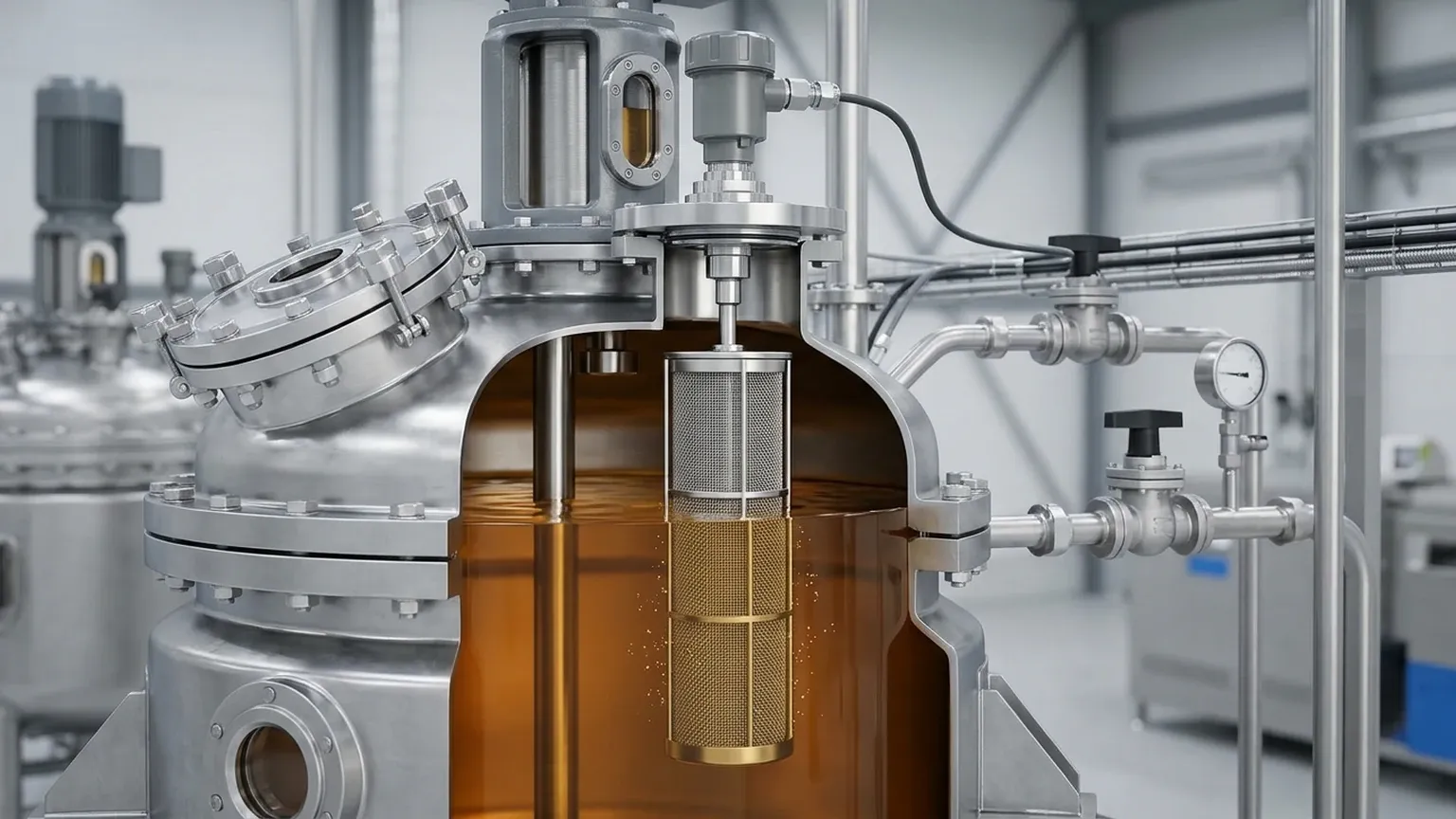
For many industrial applications, the mesh must be formed into rigid shapes to fit within housings or to withstand high differential pressures. Wire Mesh Filter Cylinders & Tubes are the most common configurations, providing a high surface-area-to-volume ratio.
Reinforcement and Support
Fine wire mesh lacks the structural integrity to withstand significant pressure drops ($ \Delta P $). To prevent collapsing or bursting, manufacturers often employ a multi-layer construction:
1. Filtration Layer: The fine mesh that dictates the micron rating.
2. Support Layer: A coarser mesh or perforated metal tube that provides mechanical rigidity.
3. Drainage Layer: Positioned between the filter and support layers to ensure uniform flow distribution across the entire surface area.
Sintered Wire Mesh
In high-pressure or high-vibration environments, standard woven mesh may experience "wire migration," where individual wires shift, altering the pore size. Sintered wire mesh solves this by diffusion-bonding multiple layers of mesh together at high temperatures. This process creates a monolithic structure that maintains its pore geometry even under extreme mechanical stress and allows for easier cleaning via backwashing.
4. Evaluating Wire Mesh Filter Manufacturers
Selecting a manufacturing partner requires an audit of their technical capabilities and quality control protocols. A reliable manufacturer should act as an engineering consultant rather than a simple commodity supplier.
Manufacturing Precision and Welding
The integrity of a filter cylinder is only as strong as its seams. For stainless steel filters, TIG (Tungsten Inert Gas) welding or plasma welding is preferred to ensure clean, slag-free joints that do not introduce contaminants into the process stream. Manufacturers should demonstrate proficiency in welding thin-gauge mesh without compromising the wire's metallurgical properties.
Quality Assurance and Testing
International buyers should verify that the manufacturer adheres to recognized standards, such as ISO 9001. Specific filtration tests may include:
* Bubble Point Test: Used to verify the integrity of the filter and confirm the absolute micron rating.
* Pressure Drop vs. Flow Rate Testing: To ensure the filter meets the system's hydraulic requirements.
* Cleanliness Verification: Ensuring the filter is free of manufacturing oils, metal shavings, or polishing compounds before shipping.
Customization and OEM Capabilities
Off-the-shelf filters rarely meet the exact needs of specialized industrial machinery. Competent wire mesh filter manufacturers offer OEM services, allowing for custom lengths, diameters, end-cap configurations (e.g., NPT threads, flanges, or O-ring seals), and specialized handle designs for ease of maintenance.
5. Installation and Operational Constraints
Even the highest quality filter will fail if improperly installed or operated outside its design parameters. Engineers must consider the following constraints during the system design phase:
Orientation and Flow Direction
Most filter cylinders are designed for outside-to-inside flow, where contaminants accumulate on the exterior surface. This allows for easier visual inspection and manual cleaning. However, inside-to-outside flow may be required in certain self-cleaning systems. The manufacturer must be informed of the flow direction to ensure the support structure is placed on the correct side of the mesh.
Differential Pressure Limits
As the filter captures particles, the pressure drop across the element increases. Manufacturers define a "terminal pressure drop," which is the maximum $ \Delta P $ the filter can withstand before it must be cleaned or replaced. Exceeding this limit can result in "bypass," where the mesh deforms or tears, allowing unfiltered fluid to pass through, or it may lead to the total collapse of the filter element.
Temperature Fluctuations
Rapid changes in temperature can cause thermal expansion and contraction. If the filter element and the housing are made of different materials with different coefficients of thermal expansion, the seals may fail, or the filter may become stuck in the housing. Specifying all-stainless construction usually mitigates this risk.
6. Maintenance, Cleaning, and Total Cost of Ownership
One of the primary advantages of stainless steel wire mesh filters is their cleanability. Unlike disposable polymer cartridges, metal filters can be refurbished multiple times, significantly reducing the total cost of ownership (TCO) over the life of the equipment.
Cleaning Methods
* Backwashing: Reversing the flow of the fluid to dislodge particles from the surface. This is most effective for surface filtration media like sintered mesh.
* Ultrasonic Cleaning: Using high-frequency sound waves in a cleaning solvent to remove fine particles trapped within the mesh openings. This is highly effective for complex, multi-layer filters.
* Chemical Cleaning: Using acids or alkalis to dissolve organic or mineral deposits. The chemical compatibility of the mesh and the seals must be confirmed before proceeding.
Replacement Cycles
While cleanable, wire mesh filters are not infinite. Over time, repeated cleaning and mechanical stress can lead to work-hardening of the wires, eventually resulting in fatigue cracks. Manufacturers can provide estimated service life based on the frequency of cleaning cycles and the nature of the contaminants.
Conclusion
The selection of Wire Mesh Filter Cylinders & Tubes is a technical decision that impacts the efficiency and safety of industrial operations. By focusing on material grade, weave precision, and structural reinforcement, engineers can specify components that withstand the rigors of demanding environments. Partnering with experienced wire mesh filter manufacturers who prioritize technical documentation and quality verification ensures that the filtration system performs according to its design specifications, ultimately protecting the bottom line from unplanned downtime and equipment damage.
