


Industrial Filtration Engineering: Beyond Stainless Steel Mesh Filter Bunnings Solutions
In the landscape of industrial fluid management, the selection of filtration components is a critical engineering decision that directly impacts system longevity, product purity, and operational safety. While many maintenance teams or small-scale operators may initially look toward consumer-grade options—often searching for terms like stainless steel mesh filter bunnings to find quick replacements—industrial-scale applications require a significantly more robust approach. For high-pressure hydraulic systems, chemical processing lines, and pharmaceutical manufacturing, the reliance on off-the-shelf retail components can lead to catastrophic system failure, contamination, or frequent downtime.
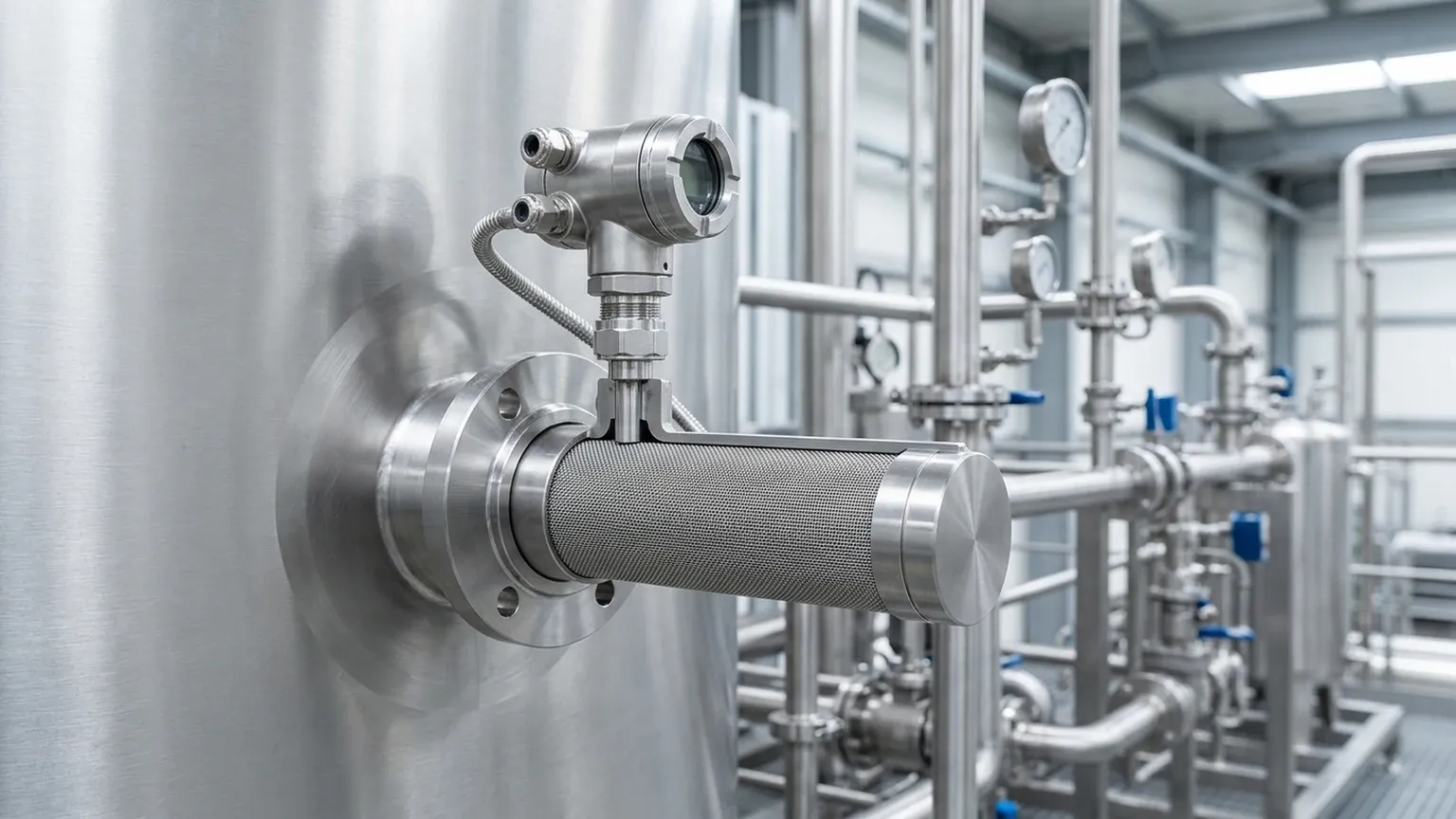
Professional-grade Wire Mesh Filter Cylinders & Tubes are engineered to withstand rigorous mechanical stresses and chemical environments that consumer-level filters are simply not designed to handle. This article examines the technical specifications, material science, and engineering considerations that distinguish industrial filtration solutions from retail alternatives, providing a guide for engineers and procurement specialists to make informed decisions.
1. Material Science: Industrial Alloys vs. Retail Grades
The most fundamental difference between an industrial filter and a standard retail-grade mesh lies in the metallurgy. While a "stainless steel mesh filter bunnings" search might yield products labeled as "304 stainless steel," the quality control and specific alloy composition can vary significantly. In industrial environments, the distinction between Grade 304, 316, and 316L is not merely a matter of price, but of chemical compatibility.
Grade 304 vs. 316L
Grade 304 is the standard "18/8" stainless steel, suitable for basic water filtration and non-corrosive environments. However, in the presence of chlorides or acidic solutions common in chemical processing, 304 is susceptible to pitting corrosion. Industrial Wire Mesh Filter Cylinders & Tubes are more commonly fabricated from Grade 316L. The addition of molybdenum (2-3%) and a lower carbon content in 316L provides superior resistance to chloride-induced corrosion and prevents intergranular corrosion during welding—a critical factor for the structural integrity of filter tubes.
Wire Diameter and Weave Precision
Industrial mesh is manufactured to strict tolerances regarding wire diameter and aperture size. In retail filters, the "mesh count" may be nominal, whereas industrial filters adhere to ISO 9044 standards. This ensures that the filtration rating (micron size) is consistent across the entire surface area, preventing "bypass" where larger particles might pass through irregular openings.
2. Structural Integrity of Wire Mesh Filter Cylinders & Tubes
In an industrial setting, filters are subjected to differential pressure (ΔP). As a filter captures contaminants, the pressure drop across the mesh increases. Retail-grade mesh filters are often designed for gravity-fed or low-pressure applications and may collapse or burst under industrial loads.
Reinforced Architectures
Industrial Wire Mesh Filter Cylinders & Tubes are rarely composed of a single layer of mesh. Instead, they utilize a multi-layer construction:
* The Filtration Layer: A fine-weave mesh (such as Dutch weave) that defines the micron rating.
* The Support Layer: A coarser, heavier wire mesh that provides mechanical strength to the filtration layer.
* The Internal Core: Often a perforated metal tube or a high-strength spiral-wound core that prevents the cylinder from collapsing under high external pressure.
Welding and Joining Technologies
Retail filters often use mechanical crimping or low-grade soldering to join the mesh to the end caps. In contrast, industrial filters utilize TIG (Tungsten Inert Gas) welding or plasma welding. These methods create a fusion bond that is as strong as the parent material, ensuring that the filter can withstand thermal expansion and mechanical vibration without the risk of seam failure.
3. Understanding Micron Ratings: Absolute vs. Nominal
A common point of confusion when comparing industrial filters to products found via a "stainless steel mesh filter bunnings" search is the definition of the micron rating.
* Nominal Rating: This is an arbitrary value indicating the ability of the filter to retain a majority of particles of a specific size. It does not guarantee 100% efficiency. Most retail filters are nominally rated.
* Absolute Rating: This refers to the diameter of the largest hard spherical particle that will pass through the filter under specified test conditions. Industrial Wire Mesh Filter Cylinders & Tubes are often tested using the "Bubble Point" method (ASTM E128) to verify their absolute rating.
For critical applications, such as protecting high-pressure fuel injectors or sensitive hydraulic valves, an absolute rating is mandatory. A filter that allows even a small percentage of oversized particles to pass can cause accelerated wear on downstream components, leading to expensive repairs that far outweigh the initial cost savings of a cheaper filter.
4. Application-Specific Design: Customization over Commodity
One of the primary limitations of retail-sourced filters is the lack of customization. Industrial processes are rarely "one size fits all." When engineers specify Wire Mesh Filter Cylinders & Tubes, they consider several variables that retail products cannot address:
Flow Dynamics and Surface Area
To minimize pressure drop and extend the service life between cleanings, engineers must calculate the Effective Filtration Area (EFA). If the flow velocity is too high, it can cause "impingement," where particles are forced through the mesh or cause erosion of the wire itself. Custom-designed tubes can be pleated to increase the surface area within the same footprint, a feature rarely found in commodity mesh products.
End Cap Configurations
Industrial filters must integrate seamlessly into existing housing. This requires specific end-cap designs, such as:
* DOE (Double Open End): Used with gaskets for simple compression sealing.
* SOE (Single Open End): Often featuring O-ring seals (e.g., 222 or 226 configurations) to ensure a leak-proof bypass-free connection.
* Threaded Connections: NPT or BSP threads for direct integration into pipework.
5. Maintenance, Longevity, and Total Cost of Ownership (TCO)
While the upfront cost of a specialized industrial filter is higher than a generic "stainless steel mesh filter bunnings" option, the Total Cost of Ownership is significantly lower.
Cleanability and Reusability
Stainless steel wire mesh is inherently durable and heat-resistant. Unlike polymer or paper filters, industrial mesh cylinders can be cleaned and reused multiple times. Cleaning methods include:
* Ultrasonic Cleaning: Using high-frequency sound waves in a solvent bath to dislodge fine particles from deep within the weave.
* Backpulsing/Backwashing: Reversing the flow of the fluid to flush contaminants off the surface of the mesh.
* Chemical Cleaning: Using specialized surfactants or acids to dissolve organic or mineral deposits (possible only with high-grade 316L stainless steel).
Reduced Downtime
A high-quality industrial filter is designed for a specific "dirt-holding capacity." By optimizing the mesh geometry, manufacturers like Kaifil ensure that the filter operates longer before reaching the terminal pressure drop. In a continuous production environment, reducing the frequency of filter changes by even 20% can result in thousands of dollars in annual labor and production savings.
6. Regulatory Compliance and Quality Assurance
For industries such as food and beverage or pharmaceuticals, filtration components must meet stringent regulatory standards. Industrial-grade Wire Mesh Filter Cylinders & Tubes are manufactured in facilities that provide full traceability of materials.
* FDA Compliance: Filters used in food processing must be made from GRAS (Generally Recognized As Safe) materials. The lubricants used in the weaving and drawing process must be food-grade.
* 3-A Sanitary Standards: In dairy and biotechnology, the finish of the filter (often electropolished) must meet specific Ra (roughness average) values to prevent bacterial growth in microscopic crevices.
* ISO 9001 Certification: Ensures that every batch of filters produced meets the same exacting standards for weave density and structural integrity.
Generic retail filters lack this documentation, making them unsuitable for any regulated production environment where an audit might require material mill certificates or certificates of conformance.
Conclusion: Making the Right Engineering Choice
In the world of industrial maintenance and system design, the temptation to utilize readily available consumer products like those found through a stainless steel mesh filter bunnings search is understandable from a convenience perspective. However, the technical demands of industrial fluid systems—characterized by high pressures, corrosive chemistries, and the need for absolute precision—require specialized solutions.
By opting for engineered Wire Mesh Filter Cylinders & Tubes, organizations benefit from superior material integrity, customized flow characteristics, and a lower total cost of ownership. Whether the application involves protecting a hydraulic pump from particulate wear or ensuring the clarity of a pharmaceutical intermediate, the investment in a high-performance metal filter is an investment in the reliability and efficiency of the entire operation. When selecting your next filtration component, prioritize technical specifications, material traceability, and proven industrial performance over retail convenience.
