


Xl Strainer Basket
In industrial fluid handling, the efficiency of a filtration system is often determined by its ability to manage high flow rates while maintaining low pressure drops. The xl strainer basket represents a critical component in large-scale piping systems, designed to capture significant volumes of particulate matter without necessitating frequent manual intervention. For engineers and maintenance professionals, selecting the appropriate high-capacity basket is not merely a matter of sizing but a complex decision involving material science, structural engineering, and fluid dynamics.
Industrial Strainers & Baskets serve as the primary line of defense for downstream equipment such as pumps, valves, and heat exchangers. When standard basket sizes are insufficient for the debris load or the flow velocity of a system, oversized or "XL" variants are employed to provide the necessary surface area and structural integrity required for continuous operation.
Engineering Specifications for High-Capacity Strainer Baskets
The design of an xl strainer basket must account for the mechanical stresses exerted by high-velocity fluid flow. Unlike smaller components, large-format baskets are subject to higher total force across their surface area, which necessitates robust construction techniques.
Material Selection and Chemical Compatibility
Most industrial applications require the use of stainless steel due to its corrosion resistance and mechanical strength. Common grades include:
* Type 304 Stainless Steel: Suitable for general industrial use, offering excellent durability and resistance to oxidation in most water and mildly corrosive environments.
* Type 316/316L Stainless Steel: Preferred for chemical processing, pharmaceutical, and marine applications where resistance to chlorides and acidic environments is paramount. The low carbon (L) version is often used for welded components to prevent intergranular corrosion.
* Specialty Alloys: In extreme environments, materials like Monel or Hastelloy may be utilized, though stainless steel remains the industry standard for the majority of B2B filtration needs.
Structural Reinforcement
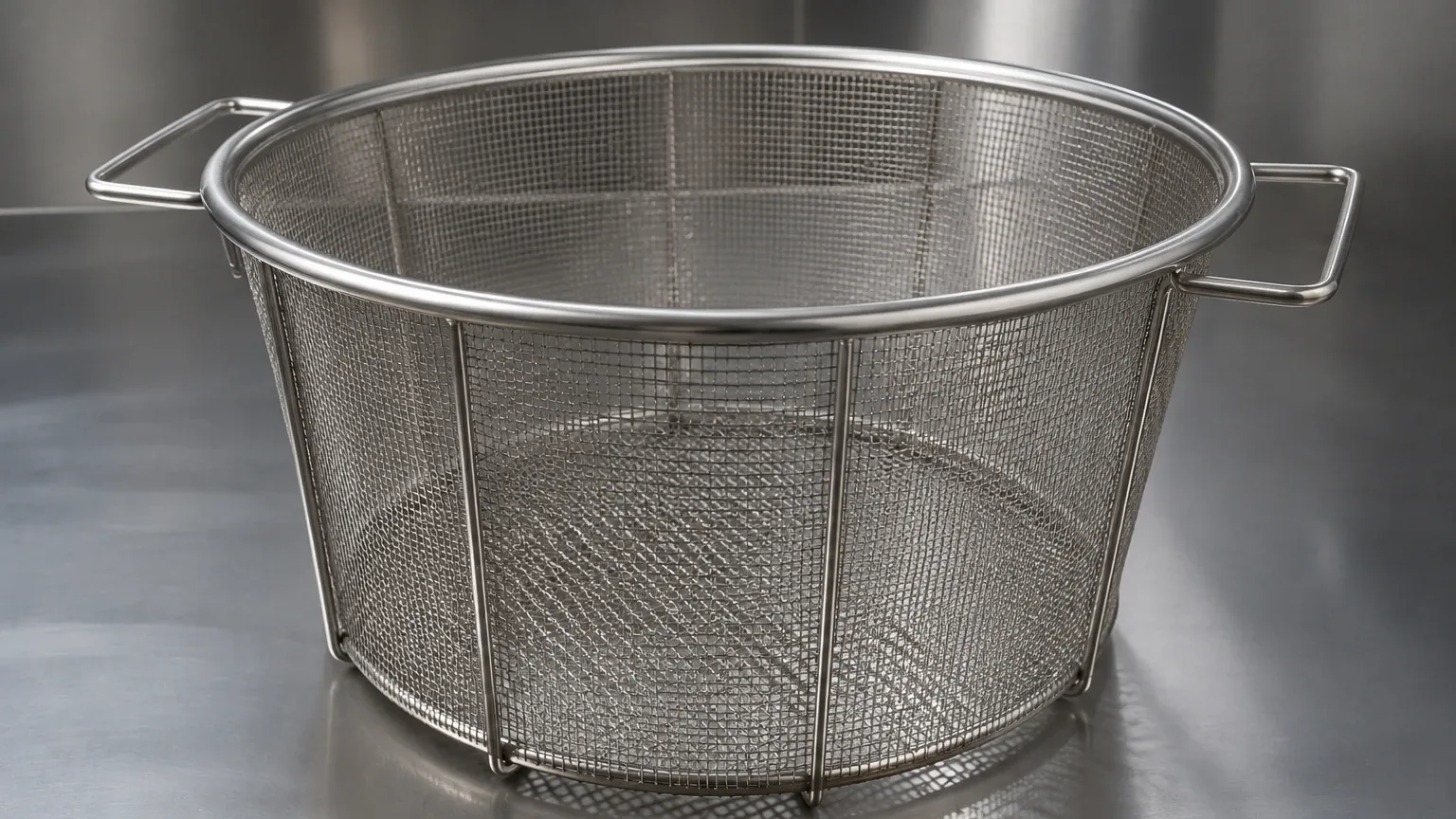
An xl strainer basket requires more than just mesh or perforated plate. To prevent collapse under differential pressure, these baskets often feature reinforcing longitudinal bars, circumferential rings, and heavy-duty bottom plates. The handle design is also critical; for XL sizes, handles must be engineered to support the weight of the basket plus the weight of the captured debris, often requiring mechanical lifting assistance during maintenance cycles.
Performance Benefits of Increased Surface Area
The primary technical advantage of utilizing an xl strainer basket is the substantial increase in the "open area ratio." This ratio compares the total area of the holes in the basket to the cross-sectional area of the inlet pipe.
Reduced Pressure Drop (Delta P)
Fluid systems are most efficient when the pressure drop across filtration components is minimized. A larger basket provides more pathways for the fluid to pass through, which lowers the velocity of the fluid as it transitions through the mesh. This reduction in velocity directly correlates to a lower initial pressure drop, allowing pumps to operate closer to their best efficiency point (BEP).
Extended Maintenance Intervals
In systems with high particulate loading, a standard basket may clog rapidly, leading to frequent downtime for cleaning. An XL basket provides a larger "dirt-holding capacity." By increasing the volume and surface area, the time between required cleanings is extended, which reduces labor costs and increases the overall uptime of the industrial process.
Protection of Downstream Assets
By ensuring that the filtration media does not become prematurely blinded, the xl strainer basket maintains a consistent flow profile. This prevents the surges in pressure or cavitation in pumps that can occur when a strainer becomes restricted, thereby extending the service life of the entire fluid system.
Design Considerations: Perforation vs. Mesh
When specifying an xl strainer basket, engineers must choose between perforated metal, wire mesh, or a combination of both. This choice depends on the required filtration accuracy and the nature of the contaminants.
1. Perforated Plate: This serves as the structural foundation for most large baskets. Perforation sizes typically range from 1/32" to 1/2" or larger. It is ideal for capturing large debris like scale, stones, or welding slag.
2. Wire Mesh Lining: For finer filtration requirements, a stainless steel wire mesh is sintered or spot-welded to the inside or outside of the perforated basket. This allows for the capture of particles down to the micron level while relying on the perforated plate for mechanical support.
3. Flow Direction: Most basket strainers utilize an "into-out" flow pattern, where debris is collected inside the basket. This makes removal and cleaning straightforward. However, the design must ensure that the basket is seated correctly to prevent bypass, which would allow contaminants to move downstream.
Technical Selection Criteria for Engineers
To ensure the correct implementation of an xl strainer basket, several technical parameters must be confirmed during the procurement phase. A mismatch in specifications can lead to system failure or inefficient filtration.
Flow Rate and Viscosity
The flow rate (GPM or m³/h) and the viscosity of the fluid are the most critical factors. Highly viscous fluids, such as heavy oils or resins, require significantly more surface area to pass through a mesh of the same micron rating compared to water. For these applications, an XL design is often the only way to achieve acceptable flow rates.
Maximum Allowable Differential Pressure
Every strainer has a burst or collapse pressure rating. Engineers must determine the maximum differential pressure the system can tolerate before the basket must be cleaned. The xl strainer basket must be built to withstand this pressure without deforming, especially in high-pressure hydraulic or steam systems.
Micron Rating and Particle Distribution
Defining the "cut point" of the filtration is essential. If the mesh is too fine, the basket will clog too quickly; if it is too coarse, it will fail to protect downstream equipment. A thorough analysis of the particle size distribution in the process fluid helps in selecting the optimal mesh size for the basket.
Maintenance and Operational Best Practices
Proper maintenance of large-scale Strainers & Baskets is vital for long-term operational reliability. Because of their size, XL baskets require specific handling protocols.
* Differential Pressure Monitoring: Systems should be equipped with gauges to monitor the pressure drop across the strainer. Automated alarms are recommended to signal when the xl strainer basket has reached its debris capacity.
* Cleaning Procedures: Depending on the contaminant, cleaning may involve high-pressure washing, chemical soaking, or ultrasonic cleaning. For stainless steel components, it is important to avoid carbon steel brushes or tools that could embed iron particles into the surface, leading to localized rusting (tea-staining).
* Gasket and Seal Inspection: Each time a basket is removed for cleaning, the seals and gaskets on the strainer housing should be inspected. A compromised seal can lead to external leaks or internal bypass, undermining the effectiveness of the filtration.
Customization and OEM Solutions
In many industrial settings, off-the-shelf components do not meet the specific spatial or performance requirements of a complex piping layout. Custom manufacturing of an xl strainer basket allows for modifications such as:
* Slanted or Offset Bottoms: To fit into unique housing geometries.
* Magnetic Inserts: To capture fine ferrous particles that might otherwise pass through the mesh.
* Multi-Stage Filtration: Incorporating different mesh layers within a single XL basket to capture a range of particle sizes in one pass.
By working with a manufacturer that understands the nuances of stainless steel fabrication and industrial filtration principles, purchasing teams can ensure they receive a component that is optimized for their specific application. Whether for chemical processing, water treatment, or hydraulic systems, the right xl strainer basket is a fundamental investment in the reliability and efficiency of industrial fluid management.
