


X Strainer
In industrial fluid handling and process engineering, the protection of downstream equipment is a primary concern for maintaining operational uptime and reducing maintenance costs. The x strainer, often utilized in specialized piping configurations or as a high-capacity inline filtration component, serves as a critical line of defense against particulate contamination. For engineers and procurement specialists, selecting the correct Strainers & Baskets involves more than simply matching pipe sizes; it requires a deep understanding of fluid dynamics, material compatibility, and the specific mechanical stresses of the application environment.
Industrial strainers are designed to remove large-scale solids from liquid or gas streams. While fine filtration might occur further downstream, the x strainer is typically responsible for capturing debris that could damage pumps, clog spray nozzles, or interfere with the precision of heat exchangers. This article examines the technical nuances of these components, focusing on the engineering considerations necessary for high-performance industrial filtration.
Understanding the Role of X Strainers in Process Piping
The term x strainer frequently refers to specialized cross-flow or high-capacity inline strainers designed to handle significant flow volumes while maintaining a manageable footprint. Unlike standard Y-strainers, which are often used for smaller debris loads, or T-strainers, which are selected for ease of maintenance in larger lines, the x strainer configuration is often engineered for specific manifold layouts where space and flow direction are constrained.
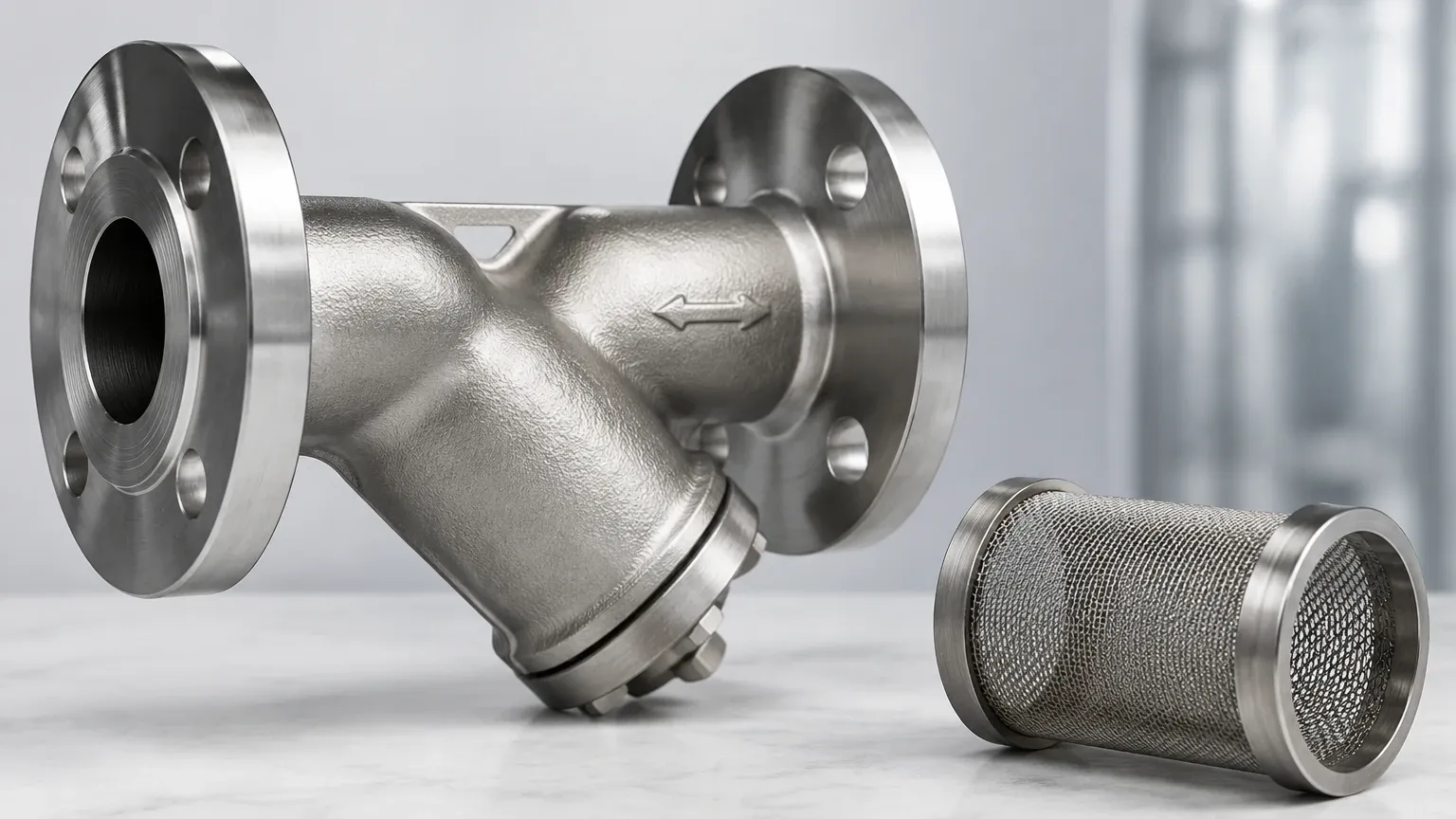
From a technical perspective, the primary function of these units is to provide a housing for a removable mesh or perforated metal element. This element intercepts solids while allowing the fluid to pass through with minimal resistance. In high-pressure hydraulic systems or chemical processing lines, the structural integrity of the strainer body and the internal basket is paramount. Engineers must account for the "burst pressure" of the mesh—the point at which the accumulated debris creates enough differential pressure to physically deform or rupture the filtration media.
Engineering Specifications for Stainless Steel Strainers & Baskets
When evaluating Strainers & Baskets, the choice of internal media determines the overall efficiency of the system. Most industrial applications require stainless steel construction due to its inherent resistance to corrosion and mechanical wear.
Perforated Metal vs. Wire Mesh
The internal element of an x strainer typically consists of a perforated metal support cylinder lined with a finer wire mesh.
1. Perforated Metal: This provides the structural skeleton. For heavy-duty industrial use, hole sizes usually range from 1/32" to 1/2". The thickness of the plate must be sufficient to withstand the force of the fluid flow, especially during start-up or surge conditions.
2. Wire Mesh: For finer filtration, a stainless steel wire mesh is layered inside the perforated basket. This allows for filtration ratings down to the micron level. Common weaves include plain weave for general purpose and twilled dutch weave for high-pressure applications where a more robust mesh structure is required.
Open Area Ratio (OAR)
A critical engineering metric for any x strainer is the Open Area Ratio. This is the ratio of the total open area of the strainer holes to the internal cross-sectional area of the inlet pipe. A high-quality strainer should offer an OAR of at least 4:1. A higher ratio ensures that the strainer can accumulate a significant amount of debris before the pressure drop becomes excessive, thereby extending the interval between cleaning cycles and protecting pump efficiency.
Material Selection and Chemical Compatibility
Material selection for the x strainer must be dictated by the chemical properties of the fluid and the operating temperature. Kaifil specializes in stainless steel solutions because of the material's versatility across various industries.
* 304 Stainless Steel: Suitable for most water treatment, food and beverage, and general industrial applications where moderate corrosion resistance is required.
* 316L Stainless Steel: Preferred for pharmaceutical, chemical processing, and marine environments. The addition of molybdenum and a lower carbon content provides superior resistance to pitting and crevice corrosion, particularly in chloride-rich environments.
* Specialty Alloys: In extreme cases involving highly acidic or alkaline fluids, materials such as Hastelloy or Monel may be integrated into the basket design to ensure longevity.
Beyond the metal itself, the seals and gaskets used in the strainer housing are vital. Engineers must confirm that the O-ring or gasket material (e.g., EPDM, Viton, PTFE, or Buna-N) is compatible with the process fluid to prevent leaks and bypass contamination.
Performance Evaluation: Pressure Drop and Filtration Accuracy
The most common challenge in implementing an x strainer is managing the pressure drop (ΔP). Every filtration component introduces a degree of resistance to the flow.
Calculating Differential Pressure
Engineers must calculate the clean pressure drop to ensure the system's pumps are sized correctly. Factors influencing ΔP include:
* Fluid viscosity and specific gravity.
* Flow velocity (GPM or m³/h).
* The micron rating of the mesh.
* The percentage of open area in the basket.
As the x strainer captures debris, the differential pressure increases. It is standard practice to install pressure gauges upstream and downstream of the strainer. Once the ΔP reaches a predetermined limit (usually 5-10 psi depending on the system), the strainer must be cleaned. Failure to monitor this can lead to "blinding" of the mesh, which can cause the basket to collapse or the pump to cavitate.
Filtration Accuracy and Micron Ratings
Selecting the correct micron rating is a balance between protection and maintenance frequency. If the mesh is too coarse, it will not protect downstream equipment. If it is too fine, the x strainer will clog almost immediately. In many B2B industrial scenarios, a multi-stage approach is used, where a coarse strainer protects a finer secondary filter.
Customization and OEM Considerations for Industrial Applications
Standard off-the-shelf strainers often fail to meet the specific requirements of complex industrial systems. Customization is where engineering expertise becomes essential. When sourcing an x strainer for an OEM project, several variables can be tailored:
* End Connections: Options include flanged (ANSI, DIN, JIS), threaded (NPT/BSP), or socket weld connections to match existing piping standards.
* Housing Geometry: In space-constrained environments, the housing of the x strainer can be redesigned to fit specific dimensions without sacrificing filtration surface area.
* Reinforced Baskets: For high-viscosity fluids or high-velocity steam, baskets can be reinforced with external rings or longitudinal bars to prevent mechanical failure.
* Magnetic Inserts: For hydraulic and lubrication systems, magnetic rods can be added to the center of the basket to capture fine ferrous particles that might otherwise pass through the mesh.
By working with a manufacturer like Kaifil, engineers can ensure that the Strainers & Baskets are designed specifically for the flow characteristics and contaminant types of their particular application.
Maintenance, Cleaning, and Replacement Cycles
The total cost of ownership (TCO) for an x strainer is heavily influenced by its maintenance requirements. A well-designed strainer should allow for rapid access to the internal basket.
Cleaning Procedures
Most industrial strainers are designed for manual cleaning. This involves blowing down the system, opening the strainer cover (often secured by swing bolts for quick access), and removing the basket. The basket should be cleaned using a soft brush or ultrasonic bath, depending on the nature of the contaminant. It is crucial to avoid using wire brushes on fine mesh, as this can enlarge the openings and compromise filtration accuracy.
Replacement Cycles
While stainless steel baskets are durable, they are not permanent. Fatigue from pressure pulsations and wear from abrasive particles will eventually necessitate replacement. Signs that a basket requires replacement include:
* Visible thinning or fraying of the wire mesh.
* Deformation of the perforated support.
* Persistent high differential pressure even after cleaning (indicating deep-seated blinding).
Keeping spare baskets on-site is a standard recommendation for critical processes to minimize downtime during cleaning or unexpected failures.
Pre-Purchase Confirmation: A Checklist for Engineers
Before finalizing the specification for an x strainer, technical teams should confirm the following data points with their supplier:
1. Design Pressure and Temperature: Ensure the housing and seals are rated for the maximum possible excursions in the system, not just the nominal operating conditions.
2. Flow Rate vs. Pressure Drop: Request a flow curve for the specific mesh size being considered.
3. Corrosion Allowance: Determine if the wall thickness of the housing includes an appropriate allowance for the expected service life.
4. Compliance Standards: Confirm if the unit needs to meet specific codes, such as ASME Section VIII, PED, or food-grade certifications (FDA/3A).
5. Bypass Prevention: Verify the seating mechanism of the basket. A poor seal between the basket and the housing will allow fluid to bypass the filtration media entirely.
By addressing these technical details during the design phase, companies can ensure that their x strainer provides reliable, long-term protection for their industrial infrastructure. For those seeking precision-engineered solutions, exploring the range of Strainers & Baskets provides a foundation for optimized fluid processing and equipment longevity.
