


In industrial fluid handling, the protection of downstream equipment—such as high-pressure pumps, spray nozzles, heat exchangers, and flow meters—is a critical engineering priority. Contaminants, even in small concentrations, can lead to mechanical wear, clogging, and costly system downtime. The wire mesh basket filter serves as a primary line of defense, offering a robust, cleanable, and highly customizable solution for removing solid particulates from liquid and gas streams.
As a specialized manufacturer, Kaifil provides precision-engineered Wire Mesh Filter Cylinders & Tubes designed to meet the rigorous demands of chemical processing, water treatment, and hydraulic systems. This guide explores the technical considerations, selection criteria, and operational best practices essential for engineers and procurement teams when integrating basket filters into industrial workflows.
1. Core Components and Construction of a Wire Mesh Basket Filter
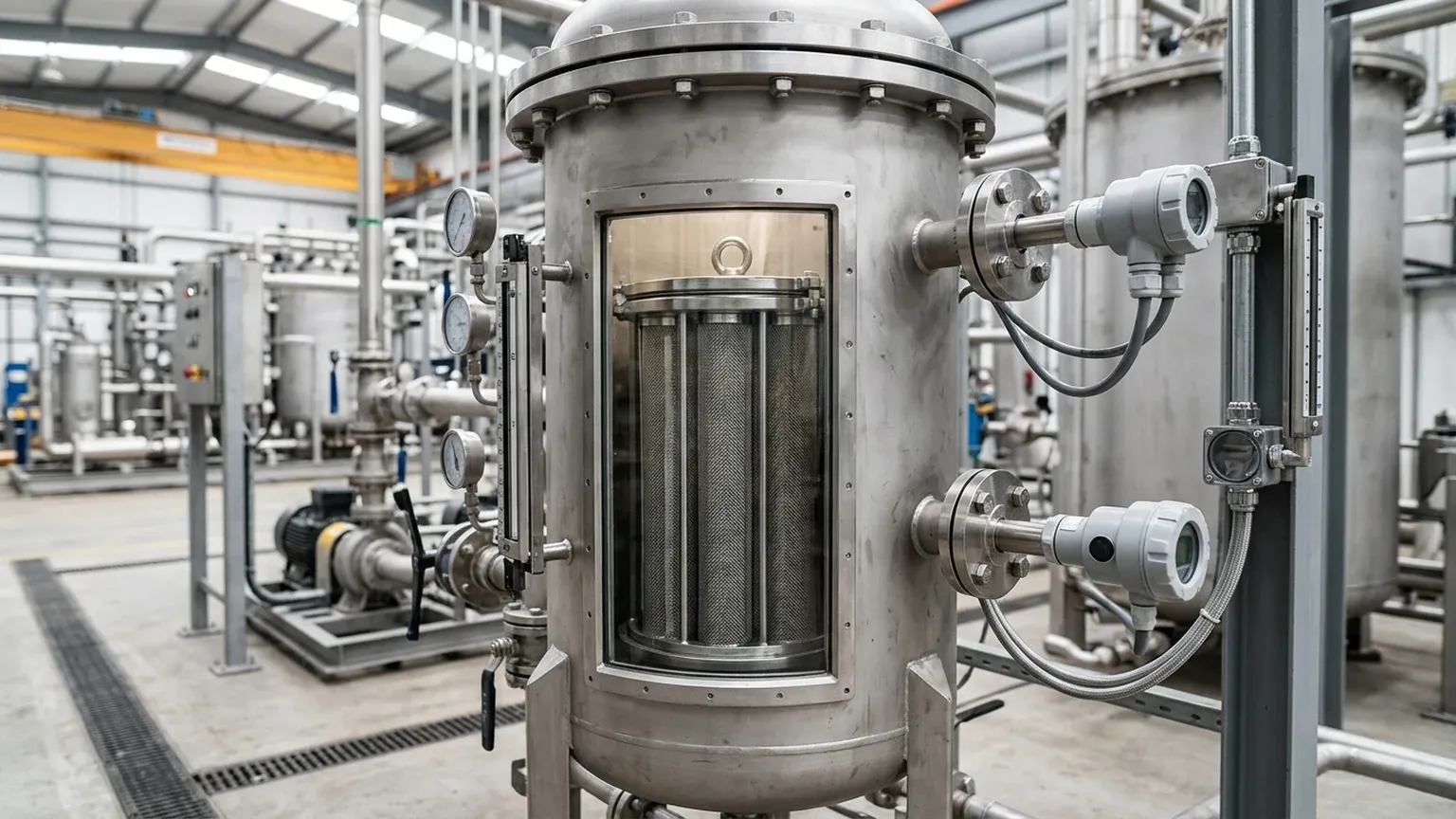
A wire mesh basket filter is essentially a strainer element designed with a "basket" geometry, typically featuring a handle or lifting lug for easy removal. Unlike simple flat screens, the basket design provides a significantly larger surface area, which translates to higher dirt-holding capacity and lower pressure drops.
Material Selection
Stainless steel is the industry standard for these components due to its mechanical strength and corrosion resistance.
- SS 304: Suitable for general industrial applications, including water filtration and non-corrosive chemical processing.
- SS 316/316L: Preferred for pharmaceutical, food and beverage, and marine environments where resistance to chlorides and acidic solutions is required.
- Exotic Alloys: In extreme environments involving high-temperature sulfuric acid or caustic solutions, materials like Monel or Hastelloy may be specified.
Structural Layers
Most industrial basket filters are not composed of a single layer of mesh. To withstand high differential pressures, a multi-layer construction is often employed:
1. Filtration Layer: The inner or outer layer of fine wire mesh that determines the micron rating.
2. Support Layer: A coarser mesh or perforated metal cylinder that provides structural rigidity, preventing the fine mesh from collapsing under flow pressure.
3. Binding and Flanges: Precision-welded end caps or flanges ensure a bypass-free seal within the filter housing.
2. Technical Principles: How Mesh Geometry Affects Performance
The performance of a wire mesh basket filter is dictated by the weave pattern of the wire cloth. Understanding these patterns is vital for selecting the correct element for a specific particulate profile.
Plain Weave vs. Dutch Weave
- Plain Weave: The simplest pattern where wires cross over and under each other. It offers high flow rates and is easy to clean, making it ideal for coarse filtration (above 100 microns).
- Dutch Weave: This pattern uses heavier warp wires and finer shute wires driven closely together. This creates a "tortuous path" for particles, providing much finer filtration (down to 5-10 microns) and superior mechanical strength.
Effective Filtration Area (EFA)
The EFA is the total open area through which the fluid can pass. A higher EFA reduces the velocity of the fluid as it passes through the mesh, which minimizes the risk of particle "breakthrough" and extends the time between cleaning cycles. When designing Wire Mesh Filter Cylinders & Tubes, engineers must balance the micron rating with the EFA to ensure the system does not suffer from excessive parasitic power loss due to pressure drop.
3. Critical Selection Criteria for Engineering Teams
Selecting the wrong filter can lead to premature clogging or, conversely, the passage of harmful contaminants. Engineers should evaluate the following parameters:
Micron Rating: Absolute vs. Nominal
- Nominal Rating: Indicates the ability of the mesh to retain a majority of particles of a specified size (e.g., 90% of 50-micron particles). This is suitable for non-critical straining.
- Absolute Rating: Refers to the diameter of the largest hard spherical particle that will pass through the mesh under specified test conditions. For protecting high-precision nozzles or sensitive chemical reactions, an absolute rating is required.
Viscosity and Flow Rate
The viscosity of the fluid significantly impacts the pressure drop across the wire mesh. High-viscosity fluids (like heavy oils or resins) require a larger basket or a coarser mesh to maintain a viable flow rate. If the flow velocity is too high, it can cause turbulence and erosion of the wire mesh strands over time.
Operating Pressure and Temperature
Standard stainless steel mesh can handle high temperatures, but the mechanical integrity of the basket assembly—including gaskets and welds—must be verified for the specific operating range. Furthermore, the maximum allowable differential pressure ($ΔP$) must be defined. If the $ΔP$ exceeds the structural limit of the support cage, the basket may deform, leading to catastrophic bypass.
4. Installation Constraints and Best Practices
Proper installation is as important as the filter's design. A wire mesh basket filter is typically housed in a strainer body with a removable cover.
- Sealing Integrity: The most common failure point is the seal between the basket flange and the housing seat. If this seal is not tight, fluid will take the path of least resistance, bypassing the filter entirely. O-rings or flat gaskets must be compatible with the process fluid.
- Orientation: Basket filters are generally designed for "inside-to-outside" flow. This ensures that contaminants are collected inside the basket, making it easy to lift the debris out of the housing during maintenance without it falling back into the downstream piping.
- Differential Pressure Monitoring: Installing pressure gauges upstream and downstream of the filter is mandatory. A sudden increase in $ΔP$ indicates the basket is full and requires cleaning. Automated systems often use differential pressure switches to trigger an alarm or a backwash cycle.
5. Managing Application Risks and Failure Modes
Industrial filtration is subject to several risks that can compromise system efficiency:
Mesh Blinding
Blinding occurs when particles that are roughly the same size as the mesh openings become wedged in the weave. This is common with needle-like or irregular contaminants. In these cases, switching to a Dutch weave or a different micron rating may be necessary.
Chemical Corrosion
Even stainless steel can fail if exposed to incompatible chemicals. For example, 304 stainless steel can suffer from pitting corrosion in high-chloride environments. Engineers must ensure the material grade matches the chemical composition of the fluid, including any trace additives or cleaning agents used in the system.
Fatigue and Vibration
In systems with reciprocating pumps or high-frequency pressure pulsations, the wire mesh can experience fatigue. Over time, the individual wires may crack, leading to a loss of filtration integrity. In such environments, reinforced Wire Mesh Filter Cylinders & Tubes with heavy-duty support cages are recommended.
6. International Procurement: Technical Confirmation Checklist
When sourcing a wire mesh basket filter from a global manufacturer like Kaifil, providing precise technical data ensures the final product meets site requirements. Buyers should confirm the following:
1. Dimensional Accuracy: Provide exact measurements for the outer diameter (OD), total length (OAL), and flange thickness to ensure a drop-in fit for existing housings.
2. Mesh Specification: Specify the mesh count (wires per inch) or the required micron rating. If the application involves high pressure, specify the thickness of the perforated support layer.
3. Weld Standards: For pharmaceutical or food-grade applications, specify the required surface finish and welding standards (e.g., argon arc welding with smooth beads to prevent bacterial growth).
4. Cleaning Requirements: Determine if the filter will be cleaned via ultrasonic bath, high-pressure water jet, or chemical solvents, as this may influence the choice of binding materials.
5. Certification: Confirm if material mill certificates (MTRs) or pressure test reports are required for compliance with local industrial regulations.
7. Conclusion
The wire mesh basket filter is a fundamental component in industrial engineering, providing a cost-effective and durable solution for fluid purification. By understanding the nuances of mesh geometry, material compatibility, and structural reinforcement, engineering teams can significantly extend the lifespan of their downstream equipment and reduce maintenance overhead.
Whether you are designing a new system or looking to optimize an existing filtration process, selecting high-quality Wire Mesh Filter Cylinders & Tubes is essential. Kaifil’s expertise in custom stainless steel fabrication allows for the development of filtration components tailored to the specific pressures, temperatures, and chemical environments of your industry, ensuring reliable performance in the most demanding applications.
