


Best Way to Clean a Wire Mesh Coffee Filter: An Industrial Engineering Perspective
In the context of industrial food and beverage processing, filtration is not merely a step in production but a critical control point for product consistency, clarity, and safety. Among the various geometries utilized in large-scale extraction and brewing, Wire Mesh Filter Cylinders & Tubes stand out for their structural integrity and reusable nature. However, the efficiency of these components is directly tied to their maintenance. For engineers managing commercial brewing systems or industrial extraction units, determining the best way to clean a wire mesh coffee filter—whether it is a small-scale precision component or a large-capacity industrial cylinder—requires an understanding of material science, chemical compatibility, and fluid dynamics.
This guide examines the technical protocols for maintaining stainless steel filtration media, focusing on the removal of organic compounds, the prevention of mesh "blinding," and the engineering considerations that influence long-term performance in demanding industrial environments.
Understanding the Engineering of Wire Mesh Filter Cylinders & Tubes
Industrial filtration components are typically manufactured from high-grade austenitic stainless steel, such as AISI 304 or 316L. These materials are selected for their corrosion resistance and ability to withstand the thermal stresses associated with Clean-in-Place (CIP) and Sterilization-in-Place (SIP) cycles.
Wire mesh filters are engineered with specific weave patterns—such as plain weave, twilled weave, or Dutch weave—to achieve precise micron ratings. In coffee and botanical extraction, the mesh must be fine enough to retain sediment (fines) while allowing essential oils and soluble solids to pass through. Unlike disposable paper filters, stainless steel cylinders and tubes provide a rigid structure that can handle high differential pressures without collapsing. However, the very complexity of the mesh—characterized by thousands of microscopic apertures—makes them susceptible to clogging if cleaning protocols are insufficient.
The Science of Clogging: Why Mesh Requires Deep Cleaning
To identify the best way to clean a wire mesh coffee filter at an industrial scale, one must first understand the nature of the contaminants. In coffee extraction, three primary factors contribute to the degradation of filter performance:
1. Lipid Accumulation: Coffee beans contain natural oils (lipids) that are released during the brewing process. These oils are hydrophobic and tend to adhere to the stainless steel surface, eventually forming a polymer-like film that restricts flow.
2. Fine Particulate Entrapment: "Fines" are microscopic particles of ground material that can become wedged within the pore structure of the mesh. If not removed, these particles act as a foundation for further buildup, a phenomenon known as "blinding."
3. Mineral Scaling: In systems using hard water, calcium and magnesium carbonates can precipitate onto the mesh, particularly in high-temperature environments. This scale narrows the effective pore size and increases the pressure drop across the filter.
Failure to address these issues leads to "channeling," where fluid is forced through a limited number of open pores at higher velocities, resulting in uneven extraction and potential mechanical failure of the mesh due to localized stress.
Best Way to Clean a Wire Mesh Coffee Filter: Industrial Protocols
For B2B operations, manual scrubbing is rarely sufficient or efficient. Instead, engineers rely on a combination of mechanical, chemical, and thermal processes to restore the original permeability of the filter.
1. Ultrasonic Cleaning
For precision wire mesh filter cylinders & tubes, ultrasonic cleaning is often regarded as the gold standard. This process utilizes high-frequency sound waves to create cavitation bubbles in a cleaning solution. When these bubbles implode against the surface of the mesh, they generate high-energy micro-jets that dislodge particulates from the deepest parts of the weave. This is particularly effective for removing fines that are physically wedged in the apertures.
2. Chemical Degreasing and CIP Cycles
Since coffee oils are the primary cause of flow restriction, chemical intervention is necessary. In an industrial setting, a two-step CIP cycle is common:
* Alkaline Wash: A solution of sodium hydroxide (caustic soda) or specialized potassium-based cleaners is circulated through the filter. This saponifies the oils, turning them into water-soluble soaps that can be easily rinsed away.
* Acid Rinse: A mild phosphoric or citric acid rinse is used to neutralize any remaining alkalinity and remove mineral scale.
For smaller-scale commercial filters, soaking in a solution of sodium percarbonate (an oxygen-based cleaner) is an effective alternative that breaks down organic residues without the hazards associated with high-concentration caustic chemicals.
3. Backwashing and High-Pressure Rinsing
Mechanical displacement via backwashing involves reversing the flow of fluid through the filter. By applying pressure from the "clean" side of the mesh to the "dirty" side, trapped particulates are pushed out of the pores. In industrial filter tubes, this is often automated, triggered by a pressure differential sensor that detects when the filter is reaching its loading capacity.
Engineering Considerations for Cleanability
When purchasing or specifying Wire Mesh Filter Cylinders & Tubes, the ease of cleaning should be a primary design consideration. Several factors influence how effectively a filter can be restored to its baseline performance:
Surface Finish and Electropolishing
Raw stainless steel mesh has microscopic irregularities where oils and bacteria can take hold. Electropolishing—an electrochemical process that removes a thin layer of material from the surface—results in a "mirror-like" finish. This reduces the surface energy of the metal, making it significantly harder for lipids and particulates to adhere. For food-grade applications, electropolished filters are often mandatory to meet hygiene standards.
Weld Integrity
In the construction of filter cylinders, the longitudinal and end-cap welds must be smooth and free of pits or crevices. Incomplete penetration or "sugar" on the back of a weld creates stagnant zones where organic material can accumulate and rot, leading to microbial contamination that no standard cleaning cycle can fully reach.
Mesh Selection
While finer mesh counts provide better clarity, they are inherently more difficult to clean. Engineers must balance the required filtration accuracy with the practicalities of the cleaning cycle. In some cases, a multi-layer sintered mesh—where multiple layers of wire cloth are bonded together—provides the necessary micron rating while offering a more robust structure that can withstand higher-pressure backwashing.
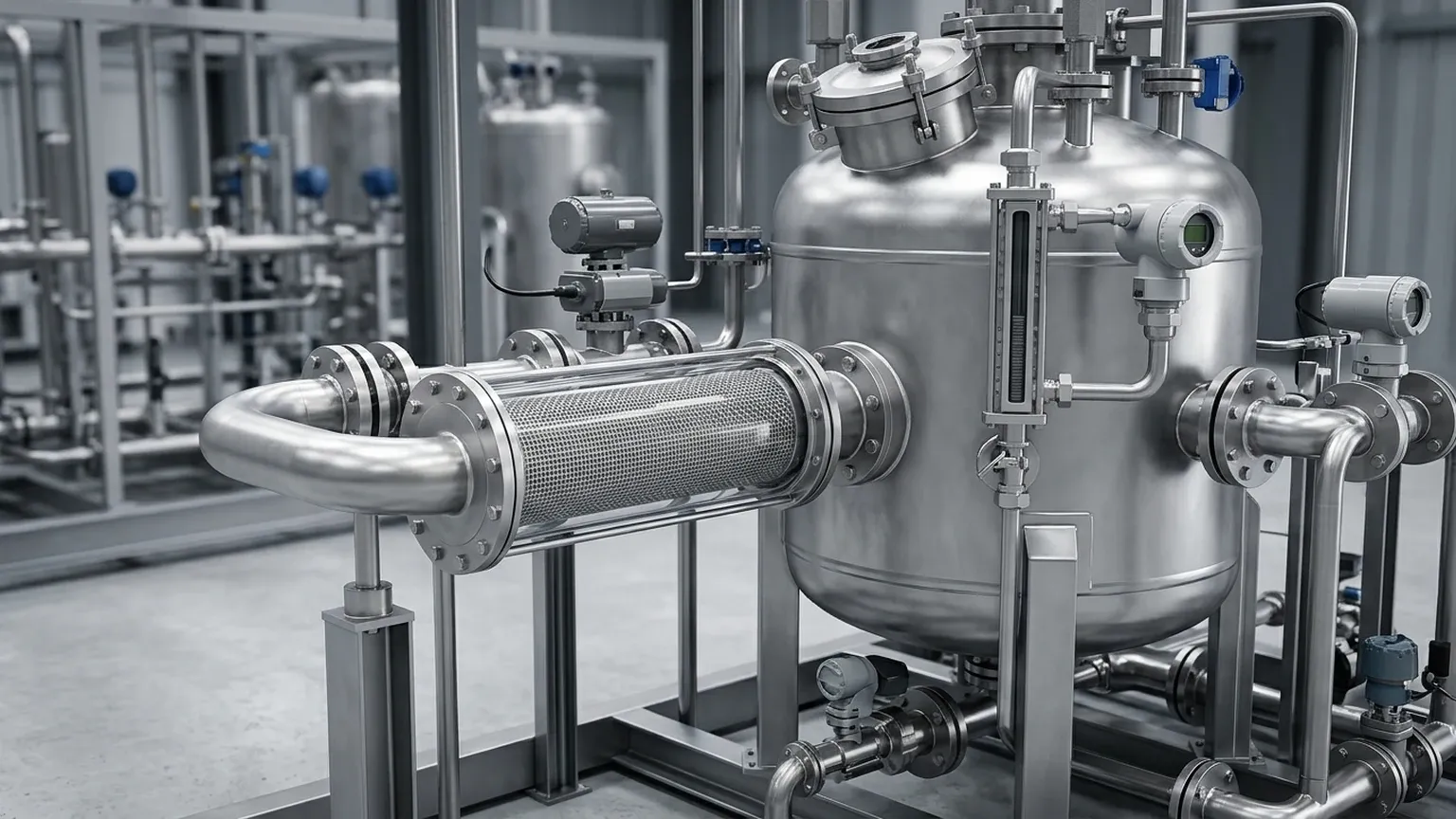
Maintenance Schedules and Total Cost of Ownership (TCO)
Determining the best way to clean a wire mesh coffee filter also involves establishing a rigorous maintenance schedule. In a high-volume production environment, waiting for the flow rate to drop significantly before cleaning is a reactive strategy that increases the risk of permanent mesh blinding.
Key Metrics for Maintenance:
* Differential Pressure (ΔP): Monitoring the pressure drop across the filter is the most reliable way to gauge loading. A baseline ΔP should be established with a clean filter; once the ΔP increases by a predetermined percentage (typically 50-100%), a cleaning cycle should be initiated.
* Visual Inspection: For removable cylinders, regular visual inspection under magnification can reveal signs of "pitting" corrosion or physical deformation of the weave.
* Replacement Cycles: Even with optimal cleaning, stainless steel filters have a finite lifespan. Repeated thermal expansion and contraction, combined with chemical exposure, will eventually lead to metal fatigue. Buyers should confirm the expected cycle life of the filter media with the manufacturer to factor replacement costs into the TCO.
Information for International Buyers and Engineers
When sourcing industrial wire mesh filters for beverage applications, procurement teams should confirm several technical details with the supplier to ensure the component is compatible with their cleaning infrastructure:
1. Alloy Verification: Ensure the material is true 304 or 316L. Low-quality alloys may contain impurities that lead to premature rusting when exposed to the acidic environment of coffee or the harsh chemicals used in CIP.
2. Micron Rating Accuracy: Confirm whether the micron rating is "absolute" or "nominal." Absolute ratings are critical for ensuring no fines pass through to the final product.
3. Pressure Ratings: Specify the maximum operating pressure and the maximum allowable differential pressure before the tube or cylinder risks structural collapse.
4. Customization Options: For unique brewing geometries, custom-fabricated Wire Mesh Filter Cylinders & Tubes can be designed with reinforced internal supports or specialized fittings to integrate seamlessly into existing production lines.
Conclusion
The best way to clean a wire mesh coffee filter in an industrial context is a multi-faceted approach that combines chemical degreasing, ultrasonic agitation, and mechanical backwashing. By treating the filter as a precision-engineered component rather than a simple consumable, processing facilities can ensure consistent product quality and extend the operational life of their filtration hardware.
For engineers and purchasing managers, selecting high-quality stainless steel filtration solutions from an experienced manufacturer like Kaifil ensures that the components are built to withstand these rigorous cleaning protocols. Whether you are designing a new extraction system or optimizing an existing production line, the right combination of material selection and maintenance strategy is essential for achieving efficient, durable, and cost-effective filtration performance.
Download Best Way to Clean a Wire Mesh Coffee Filter as a PDF
