


Mesh Wire Filter
In industrial process engineering, the efficiency of a filtration system directly impacts the longevity of downstream equipment, the purity of the final product, and the overall operational cost of the facility. Among the various technologies available, the mesh wire filter remains a cornerstone of mechanical separation due to its durability, precision, and reusability. Specifically, Wire Mesh Filter Cylinders & Tubes are engineered to withstand high-pressure differentials and corrosive environments that would compromise polymer-based alternatives.
This guide provides a technical overview of wire mesh filtration, focusing on the engineering considerations, material properties, and selection criteria essential for procurement teams and systems engineers.
Understanding the Fundamentals of Mesh Wire Filter Technology
A mesh wire filter operates primarily through surface filtration. Unlike depth filters, which trap particles within a thick medium, a wire mesh captures contaminants on the surface of the weave. This mechanism allows for precise control over the maximum particle size that can pass through the system, known as the filtration rating.
Nominal vs. Absolute Filtration
When evaluating a mesh wire filter, engineers must distinguish between nominal and absolute ratings. A nominal rating refers to the ability of the filter to retain a majority percentage (typically 60% to 90%) of particles of a specific micron size. In contrast, an absolute rating indicates the pore size where 99.9% of particles are captured. For critical applications in pharmaceutical or chemical processing, absolute-rated stainless steel mesh is often required to ensure process integrity.
The Role of Porosity and Flow Resistance
Porosity, or the percentage of open area, determines the flow capacity and the initial pressure drop across the filter. A higher open area reduces the energy required to pump fluid through the system but may sacrifice structural strength. Engineers must balance the need for high flow rates with the mechanical requirements of the application, especially in high-viscosity hydraulic or oil filtration systems.
Material Selection and Chemical Compatibility
The performance of Wire Mesh Filter Cylinders & Tubes is heavily dependent on the alloy used in their construction. Stainless steel is the industry standard due to its mechanical strength and resistance to oxidation.
1. Stainless Steel 304: The most common grade, offering excellent strength and basic corrosion resistance. It is suitable for food and beverage applications and general industrial water treatment.
2. Stainless Steel 316L: Containing molybdenum, 316L provides superior resistance to chlorides and acids. It is the preferred choice for marine environments, chemical processing, and pharmaceutical manufacturing where rigorous CIP (Clean-in-Place) protocols involve caustic agents.
3. Specialty Alloys: In extreme cases involving high-temperature flue gases or highly aggressive acids, alloys such as Monel, Inconel, or Hastelloy may be utilized to prevent premature failure due to stress corrosion cracking or pitting.
Engineering Weave Patterns for Specific Filtration Requirements
The geometry of the weave determines the mechanical properties and the filtration accuracy of the mesh wire filter. Selecting the correct weave is a critical engineering decision.
Plain Weave and Twill Weave
Plain weave is the simplest form, where each warp wire crosses over and under each weft wire. It provides high flow rates and is easy to clean. Twill weave, where wires cross over two and under two, allows for the use of heavier wires in a given mesh count, providing greater durability for high-pressure applications.
Dutch Weave (Plain and Twill)
Dutch weaves utilize different diameters for warp and weft wires. This results in a much denser mesh with smaller triangular openings. Dutch weave mesh wire filter components are ideal for fine filtration tasks where high pressure is applied, as the structure is inherently more rigid than standard square mesh.
Sintered Wire Mesh
For the most demanding environments, multiple layers of wire mesh are sintered—bonded together using heat and pressure without the use of binders. This creates a monolithic structure that combines the precision of fine mesh with the structural integrity of thick, coarse support layers. Sintered Wire Mesh Filter Cylinders & Tubes do not experience wire migration, making them essential for high-velocity gas or liquid streams.
Structural Design of Wire Mesh Filter Cylinders & Tubes
The physical configuration of a filter element must account for the direction of flow—either outside-to-inside or inside-to-outside. This determines where the reinforcement should be placed.
Support Layers and Pleating
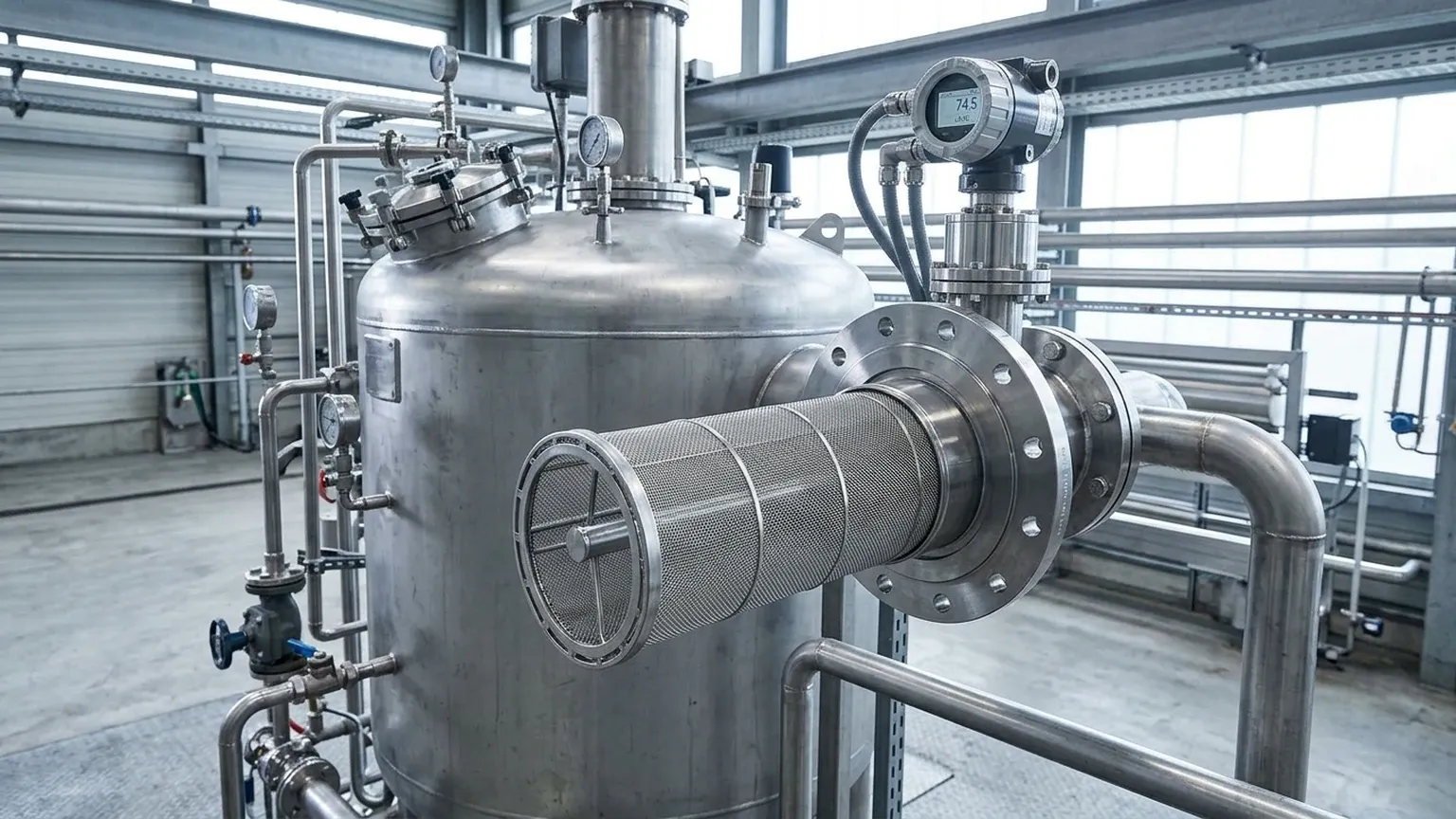
In many industrial applications, a single layer of mesh is insufficient to withstand the differential pressure (Delta P) as the filter loads with contaminants. Engineers often incorporate perforated metal cores or outer cages to provide structural support. To increase the effective filtration area without increasing the footprint of the filter housing, the mesh can be pleated. Pleating significantly extends the service life between cleaning cycles by reducing the flux (flow per unit area).
End Fittings and Sealing
The method of integration into the filter housing is a common point of failure. Custom mesh wire filter designs include various end-fitting options, such as threaded connections, flanges, or O-ring grooves (e.g., 222 or 226 configurations). Proper sealing ensures that no bypass occurs, which is vital when the goal is to protect high-precision nozzles or sensitive analytical instruments.
Key Selection Criteria for Industrial Procurement
When specifying Wire Mesh Filter Cylinders & Tubes, international buyers and engineers should prepare a comprehensive technical data sheet to ensure the component meets the application's demands. The following factors are non-negotiable:
* Fluid Characteristics: Viscosity, density, and chemical composition. This determines the material and the required surface area.
* Operating Temperature: High temperatures can affect the tensile strength of the wire and the integrity of any adhesives or gaskets used in the assembly.
* Maximum Differential Pressure: The "collapse pressure" of the cylinder must be significantly higher than the maximum expected Delta P during operation.
* Contaminant Loading: The type of solids being removed (slimy, hard, or fibrous) influences the choice of weave and whether a depth-loading or surface-loading strategy is best.
* Flow Rate Requirements: Both the steady-state flow and any potential surge flows must be accounted for to prevent mesh deformation.
Maintenance, Cleaning, and Life Cycle Management
One of the primary advantages of a stainless steel mesh wire filter over disposable cartridges is its cleanability. However, the cleaning method must be matched to the contaminant and the mesh structure.
Cleaning Techniques
* Backwashing: Reversing the flow of the fluid to dislodge particles. This is common in automated self-cleaning systems.
* Ultrasonic Cleaning: Using high-frequency sound waves in a detergent bath to remove fine particles trapped deep within the weave, especially in Dutch or sintered meshes.
* Chemical Cleaning: Using solvents or acids to dissolve organic or mineral deposits. It is crucial to ensure the cleaning agent is compatible with the filter's alloy.
Determining Replacement Cycles
While wire mesh is durable, it is not infinite. Factors such as erosion from high-velocity abrasive particles, fatigue from pressure cycling, and eventual blinding (permanent clogging) will necessitate replacement. Monitoring the pressure drop across the filter is the most effective way to determine when a cleaning cycle or a full replacement is required. A sudden drop in differential pressure may indicate a breach in the mesh, while a rapid increase after cleaning suggests the mesh has reached the end of its functional life.
Total Cost of Ownership (TCO) Considerations
When evaluating the cost of Wire Mesh Filter Cylinders & Tubes, procurement teams should look beyond the initial purchase price. The TCO includes the cost of downtime for maintenance, the labor involved in cleaning, and the environmental costs associated with disposing of single-use filters.
Stainless steel filters offer a lower TCO in high-volume or high-temperature processes because they eliminate the recurring expense of replacement cartridges and reduce the volume of waste generated. Furthermore, the high precision of a well-engineered mesh wire filter protects expensive downstream components like pumps and valves, preventing costly unscheduled repairs.
Conclusion
Selecting the right mesh wire filter is a technical process that requires a deep understanding of the fluid dynamics and mechanical stresses of the specific application. By focusing on material integrity, weave precision, and structural design, engineers can implement filtration solutions that provide reliable performance over a long service life. Whether for simple strainers or complex high-pressure Wire Mesh Filter Cylinders & Tubes, the transition to high-quality stainless steel components is an investment in process stability and operational efficiency.
