


Strainer 1.5 Inch
In industrial fluid processing, the selection of a 1.5-inch strainer is a critical decision that impacts the longevity of downstream equipment, such as pumps, valves, and heat exchangers. A strainer 1.5 inch in diameter is frequently utilized in medium-flow applications where precision filtration and a compact footprint are required. These components serve as the primary defense against particulate contamination, ensuring that the fluid stream remains within the specified purity levels for the application.
From an engineering perspective, the performance of a 1.5-inch strainer is not merely defined by its pipe size but by its internal geometry, material composition, and the specific design of its filtration element. Whether integrated into a chemical processing line, a food and beverage production facility, or a hydraulic system, understanding the technical nuances of these strainers is essential for optimizing system efficiency and minimizing downtime.
Technical Specifications and Engineering Standards
A strainer 1.5 inch is typically categorized by its body configuration—most commonly Y-strainers or Simplex basket strainers—and its connection type. For industrial B2B procurement, specifying the correct connection is the first step in ensuring system integrity. Common options include:
* NPT (National Pipe Thread): Ideal for low-pressure applications and systems where ease of installation is a priority.
* Flanged (ANSI/ASME): Preferred for high-pressure environments or systems requiring frequent disassembly for cleaning. A 1.5-inch flanged strainer provides a robust, leak-proof seal under thermal cycling.
* Tri-Clamp/Sanitary: Essential for the pharmaceutical and food industries, where crevice-free surfaces are required to prevent bacterial growth.
* Socket Weld: Used in permanent installations where high-pressure integrity and leak prevention are paramount.
The pressure rating is another vital engineering consideration. Most stainless steel 1.5-inch strainers are rated for Class 150, 300, or even 600, depending on the wall thickness and the type of alloy used. Engineers must calculate the maximum operating pressure (MAOP) and ensure the strainer body can withstand surges without compromising the structural integrity of the filter element.
Internal Filtration Mechanics: Strainers & Baskets
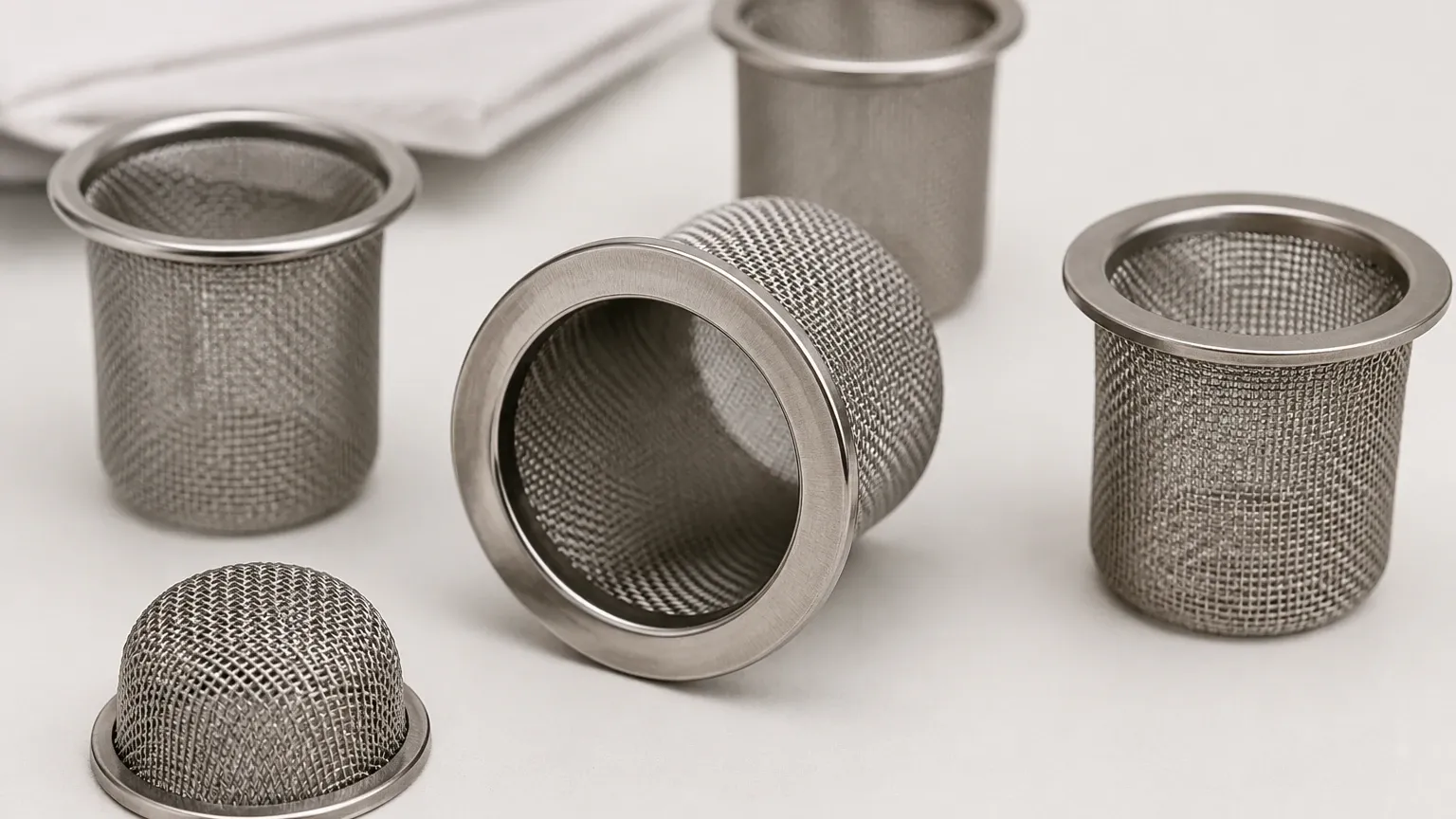
The efficiency of any filtration unit is determined by its internal components. In a 1.5-inch system, the relationship between the housing and the internal Strainers & Baskets is the primary factor in determining the filtration surface area. A larger surface area directly correlates to a lower pressure drop and a longer service interval.
Mesh and Perforation Selection
Industrial strainers utilize two main types of internal media: perforated metal and wire mesh. For a strainer 1.5 inch, the choice depends on the size of the particles to be removed. Perforated baskets are typically used for coarse filtration (removing large debris), while wire mesh liners are added for fine filtration (down to 5 microns or lower).
When selecting the internal basket, engineers must consider the "Open Area Ratio." This is the ratio of the total area of the holes in the basket to the cross-sectional area of the inlet pipe. For a 1.5-inch strainer, an open area ratio of at least 6:1 is often recommended to ensure that the strainer does not become a bottleneck in the system as it begins to collect debris.
Structural Integrity of the Basket
The basket must be designed to withstand the differential pressure that occurs as it becomes clogged. In high-viscosity applications or systems with high flow velocities, a standard wire mesh might collapse. In these instances, reinforced baskets with heavy-duty perforated backing are required to maintain the shape of the filtration media under stress.
Performance Variables: Flow Rate and Pressure Drop
The Flow Coefficient (Cv) is the standard measurement used to predict the pressure drop across a 1.5-inch strainer. Cv represents the volume of water in gallons per minute that will flow through the strainer with a pressure drop of 1 psi. For a standard strainer 1.5 inch, the Cv value can vary significantly based on the body design.
* Y-Strainers: Generally have a lower Cv because the fluid must navigate a more tortuous path. They are best suited for applications with low concentrations of solids.
* Basket Strainers: Typically offer a higher Cv and a larger holding capacity for solids, making them ideal for liquid applications where maintenance intervals need to be maximized.
Engineers must also account for fluid viscosity. As viscosity increases, the pressure drop across the strainer increases exponentially. For fluids such as heavy oils or syrups, a 1.5-inch strainer may require a coarser mesh or a larger body size to maintain the desired flow rate without exceeding the pump's head capacity.
Material Selection and Chemical Compatibility
In industrial environments, the material of the strainer 1.5 inch must be compatible with the process fluid to prevent corrosion and contamination. Kaifil specializes in stainless steel solutions, which are the industry standard for durability and hygiene.
1. 304 Stainless Steel: Suitable for water treatment, food processing, and general industrial use where mild corrosive conditions exist.
2. 316L Stainless Steel: Contains molybdenum, which provides superior resistance to chlorides and acids. This is the preferred choice for marine environments, chemical processing, and pharmaceutical applications.
3. Specialty Alloys: For highly aggressive environments, alloys such as Hastelloy or Duplex stainless steel may be required to prevent pitting and stress corrosion cracking.
Beyond the body material, the seal and gasket materials (such as EPDM, Viton, or PTFE) must be verified for chemical compatibility and temperature resistance. A failure in the seal of a 1.5-inch strainer can lead to bypass leakage, where unfiltered fluid bypasses the basket entirely, or external leakage, which poses safety risks.
Customization for Specialized Industrial Processes
Standard off-the-shelf strainers often fail to meet the rigorous demands of specific industrial applications. Customization of a strainer 1.5 inch allows engineers to tailor the component to the exact needs of their process.
Custom Dimensions and Orientations
In many retrofit projects, space is limited. Custom-designed 1.5-inch strainers can be manufactured with shorter end-to-end dimensions or unique inlet/outlet orientations (such as offset or angled connections) to fit into existing piping manifolds without extensive modifications.
Specialized Coatings and Finishes
For the food and pharmaceutical industries, the internal and external surfaces of the strainer may require electropolishing to achieve a specific Ra (Roughness Average) value. This ensures that the surface is smooth enough to prevent the adhesion of proteins or bacteria and facilitates effective Clean-in-Place (CIP) cycles.
Magnetic Inserts
In hydraulic systems or metalworking applications, fine ferrous particles can pass through standard mesh. A 1.5-inch strainer can be customized with magnetic inserts within the basket to capture these sub-micron metallic contaminants, providing an extra layer of protection for precision components.
Maintenance and Operational Considerations
The total cost of ownership (TCO) for a strainer 1.5 inch is heavily influenced by its maintenance requirements. A well-designed strainer should allow for rapid cleaning to minimize downtime.
Differential Pressure Monitoring
Installing pressure gauges upstream and downstream of the 1.5-inch strainer is the most effective way to monitor its condition. A significant increase in differential pressure indicates that the basket is full and requires cleaning. Automated systems can use differential pressure switches to trigger an alarm or initiate a backwash cycle.
Cleaning Protocols
For Simplex basket strainers, the system must be shut down or bypassed before the basket can be removed. If continuous flow is required, a Duplex strainer (which consists of two 1.5-inch strainers connected by a diverter valve) should be used. This allows one side to be cleaned while the other remains in operation.
When cleaning the Strainers & Baskets, it is important to avoid using wire brushes or abrasive tools that could damage the fine mesh. High-pressure water or ultrasonic cleaning are the preferred methods for restoring the filtration media to its original state.
Common Risks and Mitigation Strategies
Failure to properly specify a strainer 1.5 inch can lead to several operational risks:
* Bypass Contamination: If the basket is not seated correctly within the housing, fluid will take the path of least resistance, allowing contaminants to pass through. Precision manufacturing of the basket seat is essential to prevent this.
* Structural Failure: Using a mesh that is too fine for the flow rate can cause a massive pressure build-up, leading to the collapse of the internal basket. This not only stops the flow but can also send fragments of the basket downstream, causing catastrophic damage.
* Corrosion Fatigue: In systems with high-frequency pressure pulsations, such as those found near reciprocating pumps, the strainer body and internal elements can suffer from fatigue. Selecting heavy-duty wall thicknesses and reinforced baskets can mitigate this risk.
Conclusion: Selecting the Right Solution
Choosing a strainer 1.5 inch requires a balance of hydraulic performance, material science, and mechanical design. By focusing on the specific needs of the application—whether it is the high-purity requirements of a pharmaceutical line or the rugged durability needed for hydraulic oil filtration—engineers can ensure that their systems operate at peak efficiency.
Before finalizing a purchase, it is recommended that technical teams confirm the fluid properties (viscosity, temperature, chemical composition), the required micron rating, and the maximum allowable pressure drop. Working with a manufacturer like Kaifil, which understands the complexities of stainless steel filtration, ensures that the resulting 1.5-inch strainer is not just a commodity component, but a precision-engineered tool designed for long-term industrial reliability.
