


110 to 120 Mesh Paint Strainers
In industrial coating and finishing operations, the integrity of the final surface is directly proportional to the purity of the fluid being applied. Contaminants such as dried paint skins, undissolved pigments, and environmental particulates can lead to surface defects like "fish eyes," seeds, or craters, necessitating costly rework and downtime. For high-precision applications, 110 to 120 mesh paint strainers represent a critical threshold in filtration, balancing the need for fine particulate removal with the flow requirements of industrial-grade coatings.
As a specialized manufacturer of stainless steel filtration solutions, Kaifil provides engineering-grade Strainers & Baskets designed to meet the rigorous demands of chemical processing and industrial painting. Understanding the technical nuances of mesh selection, material science, and structural design is essential for engineers and procurement teams seeking to optimize their filtration systems.
Technical Breakdown: 110 vs. 120 Mesh Specifications
The term "mesh" refers to the number of openings per linear inch of the wire cloth. As the mesh count increases, the size of the openings decreases, providing finer filtration. In the context of 110 to 120 mesh paint strainers, the technical specifications are as follows:
* 110 Mesh: Typically features an aperture size of approximately 140 microns (0.0055 inches). This is often used for heavier primers, basecoats, and certain industrial enamels where high flow rates are required but medium-sized contaminants must be excluded.
* 120 Mesh: Offers a slightly finer aperture of approximately 125 microns (0.0049 inches). This level of precision is frequently specified for topcoats, clear coats, and high-gloss finishes where even microscopic imperfections are unacceptable.
When selecting between these two, engineers must consider the "Percentage of Open Area." A 120-mesh screen generally has a smaller open area than a 110-mesh screen if the wire diameter remains constant. This reduction in open area increases the resistance to flow (pressure drop), which must be accounted for in the pump and piping system design. For high-viscosity fluids, a 110-mesh strainer may be preferred to prevent excessive backpressure, while low-viscosity finishes benefit from the tighter 120-mesh filtration.
Material Engineering: Why Stainless Steel is the Industrial Standard
While disposable nylon or paper strainers are common in automotive refinishing, industrial-scale applications require the durability and chemical resistance of stainless steel. Kaifil utilizes high-grade alloys, primarily SUS 304 and SUS 316, to manufacture 110 to 120 mesh paint strainers.
Chemical Compatibility
Industrial paints often contain aggressive solvents, resins, and catalysts. Stainless steel 316, in particular, offers superior resistance to corrosion and chemical attack, making it suitable for water-borne, solvent-borne, and high-solids coatings. Unlike synthetic fibers, stainless steel does not leach chemicals into the paint or swell when exposed to thinners.
Thermal and Mechanical Stability
Industrial processes often involve heated paint systems to manage viscosity. Stainless steel maintains its structural integrity at elevated temperatures where plastic-based strainers might soften or deform. Furthermore, the mechanical strength of wire mesh allows it to withstand higher differential pressures without "media migration"—the shedding of filter fibers into the fluid stream.
Longevity and Sustainability
From a B2B procurement perspective, the total cost of ownership (TCO) is a primary driver. Stainless steel Strainers & Baskets are reusable. With proper ultrasonic cleaning or solvent soaking, these components can serve for years, significantly reducing the waste and recurring costs associated with disposable filtration elements.
Structural Design of Strainers and Baskets for Paint Applications
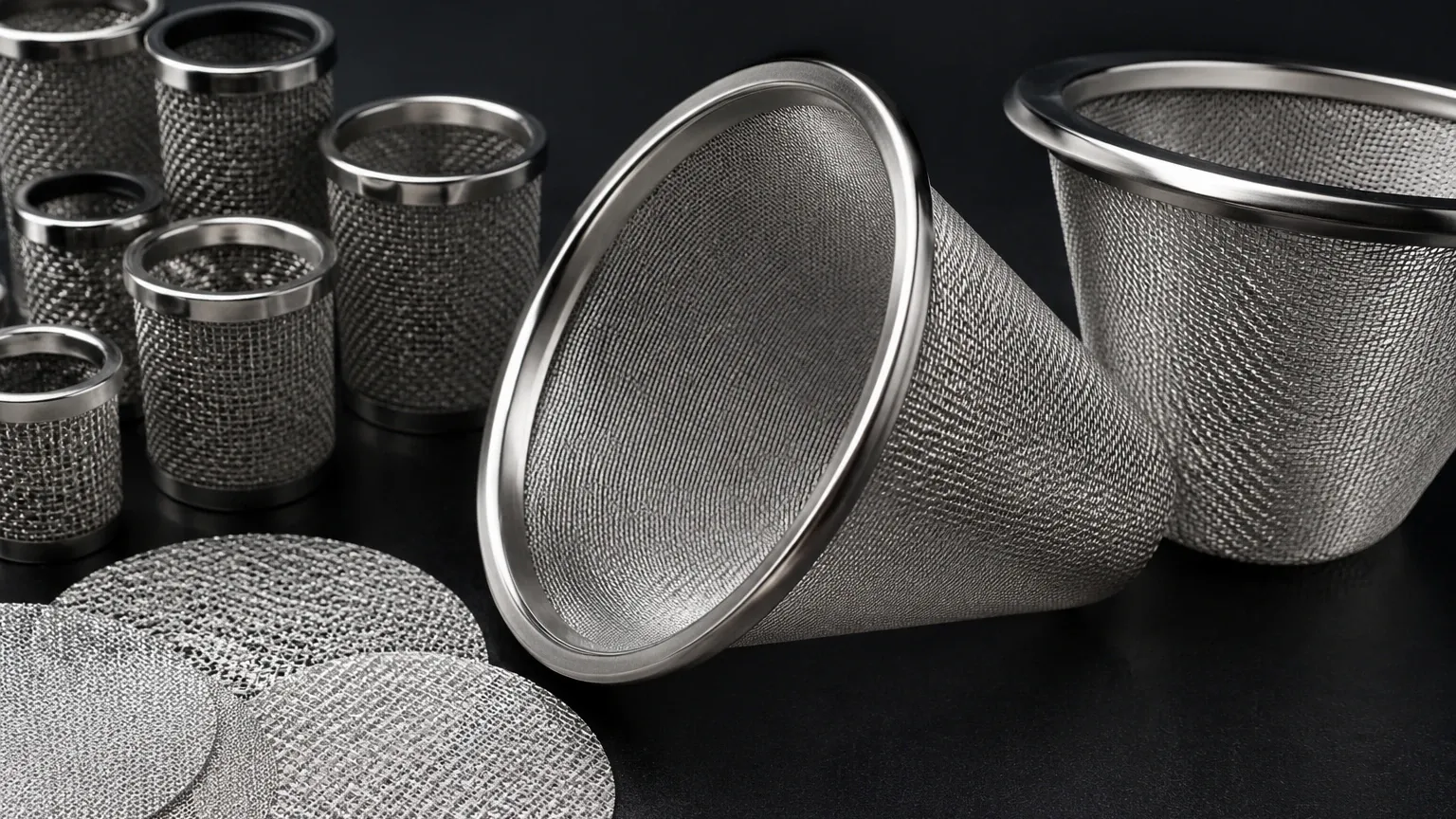
The efficiency of 110 to 120 mesh paint strainers is not solely dependent on the mesh size; the physical housing and support structure are equally vital. In industrial settings, these filters are typically integrated into the fluid line in one of three configurations:
1. Basket Strainers: These feature a large surface area, allowing for high dirt-holding capacity. The basket design is ideal for batch processing where the strainer can be removed and cleaned between shifts. The 110-120 mesh lining is often supported by a coarser perforated metal cylinder to prevent the fine mesh from collapsing under pressure.
2. Inline Cone (Witch’s Hat) Strainers: These are installed directly between pipe flanges. While they offer less surface area than baskets, they are excellent for protecting downstream equipment like spray nozzles and valves from sudden surges of debris.
3. Y-Strainers: Used for continuous flow applications, Y-strainers allow for the removal of the filter element without completely dismantling the piping system. For paint lines, these are often customized with 120-mesh stainless steel inserts to ensure fine filtration at the point of use.
Kaifil’s manufacturing process ensures that the mesh is securely bonded to the support structure, typically through precision welding or crimping. This prevents bypass—where fluid flows around the edges of the mesh rather than through it—which is a common failure point in lower-quality filtration components.
Performance Factors: Flow Rate, Viscosity, and Pressure Drop
For engineers, the primary challenge in implementing 110 to 120 mesh paint strainers is managing the relationship between fluid viscosity and pressure drop. Paint is often a non-Newtonian fluid, meaning its viscosity changes under shear stress.
* Viscosity Impact: High-viscosity coatings (such as those used in heavy-duty marine or protective applications) require more force to pass through the 125-140 micron openings. If the pressure drop (ΔP) across the strainer exceeds the system's design limits, flow rates will plummet, leading to uneven spray patterns or pump cavitation.
* Flow Velocity: To maintain efficiency, the velocity through the mesh should be kept low. This is achieved by increasing the total surface area of the strainer. By using a larger basket or multiple parallel strainers, the velocity per square inch of mesh is reduced, lowering the pressure drop and extending the time between cleanings.
* Loading Capacity: As the 110-120 mesh captures particles, the open area decreases, and the pressure drop increases. Monitoring this ΔP is the most effective way to determine when a strainer requires cleaning. Modern industrial systems often incorporate differential pressure gauges to automate this monitoring process.
Maintenance, Cleaning, and Total Cost of Ownership (TCO)
One of the most frequent questions from purchasing teams involves the maintenance cycle of stainless steel strainers. Unlike disposable filters, which are discarded when clogged, 110 to 120 mesh paint strainers are designed for recovery.
Cleaning Protocols
To maintain the precision of a 120-mesh screen, cleaning must be thorough. Dried paint within the mesh openings can permanently reduce the effective filtration area. Recommended practices include:
* Solvent Soaking: Immediately after use, the strainer should be submerged in a compatible solvent.
* Ultrasonic Cleaning: This is the most effective method for high-mesh counts. Ultrasonic waves create cavitation bubbles that dislodge microscopic particles from the wire intersections that manual scrubbing cannot reach.
* Backwashing: In some automated systems, a reverse flow of clean solvent can be used to flush contaminants from the mesh surface.
TCO Analysis
While the initial investment in a stainless steel Strainers & Baskets system is higher than purchasing a box of disposable cones, the ROI is typically realized within 6 to 12 months in high-volume environments. Savings are found in reduced hazardous waste disposal fees, lower inventory management costs, and the elimination of production stops caused by inferior filter failure.
Customization and Integration into Existing Systems
Every industrial paint line has unique requirements based on the chemistry of the coating and the geometry of the application equipment. Kaifil specializes in OEM and customized filtration solutions, allowing engineers to specify parameters beyond just the mesh count.
* Reinforced Structures: For high-pressure hydraulic paint systems, 110-120 mesh can be sintered or layered with multiple plies of coarser mesh to provide extreme structural rigidity.
* Custom Dimensions: Whether fitting into a proprietary spray booth or a legacy chemical reactor, the physical dimensions of the basket or strainer can be tailored to ensure a leak-proof fit.
* Handle and Seal Options: Custom handles for easy removal and specialized O-rings (Viton, PTFE, or EPDM) ensure that the strainer assembly is compatible with the specific solvents used in the process.
When evaluating 110 to 120 mesh paint strainers, it is vital to confirm the exact micron rating and the wire diameter used by the manufacturer. Variations in wire thickness can significantly alter the flow characteristics of the mesh, even if the mesh count remains the same. Partnering with a manufacturer like Kaifil ensures that these technical variables are controlled and documented, providing a reliable and repeatable filtration performance for demanding industrial applications.
