


Office Filter Packs
In the landscape of modern office infrastructure, the demand for high-performance filtration has transitioned from simple consumer-grade solutions to robust, industrial-standard components. Office filter packs, particularly those utilizing stainless steel wire mesh, play a critical role in maintaining the integrity of water purification systems, commercial beverage equipment, and specialized air handling units. For engineers and facility managers, selecting the right filtration media is not merely a matter of convenience but a technical decision that impacts equipment longevity, operational costs, and user safety.
As a specialized manufacturer, Kaifil provides precision-engineered Filter Discs & Packs designed to meet the rigorous demands of these environments. Understanding the technical nuances of these components is essential for optimizing performance in high-traffic office settings.
Understanding the Application of Industrial Filter Discs & Packs in Office Environments
The term "office filter packs" often encompasses a variety of filtration needs found within a professional building. Unlike residential filters, these components must withstand higher flow rates, frequent use cycles, and more stringent hygiene standards.
Commercial Beverage and Water Systems
High-end office coffee machines and integrated water dispensers rely on precision filtration to remove particulates while maintaining flow consistency. Stainless steel filter discs are often preferred in these applications because they do not shed fibers and are resistant to the high temperatures and pressures common in commercial brewing processes.
HVAC and Air Quality Sensors
Modern "smart" offices utilize sensitive sensors to monitor air quality. These sensors require miniature filter packs to protect delicate internal components from dust and micro-particulates without obstructing the airflow necessary for accurate readings. Stainless steel mesh provides the necessary structural integrity at very small scales.
Specialized Office Equipment
In creative or technical office spaces, equipment such as 3D printers, large-format plotters, and laboratory-grade cleaning stations utilize specialized filtration. These systems often require custom-shaped filter packs to manage cooling fluids or capture fine emissions, where standard off-the-shelf filters fail to meet the specific geometry or chemical resistance required.
Material Engineering: Why Stainless Steel is the Standard for Office Filter Packs
When evaluating office filter packs, the choice of material is the most significant factor in determining the filter's lifecycle and effectiveness. While plastic or paper-based filters are common in low-demand scenarios, industrial-grade stainless steel (typically AISI 304 or 316L) offers several engineering advantages.
Corrosion Resistance and Hygiene
Stainless steel 316L is particularly valued for its resistance to pitting and crevice corrosion, especially in water-based applications where chlorine or other cleaning agents may be present. Its non-porous surface prevents the accumulation of bacteria and biofilm, which is critical for office water and beverage systems where health and safety are paramount.
Structural Integrity
Unlike synthetic mesh, stainless steel wire mesh does not deform under pressure. This ensures that the pore size remains constant throughout the filtration cycle, providing predictable and repeatable results. In multi-layer filter packs, the combination of different mesh counts allows for a graduated filtration process, where outer layers capture larger debris and inner layers provide the final precision cut.
Thermal Stability
In office applications involving heat—such as steam-based cleaning or hot beverage dispensing—stainless steel maintains its mechanical properties. It does not leach chemicals or degrade at temperatures that would compromise the integrity of polymer-based filters.
Technical Specifications: Micron Ratings and Flow Dynamics
Selecting office filter packs requires a deep dive into the technical specifications that govern filtration efficiency and system pressure. Engineers must balance the need for fine filtration with the requirement for adequate flow rates.
Micron Rating: Absolute vs. Nominal
It is essential to distinguish between absolute and nominal micron ratings. An absolute rating indicates the diameter of the largest spherical particle that can pass through the filter, while a nominal rating represents a percentage of particles of a certain size that are retained. For critical office applications, such as protecting sensitive valves in a water system, an absolute-rated stainless steel mesh is often required to prevent catastrophic equipment failure.
Pressure Drop (ΔP)
The pressure drop across a filter pack is a function of the mesh opening size, the total surface area, and the fluid velocity. A common engineering mistake in office equipment design is selecting a filter that is too fine, leading to a high initial pressure drop that strains pumps and reduces the system's service life. By utilizing pleated designs or multi-layer packs, manufacturers can increase the effective filtration area, thereby reducing ΔP while maintaining high filtration accuracy.
Mesh Counts and Weave Types
The weave type—whether plain, twilled, or dutch weave—determines the strength and the "tortuous path" the fluid must take. For office filter packs, a plain weave is often sufficient for general straining, whereas a dutch weave might be employed for high-pressure, fine-filtration scenarios where mechanical strength is a priority.
The Economic and Environmental Impact of Permanent Filtration Solutions
One of the most compelling arguments for moving toward stainless steel filter packs in an office setting is the total cost of ownership (TCO). While the initial acquisition cost of a stainless steel filter is higher than that of a disposable paper or plastic alternative, the long-term benefits are substantial.
Reusability and Cleaning
Stainless steel filter packs are designed to be cleaned and reused. In many office applications, simple backwashing or ultrasonic cleaning can restore the filter to its original performance levels. This eliminates the recurring cost of purchasing, stocking, and disposing of single-use filters.
Sustainability Goals
As corporations strive to meet ESG (Environmental, Social, and Governance) targets, reducing the waste stream from office maintenance is a priority. Permanent filtration solutions align with these goals by significantly reducing the volume of landfill waste generated by HVAC and beverage system maintenance.
Reduced Downtime
High-quality filter packs are less prone to sudden failure or "blow-through." In an office environment, equipment downtime can lead to lost productivity and increased service call costs. The durability of metal filtration components ensures longer intervals between maintenance cycles.
Customization for OEM Office Equipment Manufacturers
For manufacturers of office equipment, standard filtration components are often insufficient for innovative designs. Customization is a core requirement in the development of next-generation office technology.
Geometry and Form Factor
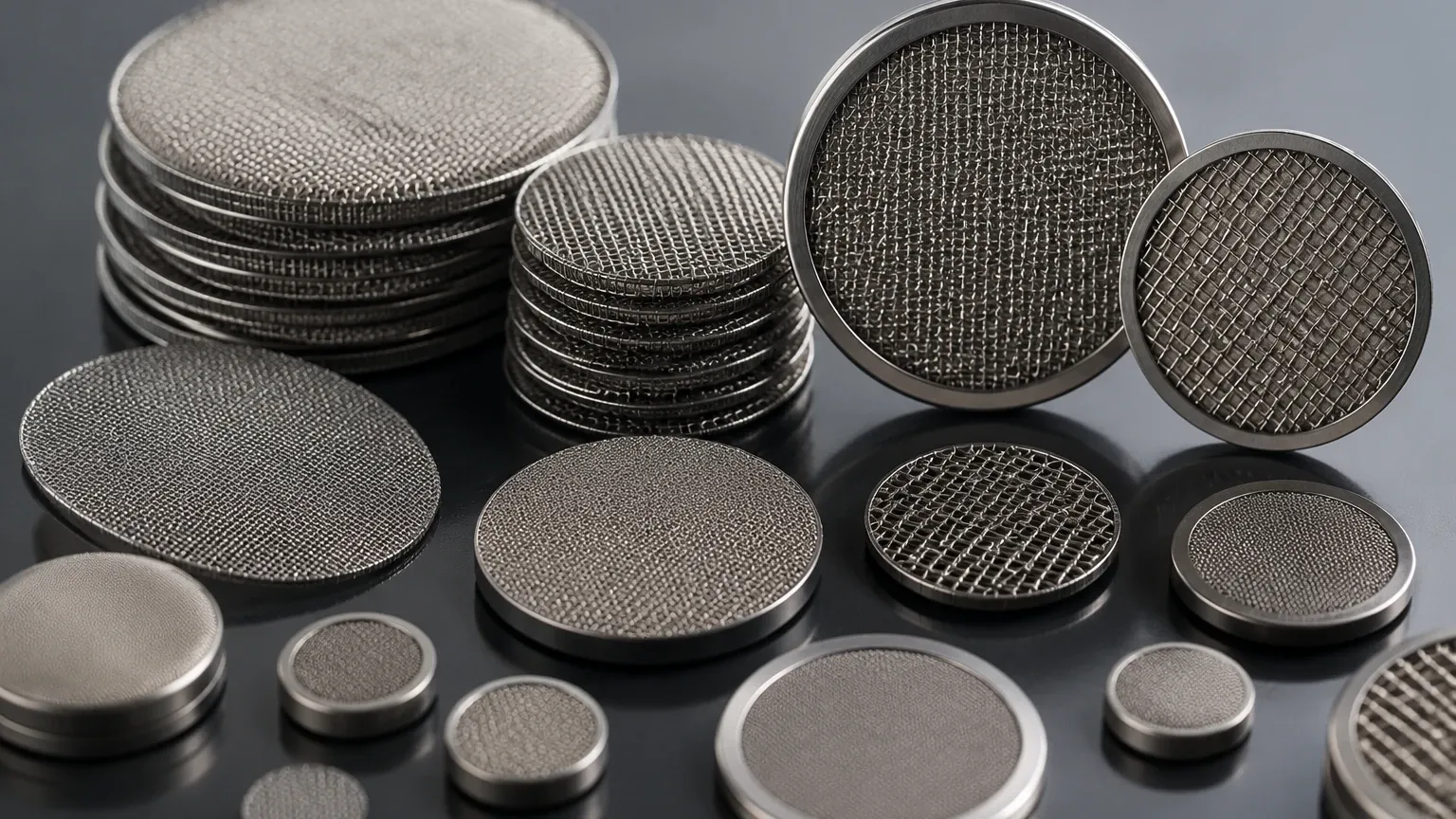
Filter packs can be manufactured in a variety of shapes—circular discs, rectangular frames, or complex three-dimensional forms. Edge treatments, such as aluminum or stainless steel rims, can be added to ensure a leak-proof seal within the equipment housing. This precision is vital for "plug-and-play" components used in modular office systems.
Layer Configuration
By sintering multiple layers of wire mesh together, manufacturers can create a single, robust filter pack that combines a drainage layer, a filtration layer, and a support layer. This "all-in-one" approach simplifies the assembly process for OEM manufacturers and ensures that the filtration media cannot be installed incorrectly during field maintenance.
Spot Welding and Bonding
In multi-layer office filter packs, the layers must be securely joined to prevent bypass. Advanced spot-welding techniques or mechanical bonding ensures that even under fluctuating pressures, the layers remain perfectly aligned, maintaining the integrity of the micron rating.
Maintenance and Replacement Cycles for Optimal Performance
Even the most durable office filter packs require a structured maintenance regimen to ensure peak performance. Engineers should establish clear protocols based on the specific conditions of the office environment.
1. Monitoring Pressure Differentials: In systems equipped with gauges, a rise in pressure drop is the most reliable indicator that a filter pack requires cleaning.
2. Visual Inspection: For non-pressurized systems, regular visual inspection for scale buildup (in water systems) or particulate loading (in air systems) is necessary.
3. Standardized Cleaning Procedures: Using the correct cleaning agents is vital. For stainless steel, avoiding highly acidic or halogenated cleaners prevents surface damage and maintains the material's passive oxide layer.
4. Replacement Indicators: While permanent, stainless steel filters do eventually wear. Signs of mechanical fatigue, distorted mesh patterns, or persistent clogging that cannot be removed by cleaning indicate that the filter pack has reached the end of its service life.
Addressing Common Engineering Challenges in Small-Scale Filtration
Designing filtration for office equipment presents unique challenges compared to large-scale industrial plants. Space constraints are often the primary hurdle. Engineers must find ways to maximize filtration surface area within very small footprints. This is where the expertise of a manufacturer like Kaifil becomes invaluable, providing the precision required to produce miniature Filter Discs & Packs that do not sacrifice performance for size.
Another challenge is the variability of the "feed"—whether it is the local water quality or the ambient dust levels in a specific building. A versatile filter pack design must be able to handle these fluctuations without requiring frequent manual intervention. By selecting the appropriate mesh depth and configuration, engineers can create a "buffer" that allows the system to operate reliably under varying conditions.
Conclusion
Office filter packs are essential components that bridge the gap between high-end industrial engineering and everyday professional environments. By prioritizing material quality, technical precision, and long-term durability, purchasing teams and engineers can ensure that office infrastructure remains efficient and sustainable. Whether for water, air, or specialized equipment, the transition to high-quality stainless steel filtration represents a strategic investment in both performance and environmental responsibility.
