


Wire Mesh Filter Material: An Engineering Guide to Selection and Performance
In industrial filtration, the selection of wire mesh filter material is a critical engineering decision that directly impacts the efficiency, longevity, and safety of a process. Unlike disposable media, metal wire mesh provides a reusable, high-strength solution capable of withstanding extreme temperatures, corrosive fluids, and high differential pressures. However, the performance of Wire Mesh Filter Cylinders & Tubes is not solely dependent on the mesh size; it is a complex interplay of metallurgy, weave geometry, and structural design.
For engineers and procurement teams in the chemical processing, pharmaceutical, and hydraulic industries, understanding the nuances of material science is essential. This guide examines the technical specifications of wire mesh materials, the mechanical implications of different weave patterns, and the factors that determine the total cost of ownership in demanding industrial environments.
Understanding the Role of Wire Mesh Filter Material in Industrial Systems
Industrial filtration serves two primary purposes: protecting downstream equipment (such as pumps, valves, and nozzles) from particulate damage and ensuring the purity of the end product. Wire mesh is often the preferred medium because of its predictable pore size and mechanical stability.
The "material" in this context refers to both the chemical alloy of the wire and the physical structure of the finished mesh. When selecting a wire mesh filter material, engineers must balance three competing requirements:
1. Chemical Compatibility: The material must resist corrosion from the process fluid.
2. Mechanical Strength: The mesh must withstand the pressure drop ($ΔP$) across the filter without deforming or experiencing wire migration.
3. Thermal Stability: The material must maintain its integrity at operating temperatures, which can range from cryogenic levels to over 800°C in certain petrochemical applications.
Chemical Composition and Alloy Selection for Harsh Environments
Stainless steel is the industry standard for most filtration applications due to its balance of cost and performance. However, "stainless steel" is a broad category, and selecting the wrong grade can lead to premature failure via pitting, crevice corrosion, or stress corrosion cracking.
Austenitic Stainless Steels (300 Series)
* AISI 304/304L: The most common grade for general-purpose filtration. It offers good corrosion resistance in water and mild atmospheric conditions. However, it is susceptible to chloride-induced pitting.
* AISI 316/316L: Containing 2-3% molybdenum, 316L is the preferred choice for chemical and marine environments. The "L" (Low Carbon) designation is crucial for filters that require extensive welding, as it prevents carbide precipitation and subsequent intergranular corrosion at the weld zones.
* AISI 310S: High-chromium and nickel content provide excellent oxidation resistance for high-temperature gas filtration (up to 1100°C).
High-Performance Alloys
In environments where standard stainless steels fail, specialty alloys are required. These are often used in the construction of specialized Wire Mesh Filter Cylinders & Tubes for the oil and gas or specialty chemical sectors.
* 904L: A high-alloy austenitic stainless steel with high molybdenum and copper content, designed for handling sulfuric acid and phosphoric acid.
* Hastelloy (C-276, C-22): Exceptional resistance to strong reducing and oxidizing acids, including wet chlorine gas and ferric chlorides.
* Monel 400: A nickel-copper alloy used primarily in hydrofluoric acid environments and marine engineering where resistance to seawater is paramount.
* Inconel 600/625: Used for extreme thermal applications and high-pressure environments where creep resistance is necessary.
Mechanical Properties and Weave Geometries
The physical performance of the wire mesh filter material is defined by how the wires are woven. The weave pattern determines the micron rating, flow capacity, and the ease with which the filter can be cleaned.
Plain Weave and Twill Weave
Plain weave is the simplest form, where each shute wire passes over and under one warp wire. It provides the highest open area and lowest pressure drop but is limited in how fine it can go. Twill weave allows for heavier wires to be used for a given mesh count, providing greater strength for high-pressure applications.
Dutch Weave (Plain and Twilled)
Dutch weaves utilize a larger diameter warp wire and a smaller diameter shute wire, woven tightly together. This creates a "tortuous path" for the fluid, allowing for much finer filtration (down to 5-10 microns) than plain weaves.
* Plain Dutch Weave: Offers a high flow rate and is relatively easy to clean.
* Twilled Dutch Weave: Allows for the finest filtration levels (sub-5 microns) and provides a very high degree of mechanical strength, though it is more difficult to backwash.
Reverse Dutch Weave
In this configuration, the warp wires are thinner and the shute wires are thicker. This results in a mesh with high mechanical strength in the direction of the warp, making it ideal for high-pressure automated screen changers and high-load filtration cylinders.
Sintering and Multi-layer Configurations for Enhanced Durability
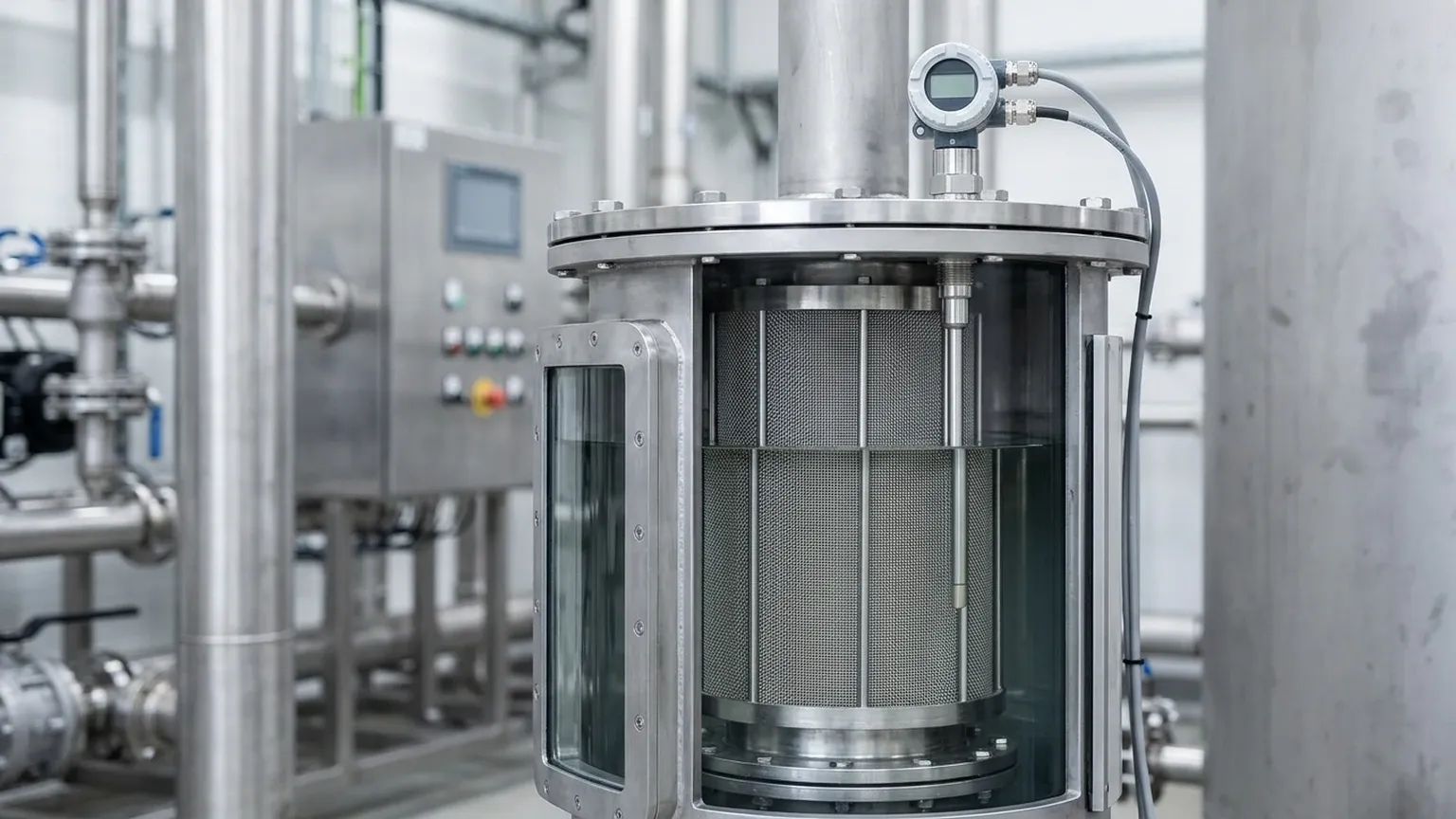
For many industrial applications, a single layer of wire mesh is insufficient. High-performance Wire Mesh Filter Cylinders & Tubes often utilize sintered mesh technology. Sintering is a process where multiple layers of mesh are bonded together using heat and pressure without the use of binders.
The Benefits of Sintered Mesh
1. Elimination of Wire Migration: In pharmaceutical or food applications, the risk of a single wire fragment breaking off and entering the product stream is a major concern. Sintering fuses the wires at every contact point, making migration impossible.
2. Structural Rigidity: Sintered mesh can be self-supporting. A typical 5-layer sintered structure includes a fine filtration layer, a protective layer, and three drainage/support layers. This allows the filter to withstand high differential pressures without a separate perforated core.
3. Precise Pore Size: The sintering process fixes the pore geometry, ensuring that the micron rating remains constant even under fluctuating pressure conditions.
Engineering Considerations for High-Pressure Applications
When designing or purchasing filter cylinders, the differential pressure ($ΔP$) is the most critical variable. As the filter accumulates debris, the $ΔP$ increases. If the wire mesh filter material or the cylinder structure is not engineered correctly, several failure modes can occur:
* Buckling: The cylinder collapses inward under external pressure.
* Bursting: The tube ruptures outward under internal pressure.
* Mesh Blinding: Particulates become permanently wedged in the pores, making cleaning impossible.
To mitigate these risks, engineers often specify a perforated metal support core or an outer shroud. The choice of material for these supports must match the electrochemical potential of the mesh to prevent galvanic corrosion. For example, using a 304 stainless steel support with a 316L mesh in a chloride-rich environment can lead to rapid failure of the support structure.
Maintenance, Cleaning, and Total Cost of Ownership (TCO)
One of the primary advantages of metal wire mesh over polymer or paper media is cleanability. However, the "cleanability" of a wire mesh filter material depends on the nature of the contaminant and the weave type.
Cleaning Methods
* Backwashing: Reversing the flow of the fluid to dislodge particles. This is most effective with plain and Dutch weaves.
* Ultrasonic Cleaning: Using high-frequency sound waves in a solvent bath to remove sub-micron particles from deep within the weave.
* Chemical Cleaning: Using acids or bases to dissolve organic or mineral scaling. This requires the filter material to be highly corrosion-resistant.
* Burn-off/Pyrolysis: Heating the filter to high temperatures to carbonize organic contaminants. This is only possible with high-temperature alloys like 310S or Inconel.
While the initial capital expenditure (CAPEX) for a stainless steel filter is higher than for a disposable cartridge, the TCO is often lower due to reduced waste disposal costs, lower downtime for filter changes, and the long service life of the metal components.
Technical Procurement: Key Specifications for International Buyers
When sourcing Wire Mesh Filter Cylinders & Tubes, providing vague specifications can lead to performance failures. To ensure the filter meets the application requirements, the following technical data must be confirmed:
1. Micron Rating (Absolute vs. Nominal): Always specify if you require an absolute rating (where 100% of particles above a certain size are captured) or a nominal rating (where a percentage is captured).
2. Flow Rate and Viscosity: The fluid's viscosity significantly impacts the pressure drop. High-viscosity fluids (like polymers or heavy oils) require larger surface areas and coarser support structures.
3. Operating Environment: Provide the full chemical composition of the fluid, including trace elements like H2S or chlorides, and the maximum operating temperature.
4. Mechanical Interface: Specify the end-cap configuration (e.g., DOE, SOE, threaded, or flanged) and the welding standard required (e.g., TIG welding for high purity).
5. Certification Requirements: For pharmaceutical or food applications, material traceability (MTRs) and compliance with FDA or EU 1935/2004 standards may be necessary.
Conclusion
The selection of wire mesh filter material is a foundational element of industrial process design. By moving beyond basic mesh counts and focusing on metallurgy, weave mechanics, and structural reinforcement, engineers can specify filtration solutions that offer superior reliability and performance. Whether handling aggressive chemicals or high-temperature gases, the right combination of alloy and structure in Wire Mesh Filter Cylinders & Tubes ensures that the filtration system remains a robust asset rather than a maintenance bottleneck.
