


Wire Mesh Filter Cap
In industrial filtration, the integrity of a system is only as strong as its weakest component. While the primary filtration media often receives the most attention during the engineering phase, the end-closures—specifically the wire mesh filter cap—play a critical role in ensuring total system reliability. These components are essential for sealing Wire Mesh Filter Cylinders & Tubes, preventing bypass, and providing the structural rigidity necessary to withstand high differential pressures.
For engineers and procurement professionals, selecting the correct wire mesh filter cap involves more than simply matching a diameter. It requires a deep understanding of metallurgy, fluid dynamics, and mechanical attachment methods. This guide examines the technical specifications, design considerations, and application risks associated with these precision components.
The Functionality of a Wire Mesh Filter Cap in Cylindrical Systems
A wire mesh filter cap serves two primary functions: containment and direction. In a typical cylindrical filter assembly, fluid or gas enters either from the outside-in or inside-out. Without a securely fitted and appropriately designed cap, the pressurized media would take the path of least resistance, bypassing the filtration mesh entirely.
Beyond simple sealing, the cap often acts as the primary interface between the filter element and the housing. This means it must frequently incorporate specialized fittings, such as threaded NPT/BSP connectors, flanges, or O-ring grooves. In high-vibration environments, such as hydraulic systems or aerospace applications, the cap must also serve as a structural anchor, preventing the mesh cylinder from collapsing or telescoping under mechanical stress.
Material Engineering for Demanding Environments
The choice of material for a wire mesh filter cap is dictated by the chemical compatibility of the media and the operating temperature of the process. Because these caps are often welded to Wire Mesh Filter Cylinders & Tubes, material consistency is vital to ensure weld integrity.
Stainless Steel 304 and 304L
Grade 304 is the standard for general industrial applications. It offers excellent corrosion resistance for water treatment and basic chemical processing. The "L" (low carbon) variant is preferred when extensive welding is required, as it minimizes carbide precipitation that can lead to intergranular corrosion in the heat-affected zone.
Stainless Steel 316 and 316L
For marine environments, pharmaceutical processing, and highly acidic chemical streams, Grade 316 is the industry benchmark. The addition of molybdenum enhances resistance to pitting and crevice corrosion, particularly in chloride-rich environments. 316L is almost universally specified for high-precision industrial filters to ensure the longevity of the welded joints.
Specialized Alloys
In extreme cases involving highly corrosive fluids (such as concentrated sulfuric acid) or high-temperature gas filtration, alloys like Monel, Inconel, or Hastelloy may be utilized. These materials maintain their structural integrity and oxidation resistance at temperatures where standard stainless steels would fail.
Weave Patterns and Micron Ratings in Cap Design
While the cap itself is often a solid metal component, many designs incorporate a "filter cap" that is itself made of mesh or a combination of perforated metal and fine wire cloth. The selection of the mesh weave impacts both the filtration efficiency and the mechanical strength of the cap assembly.
1. Plain Weave: The most common and cost-effective, suitable for general-purpose straining where high flow rates are prioritized over extreme precision.
2. Twill Weave: Allows for a heavier wire diameter in a given mesh count, providing increased strength for high-pressure applications.
3. Dutch Weave (Plain and Twill): These weaves feature a higher density of wires in one direction, creating a tortuous path for particles. This is ideal for high-pressure filtration where a wire mesh filter cap must maintain its shape while capturing fine particulates.
When specifying the micron rating, engineers must distinguish between nominal and absolute ratings. For critical applications, such as hydraulic fluid filtration or pharmaceutical ingredient recovery, an absolute rating ensures that no particle larger than the specified size can pass through the media.
Mechanical Construction: Welding and Sealing Techniques
The method used to attach a wire mesh filter cap to the main filter body is a primary determinant of the filter's pressure rating and service life.
TIG and Plasma Welding
Tungsten Inert Gas (TIG) welding is the preferred method for high-quality industrial filters. It creates a clean, slag-free joint that is essential for food-grade and pharmaceutical applications. Plasma welding offers even greater precision for very fine meshes, reducing the risk of burning through thin wire cloth.
Resistance Welding (Spot Welding)
Often used in multi-layer mesh constructions or for attaching reinforcement rings, resistance welding is efficient for high-volume OEM production. However, it may not provide the 100% hermetic seal required for high-pressure gas or liquid filtration.
Crimping and Mechanical Hemming
In applications where welding is not feasible due to material constraints or where a lower-cost solution is acceptable, caps can be mechanically crimped onto the mesh. While effective for basic strainers, crimped joints are more susceptible to bypass under high differential pressure compared to welded joints.
Sealing Interfaces
To ensure a leak-proof fit within the housing, the cap often includes:
* O-Ring Grooves: Utilizing Viton, EPDM, or PTFE O-rings for high-performance sealing.
* Flat Gaskets: Often made of silicone or fiber materials for low-pressure applications.
* Metal-to-Metal Seals: Precision-machined surfaces that rely on high clamping force.
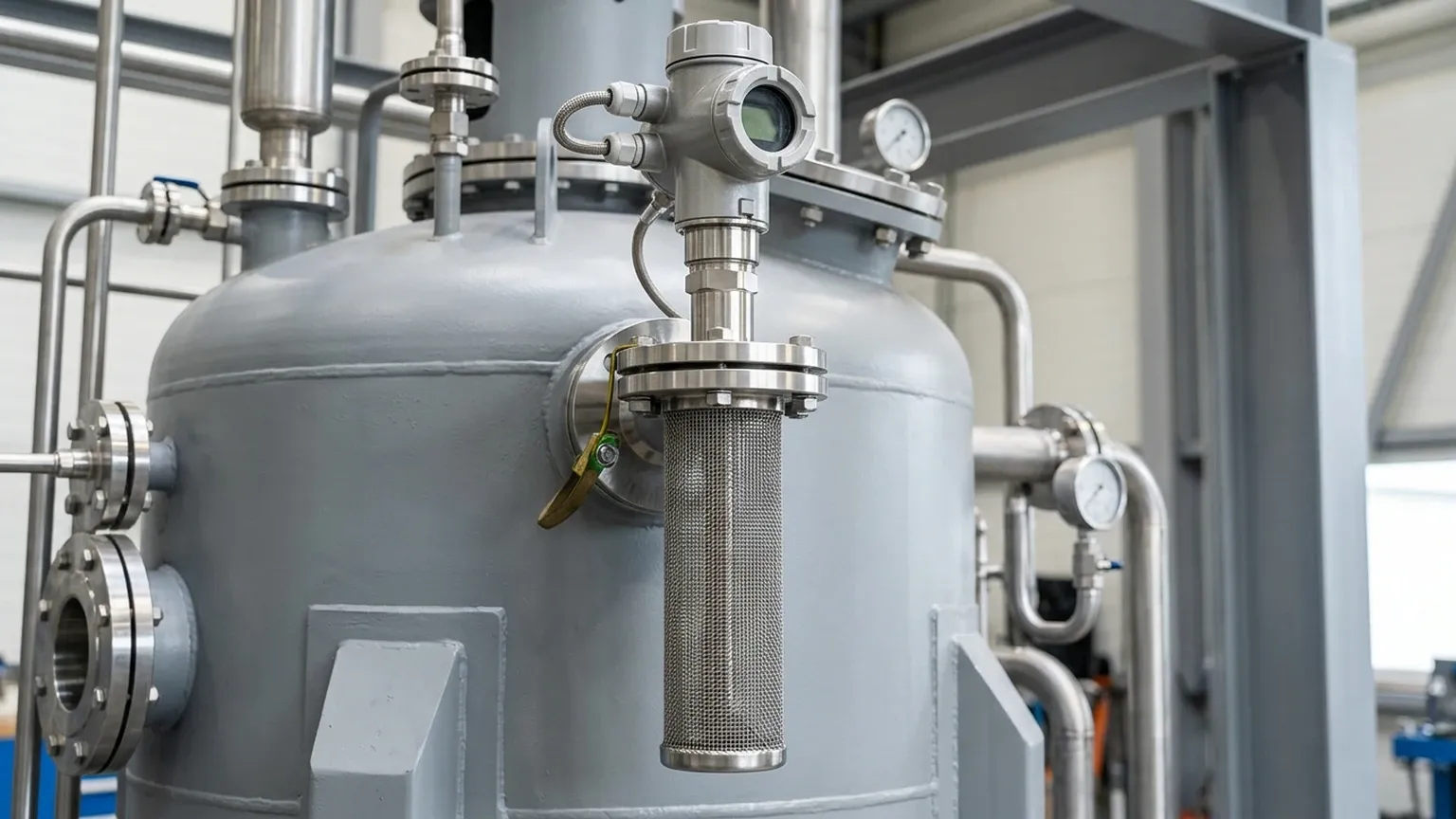
Performance Metrics: Pressure Drop and Structural Integrity
A common engineering oversight is failing to account for the pressure drop ($ΔP$) contributed by the cap design. If a wire mesh filter cap significantly restricts the flow path, it can lead to localized high-velocity zones, which may cause premature erosion of the mesh or cavitation in liquid systems.
Furthermore, the "Collapse Pressure" is a vital metric. As the filter accumulates debris, the differential pressure increases. The cap must be designed to support the Wire Mesh Filter Cylinders & Tubes so they do not buckle. This often involves adding internal support cores or external cages that are welded directly to the end caps.
Industry-Specific Requirements
Chemical Processing
Filters in this sector must withstand aggressive solvents and varying pH levels. The focus here is on material traceability and the use of corrosion-resistant alloys. Caps must be designed for easy removal and cleaning to handle batch processing requirements.
Food and Beverage
Hygienic design is paramount. This means the wire mesh filter cap must have smooth surfaces (often electropolished) and no "dead zones" where bacteria can accumulate. All materials must be FDA-compliant.
Hydraulic Systems
These filters face high-frequency pressure pulsations. The attachment between the cap and the mesh must be exceptionally robust to prevent fatigue failure. Threaded caps are common here to ensure the filter remains seated during pressure spikes.
Technical Selection Checklist for Engineers
Before finalizing a purchase order for custom filtration components, international buyers and engineers should confirm the following specifications with the manufacturer:
* Dimensional Tolerances: Ensure the OD (Outside Diameter) and ID (Inside Diameter) of the cap align with housing clearances, accounting for thermal expansion.
* Effective Filtration Area (EFA): Calculate how much of the mesh is obscured by the cap's flange to ensure flow requirements are met.
* Cleaning Compatibility: If the filter is intended for reuse, verify that the cap and weld joints can withstand ultrasonic cleaning or high-pressure backflushing.
* Certification Requirements: Determine if the project requires Mill Test Reports (MTRs), certificates of conformance, or specific ISO/ASTM compliance documentation.
* Operating Conditions: Define the maximum operating temperature, normal operating pressure, and maximum allowable differential pressure ($ΔP$).
Conclusion
The wire mesh filter cap is a fundamental component that defines the performance and reliability of industrial filtration systems. By selecting the appropriate material, weave, and attachment method, engineers can ensure that their Wire Mesh Filter Cylinders & Tubes perform optimally in the most demanding environments. Whether for fine chemical separation or heavy-duty hydraulic protection, the precision of the end-closure is what guarantees the purity of the final output and the safety of the downstream equipment.
