


15mm Inline Strainers
In industrial fluid handling, the protection of sensitive downstream components—such as solenoid valves, flow meters, and high-pressure nozzles—is a critical engineering priority. The 15mm inline strainer, often designated as a DN15 component, serves as the primary mechanical barrier against particulate contamination in small-bore piping systems. These compact filtration units are essential for maintaining process integrity in environments ranging from chemical pilot plants to precision hydraulic systems.
Selecting the correct 15mm inline strainer requires a deep understanding of fluid dynamics, material compatibility, and the specific mechanical stresses of the application. As a specialized manufacturer of stainless steel filtration solutions, Kaifil focuses on providing high-performance Strainers & Baskets that meet the rigorous demands of industrial OEM and end-user requirements.
The Engineering Role of 15mm Inline Strainers
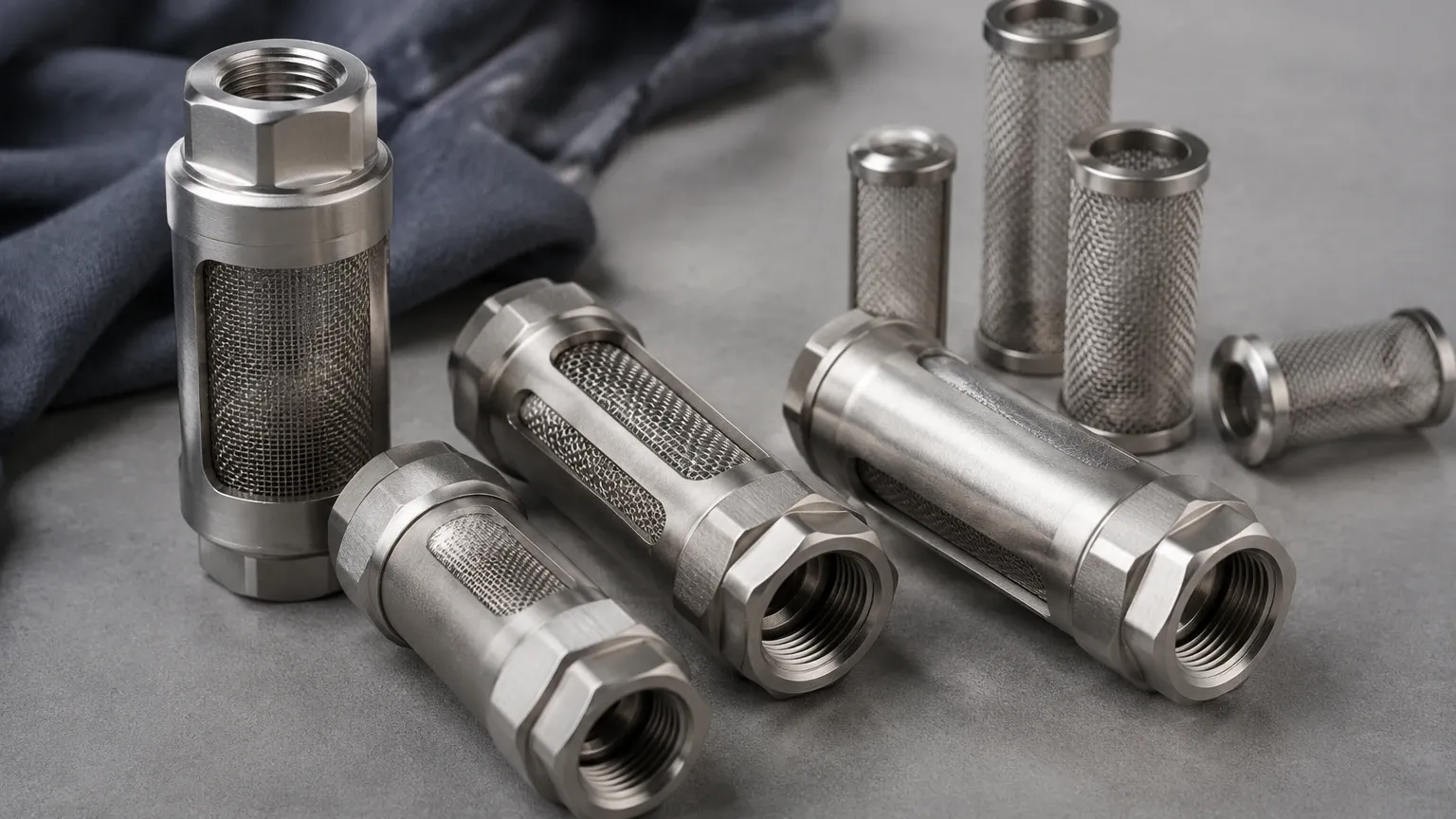
A 15mm inline strainer is designed to be installed directly into a process line to remove unwanted solids from liquids, gases, or steam. Unlike larger filtration housings that may occupy significant floor space, these units are integrated into the piping architecture, offering a space-efficient solution for localized protection.
The primary function is to prevent "debris-induced failure." In a 15mm line, even small particles—such as pipe scale, weld slag, or sediment—can cause catastrophic damage to precision instruments. For instance, a microscopic particle lodged in a valve seat can prevent a full closure, leading to leakage, pressure loss, and potential safety hazards. By implementing 15mm inline strainers, engineers ensure that the fluid reaching critical components meets the required cleanliness standards.
Material Selection and Structural Integrity
When specifying 15mm inline strainers for industrial use, the choice of material is the most significant factor influencing the unit's lifespan and performance. While plastic or brass strainers may suffice for domestic water applications, industrial environments typically demand stainless steel construction.
Stainless Steel 304 vs. 316
* Type 304 Stainless Steel: This is the standard choice for general industrial applications. It offers excellent strength and good corrosion resistance for water treatment and non-corrosive chemical lines.
* Type 316/316L Stainless Steel: For pharmaceutical, food and beverage, or marine applications, Type 316 is the preferred material. The addition of molybdenum provides superior resistance to chlorides and pitting corrosion, making it suitable for CIP (Clean-in-Place) processes and aggressive chemical environments.
Housing and Mesh Durability
The housing must be rated for the maximum system pressure, often exceeding 40 bar in hydraulic or high-pressure steam applications. Internally, the filtration element—usually a stainless steel wire mesh or a perforated metal cylinder—must be structurally reinforced to prevent collapsing under a high pressure differential ($ΔP$) as the strainer becomes loaded with contaminants.
Technical Specifications: Micron Ratings and Flow Dynamics
The performance of 15mm inline strainers is defined by the relationship between filtration fineness and flow resistance. Engineers must balance the need for fine filtration with the acceptable pressure drop across the unit.
Understanding Micron Ratings
The "micron rating" refers to the size of the particles the strainer can effectively retain.
* Coarse Filtration (100–500 microns): Used for removing large scale and protecting robust pumps.
* Fine Filtration (5–50 microns): Used for protecting precision nozzles and sensitive analytical equipment.
It is a common misconception that a finer mesh is always better. A mesh that is too fine for the application will clog rapidly, leading to frequent maintenance intervals and excessive pressure drops that can starve downstream pumps.
Flow Coefficient (Cv) and Pressure Drop
The Cv value of a 15mm inline strainer indicates the flow rate of water in gallons per minute that will pass through the unit with a 1 psi pressure drop. For a DN15 line, maintaining a high Cv while achieving the necessary filtration is the goal. Factors such as the "open area ratio" of the mesh play a vital role here. A high-quality stainless steel mesh provides a greater open area than thicker, less precise materials, allowing for higher flow rates in a compact 15mm footprint.
Design Variations: Y-Type vs. T-Type Inline Strainers
The physical configuration of the strainer impacts both installation and maintenance. For 15mm lines, two designs are most prevalent:
1. Y-Type Strainers
The Y-type is the most common configuration for 15mm inline strainers. The "leg" of the Y contains the filter element, which can be serviced without removing the entire unit from the piping. These are ideal for high-pressure steam or liquid lines where space is limited. They can be installed horizontally or vertically (downward flow), providing versatility in tight skid designs.
2. T-Type or Basket-Style Strainers
While less common in the 15mm size for standard piping, T-type or basket-style strainers are used when a higher dirt-holding capacity is required. The basket design allows for a larger surface area compared to the cylindrical element in a Y-strainer. This results in longer run times between cleanings, which is critical in continuous processes where downtime is costly.
Critical Evaluation Criteria for Purchasing Teams
When procuring 15mm inline strainers for a project, purchasing teams and engineers should confirm the following technical parameters to ensure long-term reliability:
1. Connection Type: 15mm strainers are available with NPT/BSP threaded ends, socket weld ends, or flanged connections. Threaded ends are standard for easy replacement, while socket welds are preferred in high-pressure or hazardous chemical lines to eliminate leak paths.
2. Sealing Materials: The gaskets or O-rings used to seal the strainer cap must be compatible with the process fluid. Common materials include EPDM for water, Viton (FKM) for oils and chemicals, and PTFE for high-temperature or highly aggressive fluids.
3. Ease of Maintenance: Does the design allow for quick removal of the screen? In many industrial settings, a "blow-off" valve can be installed on the strainer cap to flush out accumulated debris without stopping the flow, though a full manual cleaning is still required periodically.
4. Compliance and Certification: For specific industries, strainers must meet standards such as FDA/3A for food contact, or PED (Pressure Equipment Directive) for high-pressure systems in Europe.
Common Risks in Small-Diameter Filtration
In 15mm systems, the small internal volume makes the system highly sensitive to changes in flow. One major risk is bypass leakage. If the filter element is not seated perfectly within the housing, fluid will take the path of least resistance, allowing contaminants to bypass the mesh entirely. Precision-machined seating surfaces in stainless steel housings are essential to prevent this.
Another risk is mesh fatigue. In systems with pulsating flow (such as those powered by reciprocating pumps), the wire mesh can experience mechanical stress. Over time, this can lead to wire breakage. Specifying a reinforced or pleated mesh element can mitigate this risk by distributing the stress and providing higher structural rigidity.
Customization and OEM Solutions
Standard off-the-shelf strainers often fail to meet the exact requirements of specialized industrial equipment. This is where custom manufacturing becomes essential. For a 15mm inline strainer, customization might include:
* Non-standard mesh sizes: Tailoring the weave to capture specific particle shapes or sizes.
* Magnetic Inserts: Adding magnetic rods to the strainer to capture fine ferrous particles that might otherwise pass through a standard mesh.
* Specialized Coatings: Applying coatings for extreme chemical resistance or to reduce friction loss.
Kaifil specializes in these types of engineered solutions, ensuring that the Strainers & Baskets provided are not just components, but integrated solutions for process stability.
Maintenance and Total Cost of Ownership (TCO)
While the initial purchase price of a 15mm inline strainer is a factor, the Total Cost of Ownership (TCO) is driven by maintenance and durability. A low-quality strainer that requires frequent screen replacements or develops leaks at the seal will quickly exceed the cost of a premium stainless steel unit.
Maintenance Best Practices:
* Differential Pressure Monitoring: Installing pressure gauges upstream and downstream of the 15mm strainer allows operators to see exactly when the screen is clogged.
* Spare Elements: Always maintain a stock of replacement mesh elements to minimize downtime during cleaning cycles.
* Ultrasonic Cleaning: For stainless steel mesh elements, ultrasonic cleaning is an effective way to remove deeply embedded particles that manual brushing cannot reach, extending the life of the filter element.
Conclusion
The 15mm inline strainer is a small but vital component in the industrial landscape. Whether it is protecting a pharmaceutical filling line or a chemical dosing system, the reliability of the entire process often hinges on the performance of this single filtration point. By focusing on high-quality materials, precise micron ratings, and robust structural design, engineers can ensure their systems operate at peak efficiency with minimal risk of contamination-related failure.
For technical professionals seeking reliable, high-performance filtration components, selecting a partner with expertise in custom stainless steel manufacturing is essential. Explore the range of industrial Strainers & Baskets to find the right configuration for your specific application requirements.
