


190 Micron Paint Strainers
In industrial coating and finishing processes, the integrity of the final surface is dictated by the purity of the fluid delivered to the spray nozzle. Among the various filtration grades utilized in automotive, aerospace, and heavy machinery manufacturing, the 190 micron paint strainer remains a fundamental standard. This specific filtration level, approximately equivalent to an 80-mesh screen, is engineered to remove particulate matter, undissolved pigments, and environmental contaminants that could otherwise compromise the aesthetic and structural quality of a coating.
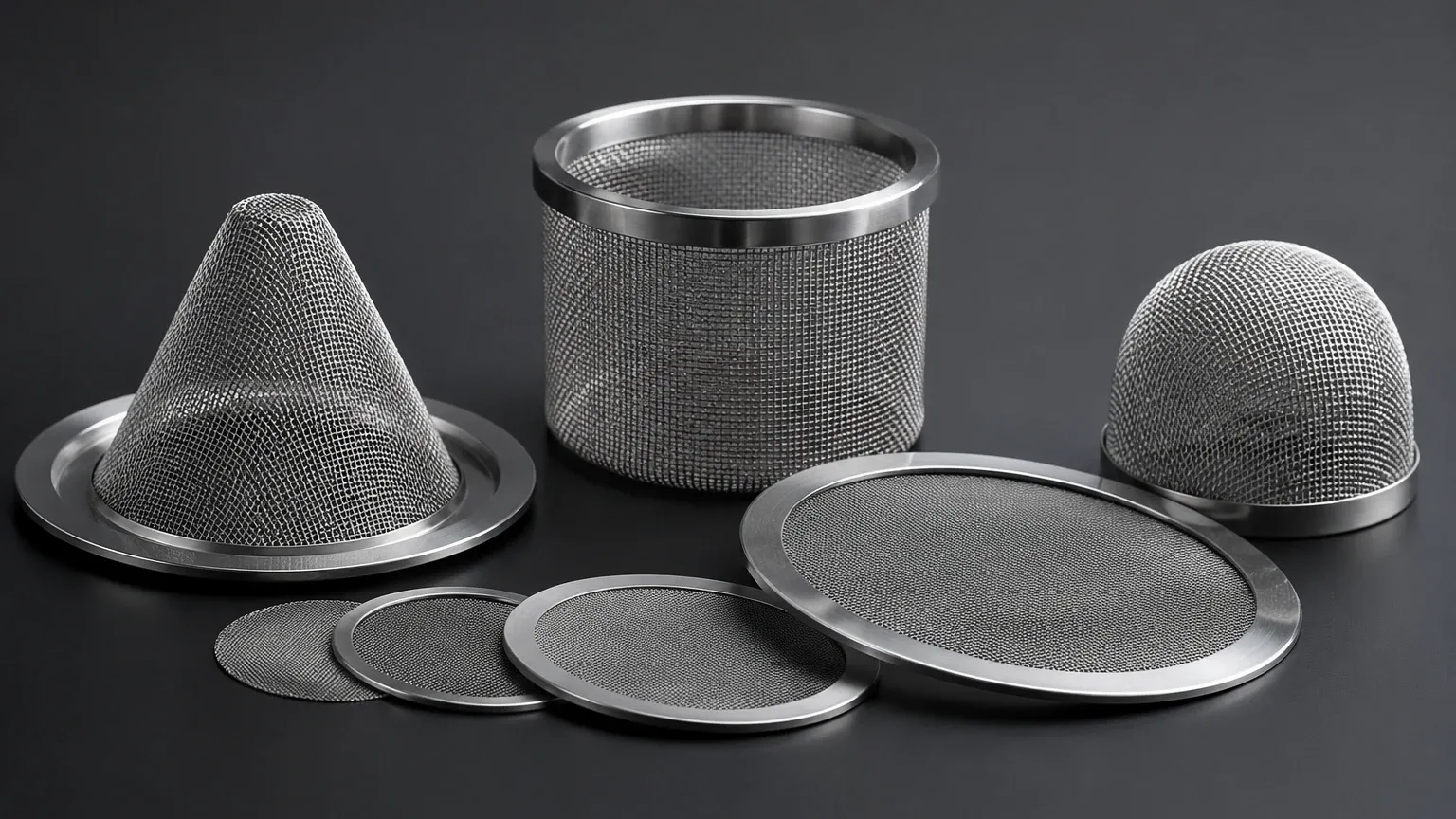
For engineers and procurement professionals, selecting the appropriate 190 micron paint strainers involves more than choosing a pore size. It requires an understanding of fluid dynamics, material compatibility, and the structural demands of high-volume production environments. While disposable paper and nylon options are common in manual touch-up stations, industrial-scale operations increasingly rely on precision-engineered Strainers & Baskets manufactured from stainless steel to ensure consistency, durability, and chemical resistance.
The Technical Role of 190 Micron Filtration
The 190-micron rating refers to the nominal distance between the threads of the filter media. In the context of industrial paints—particularly basecoats and clearcoats—this aperture size is designed to capture "seeds," skins, and dust particles while allowing the functional components of the paint, such as metallic flakes or pearl additives, to pass through without shearing or clogging.
Particle Size and Surface Defects
When a particle larger than the dry film thickness (DFT) of the coating remains in the fluid, it creates a visible defect known as a "nib" or "fisheye." In high-gloss automotive finishes, even a single 200-micron particle can necessitate a complete panel sand-down and respray. By implementing 190 micron paint strainers as a final stage of protection, manufacturers mitigate the risk of rework, which is often the highest hidden cost in a coating facility.
Mesh Count and Open Area
From an engineering perspective, the performance of a strainer is defined not just by the micron rating but by the percentage of open area. A stainless steel mesh with a 190-micron opening and a fine wire diameter provides a higher flow rate and lower pressure drop than a thicker-threaded synthetic mesh. This is critical in automated spray lines where maintaining a constant fluid pressure is essential for uniform atomization.
Material Engineering: Stainless Steel vs. Synthetic Media
While the industry has historically used disposable paper-coned strainers with nylon mesh inserts, the shift toward sustainable and high-precision manufacturing has elevated the role of metal filtration components.
Chemical Compatibility
Industrial coatings often involve aggressive solvents, including Methyl Ethyl Ketone (MEK), Toluene, and various esters. Synthetic fibers can swell or degrade when exposed to these chemicals over long periods, leading to mesh deformation and a loss of filtration accuracy. Stainless steel (typically Grade 304 or 316L) is chemically inert to virtually all industrial solvents and water-based resins, ensuring that the 190-micron aperture remains stable throughout the production cycle.
Structural Integrity under Pressure
In pressurized paint delivery systems, the strainer must withstand the differential pressure (ΔP) created as solids accumulate on the mesh surface. Disposable strainers are prone to "blow-through," where the mesh pulls away from the housing or the fibers stretch, allowing oversized contaminants to pass. Custom-manufactured stainless steel baskets provide the mechanical strength required to resist deformation even under significant hydraulic load.
Engineering Considerations for Strainer Selection
When integrating 190 micron paint strainers into a B2B production environment, engineers must evaluate several technical parameters to ensure the filtration system does not become a bottleneck.
1. Viscosity and Flow Rate
The viscosity of the coating significantly impacts the ease with which it passes through a 190-micron mesh. High-solids coatings or primers may require a larger surface area to maintain the desired flow rate. If the strainer surface area is too small for the fluid's viscosity, the velocity of the fluid through the mesh increases, which can force soft contaminants through the openings—a phenomenon known as "extruding."
2. Batch Consistency and Pigment Loading
In coatings with high pigment loading or metallic particles, the strainer must be checked for "blinding." Blinding occurs when the particles being filtered are nearly the same size as the mesh openings, causing them to wedge into the pores. For 190 micron paint strainers used with metallic basecoats, the wire diameter and weave type (typically plain weave) are optimized to prevent flake entrapment while still removing unwanted agglomerates.
3. Integration into Automated Systems
For OEM applications, strainers are often integrated into the fluid manifold or the intake of the pump. In these scenarios, the strainer is not a standalone cone but a precision-machined component. Kaifil specializes in developing custom metal filter components that fit specific housing geometries, ensuring a leak-proof seal and 100% filtration of the fluid stream.
Evaluating Total Cost of Ownership (TCO)
For purchasing teams, the choice between low-cost disposable strainers and high-performance stainless steel Strainers & Baskets is a matter of calculating the Total Cost of Ownership.
* Waste Reduction: Disposable strainers contribute significantly to the hazardous waste stream of a facility, as they are soaked in paint and solvent. Permanent stainless steel strainers can be cleaned and reused, reducing environmental impact and disposal fees.
* Downtime Prevention: A failure in a cheap disposable strainer can lead to a clogged spray gun or a ruined batch of product. The cost of stopping an automated line for 30 minutes to clean a spray tip often exceeds the cost of a high-quality stainless steel filter basket.
* Consistency: Precision-manufactured metal mesh provides a guaranteed 190-micron limit, whereas the quality control on mass-produced disposable items can vary, leading to inconsistent filtration performance between batches.
Maintenance and Cleaning Protocols for Industrial Strainers
To maintain the performance of a reusable 190 micron paint strainer, a standardized cleaning protocol must be established. Because these strainers are used with materials that cure (such as two-component epoxies or urethanes), the cleaning must occur before the coating begins to cross-link.
1. Solvent Soaking: Immediately after use, the strainer should be submerged in a compatible solvent to dissolve the resin matrix.
2. Ultrasonic Cleaning: For precision stainless steel mesh, ultrasonic cleaning is the most effective method for removing dried particles from the intersections of the wires without damaging the mesh structure.
3. Back-Flushing: High-pressure air or solvent can be directed from the clean side of the mesh to the dirty side to dislodge trapped particulates.
4. Inspection: Regular inspection under magnification is recommended to ensure that the 190-micron openings have not been enlarged by abrasive wear or restricted by permanent buildup.
Applications Across Key Industries
Automotive OEM and Refinish
In automotive assembly plants, 190 micron paint strainers are used in the clearcoat delivery lines to ensure a mirror-like finish. Any particulate larger than 190 microns would be easily visible to the naked eye on a flat hood or roof surface.
Aerospace Coatings
Aerospace coatings must meet strict weight and aerodynamic requirements. Uniform application is critical, and the presence of contaminants can lead to localized stress points or coating failure under extreme temperature fluctuations. Precision metal baskets ensure that the high-performance resins used in aviation are free from impurities.
Wood and Furniture Finishing
High-end cabinetry and furniture manufacturing require smooth, tactile finishes. 190 micron filtration is commonly used for topcoats to remove wood dust or lacquer skins that may have entered the system during the mixing process.
Customization and OEM Solutions
Every industrial coating line has unique requirements based on flow volume, pressure, and the chemistry of the coating. Standard off-the-shelf strainers often fail to meet the specific needs of specialized machinery. As a professional manufacturer, Kaifil provides customized filtration solutions that go beyond standard sizes. This includes:
* Custom Flange Designs: Ensuring the strainer fits perfectly into existing piping without bypass.
* Reinforced Structures: Adding perforated metal support layers to the 190-micron mesh for high-pressure applications.
* Multi-Stage Filtration: Designing baskets that incorporate a coarse pre-filter and a 190-micron fine-filter in a single unit to extend the service life between cleanings.
Conclusion
The 190 micron paint strainer is a critical component in the pursuit of a flawless industrial finish. While it may seem like a simple commodity, the engineering behind the mesh, the material selection, and the structural design of the strainer basket determine the efficiency of the entire coating process. By moving toward high-quality, reusable stainless steel Strainers & Baskets, industrial facilities can achieve better filtration accuracy, reduce waste, and lower their long-term operational costs. For engineers tasked with optimizing fluid delivery systems, confirming the compatibility and durability of these filtration components is a vital step in ensuring consistent production quality.
