


1 Inch Strainers
In industrial fluid handling systems, the protection of sensitive downstream equipment—such as pumps, meters, valves, and spray nozzles—is paramount. For piping systems utilizing a 1-inch diameter, the integration of 1 inch strainers serves as the primary defense against particulate contamination. These components are designed to mechanically remove solids from flowing liquids or gases, ensuring that the process remains within specified purity limits and preventing mechanical wear or clogging.
Choosing the correct 1 inch strainer requires a deep understanding of fluid dynamics, material compatibility, and the specific filtration requirements of the application. As a specialized manufacturer, Kaifil provides precision-engineered Strainers & Baskets that meet the rigorous demands of chemical processing, food and beverage production, and hydraulic systems.
Understanding the Role of 1 Inch Strainers in Industrial Systems
1 inch strainers are frequently utilized in pilot plants, small-scale industrial processes, and secondary branch lines of larger facilities. Their primary function is to intercept debris—such as scale, rust, jointing compound, and weld metal—which can inadvertently enter a piping system.
Unlike fine filters that may target sub-micron particles, strainers are typically used for coarser filtration, often measured in mesh sizes or microns ranging from 40 to 1,000 microns. The goal is not necessarily to achieve absolute purity but to protect the mechanical integrity of the system. In a 1-inch line, even a small amount of debris can cause a significant pressure drop or total blockage, leading to pump cavitation or system-wide downtime.
From an engineering perspective, the 1-inch size is a critical transition point. It is large enough to handle significant flow rates in high-pressure hydraulic or chemical dosing systems, yet small enough that the internal velocity of the fluid can be quite high. This necessitates a strainer design that can withstand turbulent flow without compromising the structural integrity of the internal mesh or basket.
Key Engineering Specifications for 1 Inch Filtration Components
When specifying 1 inch strainers, engineers must look beyond the nominal pipe size. Several technical parameters dictate whether a strainer will perform reliably over its service life.
Pressure and Temperature Ratings
Industrial strainers must be rated for the maximum operating pressure (MAOP) and temperature of the system. For stainless steel 1 inch strainers, common ratings include Class 150, 300, or higher, depending on the flange or thread specification. It is vital to consider that as temperature increases, the allowable pressure rating of the housing material typically decreases.
Connection Types
For 1-inch lines, the three most common connection types are:
- NPT (National Pipe Thread): Common in the United States for quick, threaded installations in low-to-medium pressure applications.
- Socket Weld: Preferred in high-pressure or high-temperature systems where a permanent, leak-proof joint is required.
- Flanged (ANSI/ASME): Used when the strainer needs to be easily removed for maintenance or when the rest of the system is flanged.
Effective Filtration Area (EFA)
The EFA is the total open area of the strainer element through which the fluid can pass. A higher EFA results in a lower initial pressure drop and a longer interval between cleanings. For 1 inch strainers, the ratio of the open area of the screen to the cross-sectional area of the pipe (the "burst ratio") should ideally be at least 3:1 or 4:1 for general industrial use.
Comparing Y-Strainers and Basket Strainers for 1 Inch Lines
The two most common configurations for 1 inch strainers are the Y-type and the Basket (or Simplex) type. Each has distinct advantages depending on the installation environment and the nature of the fluid.
Y-Strainers
Y-strainers are characterized by their compact, cylindrical shape and are often the preferred choice for 1-inch lines where space is limited.
- Orientation: They can be installed in either horizontal or vertical pipelines (provided the "leg" points downward to collect debris).
- Application: Best suited for applications with low levels of contamination, such as steam lines or high-pressure gas systems.
- Maintenance: Cleaning requires removing the threaded cap or flanged cover, which may lead to some fluid loss.
Basket Strainers
Basket strainers feature a larger, vertical chamber that houses a removable basket.
- Capacity: They offer a much larger dirt-holding capacity than Y-strainers, making them ideal for liquids with higher particulate loads.
- Pressure Drop: Because of the larger EFA, basket strainers generally exhibit a lower pressure drop.
- Maintenance: They are easier to service because the basket is accessed from the top. In a 1-inch line, a basket strainer is often used before a high-value pump where ensuring a steady, low-resistance flow is critical.
Calculating Flow Rate and Pressure Drop
A critical step in selecting 1 inch strainers is calculating the pressure drop (ΔP). Every strainer introduces some resistance to flow, which increases as the screen becomes clogged.
The flow coefficient (Cv) is the standard measure used to describe the flow capacity of a strainer. It represents the volume of water (in GPM) that will flow through the strainer with a 1 psi pressure drop. For a standard 1 inch strainer, Cv values can range significantly based on the internal geometry and the mesh size of the basket.
Variables affecting ΔP include:
1. Viscosity: Higher viscosity fluids (like oils or resins) require larger mesh openings or larger strainer housings to maintain acceptable flow rates.
2. Specific Gravity: Heavier fluids increase the pressure drop across the screen.
3. Mesh Size: A 100-mesh screen will create more resistance than a 20-mesh screen. Engineers must balance the need for fine filtration with the allowable pressure drop of the system.
If the calculated pressure drop across a clean 1 inch strainer exceeds 2 psi, it may be necessary to upsize the strainer or select a design with a higher Cv rating to avoid taxing the system's pumps.
Material Selection and Chemical Compatibility
In industrial filtration, the longevity of 1 inch strainers is heavily dependent on material science. Stainless steel is the industry standard due to its corrosion resistance and mechanical strength.
- SS304: Suitable for most general-purpose applications, including water treatment and light chemical processing.
- SS316L: Contains molybdenum, providing superior resistance to chlorides and pitting. This is essential for marine environments, pharmaceutical production, and aggressive chemical handling.
- Seal Materials: The gaskets or O-rings used in the strainer must also be compatible with the process fluid. Common options include EPDM for water, Viton (FKM) for high temperatures and oils, and PTFE for broad chemical resistance.
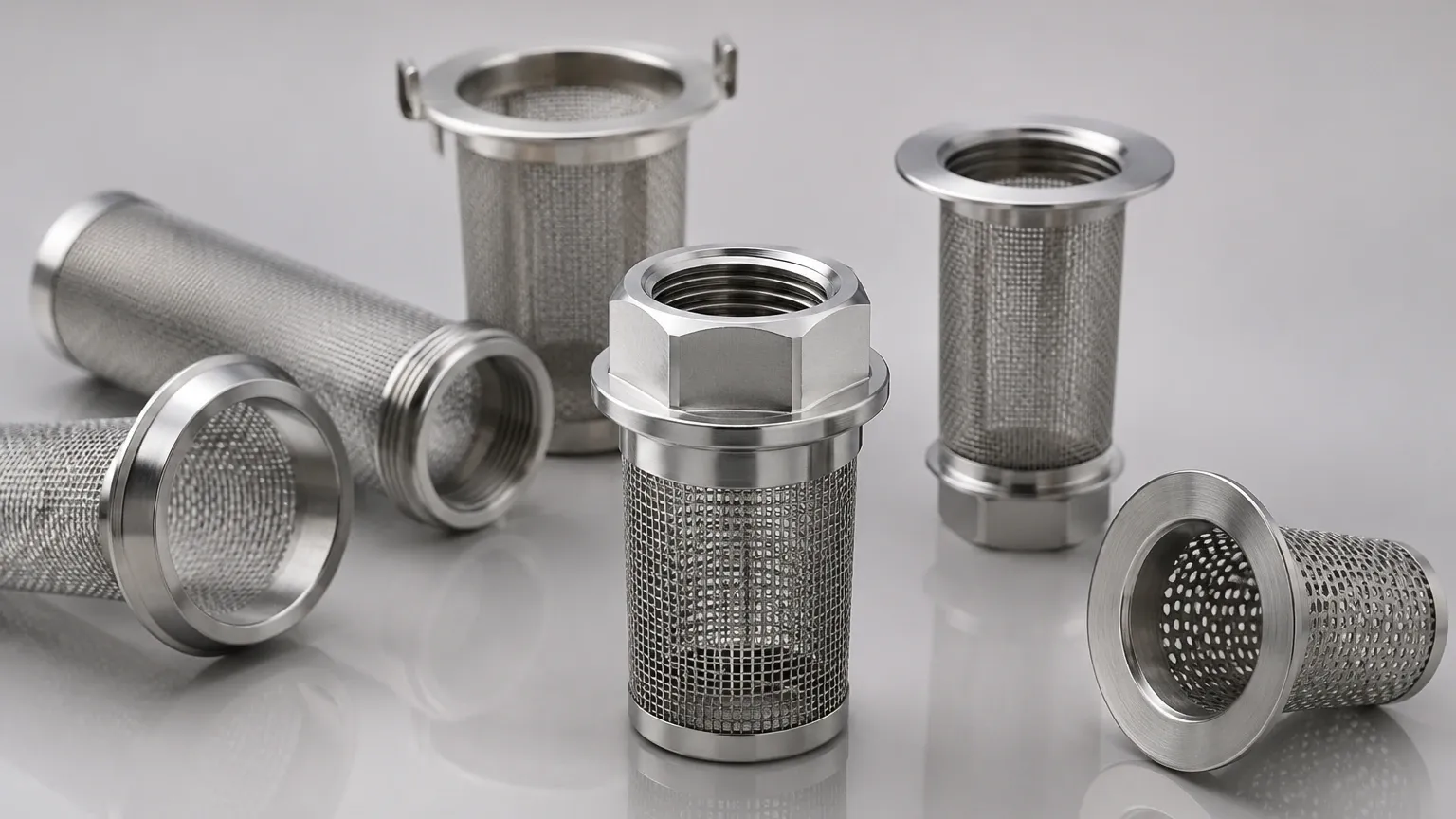
Kaifil specializes in the manufacture of high-grade stainless steel Strainers & Baskets, ensuring that both the housing and the internal mesh elements are engineered to withstand the specific corrosive or abrasive nature of the media being filtered.
Customization and OEM Solutions for Specialized Applications
While off-the-shelf 1 inch strainers are available, many industrial applications require customized solutions to meet specific spatial constraints or performance targets. Customization often involves modifying the internal basket design or the housing configuration.
Custom Mesh and Perforation Patterns
The internal element of a 1 inch strainer can be constructed using perforated plate, woven wire mesh, or a combination of both (mesh-lined baskets). For high-viscosity fluids, a wedge wire element might be used to provide superior strength and easier cleaning. Customizing the mesh count allows engineers to target specific particle sizes without unnecessarily restricting flow.
Magnetic Inserts
In systems where fine iron or steel particles are a concern (such as hydraulic return lines), 1 inch strainers can be fitted with magnetic inserts. These magnets capture sub-micron ferrous particles that might otherwise pass through a standard mesh screen, providing an extra layer of protection for sensitive components.
Heating Jackets
For fluids that solidify at room temperature, such as resins or certain food products, 1 inch strainers can be equipped with steam or hot water jackets. This ensures the media remains at the correct viscosity for efficient filtration and prevents the strainer from becoming a bottleneck in the process.
Maintenance Protocols and Service Life Optimization
The total cost of ownership (TCO) of a filtration system is determined not just by the purchase price, but by the maintenance requirements and the cost of downtime. For 1 inch strainers, a proactive maintenance schedule is essential.
Differential Pressure Monitoring
The most effective way to determine when a 1 inch strainer needs cleaning is by monitoring the differential pressure (the difference in pressure between the inlet and outlet). Many industrial systems utilize DP gauges or switches that trigger an alarm when the pressure drop reaches a pre-set limit (typically 5-10 psi above the clean pressure drop).
Cleaning Procedures
- Manual Cleaning: The system must be depressurized, the strainer opened, and the basket removed. The basket should be cleaned using a soft brush or ultrasonic bath to avoid damaging the wire mesh.
- Blow-down Valves: Some Y-strainers are equipped with a blow-down port. Opening this valve while the system is under pressure can flush out loose debris without requiring a full shutdown. However, this is only effective for certain types of contaminants and does not replace the need for periodic manual inspection.
Replacement Cycles
While stainless steel baskets are durable, they are subject to fatigue from pressure surges and mechanical wear from abrasive particles. Regular inspection should look for signs of mesh blinding (permanent clogging), wire breakage, or deformation of the basket frame. Replacing a worn basket is significantly more cost-effective than repairing a damaged pump downstream.
Conclusion: Selecting the Right 1 Inch Strainer
Selecting the appropriate 1 inch strainer is a technical decision that impacts the efficiency and reliability of an entire industrial process. Engineers must carefully evaluate the fluid properties, flow requirements, and environmental conditions to choose between Y-type and basket configurations, as well as determine the optimal material and mesh size.
By focusing on precision manufacturing and high-quality materials, Kaifil provides the technical expertise and customized solutions necessary to solve complex filtration challenges. Whether you require standard components or bespoke Strainers & Baskets, understanding these engineering fundamentals ensures that your 1-inch lines remain protected and your operations stay productive.
When evaluating your next filtration project, confirm the following with your supplier:
1. The specific alloy required for chemical compatibility (e.g., SS316L vs. SS304).
2. The required mesh or micron rating based on the smallest downstream orifice.
3. The maximum allowable pressure drop at peak flow rates.
4. The necessity for specialized features like magnetic inserts or high-pressure gaskets.
Taking these steps will ensure that your 1 inch strainers provide the necessary protection with the lowest possible impact on system performance.
