


2 Wye Strainers
In industrial fluid handling, the protection of downstream equipment is a critical engineering priority. Among the various components used to ensure system integrity, the 2-inch wye strainer—often referred to as a Y-strainer—serves as a fundamental mechanical filter. These components are designed to remove solids from flowing liquids or gases using a perforated or wire mesh straining element. By capturing debris such as scale, rust, jointing compound, and weld metal, 2 wye strainers protect expensive equipment including pumps, meters, control valves, and steam traps.
Selecting the correct 2-inch wye strainer requires a deep understanding of fluid dynamics, material compatibility, and the specific mechanical requirements of the piping system. This guide examines the technical nuances of these components, providing engineers and procurement teams with the information necessary to optimize filtration performance and system longevity.
The Role of 2-Inch Wye Strainers in Industrial Piping
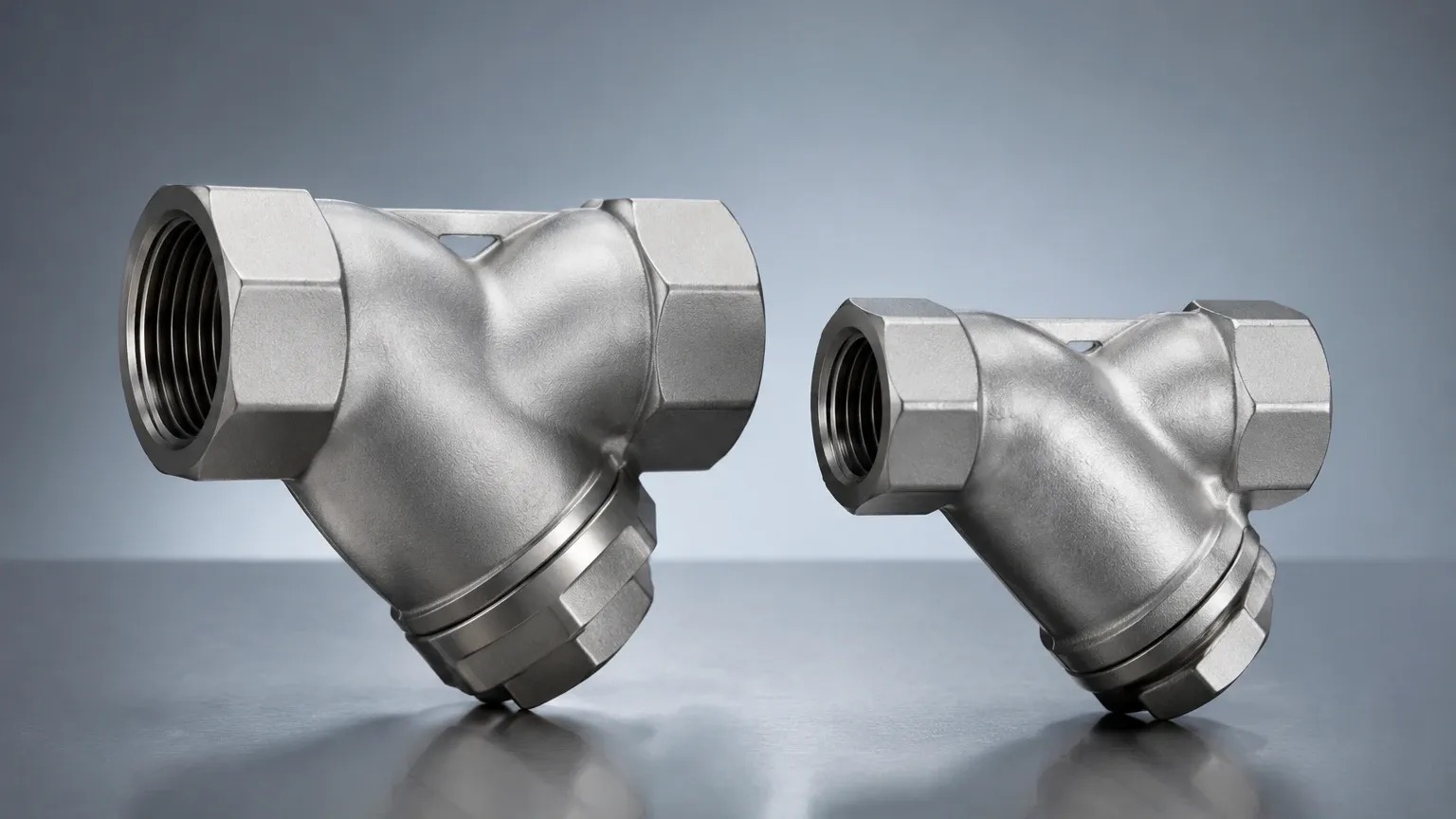
The "Y" configuration of these strainers allows for a compact design that can be installed in both horizontal and vertical pipelines. The 2-inch size is one of the most common specifications in industrial settings, bridging the gap between small-scale utility lines and large-scale process headers. It is frequently found in chemical processing, water treatment, and hydraulic systems where flow rates are significant but manageable through standard piping schedules.
The primary advantage of the wye design is its ability to be cleaned without being removed from the process line. The straining leg, which intersects the main flow path at an angle, houses the filter element. This leg can be equipped with a blow-off valve, allowing for the flushing of accumulated debris while the system remains pressurized, provided the application allows for such maintenance.
Engineering and Material Considerations
Material selection is the most critical factor in determining the service life and safety of 2 wye strainers. Industrial environments often involve corrosive fluids, high temperatures, or extreme pressures that can compromise inferior materials.
Stainless Steel Construction
For most high-performance B2B applications, stainless steel is the preferred material. Kaifil specializes in custom stainless steel filtration solutions, utilizing 304 and 316L grades to meet demanding chemical and thermal requirements.
* Type 304 Stainless Steel: Suitable for general-purpose applications, providing excellent corrosion resistance in water and mild chemical environments.
* Type 316L Stainless Steel: Contains molybdenum, which enhances resistance to pitting and crevice corrosion in chloride-rich environments. The "L" (low carbon) designation is essential for components that require welding, as it prevents carbide precipitation that can lead to intergranular corrosion.
Pressure and Temperature Ratings
Engineers must confirm that the strainer housing and the internal mesh can withstand the maximum operating pressure (MAOP) of the system. 2 wye strainers are typically rated according to ASME/ANSI standards (e.g., Class 150, 300, or 600). A Class 150 stainless steel strainer may be rated for approximately 275 PSI at ambient temperature, but this rating drops significantly as the process temperature increases. It is vital to consult the pressure-temperature curve specific to the material and flange type used.
Performance Metrics: Pressure Drop and Flow Rate
One of the most common mistakes in specifying 2 wye strainers is failing to account for the "clean" pressure drop (ΔP). Every filter introduces resistance to the flow. If the pressure drop is too high, it can lead to cavitation in pumps or insufficient pressure for downstream processes.
The Flow Coefficient (Cv)
The Cv value represents the volume of water (in gallons per minute) that will flow through the strainer with a pressure drop of 1 PSI. For a standard 2-inch wye strainer, the Cv typically ranges between 60 and 80, depending on the internal geometry and the mesh size.
Calculating Total Pressure Drop
The total pressure drop is the sum of the drop caused by the strainer body and the drop caused by the internal screen. As the screen becomes clogged with debris, the ΔP increases. Engineering best practices suggest that a strainer should be cleaned or flushed once the pressure drop reaches 5 to 10 PSI above the clean drop, or when it reaches a predetermined percentage of the total system pressure.
Screen and Mesh Selection for 2 Wye Strainers
The internal element is the heart of the strainer. For 2-inch applications, there is a distinction between perforated screens and wire mesh liners.
1. Perforated Screens: These are rigid cylinders of metal with punched holes. Common hole sizes for a 2-inch strainer might range from 1/32" to 1/4". These are used for coarse straining where large particles are the primary concern.
2. Wire Mesh: For finer filtration, a wire mesh liner is added to the interior of a perforated screen for structural support. Mesh is defined by the number of openings per linear inch. A 100-mesh screen, for example, has 100 openings per inch and can capture particles down to approximately 150 microns.
When selecting a mesh for Strainers & Baskets, engineers must balance the need for fine filtration with the risk of rapid clogging. A mesh that is too fine will require frequent maintenance and cause excessive pressure drop, while a mesh that is too coarse will allow damaging particles to pass through to sensitive equipment.
Installation and Orientation Guidelines
The physical orientation of 2 wye strainers is paramount to their functionality. Improper installation can result in debris bypassing the screen or settling in the main pipe header rather than the straining leg.
Horizontal Installation
In horizontal pipelines, the straining leg should point downward. This allows gravity to help pull debris into the collection chamber. In steam applications, the leg is often installed in a horizontal plane (sideways) to prevent condensate from pooling in the pocket, which could lead to water hammer and erosion.
Vertical Installation
Wye strainers can be installed in vertical lines only if the flow is downward. If installed in an upward-flow configuration, debris would fall back down the pipe when the flow stops, potentially clogging the line or damaging equipment below the strainer.
Connection Types
For 2-inch sizes, the most common connections are:
* Threaded (NPT): Common for low-pressure, smaller utility lines.
* Flanged (RF/RTJ): The standard for industrial process lines, allowing for easy removal and secure sealing.
* Socket Weld: Used in high-pressure systems where leak prevention is critical and the strainer does not need frequent removal.
Maintenance and Total Cost of Ownership
The total cost of ownership (TCO) for 2 wye strainers extends beyond the initial purchase price. It includes the labor costs for cleaning, the cost of replacement gaskets, and the potential downtime caused by a clogged system.
Blow-off vs. Manual Cleaning
A "blow-off" connection is a threaded port in the strainer cap. By installing a ball valve on this port, operators can flush the strainer without stopping the flow. However, for a thorough cleaning of the mesh, the system must be depressurized, the cap removed, and the screen manually inspected.
Seal and Gasket Integrity
Whenever the cap is removed for cleaning, the gasket or O-ring should be inspected. In chemical processing, using the wrong gasket material (e.g., using Buna-N where Viton or PTFE is required) can lead to catastrophic leaks. Specifying high-quality seals that are compatible with the process fluid is a vital part of the procurement process.
Common Risks and Mitigation
Several risks are associated with the long-term operation of 2 wye strainers in industrial environments:
* Screen Collapse: If the differential pressure across the screen exceeds its structural limit, the screen can collapse, sending both the debris and pieces of the screen downstream. This is often caused by neglecting maintenance. Using heavy-duty perforated backups for fine mesh can mitigate this risk.
* Erosion: High-velocity fluids containing abrasive particles can erode the strainer body and the screen over time. Selecting hardened materials or thicker-walled housings can extend service life.
* Incompatibility: Galvanic corrosion can occur if a stainless steel strainer is installed in a carbon steel line without proper isolation, or if the internal screen is a different alloy than the body.
Custom Solutions for Specialized Applications
Standard off-the-shelf strainers may not meet the requirements of specialized industries like pharmaceuticals or food and beverage, where sanitary standards (such as 3-A or EHEDG) are mandatory. In these cases, custom-engineered solutions are necessary.
Kaifil provides tailored manufacturing for 2 wye strainers, offering options such as:
* Custom Mesh Sizes: Precisely calculated to match the particle size distribution of the process.
* Specialized Coatings: For enhanced chemical resistance or reduced friction.
* Unique Geometries: To fit into tight mechanical spaces where standard dimensions are not feasible.
* Magnetic Inserts: To capture fine ferrous particles that might otherwise pass through a standard mesh.
Conclusion: Confirming Requirements Before Purchase
Before finalizing a specification for 2 wye strainers, engineers should confirm the following data points:
1. Fluid Properties: Viscosity, density, and chemical composition.
2. Operating Conditions: Normal and maximum pressure and temperature.
3. Filtration Goal: The specific particle size (micron rating) that must be removed.
4. Flow Rate: To ensure the 2-inch size provides an acceptable Cv and pressure drop.
5. Maintenance Access: Whether the installation site allows for the removal of the screen or the use of a blow-off valve.
By addressing these technical factors, B2B buyers can ensure they select a filtration solution that provides reliable protection, minimizes maintenance intervals, and contributes to the overall efficiency of the industrial process.
