


2 Gallon Paint Strainers
In industrial finishing and high-precision coating applications, the integrity of the fluid is paramount. Even minor contaminants, such as dried paint skins, dust, or undissolved pigments, can lead to surface defects that require costly rework. While large-scale production lines often utilize complex inline filtration systems, small-batch operations and specialized touch-up processes frequently rely on 2 gallon paint strainers. These components serve as the final line of defense, ensuring that the coating material delivered to the spray gun or application tool is free of particulates.
For engineers and procurement professionals, selecting the right filtration media involves more than simply choosing a size. It requires a deep understanding of material compatibility, micron ratings, and the structural demands of the specific application. As part of a broader category of Strainers & Baskets, these filtration tools are engineered to balance flow rates with particle retention, providing a reliable solution for maintaining quality standards in demanding environments.
The Role of 2 Gallon Paint Strainers in Industrial Finishing
The 2-gallon format is particularly common in industries where small to medium batches of specialized coatings are prepared. This includes automotive refinishing, aerospace component coating, and high-end furniture manufacturing. In these sectors, the volume of paint used does not justify the setup of a massive centralized system, yet the quality requirements remain just as stringent.
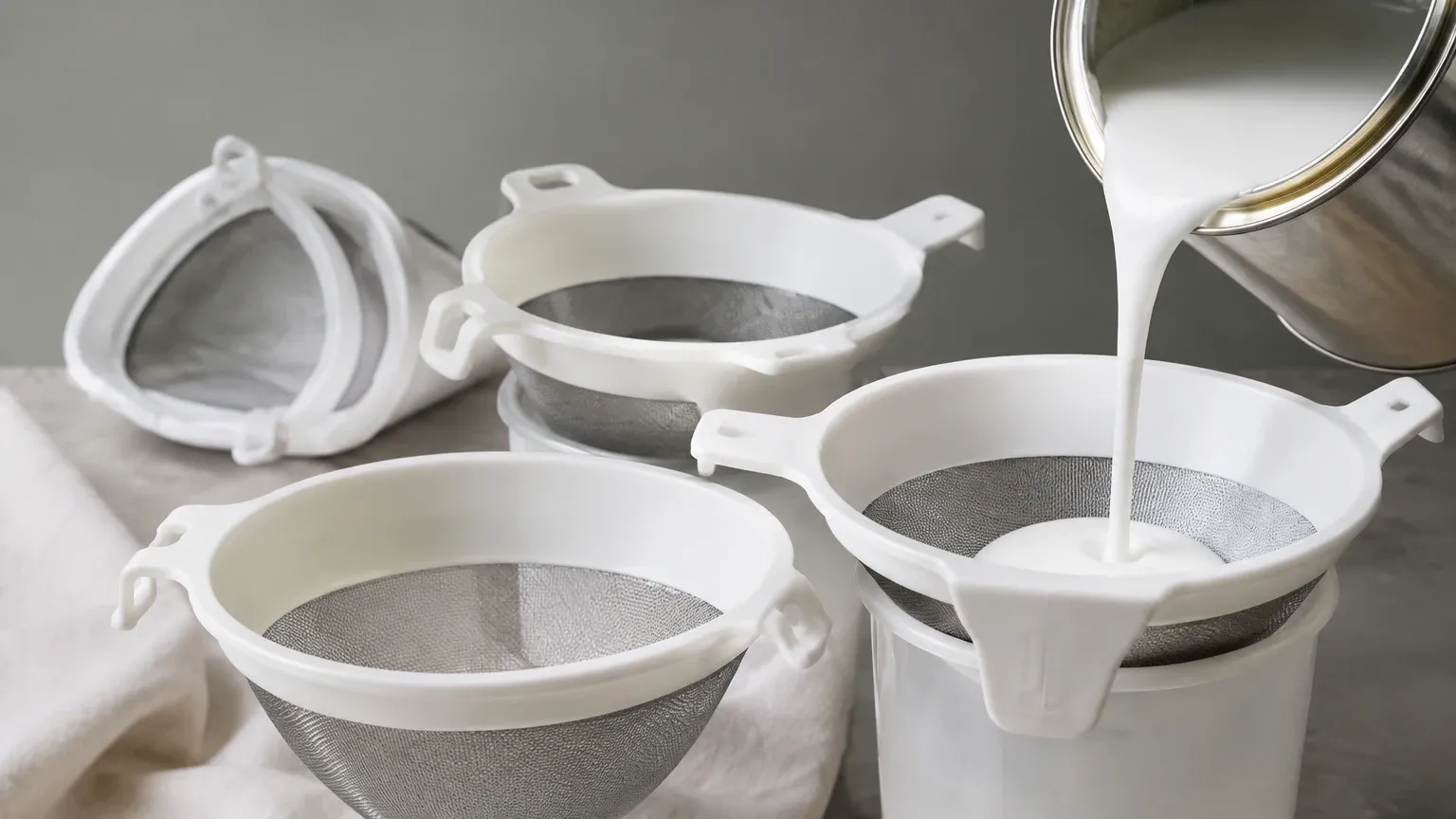
2 gallon paint strainers are designed to fit standard 2-gallon pails or pressure pots. Their primary function is to remove oversized particles that could clog spray nozzles or cause "seeds" and "nibs" on the finished surface. Beyond simple debris removal, these strainers help in homogenizing the paint after mechanical agitation, ensuring that any clumps of pigment are broken down or filtered out before they reach the application stage.
In a B2B context, the choice between disposable and reusable strainers is a significant operational decision. While disposable nylon mesh strainers are common for one-time use with standard latex paints, industrial applications involving aggressive solvents or high-viscosity coatings often necessitate the use of stainless steel baskets. These metal components offer superior durability and can be cleaned and reused, providing a more sustainable and cost-effective long-term solution for consistent production cycles.
Technical Specifications and Material Selection
When evaluating 2 gallon paint strainers, technical specifications must align with the chemical properties of the coating and the required finish quality. The two most critical factors are the material of the mesh and the filtration accuracy, typically measured in microns or mesh count.
Mesh Materials
1. Stainless Steel (304/316): For industrial-grade Strainers & Baskets, stainless steel is the gold standard. It offers exceptional resistance to a wide range of solvents, thinners, and chemicals found in industrial coatings. Stainless steel mesh maintains its structural integrity under pressure and does not shed fibers, which is a common risk with lower-quality synthetic filters.
2. Nylon and Polyester: These are lightweight and cost-effective for water-based or less aggressive solvent-based paints. However, they are prone to stretching and may degrade if exposed to strong chemical strippers or high temperatures.
Filtration Accuracy
The "mesh count" refers to the number of openings per linear inch. A higher mesh count indicates a finer level of filtration. For 2 gallon paint strainers, common specifications include:
* Coarse (approx. 40-60 mesh): Used for primers, heavy-bodied coatings, or as a pre-filter for heavily contaminated materials.
* Medium (approx. 80-100 mesh): The standard for most industrial enamels and base coats.
* Fine (approx. 150-200+ mesh): Essential for clear coats, high-gloss finishes, and applications using fine-tipped HVLP (High Volume Low Pressure) spray guns.
Engineers must calculate the allowable pressure drop across the strainer. A mesh that is too fine for a high-viscosity fluid will cause the flow rate to plummet, potentially starving the pump or spray system and leading to inconsistent application thickness.
Engineering Considerations for Small-Batch Filtration
Integrating 2 gallon paint strainers into a production workflow requires an analysis of the fluid dynamics involved. Unlike large-vessel filtration, small-batch straining is often gravity-fed or assisted by low-pressure pumps. This introduces specific engineering challenges regarding surface area and flow velocity.
Effective Filtration Area (EFA)
The EFA of a strainer determines how much fluid can pass through before the mesh becomes blinded by captured contaminants. In a 2-gallon setup, the geometry of the strainer—whether it is a flat disc, a conical shape, or a deep-drawn basket—significantly impacts the EFA. A deep-drawn stainless steel basket provides a much larger surface area than a flat mesh insert, allowing for longer run times between cleanings and reducing the risk of overflow.
Viscosity Management
Paint viscosity changes with temperature and the addition of reducers. A strainer that performs perfectly at 25°C may become a bottleneck if the ambient temperature drops and the paint thickens. When specifying 2 gallon paint strainers for industrial use, it is vital to consider the maximum viscosity (measured in centipoise or Krebs units) the system will encounter. In some cases, a heated jacket or a coarser mesh might be necessary to maintain the required production speed without compromising the removal of critical contaminants.
Evaluating Durability and Chemical Compatibility
In the B2B sector, equipment longevity directly impacts the bottom line. 2 gallon paint strainers must withstand the chemical environment of the coatings they process. This is where the distinction between consumer-grade products and industrial-grade Strainers & Baskets becomes clear.
Solvent Resistance
Many industrial coatings use aggressive solvents like MEK (Methyl Ethyl Ketone), toluene, or xylene. Synthetic mesh materials can swell or even dissolve when exposed to these chemicals over extended periods. Stainless steel 304 or 316 provides a robust solution, ensuring that the filter does not fail mid-process. Furthermore, the frame or housing of the strainer must also be compatible. If a plastic-rimmed strainer is used in a solvent-heavy environment, the rim may warp or crack, allowing unfiltered paint to bypass the mesh.
Mechanical Strength
During the filtration process, the weight of the paint and the pressure of the flow exert mechanical stress on the mesh. High-quality industrial strainers often feature reinforced bottoms or support grids to prevent the mesh from sagging or tearing. For 2-gallon applications where the strainer might be moved frequently between pails, a rigid stainless steel construction prevents deformation and ensures a consistent seal against the container rim.
Operational Efficiency and Total Cost of Ownership
While the initial purchase price of a disposable 2 gallon paint strainer is low, the total cost of ownership (TCO) for a high-volume facility can be surprisingly high. Procurement teams should analyze the following factors when deciding between disposable and permanent filtration solutions:
1. Waste Disposal Costs: In many jurisdictions, used paint filters are classified as hazardous waste. Reducing the volume of disposable filters can significantly lower waste management fees.
2. Consistency and Quality Control: Permanent stainless steel Strainers & Baskets offer consistent micron ratings. Disposable filters can vary between batches, leading to unpredictable filtration performance.
3. Downtime for Replacement: A durable, easy-to-clean stainless steel strainer can be integrated into a standard CIP (Clean-In-Place) or manual cleaning cycle, reducing the time spent swapping out clogged disposable units.
4. Risk of Failure: A burst disposable filter can contaminate an entire 2-gallon batch of expensive coating material. The structural integrity of a metal basket virtually eliminates this risk.
For facilities processing multiple colors or types of coatings per day, having a set of dedicated stainless steel strainers for each material type can streamline operations and prevent cross-contamination.
Customization Options for Specialized Coating Systems
Standard off-the-shelf 2 gallon paint strainers may not meet the requirements of every industrial application. Customization is often necessary to ensure a perfect fit and optimal performance. Manufacturers like Kaifil specialize in providing tailored filtration solutions that go beyond standard sizes.
Custom Mesh Configurations
Depending on the specific particle size distribution of the contaminants, a multi-stage strainer might be required. This could involve a coarse outer mesh to protect a fine inner mesh, extending the life of the filter and improving efficiency. Custom weave patterns, such as Dutch weave or twilled weave, can also be employed to achieve higher strength or finer filtration levels than standard plain weave mesh.
Structural Customization
For 2-gallon pressure pots or specialized mixing tanks, the strainer may need custom flanges, handles, or mounting brackets. Engineering teams can design baskets that lock securely into place, preventing bypass even under high-flow conditions. Additionally, specialized coatings (such as PTFE) can be applied to the stainless steel mesh to improve release properties, making the cleaning process even faster for sticky or fast-drying materials.
Maintenance and Best Practices for Industrial Strainers
To maximize the lifespan and performance of reusable 2 gallon paint strainers, a rigorous maintenance protocol is essential. Failure to clean a strainer properly can lead to dried paint buildup, which reduces the EFA and can eventually lead to mesh blinding.
Cleaning Procedures
* Immediate Rinsing: Strainers should be rinsed with the appropriate solvent immediately after use. Allowing paint to dry on the mesh makes cleaning significantly more difficult and may require aggressive mechanical scrubbing that can damage fine mesh.
* Ultrasonic Cleaning: For high-precision stainless steel baskets, ultrasonic cleaning is the most effective method for removing microscopic particles lodged deep within the mesh weave.
* Inspection: Regular visual inspections under magnification should be conducted to check for broken wires, distorted mesh, or chemical pitting. Even a single broken wire in a 200-mesh filter can allow oversized particles to pass through.
Storage
Cleaned strainers should be stored in a dust-free environment. In many industrial shops, strainers are kept in a sealed container or a dedicated cabinet to ensure they remain contaminant-free until their next use.
Conclusion: Selecting the Right Filtration Partner
Choosing the appropriate 2 gallon paint strainers is a technical decision that impacts product quality, operational efficiency, and waste management. While simple in concept, the engineering behind effective filtration requires a balance of material science, fluid dynamics, and mechanical design. By moving toward high-performance Strainers & Baskets, industrial users can achieve a level of consistency and durability that disposable options cannot match.
For engineers and purchasing managers, the focus should remain on the specific needs of the application: the chemical nature of the coating, the required micron rating, and the physical constraints of the 2-gallon container. Working with a manufacturer capable of providing custom stainless steel solutions ensures that the filtration system is perfectly aligned with production goals, ultimately leading to superior finishes and reduced operational costs.
