


2 1 2 Strainers
In industrial fluid handling, the 2 1/2-inch nominal pipe size (NPS) represents a critical mid-range capacity often found in chemical processing, water treatment, and food production lines. Selecting the right 2 1 2 strainers is not merely a matter of matching pipe diameters; it requires a deep understanding of flow dynamics, material compatibility, and the specific debris profile of the process media. As a specialized manufacturer of stainless steel filtration solutions, Kaifil provides high-performance Strainers & Baskets designed to protect expensive downstream equipment such as pumps, valves, and meters from particulate damage.
This guide examines the technical considerations, engineering specifications, and selection criteria essential for engineers and procurement teams evaluating 2.5-inch straining solutions for demanding industrial environments.
Understanding the Role of 2 1/2 Strainers in Industrial Piping
A 2 1/2-inch strainer serves as a primary defense mechanism in piping systems where flow rates are too high for smaller 1-inch or 2-inch lines but do not yet require the massive infrastructure of 4-inch or 6-inch headers. At this size, the mechanical stresses on the filter element increase, and the volume of captured debris can significantly impact system pressure if the strainer is not correctly specified.
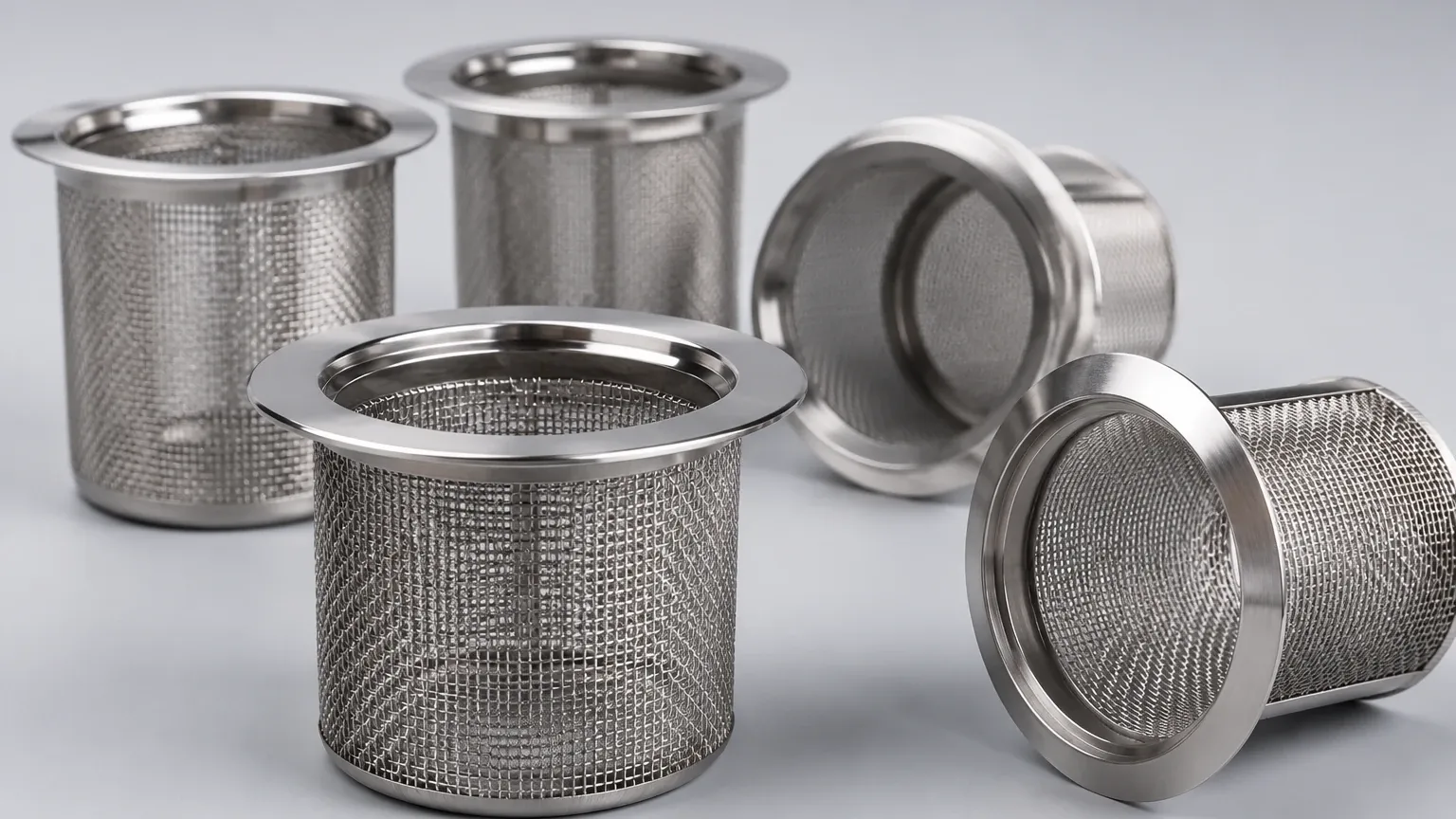
The primary function of these components is the mechanical removal of solids from flowing liquids or gases. By utilizing a perforated metal or wire mesh screen, the strainer intercepts particles while allowing the fluid to pass through. In industrial B2B contexts, the "2 1 2" designation typically refers to the connection size, while the internal basket or screen area must be significantly larger—often referred to as the "open area ratio"—to ensure minimal pressure drop and extended service intervals.
Core Configurations: Y-Strainers vs. Basket Strainers
When specifying 2 1 2 strainers, the first engineering decision involves choosing the housing configuration. The two most common types for the 2.5-inch size are Y-strainers and Basket (Simplex) strainers.
Y-Strainers
Named for their "Y" shape, these are typically used in applications where the amount of debris to be removed is relatively small. They are favored for their compact design and ability to be installed in both horizontal and vertical pipelines. In a 2.5-inch configuration, Y-strainers are often used for steam, gas, or high-pressure liquid lines. Because the dirt-holding capacity is lower than that of a basket strainer, they are best suited for systems where frequent cleaning is not required.
Basket Strainers
For liquid applications with higher solids loading, a basket-style strainer is preferred. The 2.5-inch basket strainer features a vertical cylinder that houses a large-capacity basket. This design offers a lower pressure drop and a much larger surface area for filtration. Engineers often specify basket strainers for 2.5-inch lines in cooling water systems, chemical batching, and fuel oil transfer where protecting pumps from significant scale or debris is paramount.
Material Selection and Engineering Considerations
Material integrity is the cornerstone of reliable filtration. At Kaifil, we emphasize the use of high-grade stainless steel to ensure longevity and chemical resistance. For 2 1 2 strainers, the choice of material for both the housing and the internal mesh is dictated by the process fluid.
1. 304 Stainless Steel: The standard for most industrial applications, offering excellent strength and basic corrosion resistance for water and mild chemicals.
2. 316/316L Stainless Steel: Essential for pharmaceutical, food and beverage, and marine environments. The addition of molybdenum provides superior resistance to chlorides and acetic acid.
3. Specialty Alloys: For highly aggressive chemical processing, alloys like Hastelloy or Monel may be required for the internal baskets to prevent premature failure due to pitting or stress corrosion cracking.
Beyond the metal, the seal and gasket materials (such as EPDM, Viton, or PTFE) must be checked for compatibility with the operating temperature and chemical composition of the fluid to prevent leaks at the 2.5-inch flange or NPT connections.
Evaluating Filtration Accuracy: Mesh vs. Perforation
The performance of 2 1 2 strainers is defined by the internal element. Engineers must balance the need for fine filtration with the reality of pressure drop.
* Perforated Screens: These are typically used for coarse straining (1/32" to 1/4" holes). They are robust and serve as excellent support structures for finer meshes.
* Wire Mesh: For finer filtration, a stainless steel wire mesh is layered over a perforated metal basket. This allows for filtration down to 20 microns or finer.
When selecting the mesh for a 2.5-inch line, it is vital to calculate the Open Area Ratio (OAR). A well-engineered 2 1 2 strainer should ideally have an OAR of at least 6:1. This means the total open area of the holes in the basket is six times the cross-sectional area of the 2.5-inch inlet pipe. A high OAR ensures that as the basket begins to fill with debris, the system does not experience a sudden, catastrophic drop in pressure.
Pressure Drop and Flow Rate Dynamics
In a 2.5-inch piping system, maintaining the required flow rate while minimizing energy consumption is a primary goal. Every component, including strainers and baskets, introduces a "CV value" (flow coefficient). The CV represents the volume of water at 60°F that will flow through the strainer with a pressure drop of 1 psi.
For 2 1 2 strainers, the pressure drop (∆P) increases exponentially as the basket becomes clogged. Engineering teams should install differential pressure gauges across the strainer. A common industrial standard is to clean or replace the basket when the pressure drop reaches 5-10 psi over the clean-start value. If the ∆P is ignored, the resulting turbulence can damage the internal mesh or, in extreme cases, cause the basket to collapse, sending debris directly into the downstream equipment.
Customization and OEM Solutions
Standard off-the-shelf strainers often fail to meet the specific nuances of specialized industrial processes. This is where Kaifil’s expertise in custom manufacturing becomes an asset. Customization for 2 1 2 strainers may include:
* Non-Standard Lengths: Adjusting the housing size to fit into tight skid-mounted equipment.
* Reinforced Baskets: For high-viscosity fluids or high-pressure differentials, we can manufacture baskets with internal bracing or heavier gauge perforated metal.
* Magnetic Inserts: Adding magnetic rods to the center of the 2.5-inch basket to capture fine iron and steel particles that might otherwise pass through the mesh.
* Specialty Connections: While ANSI flanges and NPT threads are standard, some applications require Tri-Clamp (sanitary) or DIN connections for international compatibility.
Maintenance and Operational Best Practices
To maximize the ROI of 2 1 2 strainers, a proactive maintenance schedule is required. Unlike disposable filters, stainless steel strainers and baskets are designed for reuse, provided they are handled correctly.
Cleaning Protocols
When the differential pressure indicates a bypass or cleaning cycle is necessary, the system must be depressurized. For basket strainers, the top cover is removed, and the basket is lifted out. It is recommended to use a high-pressure water jet or ultrasonic cleaning for fine meshes to ensure all trapped particulates are removed from the wire intersections. Using abrasive wire brushes should be avoided, as they can distort the mesh openings and compromise filtration accuracy.
Spare Parts Inventory
For critical 2.5-inch lines, maintaining an inventory of spare baskets and gaskets is essential. Downtime in a chemical plant or food processing facility can cost thousands of dollars per hour; having a clean 2 1 2 basket ready for immediate swap-out ensures that the cleaning process does not halt production.
Applications Across Key Industries
The versatility of the 2.5-inch size makes these strainers ubiquitous across several sectors:
* Chemical Processing: Protecting flow meters and dosing pumps from undissolved solids or pipe scale in medium-sized batch reactors.
* Food & Beverage: Straining pulp from fruit juices or removing large particulates from chocolate and syrup lines before bottling. In these cases, 316L stainless steel and sanitary finishes are mandatory.
* Water Treatment: Used in pre-filtration for RO (Reverse Osmosis) systems or protecting spray nozzles in industrial cooling towers.
* Hydraulic Systems: Filtering return lines to prevent metal shavings from entering the reservoir and damaging sensitive hydraulic pumps.
Conclusion: Selecting the Right Partner for Filtration
Choosing 2 1 2 strainers involves more than just verifying the pipe size. It requires a balance of material science, fluid mechanics, and operational reality. By focusing on high-quality stainless steel construction and precise engineering of the internal baskets, facilities can ensure long-term protection of their infrastructure and maintain the purity of their process fluids.
Kaifil remains committed to providing technical expertise and customized manufacturing to meet these rigorous demands. Whether you require a standard Y-strainer for a steam line or a custom-engineered basket for a complex chemical process, our team supports every step from material selection to final production. For detailed specifications and to explore our full range of industrial filtration components, Review product options and application support to find the optimal solution for your specific piping requirements.
