


Strainer 32mm
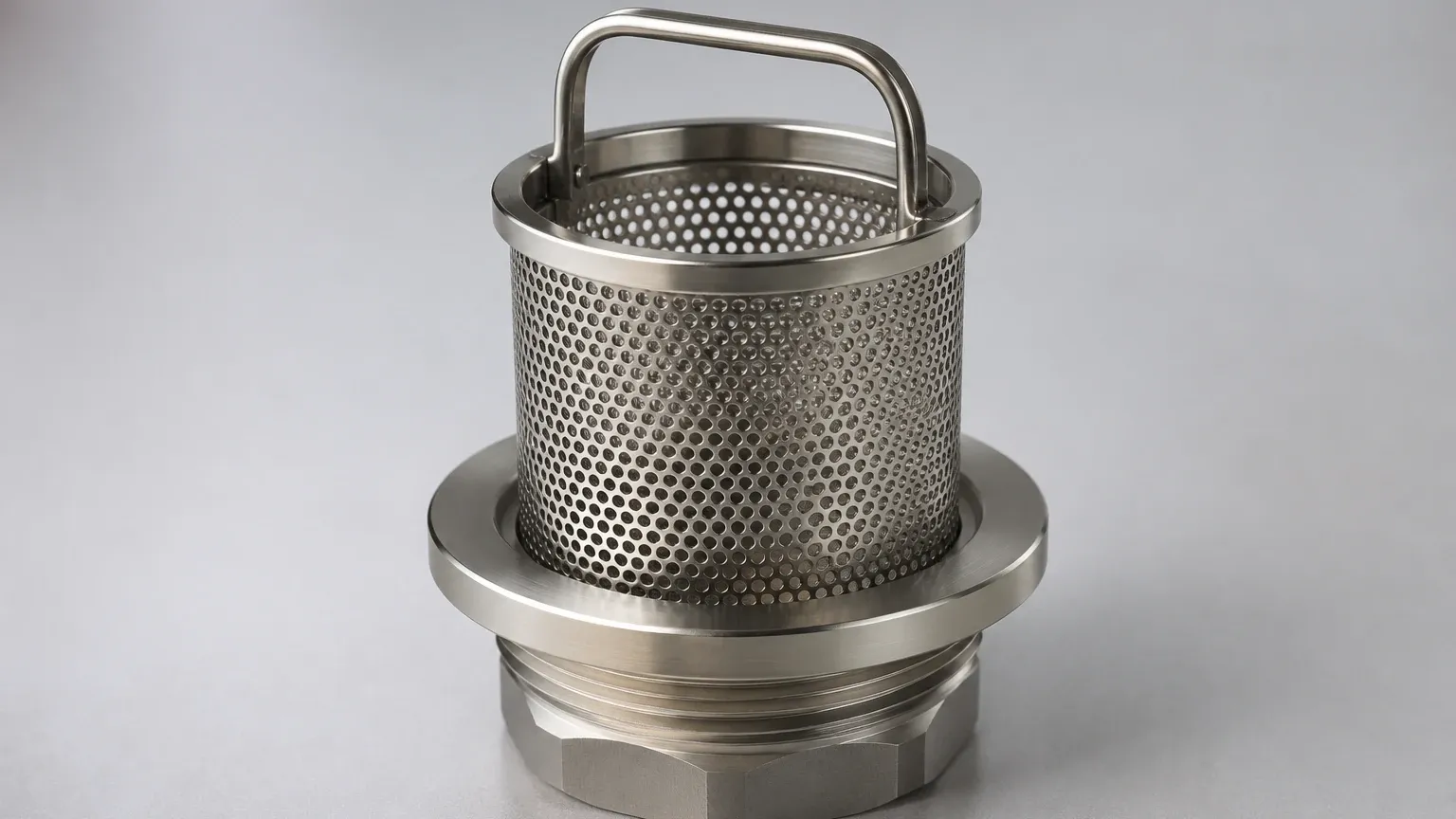
In industrial fluid handling systems, the selection of filtration components is governed by precise mechanical requirements and environmental factors. A strainer 32mm (often corresponding to a nominal pipe size of DN32 or 1 1/4 inches) serves as a critical line of defense for downstream equipment, such as pumps, valves, and heat exchangers. These components are designed to remove coarse particles from liquids or gases, ensuring that the process remains within specified purity levels while protecting sensitive hardware from mechanical wear and blockages.
Selecting the correct 32mm strainer requires a deep understanding of fluid dynamics, material compatibility, and the specific filtration demands of the application. As a specialized manufacturer of custom stainless steel filtration solutions, Kaifil provides engineering insights into the technical parameters that define high-performance Strainers & Baskets for industrial use.
Technical Standards for 32mm (DN32) Strainers
The 32mm designation typically refers to the nominal diameter (DN) of the inlet and outlet ports. In the context of global piping standards, this size is a bridge between small-bore plumbing and larger industrial process lines. Because these strainers are often integrated into high-pressure or high-temperature systems, their construction must adhere to rigorous engineering standards.
Connection Types
For a strainer 32mm, the connection method is the first point of specification. The most common types include:
* Threaded Connections: Available in NPT (National Pipe Thread) or BSP (British Standard Pipe). These are common for 32mm sizes due to the ease of installation in compact systems.
* Flanged Connections: Used in applications where frequent removal for cleaning is required or where high-pressure seals are paramount. Standards such as ANSI/ASME B16.5 or DIN EN 1092-1 define the bolt patterns and pressure ratings.
* Socket Weld or Butt Weld: Preferred in the chemical and pharmaceutical industries where leak-proof, permanent joints are necessary to prevent contamination or hazardous leaks.
Pressure and Temperature Ratings
Industrial 32mm strainers are typically rated by their Pressure Nominal (PN) or Class rating. A standard stainless steel 32mm strainer might be rated for PN16, PN25, or even PN40, depending on the wall thickness and the integrity of the housing. Temperature ratings are equally vital, as the gaskets and seals (often EPDM, Viton, or PTFE) must withstand the process fluid's thermal range without degrading.
Material Integrity: Why Stainless Steel Dominates Industrial 32mm Filtration
While strainers can be manufactured from various materials, stainless steel remains the industry standard for 32mm applications due to its superior mechanical properties and chemical resistance. Kaifil specializes in the precision manufacturing of these components, focusing on two primary grades:
SS304 vs. SS316L
* Grade 304: This is the most common grade for general industrial use. It offers excellent corrosion resistance for water treatment, food processing, and standard hydraulic applications. It is cost-effective and provides high structural strength.
* Grade 316L: For more demanding environments, such as marine applications, chemical processing, or pharmaceutical production, SS316L is preferred. The addition of molybdenum enhances resistance to pitting and crevice corrosion, particularly in chloride-rich environments. The "L" (Low Carbon) variant is essential for welded components to prevent carbide precipitation and ensure the longevity of the strainer housing.
Surface Finish and Hygiene
In the food, beverage, and pharmaceutical sectors, the internal surface finish of a strainer 32mm is a key performance indicator. Electropolishing or mechanical polishing to a specific Ra (Roughness Average) value ensures that there are no microscopic pits where bacteria can grow or where process residues can accumulate. This level of precision is a hallmark of high-quality stainless steel filtration components.
Comparing Configurations: Y-Strainers vs. Basket Strainers in 32mm Systems
The geometry of the strainer determines its holding capacity, pressure drop characteristics, and ease of maintenance. When specifying a strainer 32mm, engineers must choose between several primary configurations.
Y-Strainers
Named for their "Y" shape, these are the most compact option. They are ideal for applications with low levels of contamination where the strainer does not require frequent cleaning. They can be installed in either horizontal or vertical orientations (with the flow directed downwards), making them versatile for tight piping layouts.
Basket Strainers (Simplex and Duplex)
Basket strainers offer a larger surface area than Y-strainers, which results in a lower initial pressure drop and a higher dirt-holding capacity.
* Simplex Baskets: These require the process to be shut down for cleaning. They are suitable for batch processes where downtime is planned.
* Duplex Baskets: These consist of two separate strainer chambers connected by a diverter valve. This allows one side to be cleaned while the other remains in operation, ensuring continuous flow in 24/7 industrial operations.
For 32mm lines, basket strainers are often selected when the fluid contains a high volume of solids or when the protection of expensive downstream equipment justifies the larger footprint.
Performance Evaluation: Flow Rates and Pressure Drop Considerations
The efficiency of a strainer 32mm is measured by its ability to remove contaminants without significantly impeding fluid flow. This balance is managed through the selection of the internal filter element.
Mesh and Perforation Selection
The internal element of a 32mm strainer can be a perforated metal sheet or a fine wire mesh.
* Perforated Screens: Typically used for coarse filtration (e.g., 1mm to 5mm holes), these provide high structural strength.
* Wire Mesh: For finer filtration requirements (down to 20 microns or less), a stainless steel wire mesh is layered over a perforated support basket.
Calculating Pressure Drop (ΔP)
Every strainer introduces a pressure drop into the system. As the strainer 32mm collects debris, the ΔP increases. Engineers must calculate the "clean pressure drop" using the flow coefficient (Cv) provided by the manufacturer. If the initial pressure drop is too high, it may indicate that the mesh is too fine for the application or that the strainer body size should be increased. Monitoring the differential pressure across the strainer is the most effective way to determine when cleaning or replacement is necessary.
Customization and OEM Capabilities for Specialized 32mm Filtration
Standard off-the-shelf strainers often fail to meet the specific needs of complex industrial systems. This is where custom manufacturing becomes essential. For a strainer 32mm, customization can involve several engineering adjustments:
1. Custom Micron Ratings: Tailoring the mesh density to capture specific particle sizes while maximizing flow.
2. Reinforced Elements: Adding internal supports to the filter basket to withstand high-pressure surges or high-viscosity fluids.
3. Specialized Coatings: Applying coatings for extreme chemical resistance or to reduce friction.
4. Integrated Sensors: Adding ports for differential pressure gauges or electronic sensors to automate maintenance alerts.
Kaifil’s expertise in OEM and customized filtration allows for the development of 32mm components that fit seamlessly into proprietary machinery or unique process environments, ensuring that the filtration solution is optimized for the specific task at hand.
Maintenance and Operational Longevity
The total cost of ownership for a strainer 32mm is heavily influenced by its maintenance requirements. A poorly designed strainer may be cheap to purchase but expensive to maintain due to frequent clogging or difficult cleaning procedures.
Cleaning Protocols
For stainless steel strainers, cleaning usually involves removing the basket or screen and using pressurized water, air, or ultrasonic cleaning to dislodge particles. In some chemical applications, chemical soaking may be required. The durability of stainless steel allows these components to be cleaned and reused thousands of times, unlike disposable plastic or fiber filters.
Replacement Cycles
While the housing of a stainless steel strainer can last for decades, the internal mesh elements are subject to wear, especially in abrasive environments. Regular inspection for wire fatigue, mesh blinding (permanent clogging), or physical deformation is critical. Using high-quality Strainers & Baskets ensures that the internal components are built to the same rigorous standards as the housing, extending the time between replacements.
Critical Considerations Before Purchasing a 32mm Strainer
Engineers and purchasing teams should confirm the following technical details before finalizing a procurement order for a strainer 32mm:
* Fluid Characteristics: What is the viscosity, temperature, and chemical composition of the fluid?
* Contaminant Profile: What is the size, shape, and concentration of the particles being removed?
* Flow Rate: What is the maximum and minimum flow rate the strainer must handle?
* System Pressure: What is the maximum operating pressure and the potential for pressure spikes?
* Space Constraints: Does the installation site allow for the clearance required to remove the basket or screen for cleaning?
By addressing these factors, organizations can ensure they select a 32mm strainer that provides reliable protection, minimizes maintenance downtime, and contributes to the overall efficiency of the industrial process. Whether for a standard water line or a complex chemical reactor, the right filtration component is a vital investment in system integrity.
