


Strainer 3 8
In industrial fluid handling and piping systems, the protection of sensitive downstream equipment is a primary engineering concern. The use of a strainer 3 8 (referring to the 3/8-inch connection size) is a standard practice for small-bore piping systems where precision and reliability are paramount. These components, often categorized under the broader heading of Strainers & Baskets, serve as the first line of defense against particulate matter, scale, and debris that can compromise the integrity of pumps, valves, and instrumentation.
Selecting the correct 3/8-inch strainer requires a deep understanding of fluid dynamics, material compatibility, and filtration requirements. This guide examines the technical specifications, engineering considerations, and application-specific factors that professionals must evaluate when integrating these components into industrial processes.
Understanding the Role of 3/8 Inch Strainers in Industrial Piping
The 3/8-inch nominal pipe size (NPS) is frequently utilized in instrumentation lines, pilot plants, hydraulic systems, and specialized chemical dosing setups. Because these systems often operate with lower flow volumes but higher precision requirements, the strainer 3 8 must be engineered to provide efficient filtration without inducing excessive pressure drop.
In these applications, the primary function of the strainer is the mechanical removal of solids from a flowing liquid or gas. Unlike filters, which are designed to remove much smaller particles (often in the sub-micron range) and are usually disposable, strainers are typically designed to remove larger particles and are intended for reuse after cleaning. The 3/8-inch size is particularly critical in protecting small orifices, such as spray nozzles or steam traps, where even a minor amount of debris can cause immediate failure or process deviation.
Material Selection for 3/8 Inch Strainers & Baskets
Material science is the foundation of effective filtration. For a strainer 3 8, the choice of material for both the housing and the internal basket or screen determines the component's longevity and performance in corrosive or high-temperature environments.
Stainless Steel 304 and 316
Stainless steel is the industry standard for industrial strainers due to its excellent strength-to-weight ratio and corrosion resistance.
* Grade 304: Suitable for general-purpose applications, including water treatment and non-corrosive chemical handling. It provides good resistance to atmospheric corrosion and many organic and inorganic chemicals.
* Grade 316: Contains molybdenum, which significantly enhances resistance to pitting and crevice corrosion in chloride-rich environments. This is the preferred choice for pharmaceutical, food and beverage, and marine applications.
Specialized Alloys
In highly aggressive environments, such as those involving concentrated acids or high-temperature steam, specialized alloys like Monel, Hastelloy, or Duplex stainless steel may be required. These materials ensure that the strainer 3 8 does not become a point of failure due to chemical erosion or stress corrosion cracking.
Seal and Gasket Materials
The performance of a strainer is also dependent on its seals. Depending on the fluid being processed, engineers must specify Viton, EPDM, PTFE, or Buna-N gaskets to ensure leak-free operation and chemical compatibility.
Key Engineering Considerations: Flow Rate and Pressure Drop
One of the most critical aspects of specifying a strainer 3 8 is calculating the allowable pressure drop (ΔP). Every strainer introduces a degree of resistance to the flow. As the mesh or perforated basket collects debris, this resistance increases.
The Open Area Ratio
The efficiency of a strainer is often measured by its "Open Area Ratio" (OAR). This is the ratio of the total open area of the mesh or screen to the internal cross-sectional area of the inlet pipe. For a 3/8-inch line, a high OAR (typically 4:1 or higher) is desirable to ensure that the strainer can accumulate a significant amount of debris before the pressure drop becomes critical. A low OAR leads to rapid clogging and frequent maintenance cycles.
Flow Velocity
In a 3/8-inch system, flow velocities must be managed to prevent cavitation and erosion. Engineers typically aim for a velocity between 5 to 10 feet per second for liquids. If the velocity is too high, the force of the fluid hitting the strainer basket can cause mechanical fatigue or "blow-through," where particles are forced through the mesh media.
Types of Strainers and Baskets for Small-Bore Applications
While the size is fixed at 3/8 inch, the configuration of the strainer can vary based on the installation space and the nature of the contaminants.
Y-Strainers
The Y-strainer is the most common configuration for 3/8-inch lines. Its compact design allows for installation in both horizontal and vertical pipelines. The "leg" of the Y contains the filter element, which can be easily removed for cleaning. Y-strainers are ideal for applications with low levels of contamination where frequent cleaning is not required.
Basket Strainers (Simplex)
Basket strainers feature a larger vertical chamber that houses a basket-shaped element. For a strainer 3 8, a basket configuration offers a much higher dirt-holding capacity than a Y-strainer. These are preferred in processes where the fluid contains a higher concentration of solids. The top-loading design allows for easier access to the basket without needing to disassemble the entire piping connection.
Inline Strainers
Inline strainers are designed for straight-through flow. These are often used in suction-side applications to protect pumps. In 3/8-inch sizes, they are frequently used in laboratory settings or for protecting sensitive analytical equipment.
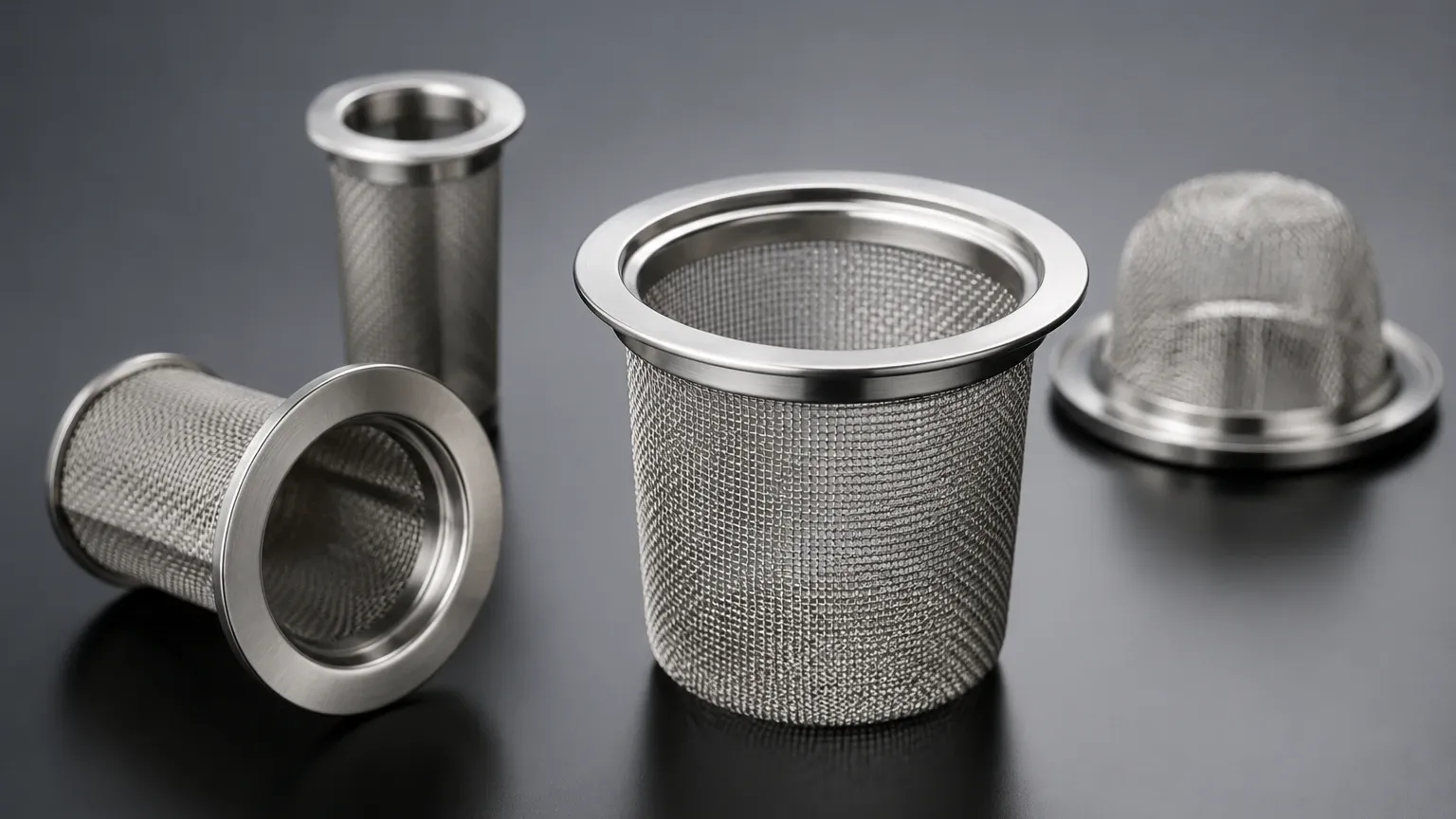
Filtration Accuracy and Mesh Specifications
The performance of a strainer 3 8 is defined by its internal element. This element can be made from perforated metal, wire mesh, or a combination of both.
Perforated Metal
Perforated baskets are typically used for "coarse" straining. Common hole sizes range from 1/32 inch to 1/4 inch. These are robust and can withstand significant pressure differentials.
Wire Mesh Liners
For finer filtration, a wire mesh liner is added to the perforated basket. Mesh sizes are defined by the number of openings per linear inch. For example, a 100-mesh screen has 100 openings per inch. In a 3/8-inch strainer, mesh sizes can range from 20 mesh (840 microns) down to 400 mesh (37 microns).
When selecting a mesh for a strainer 3 8, engineers must balance the need for fine filtration with the risk of rapid clogging. A common rule of thumb is to select a mesh size that is approximately 50% of the size of the smallest particle that needs to be removed.
Customization and OEM Solutions for 3/8 Inch Filtration
Standard off-the-shelf strainers may not always meet the specific needs of a complex industrial process. Customization is often required to address unique challenges such as limited installation space, extreme pressures, or specific flow characteristics.
Manufacturing partners like Kaifil specialize in developing custom Strainers & Baskets tailored to OEM specifications. Customization options for a strainer 3 8 include:
* Modified End Connections: While NPT (National Pipe Thread) is standard, applications may require BSPT, socket weld, or flanged connections.
* Reinforced Baskets: For high-pressure systems, baskets can be reinforced with internal supports or heavier gauge perforated metal to prevent collapsing.
* Magnetic Inserts: In systems where metallic fines are a concern (such as hydraulic or lubricating oil systems), magnetic rods can be added to the basket to capture ferrous particles that are smaller than the mesh openings.
* Specialized Coatings: For added chemical resistance, housings can be lined with PTFE or other high-performance polymers.
Maintenance and Operational Best Practices
The total cost of ownership for a strainer 3 8 is heavily influenced by maintenance practices. A neglected strainer can lead to system-wide failures, including pump cavitation or downstream contamination.
Differential Pressure Monitoring
The most effective way to determine when a strainer needs cleaning is by monitoring the differential pressure across the unit. Installing pressure gauges upstream and downstream of the strainer 3 8 allows operators to see exactly when the basket is becoming restricted. A common guideline is to clean or replace the basket when the pressure drop reaches 5-10 psi over the clean-running pressure.
Cleaning Procedures
When cleaning a 3/8-inch strainer, it is essential to inspect the basket for signs of mechanical wear or corrosion. Wire mesh elements should be cleaned using a soft brush or ultrasonic bath to avoid damaging the delicate wires. If the mesh is torn or the perforated metal is distorted, the element must be replaced immediately to maintain filtration integrity.
Spare Parts Management
For critical processes, maintaining an inventory of spare baskets and gaskets is essential. Because 3/8-inch components are relatively small, it is cost-effective to keep multiple replacement sets on hand to minimize downtime during maintenance intervals.
Conclusion
The strainer 3 8 is a small but vital component in the landscape of industrial fluid management. Whether it is a Y-strainer protecting a steam trap or a custom-designed basket strainer in a chemical dosing line, the principles of material selection, flow dynamics, and filtration accuracy remain the same. By focusing on high-quality construction and precise engineering specifications, facilities can ensure the long-term reliability of their systems. For those seeking specialized configurations or high-performance materials, exploring the full range of Strainers & Baskets is the best path toward optimizing industrial filtration performance.
