


Strainer 3d
In modern industrial engineering, the integration of mechanical components into complex piping systems requires more than just a conceptual understanding of filtration. For design engineers and procurement teams, the term "strainer 3d" represents a critical intersection between physical hardware and digital precision. High-fidelity 3D modeling (CAD) has become an essential standard for ensuring that industrial strainers and baskets fit within tight spatial envelopes, align with existing flange configurations, and meet the hydraulic requirements of the application.
Providing accurate 3D data for Strainers & Baskets allows for advanced interference checking, flow simulation, and precise material estimation. As industrial processes in chemical, pharmaceutical, and food sectors become more automated and spatially optimized, the availability of detailed technical specifications and 3D representations is no longer optional—it is a prerequisite for successful system integration.
The Role of 3D Modeling in Industrial Filtration Systems
The transition from 2D schematic drawings to comprehensive 3D environments has revolutionized how filtration components are selected and installed. When an engineer searches for a strainer 3d model, they are typically looking for a STEP, IGES, or DWG file that accurately represents the external dimensions and internal clearances of a filter housing or basket.
Spatial Integration and Interference Checking
In large-scale chemical processing plants or hydraulic power units, space is often at a premium. Using a 3D model allows engineers to perform "clash detection." This ensures that the strainer housing, the swing-bolt closure, and the clearance required for basket removal do not interfere with adjacent piping, structural beams, or electrical conduits. Without an accurate 3D representation, the risk of costly field modifications during the installation phase increases significantly.
Computational Fluid Dynamics (CFD)
Advanced 3D models are also used as the geometry base for CFD analysis. By importing a strainer 3d file into simulation software, engineers can predict how fluid will move through the basket. This helps in identifying potential dead zones where sediment might accumulate or areas of high turbulence that could lead to premature erosion of the wire mesh. Understanding these dynamics is vital for optimizing the service life of the filtration media.
Engineering Specifications for Strainers & Baskets
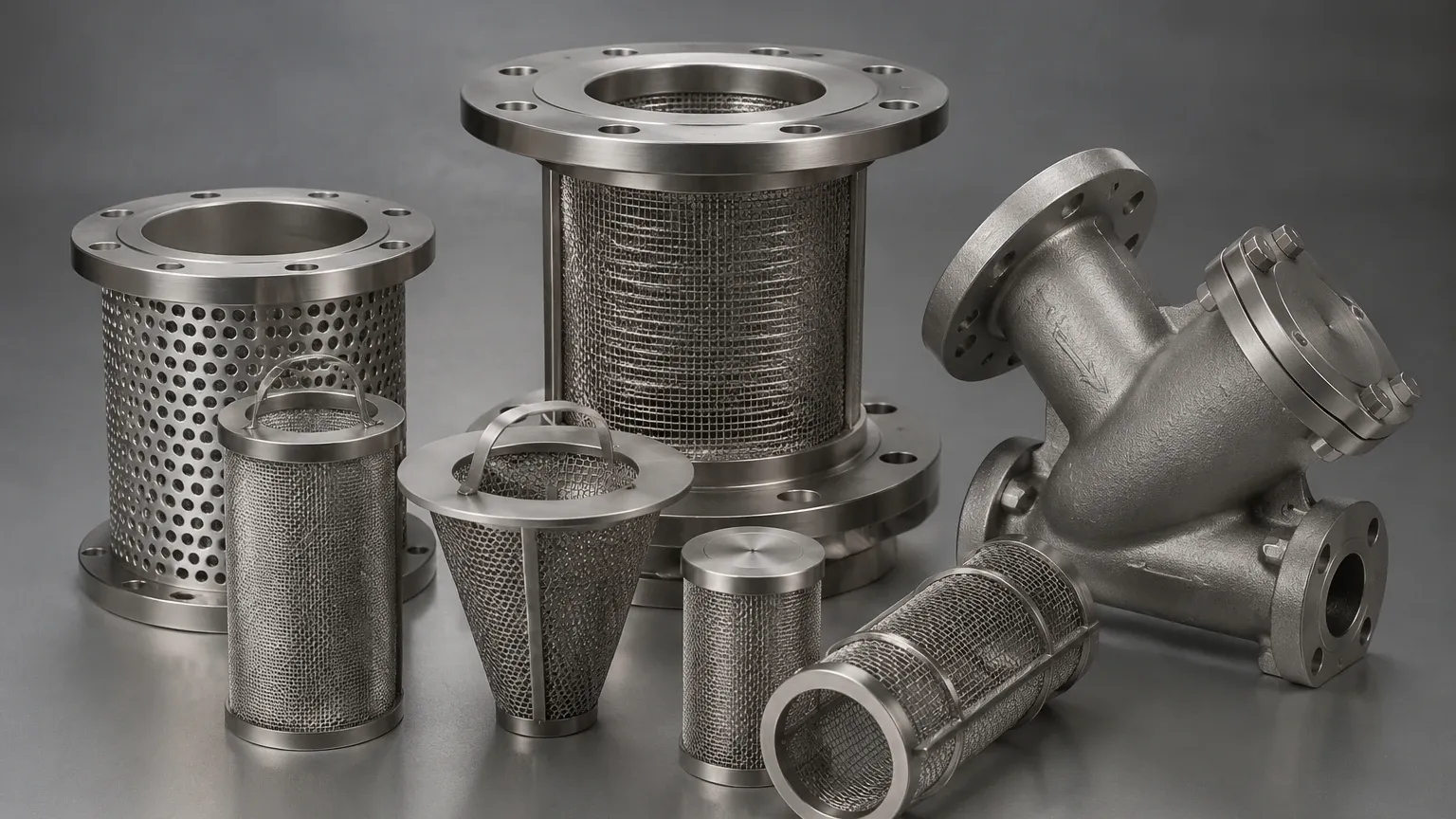
Selecting the right filtration component requires a deep dive into technical parameters that go beyond simple dimensions. Whether the application involves a simplex strainer, a duplex system for continuous operation, or a Y-strainer for steam lines, the internal basket design is the most critical element.
Micron Ratings and Filtration Accuracy
Filtration accuracy is determined by the mesh or perforation size of the basket. Industrial strainers typically handle coarser particles (from 1 inch down to 40 microns), while fine filters handle sub-micron levels. For heavy-duty industrial applications, a combination of a perforated metal support basket lined with a fine stainless steel wire mesh is often used. This provides both the structural strength to withstand high differential pressures and the precision required for fine particle capture.
Open Area Ratio (OAR)
The Open Area Ratio is the relationship between the total area of the openings in the strainer basket and the cross-sectional area of the inlet pipe. A high OAR is desirable because it results in a lower initial pressure drop and longer intervals between cleanings. A standard industrial requirement is often an OAR of at least 6:1, meaning the total area of the holes in the basket is six times the area of the pipe. This ensures that even as the basket begins to fill with debris, the system flow remains relatively unimpeded.
Material Selection and Environmental Compatibility
Durability in industrial filtration is largely a function of material science. Stainless steel is the industry standard due to its corrosion resistance and mechanical strength at varying temperatures. Kaifil specializes in utilizing high-grade alloys to meet specific environmental demands.
* 304 Stainless Steel: The most common grade, offering excellent cost-effectiveness and resistance to atmospheric corrosion and many organic and inorganic chemicals. It is widely used in food processing and general industrial water treatment.
* 316L Stainless Steel: Containing molybdenum, 316L provides superior resistance to chlorides and acids. It is the preferred choice for marine environments, pharmaceutical manufacturing, and aggressive chemical processing where pitting corrosion is a concern.
* Specialty Alloys: For extreme conditions involving high temperatures or highly corrosive media, materials such as Monel, Hastelloy, or Duplex stainless steel may be required. These materials ensure that the strainer 3d components maintain their structural integrity over years of continuous service.
Performance Evaluation: Pressure Drop and Flow Dynamics
One of the primary concerns for any engineer integrating a strainer into a system is the "clean pressure drop" (ΔP). Every component in a fluid system creates resistance, and the strainer is no exception.
Calculating Differential Pressure
The pressure drop across a strainer is influenced by the fluid's viscosity, specific gravity, flow rate, and the percentage of open area in the basket. When reviewing a strainer 3d design, engineers must account for the internal geometry of the housing. A well-designed housing minimizes turbulence at the inlet and outlet, which helps keep the pressure drop within acceptable limits.
The Impact of Debris Loading
As the strainer captures contaminants, the differential pressure will rise. It is standard engineering practice to install pressure gauges upstream and downstream of the strainer. When the differential pressure reaches a predetermined limit (typically 10-15 psi above the clean drop), the basket must be cleaned or replaced. High-performance baskets are designed to withstand significant differential pressure without collapsing, a failure mode that could send debris downstream and damage sensitive equipment like pumps or flow meters.
Customization and OEM Capabilities in Filtration
While standard off-the-shelf strainers meet many needs, many industrial applications require custom-engineered solutions. This is where the flexibility of a manufacturer like Kaifil becomes invaluable. Customization can involve unique dimensions, specialized mesh configurations, or specific flange ratings (such as ANSI, DIN, or JIS).
Tailored Basket Designs
In some processes, the standard cylindrical basket is insufficient. Custom shapes, such as slanted baskets for high-velocity lines or multi-layered pleated baskets for increased surface area, can be developed. Providing a customized strainer 3d model during the design phase allows the customer to verify that the bespoke component will interface perfectly with their proprietary equipment.
OEM Integration
For manufacturers of original equipment (OEMs), such as pump skid builders or cooling tower manufacturers, the strainer is a sub-component of a larger machine. Kaifil works closely with these partners to develop filtration components that are optimized for their specific machine footprint and performance requirements. This collaborative approach ensures that the final product is both efficient and easy for the end-user to maintain.
Maintenance Cycles and Operational Efficiency
The total cost of ownership (TCO) for industrial strainers is heavily influenced by maintenance requirements. A strainer that is difficult to access or clean will lead to longer downtimes and higher labor costs.
Ease of Access
When evaluating a strainer 3d layout, engineers should consider the "pull space." This is the vertical or horizontal clearance required to remove the basket from the housing. If the 3D model shows that a structural beam is located directly above a top-opening strainer, the design must be adjusted to a side-entry model or the beam must be moved.
Cleaning and Replacement
Stainless steel baskets are generally cleanable and reusable. Methods such as backwashing, ultrasonic cleaning, or chemical soaking are used depending on the nature of the contaminant. However, wire mesh is a wear item. Over time, the repeated stress of pressure fluctuations and cleaning cycles can lead to fatigue. Regular inspection of the mesh integrity is essential to prevent bypass, where unfiltered fluid leaks through small tears in the media.
Conclusion: Selecting the Right Partner
Integrating effective filtration into an industrial process requires a balance of mechanical engineering, material science, and spatial planning. By utilizing accurate technical data and considering the implications of 3D design integration, engineers can ensure that their systems operate reliably and efficiently.
Whether you are designing a new chemical processing line or upgrading an existing hydraulic system, the quality of the Strainers & Baskets used will directly impact the longevity of your downstream equipment. Working with a manufacturer that understands the technical nuances of filtration—from the initial strainer 3d CAD model to the final alloy selection—is the most effective way to achieve optimal performance and minimize operational risks.
