


Strainer 3d Print
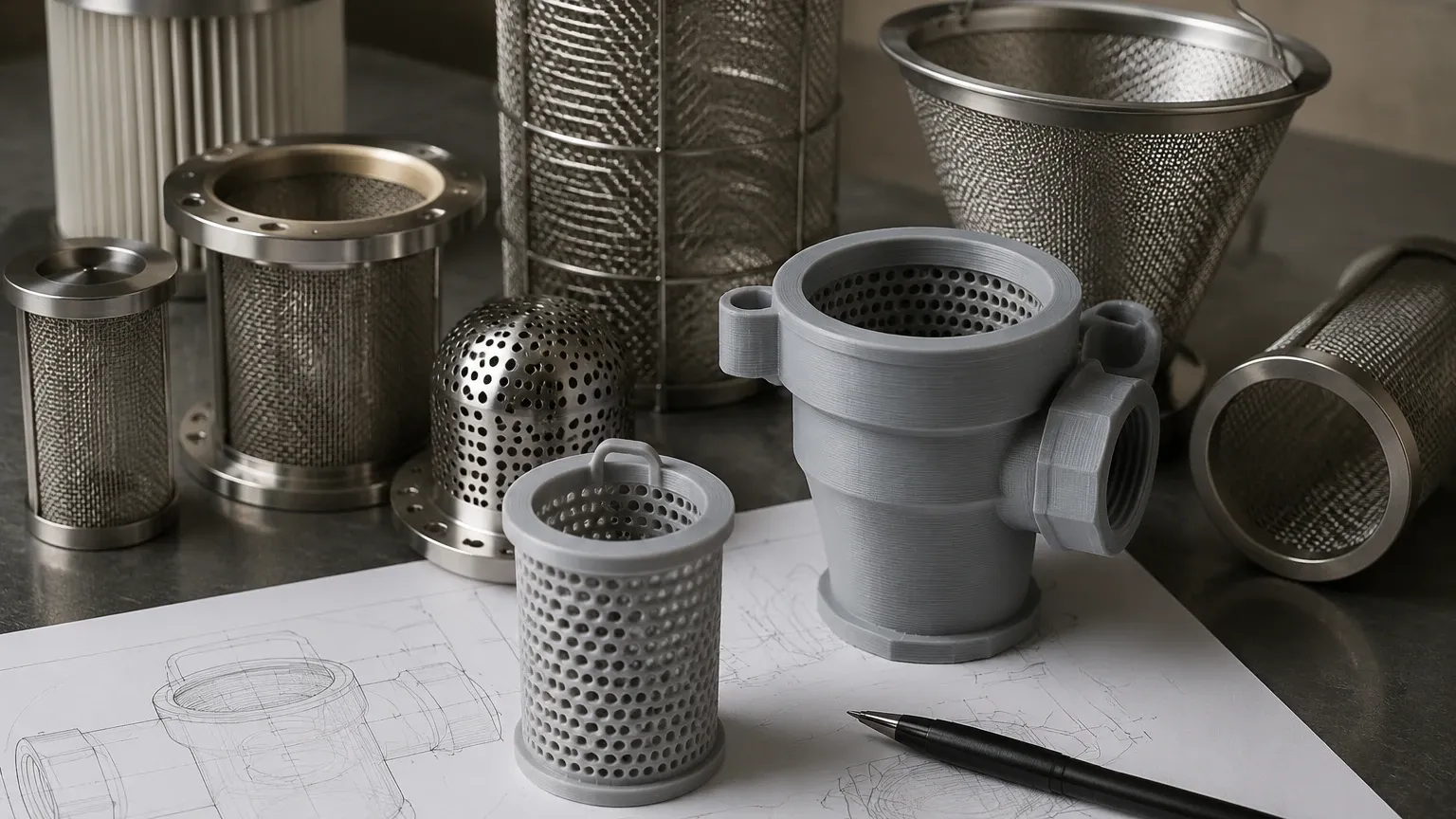
In the landscape of industrial filtration, the ability to protect downstream equipment from particulate contamination is critical for operational longevity and process efficiency. While traditional manufacturing methods for Strainers & Baskets remain the industry standard due to their robustness and material integrity, the emergence of additive manufacturing—often discussed in engineering circles as "strainer 3d print" technology—has introduced new possibilities for rapid prototyping and complex geometry validation.
For engineers and procurement teams, understanding the intersection between modern prototyping and high-performance industrial production is essential. This article explores the technical nuances of industrial strainers, the role of 3D printing in the design phase, and the critical engineering considerations required when transitioning from a prototype to a production-grade stainless steel filtration solution.
The Fundamental Role of Strainers & Baskets in Industrial Systems
Industrial strainers and baskets serve as the first line of defense in fluid handling systems. Unlike fine filters designed to remove microscopic particles, strainers are typically used for coarse filtration, removing larger solids that could damage pumps, valves, meters, and other sensitive components.
Protecting Downstream Assets
In chemical processing, water treatment, and food production, the presence of oversized debris can lead to catastrophic mechanical failure. Strainers are integrated into pipelines to intercept these solids. The design of the basket is paramount; it must provide sufficient surface area to allow for fluid flow while maintaining the structural integrity to withstand the differential pressure created by the trapped debris.
Surface Filtration Principles
Strainers operate primarily through surface filtration. The media—whether perforated metal or woven wire mesh—acts as a physical barrier. The efficiency of this barrier is determined by the "open area ratio," which is the percentage of the total basket surface that allows fluid to pass. A higher open area ratio typically results in a lower initial pressure drop, which is a key performance indicator for any industrial system.
Prototyping and Design Validation: The Role of Strainer 3D Print
The term strainer 3d print has gained traction as additive manufacturing technologies have matured. In the B2B engineering context, 3D printing is rarely used for the final production of high-pressure industrial strainers, but it has become an invaluable tool during the Research and Development (R&D) phase.
Rapid Prototyping for Flow Dynamics
Before committing to the tooling and fabrication costs of a custom stainless steel basket, engineers may utilize a strainer 3d print approach to create a physical model of a new design. This allows for:
* Fitment Testing: Ensuring the strainer housing and internal basket interface perfectly within existing pipeline constraints.
* Computational Fluid Dynamics (CFD) Validation: While CFD software provides excellent theoretical data, a 3D-printed prototype can be used in low-pressure flow loops to observe turbulence and flow distribution patterns.
* Complex Geometry Exploration: Additive manufacturing allows for the creation of internal baffles or non-standard shapes that would be difficult to visualize or test using traditional subtractive methods.
Limitations of 3D Printed Components
While a strainer 3d print is excellent for visualization, it often falls short in industrial performance. Most polymer-based 3D prints lack the thermal stability and chemical resistance required for harsh industrial environments. Even metal 3D printing (such as DMLS – Direct Metal Laser Sintering), while capable of producing functional parts, often carries a significantly higher cost-per-unit and different surface finish characteristics compared to the precision-woven wire mesh used in professional Strainers & Baskets.
Engineering Specifications: Material Selection and Durability
When transitioning from a design concept to a functional industrial component, material selection is the most critical decision. Industrial filtration demands materials that can withstand corrosion, high temperatures, and mechanical stress.
Stainless Steel: The Industry Standard
Most high-quality industrial baskets are fabricated from stainless steel, specifically grades 304 and 316L.
* Grade 304: Offers excellent durability and is suitable for most water treatment and general industrial applications where extreme corrosion is not a primary concern.
* Grade 316L: Contains molybdenum, which provides superior resistance to chlorides and acids. This is the preferred material for pharmaceutical, marine, and chemical processing applications.
Wire Mesh vs. Perforated Metal
The "strainer 3d print" model might show a uniform hole pattern, but in production, engineers must choose between different media types:
* Perforated Metal: Provides high structural strength and is ideal for coarse straining (1mm and larger).
* Woven Wire Mesh: Used for finer filtration requirements. The weave type—such as plain, twill, or Dutch weave—determines the micron rating and the mechanical strength of the mesh. In many heavy-duty applications, a fine wire mesh is supported by a coarser perforated metal cylinder to combine filtration accuracy with structural rigidity.
Performance Metrics: Flow Rate, Pressure Drop, and Filtration Efficiency
An industrial strainer is only as effective as its ability to maintain system flow. Engineers must evaluate several technical metrics before finalizing a purchase.
Differential Pressure (ΔP)
Differential pressure is the difference in pressure between the inlet and outlet of the strainer. As the basket collects debris, the ΔP increases. If the ΔP becomes too high, it can lead to basket collapse or pump cavitation. Professional manufacturers design Strainers & Baskets with a high "dirt-holding capacity" to extend the time between cleaning cycles.
Viscosity Considerations
The viscosity of the fluid significantly impacts the performance of the strainer. Thicker fluids, such as oils or resins, require a larger open area and potentially a coarser mesh to prevent excessive pressure drop. A prototype created via strainer 3d print may not accurately reflect these fluid dynamics unless the material surface roughness is carefully accounted for.
Filtration Rating (Micron vs. Mesh)
It is vital to distinguish between mesh count (the number of wires per linear inch) and micron rating (the actual size of the opening). Engineers must specify the largest particle size that can safely pass through the system to determine the appropriate filtration rating.
Customization and OEM Manufacturing for Demanding Environments
Every industrial application has unique constraints, which is why customization is a cornerstone of effective filtration. While a standard strainer 3d print file might serve a generic purpose, industrial-grade solutions require tailored engineering.
Custom Dimensions and Configurations
In many retrofit projects, standard off-the-shelf strainers do not fit the existing footprint. Custom manufacturing allows for the adjustment of flange types, handle configurations for easy removal, and specialized basket shapes (such as slanted or multi-basket designs) to maximize surface area in tight spaces.
Reinforced Construction
For high-pressure applications, baskets require reinforcement. This may include heavy-duty binding, longitudinal support bars, or reinforced bottoms. These structural elements are difficult to replicate accurately in a standard strainer 3d print but are essential for the safety and reliability of a pressurized pipeline.
Quality Control and Certification
Professional manufacturers like Kaifil adhere to strict quality control standards. This includes material traceability (MTRs), weld integrity inspections, and ensuring the final product meets industry-specific certifications, such as FDA compliance for food and beverage applications or ASME standards for pressure vessels.
Maintenance Strategies and Total Cost of Ownership (TCO)
Selecting a strainer involves looking beyond the initial purchase price to the total cost of ownership. The durability of the component directly impacts maintenance schedules and downtime.
Cleaning and Reusability
One of the primary advantages of stainless steel Strainers & Baskets is their cleanability. Unlike disposable filter cartridges, metal baskets can be cleaned via backwashing, ultrasonic cleaning, or manual pressure washing. The structural integrity of a professionally welded stainless steel basket ensures it can withstand repeated cleaning cycles without losing its filtration accuracy.
Replacement Cycles
While a 3D-printed prototype might be useful for a one-off test, it cannot match the service life of a fabricated metal component. In a B2B environment, the goal is to minimize the frequency of replacements. High-quality materials and robust construction reduce the risk of bypass—where fluid leaks around the basket—and mechanical failure, ensuring the long-term protection of the entire system.
Evaluating the Next Step
When moving from the conceptual phase of a "strainer 3d print" to the implementation of a production-grade solution, engineers should confirm the following:
1. Chemical Compatibility: Does the chosen alloy stand up to the process fluid?
2. Pressure Ratings: Can the basket handle the maximum expected differential pressure?
3. Ease of Access: Is the basket designed for quick removal to minimize downtime during cleaning?
By focusing on these factual engineering requirements, purchasing teams can ensure they invest in filtration components that deliver reliable, long-term performance in the most demanding industrial environments.
