


Strainer 40mm
In industrial fluid handling and piping systems, the selection of the correct filtration component is critical to protecting downstream equipment such as pumps, meters, and valves. A strainer 40mm (often referred to by its nominal diameter, DN40 or 1.5 inches) serves as a primary defense mechanism against particulate contamination. These components are engineered to remove solids from liquids or gases through a perforated or wire mesh straining element.
For engineers and procurement professionals, understanding the technical nuances of a 40mm strainer—ranging from material compatibility to pressure drop calculations—is essential for ensuring system longevity and operational efficiency. As a manufacturer specializing in high-performance filtration, Kaifil provides Strainers & Baskets designed to meet the rigorous demands of chemical processing, food production, and hydraulic applications.
Understanding the 40mm (DN40) Specification
The "40mm" designation typically refers to the nominal bore of the pipework the strainer is designed to service. In the context of industrial standards, this corresponds to a 1.5-inch pipe size. However, the physical dimensions of the strainer housing will vary significantly based on the type of strainer (Y-type, T-type, or Basket type) and the connection standard employed.
Connection Standards and Interface
When specifying a strainer 40mm, the first technical hurdle is the connection type. Common interfaces include:
* Threaded (NPT/BSP): Common in smaller, lower-pressure systems where ease of installation is a priority.
* Flanged (ANSI, DIN, JIS): Preferred for high-pressure industrial applications where secure, leak-proof seals and frequent maintenance access are required.
* Socket Weld or Butt Weld: Used in high-pressure or high-temperature environments where a permanent, seamless connection is necessary to prevent potential leak paths.
Selecting the wrong connection standard can lead to installation delays or the need for costly adapters, which may introduce additional turbulence and pressure drop into the system.
Technical Evaluation of Strainers & Baskets
The performance of a strainer is not solely dependent on its housing size but on the engineering of its internal elements. The relationship between the housing and the internal basket determines the "open area ratio," which is a critical metric for any filtration system.
The Open Area Ratio (OAR)
The OAR is the ratio of the total area of the holes in the straining element to the internal cross-sectional area of the inlet pipe. For a strainer 40mm, a high OAR (typically 4:1 or higher) is desirable to ensure that the strainer can accumulate a significant amount of debris before the pressure drop becomes excessive. A low OAR results in frequent cleaning cycles and increased energy consumption by the system's pumps.
Pressure Drop (Delta P) Considerations
Every filtration component introduces a degree of resistance to flow. For a DN40 system, engineers must calculate the clean pressure drop based on the fluid's viscosity, specific gravity, and flow velocity.
If the pressure drop across the strainer exceeds the system's design limits, it can lead to cavitation in pumps or insufficient flow to critical processes. It is vital to consult flow coefficient (Cv) charts provided by the manufacturer to ensure the 40mm unit can handle the required flow rate (typically ranging from 50 to 150 liters per minute depending on the fluid type) without compromising system performance.
Material Selection for Industrial Durability
Industrial environments often involve corrosive fluids, high temperatures, or strict hygienic requirements. The material of both the housing and the internal Strainers & Baskets must be selected based on chemical compatibility.
Stainless Steel 304 vs. 316L
* Stainless Steel 304: Suitable for general industrial use, water treatment, and mildly corrosive environments. It offers excellent strength and cost-effectiveness.
* Stainless Steel 316/316L: The industry standard for chemical processing and marine environments. The addition of molybdenum provides superior resistance to pitting and crevice corrosion, particularly in chloride-rich environments. 316L (low carbon) is preferred for welded components to prevent intergranular corrosion.
* Specialty Alloys: For highly aggressive media, materials like Duplex stainless steel or Hastelloy may be required for the internal mesh or the entire housing assembly.
Gasket and Seal Compatibility
While the metal components are vital, the seals (O-rings or flat gaskets) are often the first point of failure. Common materials for a strainer 40mm include EPDM for water, Viton (FKM) for chemicals and high temperatures, and PTFE for universal chemical resistance. Ensuring that the seal material matches the process fluid is a prerequisite for preventing hazardous leaks.
Filtration Accuracy and Mesh Selection
The primary function of a strainer 40mm is to protect equipment from specific particle sizes. This is achieved by selecting the appropriate mesh or perforation size for the internal basket.
1. Perforated Plate: Used for coarse filtration (typically 1mm to 5mm holes). These are robust and serve as the primary support for finer meshes.
2. Wire Mesh: Used for finer filtration (from 20 mesh down to 400 mesh, or approximately 37 microns). In a 40mm basket, multiple layers of mesh may be sintered together to provide both fine filtration and structural integrity.
3. Wedge Wire: Ideal for heavy-duty applications where high strength and non-clogging characteristics are required. Wedge wire elements are particularly effective in high-viscosity fluid applications.
When selecting the micron rating, the general rule is to choose a mesh size that is slightly smaller than the smallest particle that could damage downstream equipment. Over-filtering (choosing a mesh that is too fine) leads to rapid clogging and unnecessary maintenance costs.
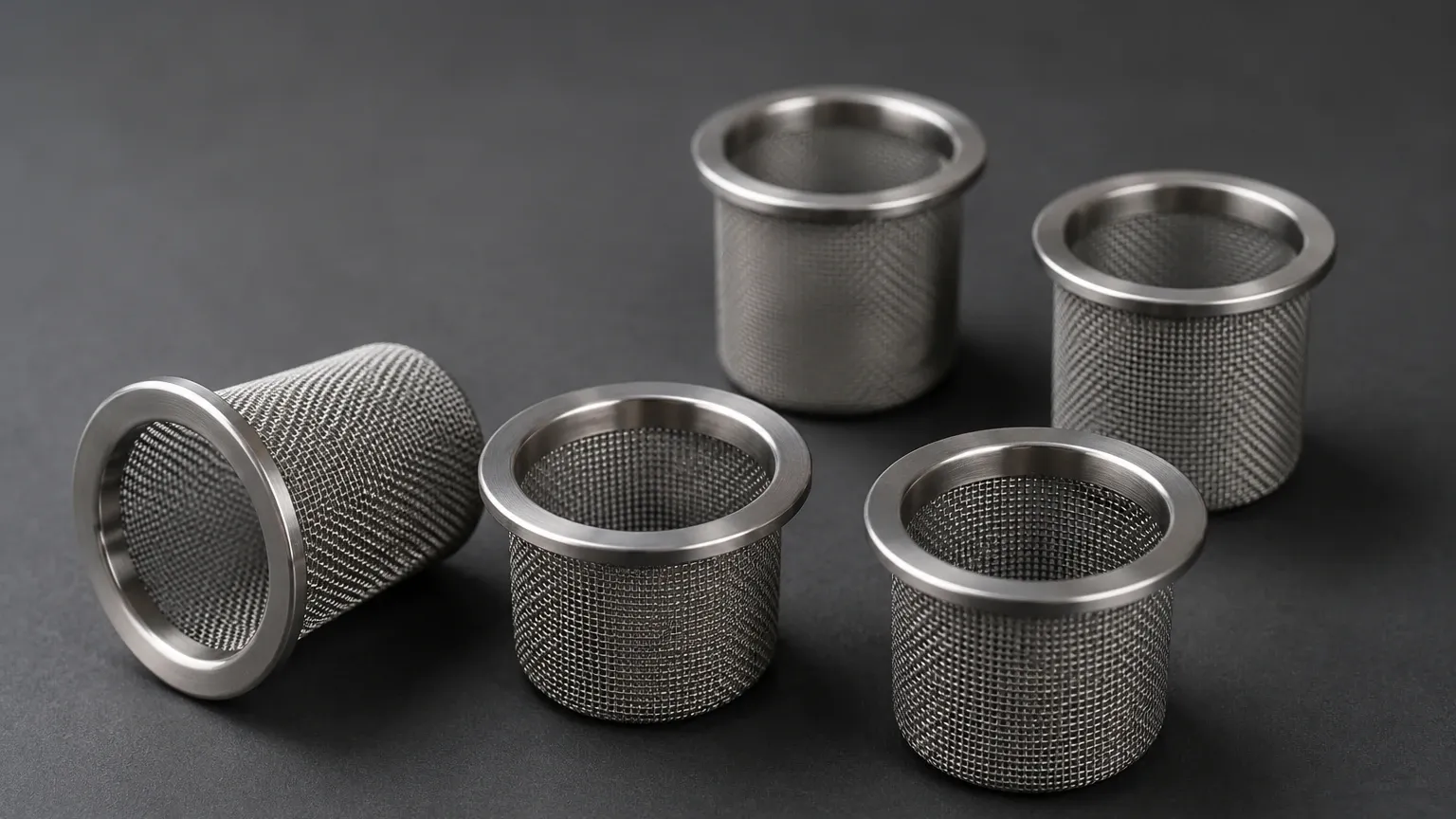
Application-Specific Configurations
A strainer 40mm is utilized across diverse industries, each with unique engineering constraints:
Chemical and Petrochemical
In these sectors, the focus is on corrosion resistance and pressure containment. Strainers are often required to meet ASME or PED pressure vessel codes. The 40mm size is frequently used in sampling lines or secondary chemical feed systems.
Food and Beverage
Hygienic design is paramount here. A strainer 40mm used in food processing must feature polished internal surfaces (often Ra < 0.8 µm) to prevent bacterial growth. Tri-clamp connections are the standard, allowing for rapid disassembly and cleaning (COP – Cleaning Out of Place).
Hydraulic and Lube Oil Systems
Protecting sensitive hydraulic valves requires precise filtration. In these systems, the strainer 40mm often acts as a "suction strainer" or a "return line strainer." The ability to handle high-viscosity oils without collapsing the internal basket is a key design requirement.
Maintenance and Total Cost of Ownership (TCO)
Purchasing a strainer 40mm involves more than the initial capital expenditure. The Total Cost of Ownership includes maintenance labor, replacement parts, and the cost of system downtime.
Ease of Access
For systems where flow cannot be interrupted, a duplex strainer (two 40mm housings connected by a changeover valve) is recommended. This allows one basket to be cleaned while the other remains in service. For simpler systems, a Y-strainer or a Simplex basket strainer with a quick-release cover can significantly reduce the time required for routine maintenance.
Monitoring Performance
Installing differential pressure gauges across the 40mm strainer is a best practice. By monitoring the pressure drop, maintenance teams can move from a schedule-based cleaning routine to a condition-based one, cleaning the basket only when it reaches a predetermined saturation point. This extends the life of the Strainers & Baskets and prevents unnecessary wear on seals.
Engineering Checklist for Purchasing a Strainer 40mm
Before finalizing a purchase or requesting a custom design from a manufacturer like Kaifil, engineers should confirm the following parameters:
* Fluid Properties: What is the chemical composition, viscosity, and temperature range?
* Flow Rate: What are the minimum, normal, and maximum flow rates expected in the 40mm line?
* Maximum Allowable Pressure Drop: What is the limit for the system when the strainer is clean and when it is 50% clogged?
* Filtration Target: What is the specific particle size (in microns or mesh) that must be removed?
* Housing Material: Is SS304 sufficient, or is SS316/316L required for corrosion resistance?
* Connection Type: Does the unit need to match existing flanged, threaded, or welded piping?
* Regulatory Compliance: Are there specific industry standards (FDA, 3A, ASME) that must be met?
Customization and OEM Solutions
Standard off-the-shelf strainers may not always meet the specific geometric or performance requirements of a complex industrial skid. Kaifil specializes in the customization of filtration components, allowing for the design of bespoke 40mm strainer housings and internal elements.
Whether the application requires a non-standard height to fit into a tight envelope, a specific reinforced basket design for high-pressure surges, or a unique mesh combination for multi-stage filtration, custom manufacturing ensures that the filtration solution is optimized for the specific application rather than being a compromise.
By focusing on precision engineering and high-quality stainless steel fabrication, manufacturers can provide 40mm filtration solutions that offer the reliability required for modern industrial processes. Selecting the right Strainers & Baskets is an investment in the protection of the entire fluid system, reducing long-term repair costs and ensuring consistent product quality.
