


Strainer 40 Mesh
In industrial fluid handling, the efficiency of a system often depends on the precision of its primary filtration components. A strainer 40 mesh is a common yet critical specification utilized across various sectors to protect sensitive downstream equipment from particulate contamination. Understanding the technical nuances of this specific mesh size, its structural integration into industrial systems, and the engineering variables that dictate its performance is essential for technical professionals and procurement teams.
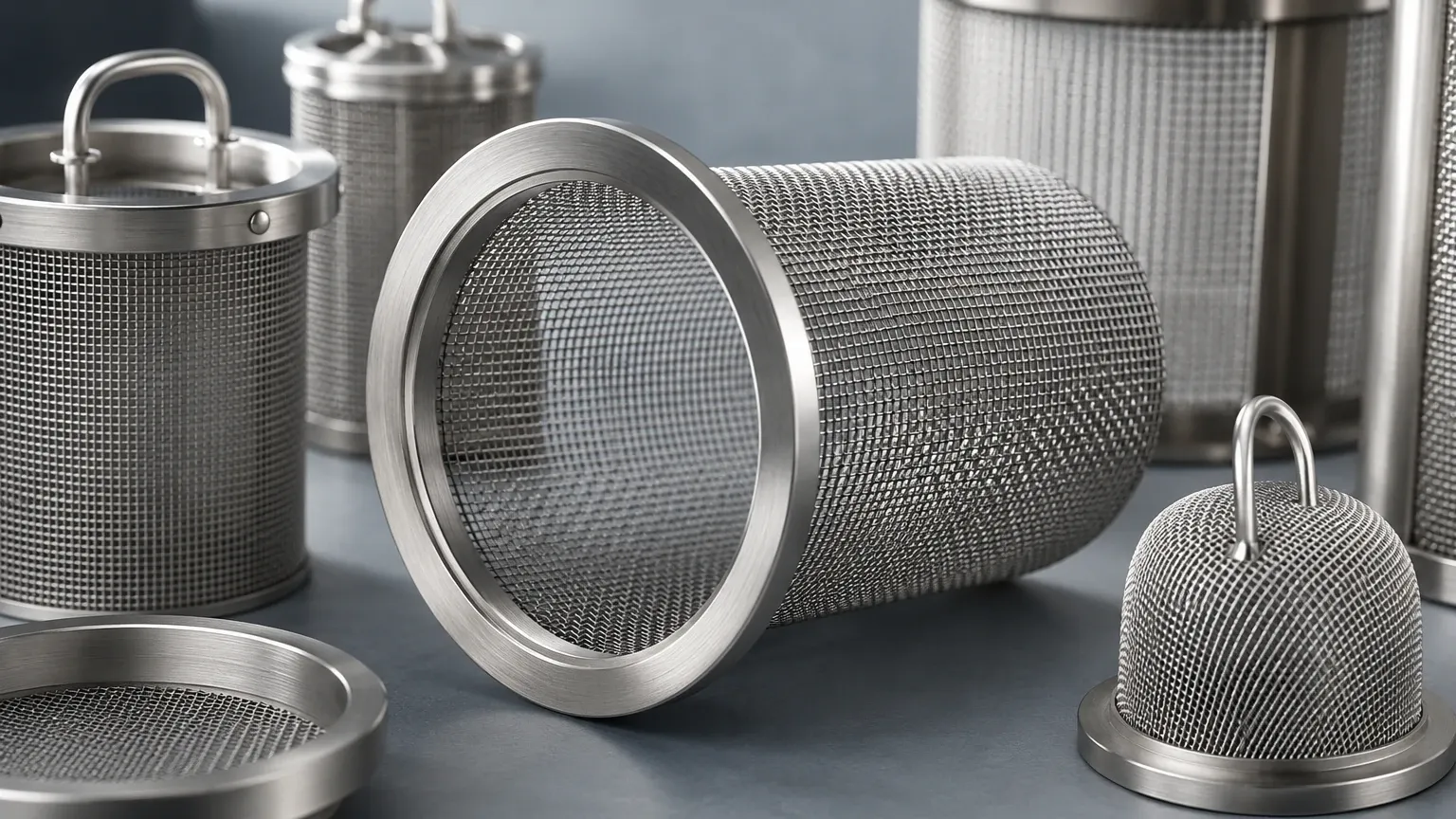
As a specialized manufacturer of stainless steel filtration solutions, Kaifil produces high-performance Strainers & Baskets designed to meet the rigorous demands of chemical processing, water treatment, and food production. This guide examines the technical characteristics and application considerations for 40 mesh strainers.
Understanding the Technical Specifications of 40 Mesh Strainers
The term "40 mesh" refers to the number of openings per linear inch of the wire cloth. In a standard strainer 40 mesh configuration, there are 40 wires and 40 openings in every inch of the material. However, the mesh count alone does not fully define the filtration capability; the wire diameter is equally critical.
Opening Size and Micron Rating
For a standard industrial 40 mesh screen, the opening size is typically approximately 0.0150 inches or 381 to 425 microns, depending on the wire gauge used. If a heavier wire is used for increased structural durability, the opening size (aperture) decreases, while a finer wire increases the open area but reduces the mechanical strength of the mesh.
Open Area Ratio (OAR)
The open area ratio is the percentage of the total screen area that is available for fluid flow. For a typical 40 mesh stainless steel screen with a wire diameter of 0.010 inches, the open area is approximately 36%. Engineers must calculate the total surface area of the strainer basket to ensure that the cumulative open area is significantly larger than the cross-sectional area of the inlet pipe—often a ratio of 6:1 or higher—to minimize initial pressure drop.
Structural Configurations: Strainers & Baskets in Industrial Systems
A strainer 40 mesh is rarely used as a standalone piece of fabric. In industrial environments, it is integrated into robust housings designed to withstand high pressures and flow velocities. The choice of housing and basket design depends on the installation geometry and the required maintenance frequency.
Y-Strainers
Y-strainers are typically used in pressurized lines, either liquid or gas, where the amount of material to be removed is relatively small. They are compact and can be installed horizontally or vertically. A 40 mesh screen in a Y-strainer is frequently used for steam or gas applications where fine particulate protection is required for valves or regulators.
Simplex and Duplex Basket Strainers
Basket strainers are designed for systems where a higher volume of debris is expected. The "basket" design allows for a much larger surface area than a Y-strainer, leading to longer service intervals.
* Simplex Strainers: Used in batch processes where the system can be shut down briefly to clean the basket.
* Duplex Strainers: Consist of two separate strainer chambers connected by a diverting valve. This allows one side to be cleaned while the other remains in operation, ensuring continuous flow in critical applications like lubrication systems or cooling water loops.
Material Selection and Corrosion Resistance
For industrial filtration, the material of construction for the strainer 40 mesh is as important as the mesh size. Stainless steel is the industry standard due to its mechanical strength and resistance to various chemical environments.
Grade 304 Stainless Steel
304 stainless steel is the most common material for 40 mesh strainers. It provides excellent strength and good corrosion resistance for most water, food, and general industrial applications. It is cost-effective for environments where high concentrations of chlorides or extreme acids are not present.
Grade 316/316L Stainless Steel
In chemical processing, marine environments, or pharmaceutical applications, 316L stainless steel is preferred. The addition of molybdenum enhances resistance to pitting and crevice corrosion, particularly in chloride-rich environments. For high-purity applications, 316L’s low carbon content minimizes carbide precipitation during welding, ensuring the structural integrity of the basket seams.
Specialty Alloys
In extreme cases involving highly corrosive acids or high temperatures, materials such as Monel, Hastelloy, or Duplex stainless steel may be specified. These materials ensure that the 40 mesh screen does not suffer from premature failure due to chemical erosion or thermal degradation.
Engineering Considerations: Pressure Drop and Flow Rates
One of the most critical factors in selecting a strainer 40 mesh is the impact on system hydraulics. Every filter media introduces a restriction to flow, resulting in a pressure drop (Delta P).
Clean Pressure Drop
The clean pressure drop is the resistance offered by the strainer when it is first installed or immediately after cleaning. This is influenced by fluid viscosity, specific gravity, flow velocity, and the open area of the 40 mesh screen. High-viscosity fluids, such as heavy oils, will experience a much higher pressure drop through a 40 mesh screen than water at the same flow rate.
Dirty Pressure Drop and Clogging
As the strainer captures debris, the available open area decreases, and the pressure drop increases. Engineers must specify a "terminal pressure drop"—the point at which the strainer must be cleaned or replaced to prevent system damage or pump cavitation. For many industrial systems, a differential pressure gauge is installed across the strainer to monitor this in real-time.
Structural Support
Because wire mesh is relatively flexible, a 40 mesh screen in a large basket often requires a perforated metal backup or a heavy-duty internal frame. This support prevents the mesh from collapsing or "ballooning" under the force of high-pressure differentials, particularly during surge events or when the strainer is heavily loaded with contaminants.
Applications for 40 Mesh Filtration
The 40 mesh size (approx. 400 microns) sits at the transition point between coarse straining and fine filtration. It is versatile enough for a wide range of industrial roles.
1. Pump Protection: Installed on the suction side of pumps to prevent large particles, scale, or debris from damaging impellers or mechanical seals.
2. Nozzle Protection: In spray systems, a strainer 40 mesh is used to prevent the clogging of medium-sized nozzles in cooling towers or wash-down stations.
3. Heat Exchanger Shielding: Protecting plate or shell-and-tube heat exchangers from debris that could foul the small passages and reduce thermal efficiency.
4. Pre-filtration: Acting as a primary stage before finer cartridge filters or membranes (such as Reverse Osmosis systems) to extend the life of the more expensive secondary filter elements.
5. Fuel and Oil Filtration: Used in the filtration of lubricating oils and diesel fuels to remove contaminants that could cause wear in engines or hydraulic components.
Maintenance, Cleaning, and Replacement Protocols
The longevity of a strainer 40 mesh depends heavily on proper maintenance. Unlike disposable filter cartridges, stainless steel mesh baskets are generally designed to be cleaned and reused.
Cleaning Procedures
Cleaning typically involves removing the basket and using a soft brush or high-pressure water/air from the outside in (backwashing). It is vital to avoid using hard metal scrapers that could damage the wire weave or alter the aperture size of the 40 mesh. In the food and pharmaceutical industries, baskets may undergo Ultrasonic cleaning or CIP (Clean-In-Place) cycles to ensure complete sterilization.
Inspection for Wear
During maintenance, the mesh should be inspected for:
* Wire Breakage: Often caused by fatigue from flow-induced vibration.
* Blinding: Permanent clogging where particles become wedged in the mesh openings.
* Corrosion: Signs of pitting or thinning of the wires.
* Seal Integrity: Ensuring that the gaskets or O-rings at the top of the basket are intact to prevent "bypass," where fluid flows around the basket rather than through the 40 mesh.
Customization and OEM Considerations for Industrial Filtration
Standard off-the-shelf strainers may not always meet the specific requirements of complex industrial systems. Customization allows engineers to optimize the filtration process for specific flow conditions and space constraints.
Custom Basket Designs
Manufacturers can customize the height, diameter, and handle configuration of the basket. For instance, a slanted-bottom basket might be required for specific drainage needs, or a pleated 40 mesh design could be used to significantly increase the surface area within a standard housing, reducing the frequency of cleaning.
Multi-Layer Mesh Construction
In demanding applications, a "sintered" mesh approach may be used. This involves bonding the 40 mesh to other layers of coarser and finer mesh or perforated metal through a heat-and-pressure process. This creates a single, rigid filtration element that combines the precision of 40 mesh with the structural strength of heavy plate.
OEM Partnerships
For equipment manufacturers (OEMs) building skids or specialized machinery, partnering with a dedicated manufacturer like Kaifil ensures that the Strainers & Baskets are engineered to the exact tolerances required. This includes selecting the correct alloy, ensuring weld quality, and providing documentation for material traceability (MTRs), which is often mandatory in the chemical and pharmaceutical sectors.
Conclusion
The selection of a strainer 40 mesh is a balance between filtration efficiency, structural durability, and hydraulic performance. By understanding the relationship between mesh count, wire diameter, and open area, engineers can ensure that their systems are protected without incurring unnecessary energy costs from excessive pressure drops. Whether used in a simple Y-strainer for steam lines or a complex duplex basket system for chemical processing, the 40 mesh stainless steel strainer remains a fundamental component in modern industrial infrastructure.
