


Strainer 40
In industrial filtration, the term "strainer 40" typically refers to one of two critical engineering specifications: the mesh count of the filtration media or the schedule of the piping system into which the strainer is integrated. For engineers and procurement professionals, distinguishing between a 40-mesh lining and a Schedule 40 housing is essential for ensuring system compatibility, pressure integrity, and filtration efficiency.
As a specialized manufacturer of Strainers & Baskets, Kaifil provides precision-engineered components that bridge the gap between these specifications. This guide examines the technical nuances of 40-mesh filtration, the structural requirements of Schedule 40 systems, and the engineering considerations necessary for selecting the appropriate filtration solution for demanding industrial environments.
Technical Specifications of 40-Mesh Media
When "strainer 40" refers to the mesh size, it indicates that there are 40 openings per linear inch of the wire cloth. This is a common specification for medium-coarse filtration, often used as a primary stage to protect pumps, valves, and downstream instrumentation from particulate damage.
Aperture and Particle Retention
The aperture size of a standard 40-mesh stainless steel screen is approximately 0.0165 inches, which translates to 425 microns (μm). This means the strainer will effectively retain any solid particles larger than 425 microns. For perspective, this is roughly the size of fine sand or coarse salt.
In industrial applications, selecting a 40-mesh strainer requires an understanding of the relationship between the wire diameter and the open area. A typical 40-mesh screen utilizes a wire diameter of approximately 0.010 inches (0.25 mm). This configuration results in an open area percentage of roughly 36% to 40%. Engineers must balance the need for a high open area (to minimize pressure drop) with the requirement for structural rigidity, especially in high-viscosity or high-velocity flow conditions.
Material Composition
For 40-mesh strainers, material selection is dictated by the chemical compatibility of the fluid and the operating temperature. Stainless steel is the industry standard due to its durability and corrosion resistance:
* Grade 304 Stainless Steel: Suitable for general industrial use, water treatment, and mildly corrosive environments.
* Grade 316/316L Stainless Steel: Preferred for chemical processing, marine applications, and food and beverage production where resistance to chlorides and organic acids is required.
* Specialty Alloys: In highly aggressive environments, such as those involving high concentrations of sulfuric acid or high-temperature steam, alloys like Monel or Hastelloy may be utilized for the 40-mesh lining.
Integration with Schedule 40 Piping Systems
In many procurement contexts, "strainer 40" refers to the pipe schedule of the strainer housing. Schedule 40 is the most common wall thickness for industrial piping. A strainer designed for a Schedule 40 system must match the internal diameter (ID) and pressure ratings of the surrounding infrastructure to prevent flow turbulence and mechanical failure.
Pressure Ratings and Wall Thickness
Strainer housings designed for Schedule 40 systems are engineered to withstand specific internal pressures. For example, a 2-inch Schedule 40 carbon steel pipe has a wall thickness of 0.154 inches and a nominal internal diameter of 2.067 inches. The strainer housing must maintain at least this wall thickness to ensure the safety factor of the entire pipeline is not compromised.
Engineers must verify that the strainer’s flange or NPT (National Pipe Thread) connections are rated for the system’s maximum allowable working pressure (MAWP). While Schedule 40 defines the dimensions, the material (e.g., Cast Iron, Ductile Iron, or Stainless Steel) determines the actual pressure-temperature rating according to ASME B16.5 or B16.34 standards.
Flow Dynamics in Schedule 40 Strainers
The transition from a Schedule 40 pipe into a strainer body often involves an expansion in volume to accommodate the filter basket. This expansion reduces the fluid velocity, allowing particles to settle into the basket. If the strainer body is not properly sized for the Schedule 40 flow rate, it can lead to excessive turbulence, which may cause "bypass"—where particles are forced through the mesh—or accelerated erosion of the housing walls.
Key Engineering Considerations for Selection
Selecting the right Strainers & Baskets involves more than just matching a mesh size or pipe schedule. Engineers must evaluate the total cost of ownership and the operational impact of the filtration unit.
1. Pressure Drop ($ΔP$)
Every strainer introduces a restriction to the flow. The initial pressure drop (clean $ΔP$) for a 40-mesh strainer depends on the fluid's viscosity, density, and flow velocity. As the basket collects debris, the $ΔP$ increases. It is standard engineering practice to design a system where the clean pressure drop does not exceed 2 PSI (0.14 bar). If the calculated $ΔP$ is too high, a larger strainer body or a pleated mesh design may be required to increase the effective filtration area.
2. Dirt Holding Capacity
A flat 40-mesh screen has a limited surface area. In systems with high particulate loading, the strainer will clog rapidly, requiring frequent maintenance. To extend the service cycle, engineers often specify "high-capacity" baskets. These may include pleated designs or multi-layered mesh configurations where a coarse outer layer provides structural support for the 40-mesh inner layer. This increases the total surface area and allows for more significant debris accumulation before reaching the terminal pressure drop.
3. Viscosity Effects
The performance of a 40-mesh strainer changes significantly with fluid viscosity. In hydraulic oil or heavy fuel oil applications, the resistance through the 425-micron openings is much higher than in water applications. For high-viscosity fluids, the flow rate must be derated, or the strainer size must be increased to prevent cavitation in pumps located downstream of the strainer.
Common Risks and Mitigation in Strainer 40 Applications
Failure to properly specify a strainer can lead to catastrophic equipment failure or costly downtime. Below are common risks associated with 40-mesh and Schedule 40 specifications:
* Mesh Collapse: If the differential pressure across a 40-mesh screen exceeds the structural limit of the wire, the mesh can tear or collapse. This allows all accumulated debris to bypass the filter and enter sensitive equipment. Mitigation involves using a perforated metal backup basket to support the fine mesh.
* Galvanic Corrosion: In systems where a stainless steel 40-mesh basket is placed in a carbon steel Schedule 40 housing, galvanic corrosion can occur if the fluid is conductive (e.g., seawater). Engineers should ensure proper insulation or use compatible materials for both the housing and the internal components.
* Seal Failure: The gasket or O-ring that seals the strainer cover is a frequent point of failure. For 40-mesh applications involving chemicals or high temperatures, standard Buna-N seals may be insufficient. PTFE or Viton seals should be specified based on the fluid's chemical profile.
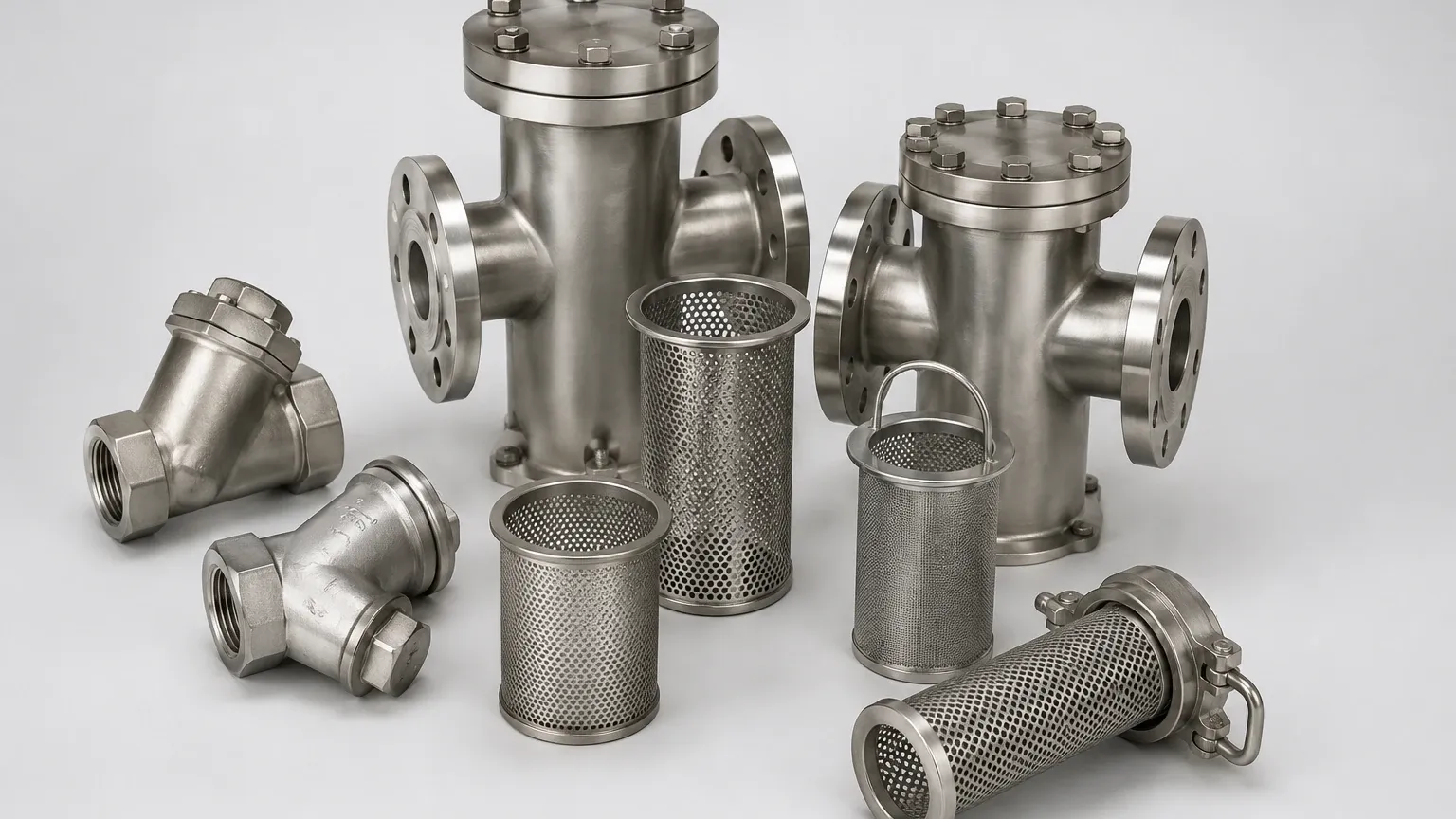
Customization and OEM Solutions
Off-the-shelf strainers often fail to meet the specific spatial or performance requirements of complex industrial skids. Kaifil specializes in the custom design and manufacture of Strainers & Baskets tailored to unique operational parameters.
Custom Mesh Configurations
While standard 40-mesh is effective for many applications, some processes require a "reverse plain dutch weave" or "twilled weave" to provide higher mechanical strength while maintaining the 425-micron rating. Kaifil can engineer these specific weave patterns into custom basket shapes to optimize flow and durability.
Housing Modifications
For Schedule 40 piping systems with restricted footprints, custom-angled Y-strainers or compact T-strainers can be manufactured. These units maintain the pressure integrity of Schedule 40 standards while fitting into tight configurations that standard commercial units cannot accommodate.
Maintenance and Operational Best Practices
To ensure the longevity of a strainer 40 installation, a rigorous maintenance schedule is required.
Monitoring Differential Pressure
The most effective way to manage a strainer is through the installation of differential pressure gauges. By monitoring the pressure upstream and downstream of the 40-mesh basket, operators can determine the exact moment cleaning is required. Waiting for a visible drop in system flow often means the strainer has already reached a critical state, risking mesh damage.
Cleaning Procedures
Stainless steel 40-mesh baskets are generally reusable. Cleaning should be performed using soft brushes or ultrasonic baths to avoid deforming the wire openings. High-pressure water jets should be used with caution, as they can displace the wires in a 40-mesh screen, altering the filtration accuracy from 425 microns to a much larger, inconsistent value.
Spare Parts Management
For critical processes, maintaining a "duplex" strainer system—where one basket can be cleaned while the other remains in operation—is ideal. If a simplex system is used, a spare 40-mesh basket should always be kept on-site. This minimizes downtime during cleaning cycles and provides an immediate solution if a basket is damaged during service.
Conclusion: Confirming Specifications Before Purchase
Before finalizing a purchase order for a "strainer 40," technical teams should confirm the following data points with their manufacturer:
1. Is "40" the mesh count or the pipe schedule? Ensure the vendor understands if you need a 425-micron filtration level or a housing compatible with Schedule 40 wall thickness.
2. What is the required flow rate and maximum allowable pressure drop? This determines the size of the strainer body and the necessary filtration surface area.
3. What are the fluid properties? Temperature, viscosity, and chemical composition will dictate whether 304, 316, or a specialty alloy is required for the mesh and housing.
4. Are there specific certification requirements? For pharmaceutical or food applications, the 40-mesh strainer may need to comply with FDA or 3A standards.
By addressing these technical variables, engineers can ensure that their Strainers & Baskets provide reliable, long-term protection for their industrial processes. Kaifil’s engineering team is available to assist in calculating flow dynamics and selecting the optimal mesh configurations for any industrial application, ensuring that your filtration system performs to its exact design specifications.
