


Strainer 4 Prong
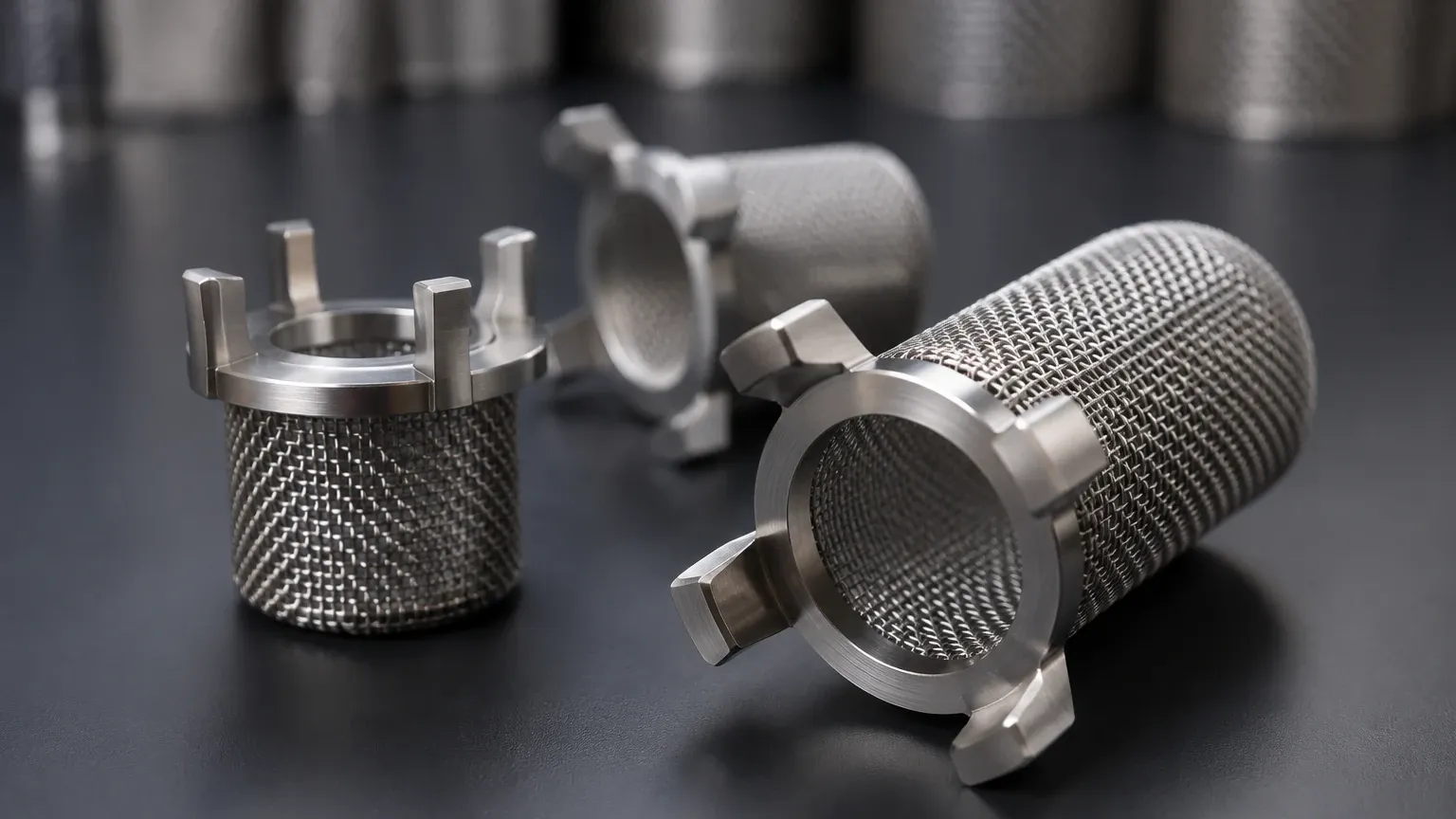
In the landscape of industrial filtration, the mechanical design of support structures is as critical as the filtration media itself. While the term "strainer 4 prong" is frequently associated with smaller-scale culinary or laboratory tools, its engineering principles—centered on stability, tension, and alignment—are deeply relevant to large-scale industrial Strainers & Baskets. For engineers and procurement specialists, understanding how these multi-point contact systems enhance the durability and efficiency of stainless steel filtration components is essential for optimizing process uptime.
Industrial strainers are designed to remove unwanted solids from liquid or gas streams, protecting downstream equipment such as pumps, valves, and heat exchangers. A "4 prong" configuration, whether applied to a basket handle, a centering spider, or a support base, provides a symmetrical distribution of force that is superior to two- or three-point designs in high-pressure or high-viscosity applications.
The Mechanical Role of 4-Prong Support Structures
In industrial basket strainers, the "prong" refers to the structural extensions used to secure the filter element within the housing. A 4-prong design offers several mechanical advantages that are critical for maintaining the integrity of the filtration system.
Stability and Centering
One of the primary challenges in high-flow filtration is "basket float" or lateral shifting. When fluid enters a strainer housing at high velocity, it exerts significant hydrodynamic force on the basket. A strainer 4 prong alignment system ensures that the basket remains perfectly centered. This prevents bypass—where unfiltered fluid escapes around the edges of the basket—and ensures that the seal remains intact under varying pressure conditions.
Torque and Load Distribution
For larger Strainers & Baskets, manual removal for cleaning can be physically demanding. A 4-prong handle design allows for a more ergonomic grip and better distribution of torque when breaking a seal that may have become stuck due to debris or thermal expansion. From an engineering perspective, four points of contact reduce the localized stress on the basket rim, preventing deformation of the stainless steel frame over repeated maintenance cycles.
Vibration Dampening
In hydraulic and high-speed pumping applications, mechanical vibration can lead to metal fatigue in wire mesh filters. A 4-prong support base (often called a spider) acts as a stabilizer at the bottom of the strainer housing. By providing four equidistant points of contact against the housing floor, it minimizes harmonic resonance and mechanical wear, significantly extending the service life of the filter cartridge.
Material Engineering for Industrial Strainers
The effectiveness of a strainer 4 prong component is heavily dependent on the materials used in its construction. At Kaifil, we prioritize high-grade alloys to ensure that these structural elements can withstand the rigors of chemical processing and water treatment.
Stainless Steel 304 and 316L
Stainless steel is the industry standard for industrial filtration due to its excellent strength-to-weight ratio and corrosion resistance.
* SS304: Suitable for general industrial use, food and beverage applications, and standard water treatment where moderate corrosion resistance is required.
* SS316L: The preferred choice for pharmaceutical and chemical processing. The addition of molybdenum and a lower carbon content provides superior resistance to pitting and crevice corrosion, especially in chloride-rich environments.
Surface Finishes and Sanitary Standards
In the food and pharmaceutical sectors, the "4 prong" geometry must be designed to avoid "dead zones" where bacteria can proliferate. Kaifil utilizes advanced manufacturing techniques, such as electropolishing and precision TIG welding, to ensure that all joints are smooth and crevice-free. This ensures that the Strainers & Baskets meet stringent sanitary requirements and are easy to clean via CIP (Clean-In-Place) systems.
Optimizing Flow Dynamics and Pressure Drop
Every structural element added to a strainer, including prongs and handles, introduces a potential obstruction to fluid flow. When selecting or designing a strainer 4 prong system, engineers must balance structural rigidity with the need for a low initial pressure drop ($\Delta P$).
Calculating Effective Open Area
The ratio of the total open area of the mesh to the cross-sectional area of the inlet pipe is a key performance indicator. A well-designed 4-prong basket support should be streamlined to minimize turbulence. If the prongs are too bulky, they can create eddies that lead to localized erosion of the wire mesh. Kaifil’s engineering team focuses on optimizing the geometry of these supports to ensure that the effective open area remains at least 6 to 8 times the pipe area, providing ample capacity for debris loading before a cleaning cycle is required.
Managing Differential Pressure
As debris accumulates on the strainer 4 prong basket, the differential pressure increases. If the structural supports are inadequate, the basket may collapse or the mesh may burst. A 4-prong cross-brace at the bottom of the basket provides the necessary hoop strength to resist these forces. Engineers should specify the maximum allowable differential pressure (PSID) based on the specific gravity and viscosity of the process fluid to ensure the chosen strainer design is fit for purpose.
Customization of Strainers & Baskets for OEM Applications
Standard off-the-shelf filtration components often fail to meet the specific requirements of complex industrial systems. This is where custom manufacturing becomes vital. Kaifil specializes in developing tailored solutions that incorporate specific features like the strainer 4 prong configuration into existing or new process lines.
Tailored Micron Ratings
Depending on the application, a strainer may need to remove particles ranging from several millimeters down to 50 microns. The 4-prong support structure must be compatible with various media types, including:
* Single Layer Wire Mesh: For coarse filtration and high flow rates.
* Multi-Layer Sintered Mesh: For high-pressure applications requiring extreme mechanical strength.
* Perforated Metal: Used as a support cage for finer mesh liners.
Integration with Existing Equipment
For OEM clients, the ability to customize the dimensions and prong spacing of Strainers & Baskets is essential for seamless integration. Whether it is a specialized flange connection or a unique handle height to fit a specific housing lid, Kaifil provides the technical expertise to ensure that the custom component performs as intended within the larger hydraulic or chemical system.
Maintenance, Replacement Cycles, and Total Cost of Ownership
Investing in a high-quality strainer 4 prong system is a strategy to reduce the Total Cost of Ownership (TCO). While cheaper, less robust designs may have a lower initial purchase price, they often lead to higher costs in the form of frequent replacements, damaged downstream equipment, and unplanned downtime.
Inspection Protocols
Regular inspection of the pronged supports and the mesh interface is recommended. Engineers should look for:
1. Stress Cracks: Particularly near the weld points of the prongs.
2. Erosion Patterns: Indicating high-velocity turbulence or abrasive particles.
3. Deformation: Suggesting that the strainer has been subjected to pressures exceeding its design limit.
Determining Replacement Cycles
The replacement cycle for Strainers & Baskets depends on the corrosivity of the fluid and the frequency of cleaning. In non-corrosive environments with regular manual cleaning, a high-quality stainless steel basket can last for several years. However, in abrasive slurry applications, the lifespan may be significantly shorter. Utilizing a 4-prong design that allows for easy removal and thorough cleaning can extend this lifecycle by preventing the buildup of corrosive "cakes" in the corners of the basket.
Conclusion: Choosing the Right Industrial Strainer
Selecting the correct filtration component involves more than just picking a mesh size. The structural integrity provided by features like a strainer 4 prong support system ensures that the filter can withstand the operational stresses of industrial environments. By focusing on material quality, flow dynamics, and mechanical stability, engineers can ensure their systems remain protected and efficient.
Kaifil remains committed to providing high-performance, customized filtration solutions. From material selection and filtration accuracy to the engineering of complex support structures, our team works closely with global customers to deliver dependable components for the most demanding applications. When evaluating your next filtration project, consider the mechanical advantages of a robustly supported basket to ensure long-term reliability and performance.
For more information on our range of custom filtration components and to discuss your specific application requirements, Review product options and application support.
