


Engineering Guide to Steel Mesh Filter Cartridges: Performance, Selection, and Industrial Application
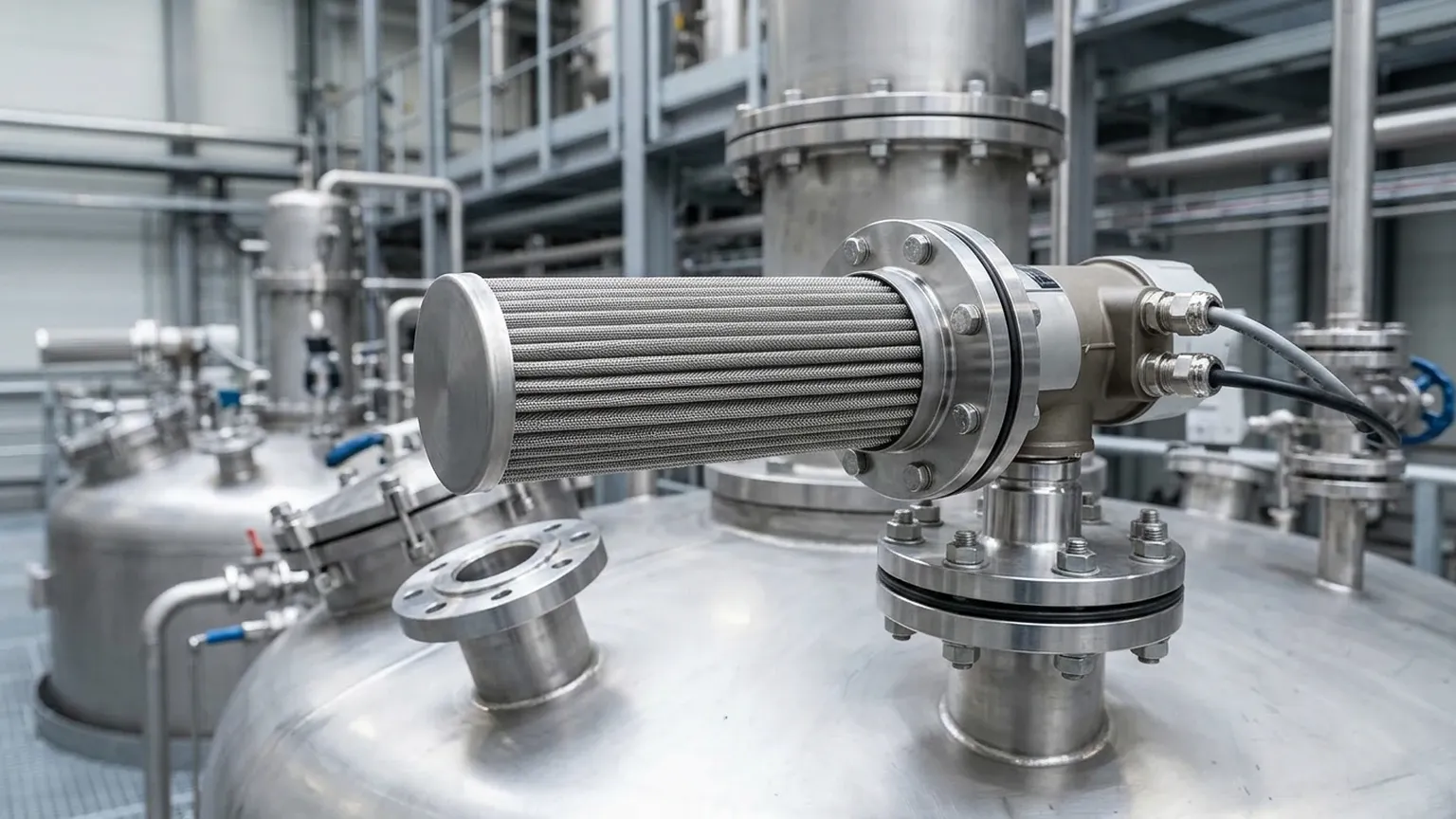
In industrial process engineering, the selection of filtration media is a critical decision that impacts system efficiency, product purity, and long-term operational costs. While polymer-based filters are common in light-duty applications, demanding environments—characterized by high temperatures, aggressive chemicals, or high mechanical stress—require the structural integrity of a steel mesh filter cartridge.
These components are engineered to provide precise particulate separation while maintaining structural stability under conditions that would cause synthetic media to bypass or fail. This guide examines the technical specifications, material considerations, and engineering variables associated with Wire Mesh Filter Cylinders & Tubes, providing a framework for technical professionals to optimize their filtration systems.
1. Fundamentals of Wire Mesh Filtration
The primary function of a steel mesh filter cartridge is surface filtration. Unlike depth filters, which trap particles within a thick matrix of fibers, wire mesh captures contaminants on a single, precisely defined plane. This mechanism allows for predictable performance and, more importantly, the ability to clean and reuse the media.
Weave Geometry and Micron Ratings
The performance of the filter is largely determined by the weave pattern of the stainless steel wire. For industrial applications, several standard weaves are utilized:
* Plain Weave: The simplest configuration where wires cross over and under each other. It provides high flow rates and low pressure drop but is limited in its ability to achieve very fine micron ratings while maintaining strength.
* Twill Weave: Each shute wire passes successively over two and under two warp wires. This allows for a heavier wire diameter for a given mesh count, increasing the mechanical strength of the cylinder.
* Dutch Weave (Plain and Twill): These weaves use a larger diameter for the warp wires and a smaller diameter for the shute wires. This creates a dense, triangular opening that offers superior strength and much finer filtration ratings (down to 5–10 microns) compared to standard weaves.
When selecting Wire Mesh Filter Cylinders & Tubes, engineers must balance the "absolute" micron rating—the size of the largest spherical particle that can pass through—with the required flow velocity.
2. Material Selection and Chemical Compatibility
The longevity of a steel mesh filter cartridge is directly tied to its metallurgical composition. Industrial environments often involve corrosive fluids or extreme thermal cycling, making material selection a primary engineering constraint.
Stainless Steel Grades
* Grade 304: The standard choice for general industrial use. It offers good corrosion resistance to most oxidizing acids and is cost-effective for water treatment or food-grade applications.
* Grade 316L: Containing molybdenum, 316L provides enhanced resistance to chlorides and pitting. The "L" denotes low carbon content, which is essential for components that require welding, as it prevents carbide precipitation that can lead to intergranular corrosion.
* Exotic Alloys: In highly specialized chemical processing, materials like 904L, Monel, or Inconel may be specified to handle high-concentration sulfuric acid or extreme high-temperature oxidation.
Thermal Stability
Unlike plastic or paper cartridges, stainless steel filters can operate at temperatures exceeding 500°C (depending on the alloy and seal material). This makes them indispensable for steam filtration, hot oil systems, and polymer melt applications.
3. Structural Design of Filter Cylinders and Tubes
A filter cartridge is more than just a mesh; it is a structural pressure vessel component. The design must account for the differential pressure ($ΔP$) that increases as the filter becomes loaded with contaminants.
Support Structures
Fine wire mesh lacks the inherent stiffness to withstand high-pressure differentials. Therefore, a high-quality steel mesh filter cartridge typically incorporates a multi-layer construction:
1. Filtration Layer: The primary mesh that determines the micron rating.
2. Support Layer: A coarser, heavier mesh or a perforated metal core that provides rigidity.
3. Protective Outer Guard: An optional perforated sleeve to protect the delicate filtration mesh during handling and installation.
Pleated vs. Cylindrical Designs
Engineers must choose between a simple cylindrical tube and a pleated design.
* Cylindrical Tubes: Easier to clean and ideal for high-viscosity fluids or applications with low solids loading.
* Pleated Cartridges: By folding the mesh, the surface area is significantly increased (often by 3 to 5 times). This results in lower face velocity, lower initial pressure drop, and a much higher dirt-holding capacity, extending the time between cleaning cycles.
4. Performance Metrics and Evaluation
When evaluating a steel mesh filter cartridge, purchasing teams and engineers should focus on four key performance indicators (KPIs):
Clean Pressure Drop (ΔP)
The resistance to flow when the filter is new. A high initial ΔP limits the available "headroom" for contaminant loading before the system reaches its terminal pressure drop and requires cleaning.
Dirt Holding Capacity (DHC)
The total mass of contaminants the filter can capture before reaching the maximum allowable differential pressure. For B2B buyers, a higher DHC translates directly to lower maintenance labor costs.
Mechanical Collapse Pressure
The maximum differential pressure the cartridge can withstand before structural failure occurs. In hydraulic systems, where pressure spikes are common, specifying a high collapse pressure is a safety requirement.
Bubble Point Testing
A non-destructive test used to verify the integrity of the filter and its micron rating. By immersing the cartridge in a liquid and measuring the pressure required to force air through the largest pore, manufacturers can ensure the product meets the specified filtration accuracy.
5. Maintenance: Cleaning and Reusability
One of the primary economic advantages of a steel mesh filter cartridge over disposable media is reusability. However, the effectiveness of the cleaning process determines the total cost of ownership.
Cleaning Methodologies
* Backwashing: Reversing the flow of the process fluid to dislodge particles from the surface. This is often automated in continuous process systems.
* Ultrasonic Cleaning: Using high-frequency sound waves in a detergent bath to create cavitation bubbles that strip contaminants from deep within the mesh weave. This is the most effective method for fine Dutch weaves.
* Chemical Cleaning: Using acids, alkalis, or solvents to dissolve specific types of fouling (e.g., calcium scale or organic polymers).
* Burn-off / Pyrolysis: Subjecting the filter to controlled high temperatures to carbonize organic contaminants, which are then removed via air blast or ultrasonics.
6. Integration and Sealing Configurations
To ensure that no fluid bypasses the filtration media, the interface between the cartridge and the housing must be perfectly sealed. Standard industrial configurations include:
* Double Open End (DOE): The cartridge is open at both ends and relies on flat gaskets and a tie-rod assembly for sealing.
* Code 7 (226 O-Rings): Features two 226 O-rings and a bayonet locking tab. This is a high-security seal used in the pharmaceutical and food industries to prevent bypass under high pressure.
* Threaded Connections: NPT or BSP threaded end caps are used when the filter must be hard-mounted into a manifold or vessel, providing a robust mechanical connection.
7. Procurement Checklist for Industrial Buyers
When sourcing Wire Mesh Filter Cylinders & Tubes, providing the manufacturer with comprehensive data ensures the delivered product will perform as expected. Buyers should confirm the following parameters:
1. Fluid Characteristics: Viscosity, density, and chemical composition.
2. Operating Conditions: Normal and maximum operating temperature and pressure.
3. Contaminant Profile: Particle size distribution, concentration (ppm), and the nature of the solids (deformable vs. hard).
4. Flow Requirements: Minimum, normal, and peak flow rates.
5. Target Micron Rating: Specify whether the requirement is "nominal" (approximate) or "absolute" (guaranteed).
6. Dimensional Constraints: Overall length, outer diameter (OD), and inner diameter (ID).
Conclusion
The steel mesh filter cartridge is a versatile and durable solution for complex industrial filtration challenges. By understanding the nuances of weave patterns, material grades, and structural reinforcement, engineers can specify components that not only protect downstream equipment but also improve process consistency.
As a specialized manufacturer, Kaifil provides customized filtration solutions that address these technical requirements. Whether the application involves high-pressure hydraulics, corrosive chemical processing, or stringent food safety standards, the correct application of Wire Mesh Filter Cylinders & Tubes ensures a reliable, cleanable, and cost-effective filtration lifecycle. For technical teams, moving beyond generic specifications to a detailed understanding of metal mesh engineering is the key to optimizing system performance and reducing the total cost of filtration operations.
