


Industrial Maintenance Guide: How to Clean Mesh Filter Cylinders and Tubes
In industrial filtration, the longevity and efficiency of a system are directly tied to the maintenance of its core components. Wire Mesh Filter Cylinders & Tubes serve as the primary barrier against contaminants in applications ranging from hydraulic systems and chemical processing to food and beverage production. Unlike disposable synthetic filters, stainless steel wire mesh is designed for durability and reusability. However, the effectiveness of these components depends on a rigorous understanding of how to clean mesh filter elements without compromising their structural integrity or filtration accuracy.
This guide provides an engineering-perspective on the methods, technical considerations, and best practices for cleaning industrial wire mesh filters, ensuring that plant operators and maintenance teams can maximize the return on investment for their filtration hardware.
Understanding the Mechanics of Mesh Contamination
Before addressing the cleaning process, it is essential to understand how contaminants interact with the wire mesh. Wire mesh filters typically operate on the principle of surface filtration. Particles larger than the pore size are trapped on the upstream side of the mesh. Over time, these particles form a "filter cake," which can actually improve filtration efficiency but simultaneously increases the differential pressure (ΔP) across the element.
Contamination generally falls into three categories:
1. Particulate Loading: Solid debris trapped on the surface or within the wire intersections.
2. Adsorption and Scaling: Chemical precipitates or organic films that bond to the stainless steel wires.
3. Pore Blinding: Small particles that become wedged within the mesh openings, which are the most difficult to remove through standard rinsing.
Identifying the nature of the contaminant is the first step in determining the appropriate cleaning protocol. For example, a filter used in a hydraulic oil circuit will require different cleaning agents than one used in a high-temperature polymer melt application.
How to Clean Mesh Filter: Primary Industrial Methods
There is no universal solution for cleaning industrial filters; the method must be matched to the mesh type (plain weave, twilled, or dutch weave) and the type of contaminant.
1. Ultrasonic Cleaning
Ultrasonic cleaning is widely regarded as the most effective method for precision wire mesh filters, especially those with fine micron ratings. This process uses high-frequency sound waves to create cavitation bubbles in a cleaning solvent. When these bubbles collapse near the surface of the mesh, they release significant energy that dislodges particles from the deepest interstitial spaces of the weave.
* Best for: Fine mesh, pleated elements, and complex geometries where mechanical scrubbing is impossible.
* Engineering Note: Ensure the ultrasonic frequency is calibrated to the mesh thickness to avoid fatigue cracking in very fine wires.
2. Backwashing and Backflushing
Backwashing involves reversing the flow of a clean fluid (liquid or gas) through the filter element from the downstream side to the upstream side. This force lifts the accumulated filter cake and flushes out trapped particles.
* Best for: Coarse to medium mesh cylinders used in continuous flow systems.
* Engineering Note: The backwash pressure must be sufficient to overcome the particle adhesion but must not exceed the collapse pressure rating of the filter tube.
3. Chemical Cleaning and Solvent Soaking
For contaminants like resins, oils, or mineral scales, chemical intervention is often necessary. The filter is submerged in a bath of specialized solvents, caustic solutions, or mild acids that dissolve or weaken the bond between the contaminant and the stainless steel.
* Best for: Organic build-up, calcification, and greases.
* Engineering Note: Material compatibility is critical. While 316L stainless steel offers high resistance, certain concentrated acids can strip the chromium oxide passive layer, leading to corrosion. Always follow chemical cleaning with a passivation treatment if necessary.
4. Thermal Cleaning (Burn-off)
In industries like plastic extrusion or polymer processing, filters may become clogged with hardened materials that cannot be dissolved. Thermal cleaning involves heating the filter in a controlled vacuum oven or fluidized bed to carbonize or vaporize the organic material.
* Best for: Polymers, resins, and heavy hydrocarbons.
* Engineering Note: Temperature control is vital. Exceeding the annealing temperature of the stainless steel can soften the wire, leading to mesh migration or structural failure under pressure.
Engineering Considerations for Maintenance
When developing a maintenance SOP for Wire Mesh Filter Cylinders & Tubes, several technical factors must be evaluated to prevent damage during the cleaning cycle.
Differential Pressure Monitoring
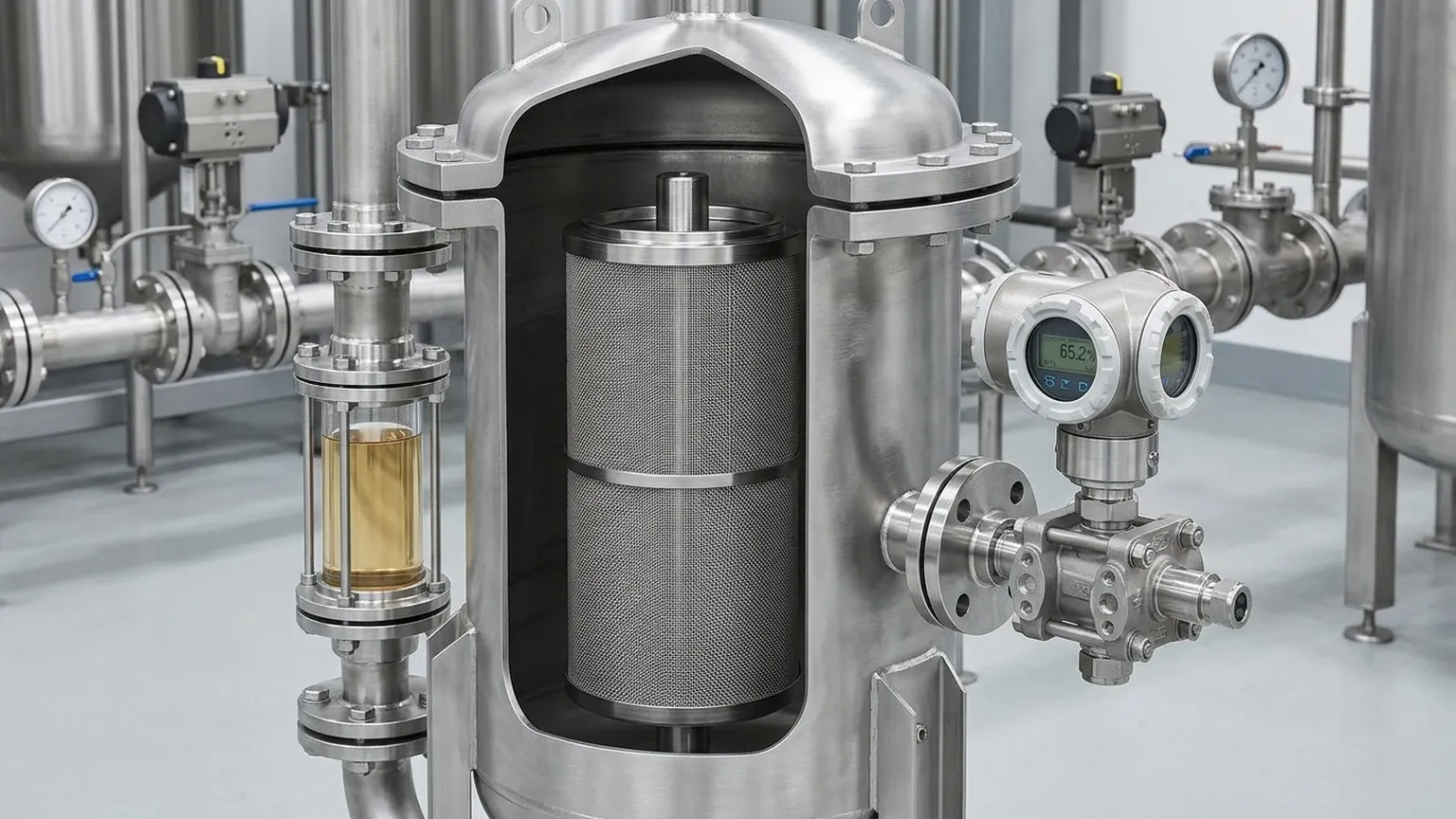
The most reliable indicator of when to clean a filter is the differential pressure. A clean filter has a baseline ΔP. As it loads, the pressure drop increases. Engineers typically set a "terminal ΔP"—a threshold where the filter must be cleaned to prevent bypass, element collapse, or reduced system flow. Cleaning a filter too early leads to unnecessary downtime; cleaning it too late can cause permanent deformation of the mesh.
Mesh Integrity and Deformation
Mechanical cleaning, such as using stiff brushes or high-pressure water jets, should be approached with caution. High-pressure localized spray can displace the wires in a precision weave, changing the micron rating of the filter. For pleated filter tubes, mechanical scrubbing can damage the pleat tips, which are the most vulnerable points of the structure.
Drying and Reinstallation
After liquid cleaning, filters must be thoroughly dried to prevent flash rusting (if carbon steel contaminants were present) or microbial growth (in food-grade applications). Compressed air used for drying must be filtered and oil-free to avoid re-contaminating the mesh.
When to Replace vs. When to Clean
While stainless steel filters are durable, they do not last indefinitely. A critical part of knowing how to clean mesh filter elements is recognizing when they have reached the end of their service life. International buyers and maintenance managers should look for the following signs:
* Permanent Pressure Drop: If the baseline ΔP remains high even after a thorough cleaning, the mesh is likely "blinded" by sub-micron particles that cannot be removed.
* Structural Fatigue: Inspect for broken wires, thinning of the mesh, or separation of the mesh from the end caps or support cores.
* Corrosion Pitting: Small pits in the metal indicate chemical attack, which compromises both the filtration accuracy and the structural safety of the vessel.
Customization for Enhanced Cleanability
At the design phase, engineers can specify features that make cleaning more efficient. For instance, choosing a Dutch weave mesh provides a smoother surface that sheds filter cakes more easily than a standard square weave. Additionally, the use of internal support cores in Wire Mesh Filter Cylinders & Tubes allows for higher backpressure during cleaning cycles without the risk of the tube collapsing.
Kaifil specializes in manufacturing customized filtration solutions that balance the need for high-precision filtration with the practicalities of industrial maintenance. By selecting the right alloy—typically 304 or 316L stainless steel—and the appropriate mesh structure, we help customers achieve a lower total cost of ownership through extended cleaning cycles and improved durability.
Conclusion: Best Practices for Purchasing and Maintenance
For international buyers and engineering teams, the decision to implement wire mesh filtration involves more than just selecting a micron rating. It requires a comprehensive plan for maintenance. When sourcing Wire Mesh Filter Cylinders & Tubes, confirm the following with your manufacturer:
1. Maximum Allowable Differential Pressure: To set accurate cleaning triggers.
2. Cleaning Method Compatibility: Ensure the filter can withstand ultrasonic or thermal cleaning if your process requires it.
3. Material Certifications: Verify that the stainless steel grade is appropriate for the cleaning chemicals you intend to use.
By following a structured approach to cleaning and monitoring, industrial facilities can maintain peak filtration performance, protect expensive downstream machinery, and significantly reduce the frequency of filter replacements. Proper cleaning is not just a maintenance task; it is a critical component of process optimization.
