


4 Basket Strainers
In industrial fluid handling, the protection of downstream equipment—such as pumps, valves, flow meters, and heat exchangers—is a critical engineering priority. Among the various mechanical separation tools available, 4 basket strainers (referring primarily to 4-inch pipe size units or multi-basket configurations) serve as a fundamental line of defense. These components are designed to remove large-scale particulate matter from liquid or gas streams, ensuring that solid contaminants do not cause mechanical failure, erosion, or process contamination.
Selecting the correct strainer requires a deep understanding of fluid dynamics, material compatibility, and the specific mechanical requirements of the application. For engineers and procurement teams, the decision-making process involves balancing initial capital expenditure with long-term operational efficiency and maintenance requirements.
Technical Overview of 4-Inch Basket Strainers
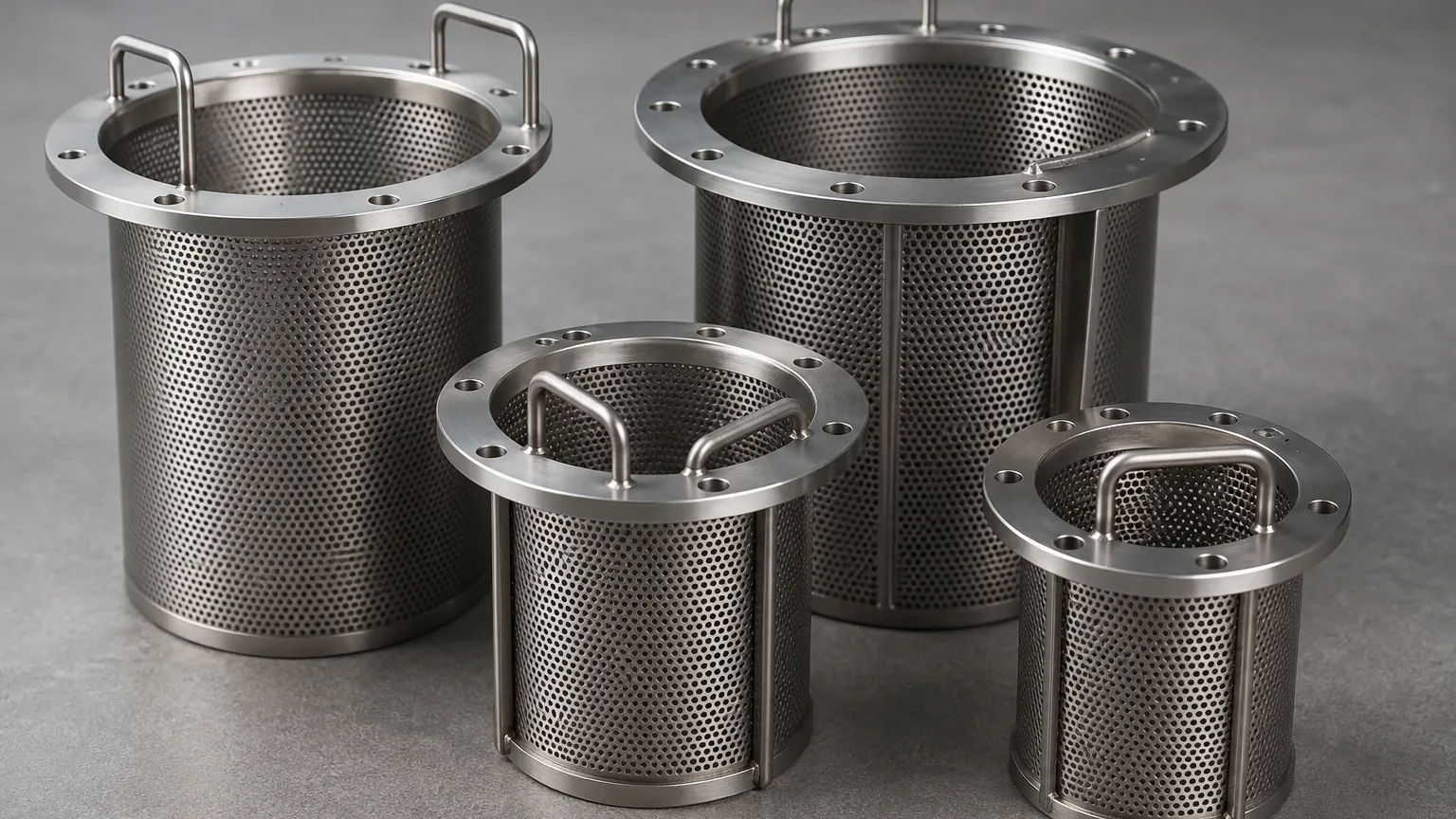
A 4-inch basket strainer is typically defined by its connection size, designed to integrate seamlessly into a 4-inch piping system. The "basket" refers to the internal element—a removable, perforated metal or wire mesh screen that captures debris. Unlike Y-strainers, which are often used for smaller pipe sizes or applications with lower debris loading, basket strainers offer a larger surface area and a greater holding capacity for solids.
In high-flow industrial environments, the 4-inch specification is a common standard. These units are frequently used in cooling water systems, chemical processing lines, and fuel oil handling. The design allows for a lower pressure drop across the strainer compared to smaller or more restrictive designs, which is essential for maintaining system efficiency and reducing the load on centrifugal pumps.
Multi-Basket Configurations
In some contexts, "4 basket strainers" may refer to a multi-basket housing containing four individual filter baskets. These units are utilized in high-volume applications where a single basket would either be too heavy for manual cleaning or would require frequent servicing due to high solids loading. By distributing the flow across four baskets, the total filtration surface area is significantly increased. This configuration extends the time between cleaning cycles and reduces the velocity of the fluid as it passes through the mesh, which can improve filtration efficiency and reduce the risk of particle bypass.
Engineering Considerations for Material Selection
The durability of a strainer is largely dictated by its material of construction. In industrial filtration, stainless steel is the preferred choice due to its mechanical strength and resistance to various forms of corrosion.
Stainless Steel 304 vs. 316
Most industrial Strainers & Baskets are manufactured from either Grade 304 or Grade 316 stainless steel.
* Grade 304: This is the standard industrial grade, providing excellent resistance to atmospheric corrosion and many organic and inorganic chemicals. It is suitable for most water treatment and general industrial applications.
* Grade 316: For environments involving chlorides (such as seawater or brine) or highly acidic chemical processes, Grade 316 is required. The addition of molybdenum enhances its pitting resistance, making it essential for pharmaceutical and chemical processing where hygiene and corrosion resistance are paramount.
Gasket and Seal Selection
While the housing and basket are the primary structural components, the seals ensure the integrity of the system. Depending on the fluid temperature and chemical composition, engineers must specify the correct elastomer. Common options include:
* Buna-N (Nitrile): General purpose, good for oils and water.
* EPDM: Excellent for steam and water, but poor resistance to petroleum-based fluids.
* Viton (FKM): High-temperature resistance and compatibility with a wide range of chemicals and fuels.
* PTFE: Near-universal chemical resistance, though with less elasticity than traditional elastomers.
Performance Metrics: Flow Rate and Pressure Drop
The most critical performance metric for a 4-inch basket strainer is the clean pressure drop (ΔP). Every component added to a piping system introduces resistance. If the pressure drop is too high, it can lead to cavitation in pumps or insufficient flow at the point of use.
The Importance of the Cv Value
The Flow Coefficient (Cv) represents the volume of water at 60°F that will flow through the strainer with a pressure drop of 1 psi. For a 4-inch strainer, the Cv value is influenced by the housing design and the open area ratio of the basket. A higher Cv indicates less resistance to flow. When selecting a strainer, engineers must calculate the expected pressure drop based on the fluid's viscosity and specific gravity, ensuring that even as the basket begins to fill with debris, the system remains within operational limits.
Open Area Ratio
The ratio of the open area of the basket to the internal cross-sectional area of the pipe is a key indicator of how long a strainer can operate before requiring cleaning. A standard industrial basket strainer typically offers an open area ratio of 6:1 or higher. This means the total area of the holes in the basket is six times larger than the area of the 4-inch pipe. This redundancy allows for significant debris accumulation without a dramatic increase in pressure drop.
Comparing Simplex and Duplex Configurations
When integrating 4-inch strainers into a process, the operational requirements dictate whether a simplex or duplex design is necessary.
Simplex Strainers
A simplex strainer consists of a single housing and basket. It is the most cost-effective solution for systems where the flow can be intermittently stopped. To clean the basket, the system must be shut down, the strainer depressurized, and the cover removed. These are ideal for batch processes or systems with redundant piping loops.
Duplex Strainers
In continuous flow applications—such as power generation, oil lubrication systems, or continuous chemical manufacturing—a duplex strainer is required. This configuration consists of two separate strainer housings connected by a diverting valve. When the basket in the active chamber becomes clogged, the valve is turned to divert flow to the clean chamber. The dirty basket can then be serviced without interrupting the process. For 4-inch systems, duplex strainers are a substantial investment but are essential for preventing costly downtime.
Customization and OEM Capabilities
Standard off-the-shelf strainers may not meet the specific needs of every industrial application. Customization is often required to address unique space constraints, specific filtration levels, or extreme operating conditions.
Tailored Filtration Accuracy
The internal basket can be customized with various media types. For coarse filtration, perforated plate (with hole sizes ranging from 1/32" to 1/2") is common. For finer filtration, a stainless steel wire mesh liner is added to the perforated basket. This allows for filtration down to 20 microns or finer. In applications like food and beverage or pharmaceutical production, the precision of this mesh is vital for ensuring product purity.
Structural Reinforcements
In high-pressure systems or applications with high-viscosity fluids, the basket may be subject to significant mechanical stress. Custom-engineered baskets can include reinforced handles, heavy-duty support frames, or magnetic inserts designed to capture fine ferrous particles that might otherwise pass through the mesh.
Maintenance and Replacement Cycles
The longevity of a 4-inch basket strainer depends on a proactive maintenance schedule. The most common cause of strainer failure is not mechanical wear, but rather the failure to clean the basket, leading to a "collapsed basket" scenario where the pressure differential exceeds the structural limits of the mesh.
Monitoring Differential Pressure
Engineers should always install differential pressure gauges across the strainer. A clear guideline for cleaning should be established—typically when the pressure drop reaches 5–10 psi above the clean reading. Waiting until the pressure drop is excessive can force contaminants through the mesh or damage the internal support structure.
Replacement Parts
While the housing of a stainless steel strainer can last for decades, the baskets and seals are wear items. It is a best practice to keep at least one spare basket and a set of gaskets on-site. This allows for immediate replacement during a cleaning cycle, minimizing the time the housing is open and reducing the risk of process contamination.
Key Factors to Confirm Before Procurement
Before finalizing a purchase order for 4 basket strainers, procurement teams and engineers should confirm the following technical details with the manufacturer:
1. Connection Type: Are the flanges ANSI, DIN, or JIS? For 4-inch lines, ANSI 150# or 300# flanges are standard, but compatibility with existing piping is essential.
2. Design Pressure and Temperature: Ensure the housing is rated for the maximum possible surge pressure and temperature of the process, not just the nominal operating conditions.
3. Filtration Level: Define the micron or mesh size required. Over-filtering (selecting a mesh that is too fine) will lead to rapid clogging and unnecessary maintenance.
4. Fluid Characteristics: Provide the manufacturer with the viscosity and chemical composition of the fluid to ensure material compatibility for both the metal and the elastomers.
5. Space Constraints: Basket strainers, especially duplex models, have a significant footprint. Confirm the "lay length" (end-to-end dimension) and the clearance required to remove the basket for cleaning.
Conclusion
Whether utilized in a simplex or duplex configuration, 4-inch basket strainers are essential components for maintaining the integrity of industrial fluid systems. By selecting high-quality stainless steel construction and accurately defining the required filtration parameters, facilities can protect their expensive downstream equipment and ensure consistent process performance. Working with a manufacturer that understands the nuances of custom filtration—from material selection to precise mesh engineering—allows for the development of a solution that balances durability with cost-effectiveness.
